Why Oregon Will Not Plate a Quad
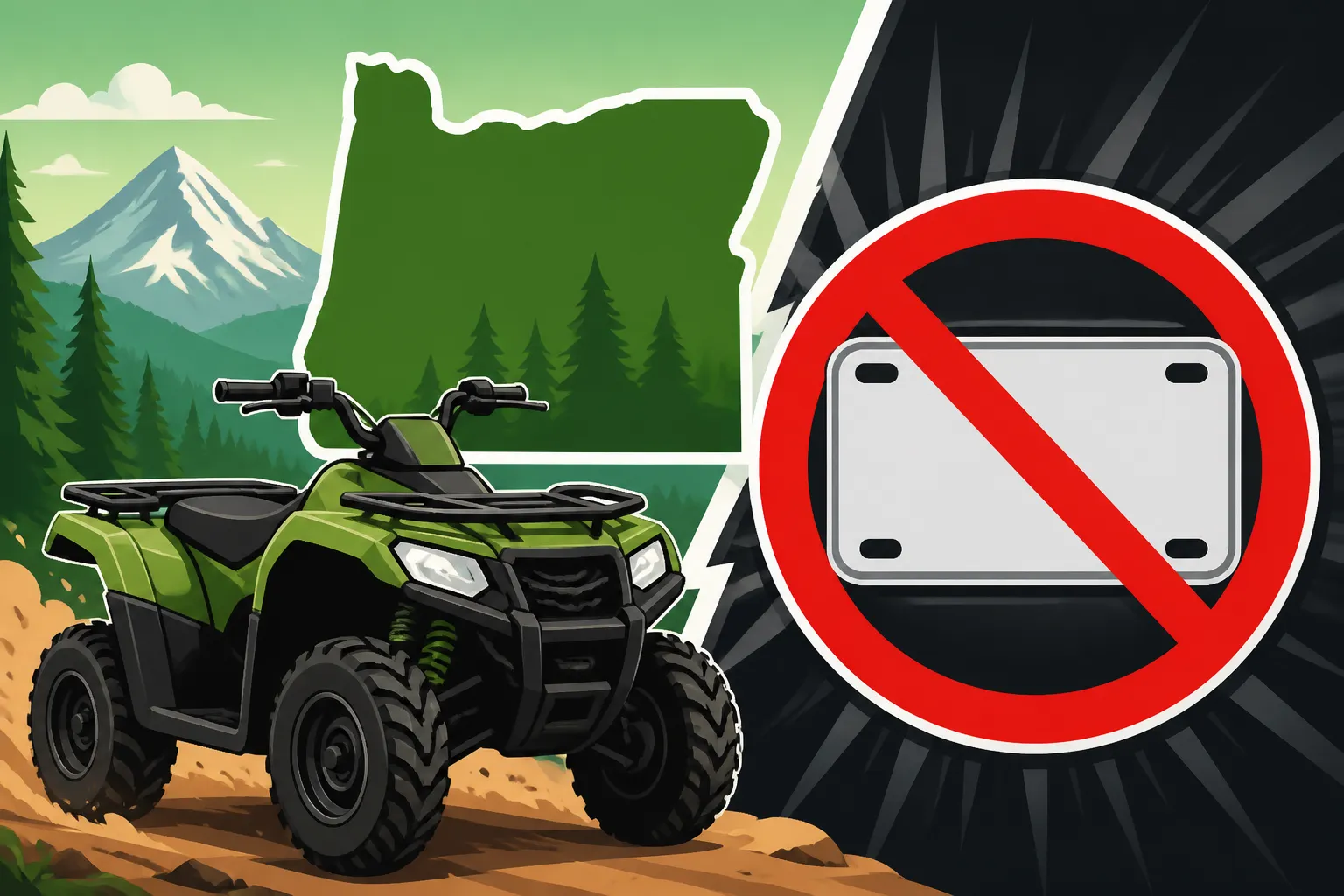
It's a common dream for many off-road enthusiasts here in Oregon: the idea of throwing a license plate on your trusty quad and cruising down the highway to hit the next trail or even just run to the corner store. We've all seen videos or heard tales from other states where ATVs seem to zip around town like any other vehicle. But for us here in the Beaver State, that dream typically hits a harsh wall of reality. This guide will dive deep into why your beloved Class I ATV, often called a quad or four-wheeler, simply cannot be registered for street legal use in Oregon, exploring the regulations, the classifications, and what genuine street legality actually entails for off-highway vehicles.
Understanding Oregon's ATV Classification System
Before we can even begin to understand why a quad can't get a license plate, we first need to grasp how Oregon categorizes off-highway vehicles (OHVs). It’s not just a blanket term; the state has a very specific system that dictates everything from where you can ride to what kind of safety gear you need, and, crucially, whether a machine can ever see pavement with a plate.
The Core Definition of a Class I ATV
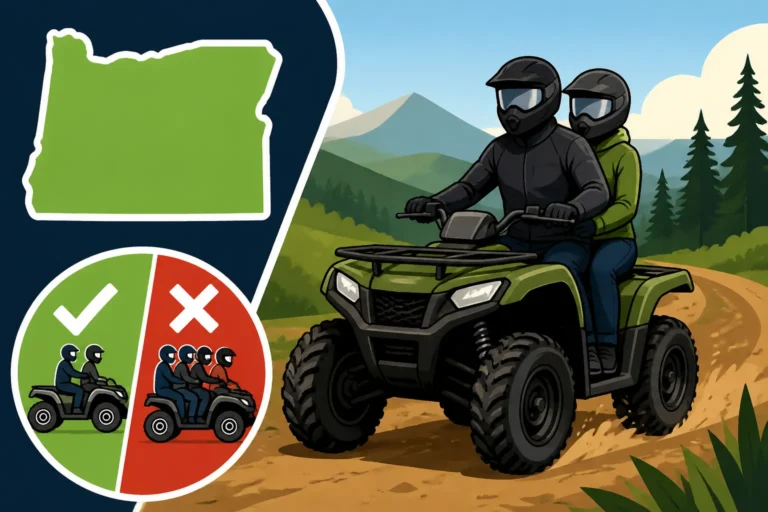
When most people say "ATV," they're thinking of a Class I all-terrain vehicle. Picture your standard sport quad or utility four-wheeler: it's designed for a single operator, sometimes with a passenger, you straddle the seat like a motorcycle, and you steer with handlebars. Oregon law, specifically [Oregon's Class I Under ORS 801.190], defines these machines in a way that fundamentally places them firmly in the "off-road only" category. These vehicles are generally limited to 50 inches in width and have a dry weight limit. Think about the engineering – a high center of gravity, narrow track width, and knobby, low-pressure tires. These features are fantastic for conquering sand dunes, navigating tight forest trails, or hauling gear across a muddy field.
However, these very characteristics make them inherently unsuitable and unsafe for paved public roads. Imagine a sharp turn on asphalt at 45 mph on a machine designed for carving loose dirt. The tires lack the grip, the suspension isn't tuned for hard surfaces, and the stability is compromised. The manufacturers themselves design and label these machines as "off-highway use only," a critical point that the state of Oregon, like many others, upholds rigorously. Trying to force a machine built for dirt onto the street is like trying to use a fish to climb a tree; it's just not what it's made for.
Differentiating Class III Off-Road Motorcycles
While our focus here is primarily on quads, it's worth briefly touching on Class III off-road motorcycles, commonly known as dirt bikes. Like Class I ATVs, these vehicles are also designed strictly for off-highway recreation. They feature two wheels, handlebars, and a straddle seat, very much like a street motorcycle, but they lack the lights, mirrors, speedometers, and other safety equipment required for road use. Their knobby tires, high ground clearance, and long-travel suspension are perfect for single-track trails and motocross tracks but are ill-suited for asphalt.
The key takeaway here is that both Class I ATVs and Class III off-road motorcycles share a common DNA: they are purpose-built for conditions away from public roads. Neither of these classifications is eligible for traditional street registration in Oregon because their fundamental design, as dictated by manufacturers and recognized by state law, is not compliant with highway safety standards. This distinction is crucial when we look at the one type of OHV that can gain street-legal status.
The Exception: Class II ATVs and Their Unique Status
Now, this is where things get interesting and often confusing for many riders. While Class I ATVs (quads) cannot be plated, Oregon does have a category of off-highway vehicle that can be made street legal: the Class II ATV. But don't let the "ATV" in the name fool you into thinking it's just a bigger quad. [Oregon's Class II Under ORS 801.193] defines these vehicles very differently. Typically, a Class II ATV refers to machines like sand rails, dune buggies, and, critically, many utility terrain vehicles (UTVs) or side-by-sides.
What sets them apart? Class II machines generally have a steering wheel (not handlebars), bucket or bench seats (not a straddle seat), and are often significantly wider and heavier than Class I quads. They are typically designed with a roll cage and often come equipped from the factory with features that are closer to those found on a conventional car, such as seatbelts and sometimes even basic lighting. Because of their more car-like design, some Class II machines, particularly UTVs, can be modified to meet the stringent requirements for street legality. This might involve adding specific lighting, mirrors, turn signals, a horn, a windshield, and ensuring they meet certain emission and safety standards. This is a very different beast from your typical quad. Companies like SuperATV specialize in accessories that can help convert eligible Class II machines into street-legal vehicles, offering everything from full street-legal kits to individual components like turn signal kits and DOT-approved windshields. It's a testament to their different engineering and intended use that these machines even have a pathway to street legality, a path that Class I quads simply don't have.
The Legal Framework: Why Class I (Quads) Cannot Be Plated
The inability to plate a quad in Oregon isn't some arbitrary whim; it's deeply rooted in both state and federal law, reflecting safety standards and the original intent of vehicle manufacturers. Understanding these underlying legal principles helps clarify why the "just add turn signals" approach simply won't cut it.
Oregon Revised Statutes and ATV Definitions
Oregon's laws are meticulously crafted, and the definitions within the Oregon Revised Statutes (ORS) are the bedrock of how vehicles are treated. When it comes to ATVs, the state's legal framework clearly distinguishes between vehicles intended for highway use and those designated for off-highway use. As mentioned, [Oregon's Class I Under ORS 801.190] specifically defines these quads by their physical characteristics – straddle seat, handlebars, and typically a width limit of 50 inches. This classification inherently places them outside the realm of vehicles that can be registered for general road use.
The state's legal definitions are not just about what a vehicle looks like, but what its fundamental design and purpose are. A quad is designed for agility, power delivery to all four wheels, and suspension travel over uneven terrain. It's not designed to meet the stopping distances, stability requirements, or crash-worthiness standards mandated for vehicles sharing the road with cars, trucks, and motorcycles. The ORS acts as the gatekeeper, and the characteristics of a Class I ATV fundamentally preclude it from passing through the "street legal" gate. Any legislative effort to change this would involve a significant redefinition and reclassification, which would be a monumental undertaking given the safety implications.
Federal Motor Vehicle Safety Standards (FMVSS) and ATVs
Beyond state laws, there's a powerful federal layer that dictates why quads aren't street legal: the Federal Motor Vehicle Safety Standards (FMVSS). These are regulations issued by the National Highway Traffic Safety Administration (NHTSA) that specify design, construction, performance, and durability requirements for motor vehicles and their related safety equipment. The critical point here is that ATVs, as defined by their manufacturers and recognized by NHTSA, are explicitly not considered motor vehicles for on-road use. They are manufactured and sold with a clear "for off-road use only" disclaimer.
This isn't just a suggestion; it means that ATVs are not designed, tested, or certified to meet any of the rigorous FMVSS standards that highway vehicles must satisfy. This includes everything from brake performance, lighting configurations, crumple zones, emissions, and even specific types of tires. A quad's low-pressure, knobby tires, for instance, are fantastic off-road but can offer poor traction, unpredictable handling, and rapid wear on asphalt, posing a significant safety hazard. Without meeting these federal standards, no state, including Oregon, can legally register an ATV for general highway use, regardless of any bolt-on accessories you might add. This federal mandate forms an insurmountable barrier for Class I quads seeking street legality.
The Role of the Oregon Department of Motor Vehicles (DMV)
Given the state and federal regulations, the Oregon Department of Motor Vehicles (DMV) plays a specific, and often misunderstood, role. Many people mistakenly believe that the DMV is the place to register an ATV for street use. However, [Why Oregon's DMV Does Not Register ATVs] for this purpose is straightforward: their mandate is to register and title vehicles that comply with federal and state highway safety standards. Since Class I ATVs do not meet these standards, the DMV simply cannot process them for street registration.
Instead, the DMV handles titling for all types of vehicles, including off-highway vehicles, but this is distinct from street registration. While you can get an [Oregon Title for a Machine Used Only Off-Road], this title serves primarily as proof of ownership, which is crucial for buying or selling an ATV. It has absolutely no bearing on whether the vehicle is legal to operate on public roads. The agency responsible for off-highway vehicle operating permits in Oregon is actually the Oregon Parks and Recreation Department (OPRD), which further highlights the clear separation between on-road and off-road legal frameworks in the state. The DMV is essentially constrained by the existing laws, and unless those laws change significantly at both state and federal levels, they have no legal mechanism to plate a quad.
What "Street Legal" Truly Means in Oregon for OHVs
The term "street legal" gets thrown around a lot in the off-road community, and it often means different things to different people. In Oregon, for off-highway vehicles, it's a very specific designation with clear lines drawn between limited access and full highway legality. This distinction is paramount to understanding why quads don't make the cut.
The Distinction Between Registration and Operating Permits
It's vital to differentiate between an Oregon ATV operating permit and traditional vehicle registration. An [Oregon's ATV Operating Permit] is a two-year permit issued by the Oregon Parks and Recreation Department (OPRD) that signifies your ATV, UTV, or dirt bike is permitted for use on designated off-highway vehicle riding areas throughout the state. This permit, which costs the same regardless of your machine's class, is required for riding on public lands like the Oregon Dunes, the Tillamook State Forest, and other trails managed by federal, state, and local agencies. You get a decal, which you must display properly, and a card to carry with you.
This permit has absolutely nothing to do with whether your machine can legally drive on public roads. It's an access pass for off-road trails and areas, funding the maintenance and management of those very places. In contrast, traditional vehicle registration, handled by the DMV, is what allows a vehicle to legally travel on paved public roads and highways. This registration requires the vehicle to meet all applicable Federal Motor Vehicle Safety Standards and state regulations for highway use. Because Class I ATVs don't meet these standards, they cannot receive traditional vehicle registration, and therefore, they cannot be considered street legal in Oregon. It’s two entirely separate systems serving entirely different purposes.
Limited Road Access vs. Full Street Legality
While true street legality for quads is off the table, Oregon does provide limited road access for OHVs under specific circumstances. This is often where confusion arises. The state has designated [Oregon ATV Highway Access Routes] in a few select communities, notably [Riding an ATV Through Lakeside] and [Riding an ATV Through Sumpter]. These are specific, clearly marked routes that allow OHVs (including quads with a valid off-road permit) to travel on certain public roads to connect trail sections, access fuel, or reach staging areas within those towns.
However, this is not "street legal" in the full sense. When on these designated routes, OHV operators must adhere to all traffic laws, including speed limits, stop signs, and yielding to other traffic. Helmets are typically required for all riders, and machines must have functional headlights, taillights, and brake lights. These routes are a convenience for off-road users, allowing them to temporarily integrate with road traffic for very specific purposes. They are not an open invitation to ride your quad anywhere you please on public roads. You cannot take your quad on a state highway or a county road outside of these designated zones, nor can you ride it to work every day. The state is very clear: these are limited access points, not full street-legal endorsements. Any deviation from these specific routes can lead to a citation for riding an unopened road.
Requirements for Street-Legal Class II Machines
So, if Class I quads are out, what does it take for a Class II machine to become street legal in Oregon? It's a comprehensive list, far beyond just adding a few blinkers. For a Class II OHV, such as many UTVs or sand rails, to qualify for street registration, it must essentially be converted to meet all the safety and equipment requirements of a conventional motor vehicle. This includes, but isn't limited to:
- DOT-Approved Tires: Tires rated for highway use, not just off-road terrain.
- Lighting Package: Headlights (high and low beam), taillights, brake lights, turn signals, and often a license plate light. These must meet specific brightness and visibility standards.
- Mirrors: A rearview mirror and often side mirrors, providing a clear view behind the vehicle.
- Horn: A functioning horn audible from a certain distance.
- Windshield: A DOT-approved safety glass windshield.
- Wipers: Functioning windshield wipers.
- Seatbelts/Restraints: Functioning seatbelts for all occupants, meeting automotive standards.
- Speedometer: A working speedometer.
- Emissions Compliance: The vehicle must meet applicable emissions standards.
- Vehicle Identification Number (VIN) Verification: The VIN must be verified and clear.
And critically, [Mandatory Insurance on Every Oregon Class II] is required for any Class II machine that is street legal. This comprehensive list of modifications, which can be quite expensive and complex, transforms a Class II OHV into something much closer to a car, allowing it to be registered by the DMV. A company like SuperATV offers many of these conversion components for popular UTV models, but it's important to note that these are for Class II machines, not for Class I quads. The design differences between a quad and a UTV or sand rail (like having a steering wheel, side-by-side seating, and a roll cage) make this type of conversion physically possible for Class II machines in a way that it is simply not for a Class I quad.
| Feature / Requirement | Class I ATV (Quad) | Class II OHV (e.g., UTV, Sand Rail) | Street-Legal Potential |
|---|---|---|---|
| Seating Position | Straddle Seat | Bucket or Bench Seat | No (Quad) / Yes (OHV) |
| Steering | Handlebars | Steering Wheel | No (Quad) / Yes (OHV) |
| Max Width | Generally 50 inches | Often Wider (up to 75 inches for Class IV) | No (Quad) / Yes (OHV) |
| Manufacturer Intent | Off-Highway Only | Off-Highway (but convertible) | No (Quad) / Yes (OHV) |
| FMVSS Compliance | No | Potentially, with modifications | No (Quad) / Yes (OHV) |
| DMV Street Registration | No | Yes, if converted to meet standards | No (Quad) / Yes (OHV) |
| Required Permit | OPRD OHV Permit | OPRD OHV Permit (off-road) / DMV Plate (street) | Yes |
Common Misconceptions and Frustrations
The desire to make a quad street legal is strong, and this often leads to common misunderstandings and deep-seated frustrations among riders. It's easy to look at a quad, especially a larger utility model, and think, "What's the difference between this and a small car?" But legally and mechanically, the differences are vast.
The "If I Add Turn Signals" Myth
One of the most persistent myths in the off-road community is that simply adding a few automotive accessories will make an ATV street legal. The thought process often goes: "If I put on turn signals, a horn, and some mirrors, it's basically a motorcycle, right?" Unfortunately, this couldn't be further from the truth in Oregon. While these components are certainly part of what a street-legal vehicle needs, they are a small piece of a much larger, more complex puzzle that Class I ATVs are simply not designed to complete.
As we discussed, the core issue lies in the fundamental design and the lack of Federal Motor Vehicle Safety Standards (FMVSS) compliance. An ATV's frame, suspension geometry, braking system, and tire type are all engineered for specific off-road performance, not for highway speeds, sudden stops on asphalt, or potential collisions with other road vehicles. Adding a turn signal kit, even a high-quality one from SuperATV, won't magically give your quad DOT-approved tires, a crash-tested chassis, or the necessary emissions certifications. It's like trying to make a sailboat into an airplane by adding wings; while it might have some similar components, its core structure and engineering are for an entirely different environment. Riders who attempt to make a quad street legal with only bolt-on accessories risk significant [Oregon Fines for Riding Without a Permit] and severe safety hazards.
Comparing Oregon to Other States' Laws
Another source of frustration stems from the fact that a handful of other states do allow ATVs to be registered and operated on public roads, at least in certain areas or under specific conditions. Riders see videos from states like Arizona, Utah, or South Dakota where quads are cruising down main streets, and they wonder, "Why not Oregon?" This creates a feeling that Oregon's laws are overly restrictive or somehow outdated.
The reality is that each state has the authority to set its own vehicle code, as long as it doesn't contradict federal law (like the FMVSS which states ATVs are off-road only). States that allow street-legal quads typically do so by creating specific exemptions, classifications, or modification requirements within their state laws that Oregon has chosen not to adopt. These states might have different interpretations of what constitutes a "highway vehicle" or have specific legislation to accommodate these conversions. Oregon, however, has maintained a stricter adherence to the manufacturer's "off-highway use only" designation for Class I ATVs, prioritizing safety and consistency with federal guidelines. So, while it's tempting to compare, Oregon's legislative priorities and safety assessments have led to a different regulatory landscape. An out-of-state plate on a quad won't grant you street-legal status here, either; [Oregon Rules for an Out-of-State Machine] still require you to abide by Oregon's operating laws.
The Financial and Practical Implications
Attempting to convert a Class I quad into a street-legal machine in Oregon, despite the legal barriers, can have significant financial and practical implications. Riders might spend hundreds or even thousands of dollars on accessories like DOT tires, turn signal kits, mirrors, and horns, only to find that their efforts are futile. This investment is wasted because the fundamental legal classification and federal safety standards remain unmet.
Beyond the monetary cost, there's the risk of operating an illegal vehicle. Getting caught riding an unpermitted or illegally modified quad on a public road can result in substantial fines, vehicle impoundment, and even points on your driving record. An officer will not care about your aftermarket lights or your earnest intentions; they will cite you based on the vehicle's legal classification and its inability to be registered for highway use. Furthermore, if you're involved in an accident on a public road with an illegally operating quad, your insurance coverage will likely be void, leaving you personally liable for damages and injuries. This could lead to devastating financial consequences. It’s a harsh lesson that many learn the hard way: in Oregon, for Class I ATVs, the path to street legality is a dead end, and trying to force it open only leads to frustration and potential penalties.
Alternatives and What You Can Do in Oregon
While the dream of plating your quad for street use might be out of reach in Oregon, that doesn't mean your off-road adventures are limited. The state offers fantastic opportunities for OHV enthusiasts, and there are legal ways to get your machine to and from the trails, as well as options for genuinely street-legal OHVs.
Utilizing Oregon's Designated Access Routes
Oregon understands the need for riders to connect between trails, access services, or simply enjoy a scenic ride through certain communities. That's why the state has established [Oregon ATV Highway Access Routes] in specific areas. As mentioned, towns like [Riding an ATV Through Lakeside] and [Riding an ATV Through Sumpter] are pioneers in this regard, allowing permitted OHVs to travel on designated sections of public roads. These routes are clearly marked with signs, and they are not free-for-alls. When you're on these roads, your quad must have a valid [Oregon's ATV Operating Permit], and you must follow all rules of the road, including posted speed limits, stop signs, and yielding to pedestrian and vehicle traffic. Helmets are typically required, and your machine needs basic functioning lights for visibility.
Think of these as temporary corridors, not a full license to roam. You use them to get from your campsite to the dunes, or to grab a burger in town, before returning to the off-road areas. Many riders trailer their quads to a staging area and then use these access routes to extend their ride experience. It’s a privilege, not a right, and maintaining good rider etiquette and strict adherence to the rules helps ensure these routes remain open for everyone. Always check with the local authorities or the Oregon Parks and Recreation Department for the most current maps and regulations for these routes before you ride.
Exploring Street-Legal Class II Options
If having a street-legal off-highway vehicle is a high priority for you, then turning your attention to Class II machines is the way to go. Many utility terrain vehicles (UTVs) or side-by-sides fall under the Class II definition, and with the right modifications, they can be registered for street use in Oregon. These machines, with their steering wheels, bench or bucket seats, and roll cages, are structurally more adaptable to meet highway safety standards.
The conversion process involves adding all the necessary street-legal components: DOT-approved tires, a full lighting package (headlights, taillights, brake lights, turn signals), mirrors, a horn, a DOT-approved windshield with wipers, and ensuring proper emissions. It's a significant investment, but it's a legal path to street access for an OHV. Companies like SuperATV offer a vast array of street-legal conversion kits and individual components designed specifically for popular UTV models. For example, they have excellent LED turn signal kits, robust windshields, and various mirrors that can help you get your UTV ready for DMV inspection. Once modified and inspected, these machines can be registered with the Oregon DMV, and you can truly enjoy the freedom of taking your [Titling and Registering a Street-Legal Rail] or UTV on both the trail and the pavement, provided you have the [Mandatory Insurance on Every Oregon Class II] required for these vehicles.
Safe and Legal Off-Road Riding
Ultimately, the primary purpose of a Class I ATV is off-road recreation, and Oregon offers some of the most incredible off-road riding opportunities in the country. Instead of focusing on street legality for your quad, embrace its intended use and explore the vast network of trails and open riding areas. Whether you're carving through the towering sand dunes of the [Oregon Dunes National Recreation Area], navigating the challenging singletrack of the [Oregon's Tillamook State Forest Trails], or exploring the high desert landscapes around Millican Valley, there's an adventure waiting.
To ensure your off-road riding is both safe and legal, always make sure you have a current [Oregon's ATV Operating Permit] displayed on your machine. All riders, especially those under 16, need to have an [Oregon ATV Safety Education Card] or an approved out-of-state equivalent. Always wear appropriate safety gear, including a DOT-approved helmet, eye protection, long pants, long sleeves, gloves, and over-the-ankle boots. Ride responsibly, stay on marked trails, and respect private property and wildlife closures. By focusing on enjoying your quad in its natural element, you'll have countless hours of fun without the legal headaches and safety concerns associated with trying to make it street legal.
The Future of ATV Road Access in Oregon
The landscape of off-highway vehicle use and road access is not static. Laws and regulations evolve, driven by community needs, safety considerations, environmental concerns, and legislative efforts. While the current situation for plating Class I quads in Oregon is clear, it's worth understanding how changes might occur and what factors influence them.
The Legislative Process and Advocacy
Any significant change to allow Class I ATVs to be fully street-legal in Oregon would require legislative action. This means new bills would need to be introduced, debated, and passed by the Oregon State Legislature. This is a complex and often lengthy process, involving committees, public hearings, and votes in both the House and Senate before potentially being signed into law by the Governor. Such legislation would need to address the fundamental issues of federal safety standards, liability, and the inherent design limitations of quads.
Advocacy groups and rider organizations play a crucial role in this process. Groups representing OHV enthusiasts can lobby legislators, provide testimony, and gather public support for changes they believe are beneficial. Similarly, safety advocates and environmental groups might push for maintaining or even increasing restrictions. The [Inside Oregon's ATV Highway Access Routes Advisory Committee], for example, reviews proposals for new designated road access routes and advises the Transportation Commission, demonstrating a pathway for specific, limited changes. However, full street legality for Class I ATVs would be a much broader and more challenging legislative effort than creating a few access routes.
Balancing Recreation with Public Safety Concerns
The reason for the current regulations against plating quads on Oregon roads largely boils down to a fundamental balancing act: promoting recreational opportunities while ensuring public safety and minimizing environmental impact. Lawmakers and regulatory bodies weigh the desires of the riding community against potential risks to other road users, pedestrians, and the ATV operators themselves.
The safety concerns are significant. ATVs are designed for off-road terrain, where speeds are generally lower, and surfaces are forgiving. On hard pavement at higher speeds, the risk of rollovers, loss of control, and severe injuries in a collision increases dramatically. Noise pollution, exhaust emissions, and wear and tear on paved roads are also considerations. Any push for broader street legality would need to convincingly demonstrate how these concerns could be mitigated without compromising public safety or the environment. It's a challenging proposition, as the core design of a quad is fundamentally at odds with the demands of highway travel.
Staying Informed About Rule Changes
For any off-road enthusiast in Oregon, staying informed about current and potential rule changes is critical. While the immediate future for plating Class I quads seems unlikely, regulations regarding designated road access, safety requirements, and permissible riding areas can and do change. The best ways to stay up-to-date include:
- Oregon Parks and Recreation Department (OPRD) OHV Program: This is the primary state agency managing OHV recreation. Their website is an invaluable resource for current rules, maps, and permit information.
- Oregon Department of Transportation (ODOT) and DMV: For information regarding street-legal vehicles and any proposed changes to road use laws.
- Local OHV Clubs and Organizations: These groups are often on the front lines of advocacy and are excellent sources of information about local rules, trail conditions, and political efforts.
- Legislative Monitoring: You can often sign up for alerts from the state legislature on topics related to motor vehicles or outdoor recreation.
By proactively seeking out information, riders can ensure they are always compliant with Oregon laws, safely enjoy their machines, and be prepared for any future changes that might impact [Oregon ATV Rules for the Road Down to the Sand] or broader road access. The bottom line is that while your quad might not get a license plate for full street legality today, staying engaged and informed ensures you can maximize your off-road fun within the current legal framework.
Disclaimer
This article is for general informational purposes only and does not constitute professional advice. Laws, prices and regulations vary by location and change over time. Consult a qualified professional for guidance on your specific situation.