Riding Two Up Where Oregon Allows One
It’s a common sight, and honestly, a common struggle for many of us who love hitting Oregon’s incredible trails and dunes: you’ve got your trusty quad, maybe it’s a Class I ATV, and a buddy or, even more likely, one of your excited kids wants to hop on the back for the ride. Your heart says "yes," but Oregon’s rules, and frankly, the design of most single-rider machines, often say "hold on a minute." This guide is all about navigating those specific rules, understanding why they exist, and ensuring everyone stays safe and legal when you’re out enjoying the vast beauty of Oregon's off-road world.
The Core Rule: What Oregon Says About Passengers
Let’s get straight to the heart of the matter. Oregon is pretty clear when it comes to who can ride where on an ATV or UTV. The overarching principle is safety, and that often boils down to how the manufacturer originally designed the machine for passengers. It’s not about how much space seems to be available, but rather what the vehicle was engineered to safely accommodate.
Operator Versus Passenger Capacity
When you look at your quad, especially a standard Class I ATV, you’ll notice it has one seat. That's not just a suggestion; it's a design choice based on weight distribution, handling characteristics, and the operator's ability to control the machine under various conditions. Oregon law generally follows this manufacturer's intent. If a quad is designed for one person, then one person is all that's legally allowed on it while riding on public lands or designated OHV areas.
Think about it from a purely practical standpoint. A quad is maneuvered by shifting your body weight. When you add a passenger, especially one not properly secured or positioned, that critical weight distribution changes dramatically. A sudden turn, an unexpected bump, or even just accelerating or braking can become incredibly unstable. The machine isn't going to react the way you expect, and that puts both you and your passenger at serious risk. This is a key reason why Oregon's rules, much like those in many other states, are so particular about matching rider count to machine design. It's not about being restrictive; it's about preventing rollovers and serious injuries.
Seating and Foot Pegs: The Oregon Standard
So, what does Oregon require for a machine to legally carry a passenger? It boils down to two critical components: a dedicated, secure seat and proper foot pegs or footrests for that passenger. You can't just have someone perch on the fender or squeeze onto the main seat behind the operator. That might feel okay for a slow, short jaunt, but it utterly fails Oregon’s safety standards for any real off-road riding. The passenger needs their own distinct space, designed to keep them stable and secure. [Foot Pegs and Oregon's Passenger Rule] is a rule that often surprises people who are used to simply making do.
Imagine you're navigating a rocky trail in the Tillamook State Forest or trying to climb a steep dune at Sand Lake. If your passenger doesn't have secure footrests, their feet are dangling, or worse, they're trying to balance by pushing on your own feet. This isn't just uncomfortable; it's dangerous. They could easily slip, fall off, or destabilize the quad. The same goes for the seat. A passenger needs to be able to brace themselves, hold on securely, and move with the machine safely. A fender seat that isn't factory-installed or certified for passenger use simply isn't going to cut it in the eyes of an Oregon Parks and Recreation Department (OPRD) ranger. They're looking for genuine, engineered solutions, not makeshift additions. This is especially true for [Oregon Rules for Passengers on a Quad].
When a Side-by-Side Changes the Dynamic
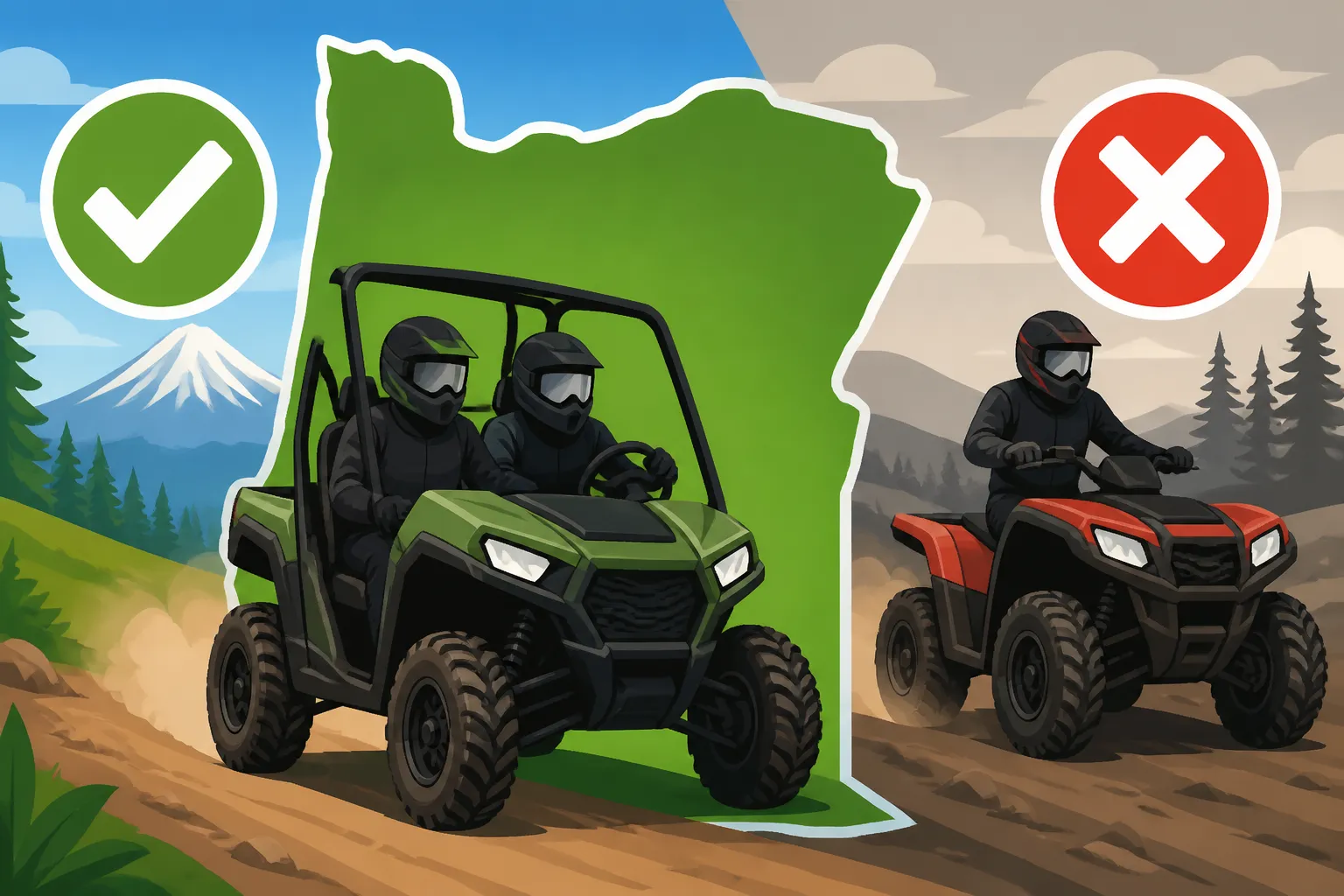
Now, let's talk about side-by-sides, which Oregon classifies as Class IV ATVs. These machines are a game-changer when it comes to passenger capacity, precisely because they are designed for multiple occupants right from the factory. Unlike a traditional quad with its straddle seat, a side-by-side typically features bench seats or bucket seats, complete with seatbelts, much like a car. This fundamental design difference is why [Oregon's Class IV Side-by-Sides Under 75 Inches] can legally carry multiple people, where a Class I or Class III machine often cannot.
If you have a side-by-side, it's generally equipped with two, four, or even more seats, each with its own seatbelt. This provides a much more secure and stable environment for passengers. The operator uses a steering wheel, and the passengers are seated within a roll cage, significantly reducing the risks associated with weight shifts and falls that are inherent to single-seat quads carrying extra passengers. So, if your goal is to bring the whole family or a group of friends along for the adventure, a multi-passenger side-by-side is the machine designed for exactly that. It aligns perfectly with the safety principles embedded in Oregon's OHV regulations, which differentiate significantly between the "straddle seat" of a quad and the "bench seat" or bucket seats found in UTVs. [Straddle Seat Versus Bench Seat in Oregon's ATV Classes] explains this distinction in more detail.
Specific Scenarios and What Oregon Allows (or Doesn't)
We’ve all been there, standing next to our ATV, faced with a situation where we really wish we could just double up. Whether it's a child or an adult, the desire to share the experience is strong. But it's crucial to understand Oregon's rules for these specific situations to avoid fines and, more importantly, to keep everyone safe.
Riding a Single-Seat Quad with a Child Passenger
This is probably the most common scenario that causes confusion and, unfortunately, leads to violations. As parents or guardians, we naturally want to share our passions with our kids. An ATV ride through the Oregon Dunes or along a forest trail seems like a perfect bonding experience. However, putting a child on a single-seat quad, either in front of you or behind you on the fender, is not only against Oregon law but highly dangerous.
A single-seat quad simply doesn't have the dedicated passenger seat and foot pegs required. A child in front of the operator can interfere with steering and control, block the operator's view, and is in a vulnerable position in case of a sudden stop or impact. If they're on the fender behind you, they lack proper support, their legs are likely dangling, and they can easily bounce off over rough terrain. Plus, the extra weight, even of a small child, significantly alters the quad's center of gravity, making it much more prone to rollovers. Even if you're going slow and feel completely in control, unexpected obstacles or changes in terrain can quickly lead to a loss of balance. Safety gear is crucial, and while a child might wear a helmet, it won't compensate for the fundamental design flaw of carrying them on a single-rider machine. Remember, everyone, especially children, needs to wear a proper helmet that meets DOT standards, as explained in [Oregon Helmet Law for ATV Riders].
Riding Two Adults on a One-Person Quad
If riding with a child on a single-seat quad is risky, doing so with another adult amplifies those risks dramatically. Two adults on a machine designed for one person presents immediate and severe challenges. First, there's the sheer weight. Most single-rider ATVs have a weight capacity that can be easily exceeded by two adults, especially if they also have gear. Exceeding this limit strains the suspension, brakes, and engine, making the machine less responsive and more difficult to control.
Second, the space constraint is immense. Two adults crammed onto a single saddle seat will inevitably interfere with each other's ability to shift weight, maintain balance, and operate the controls effectively. The passenger will have no proper foot support, and their legs could get caught in moving parts or scrape against obstacles. Maneuvering through technical terrain, making sharp turns, or even maintaining a straight line on an uneven trail becomes incredibly difficult and dangerous. The risk of a rollover or an ejection accident increases exponentially. Oregon law considers this a direct violation of safe operating practices, and an OPRD ranger won't hesitate to issue a citation, potentially ending your ride and costing you a significant fine. [Oregon Fines for Riding Without a Permit] gives you an idea of the cost of other common infractions, and riding unsafely is certainly in that ballpark.
Using Aftermarket Accessories for Extra Passengers
It’s tempting, isn’t it? You see those aftermarket seats or platforms advertised that bolt onto the back of your single-seat quad, and you think, "Aha! Problem solved!" However, in Oregon, using these accessories to carry an extra passenger on a machine not originally designed for two riders is generally not permitted and doesn’t magically make it legal or safe. While companies like SuperATV make fantastic aftermarket accessories for all kinds of machines, including racks, storage boxes, and even suspension upgrades, their products designed to carry gear or modify a machine for performance aren't typically certified to convert a single-rider ATV into a legal, safe two-up passenger vehicle under Oregon law.
The key here is "manufacturer's original design" and "safety certification." A bolt-on fender seat, even if sturdy, usually doesn’t provide the integrated structural support, proper grab handles, or secure, dedicated footrests that Oregon law requires for a passenger. It also doesn't address the fundamental issue of weight distribution and altered handling characteristics for a machine built for one. The OPRD views these additions with caution, as they often create a false sense of security without actually meeting the safety criteria for carrying a passenger. While SuperATV offers many solutions to enhance your OHV experience, always check Oregon's specific passenger requirements to ensure any modification for additional riders is compliant and genuinely safe. If your quad didn't come from the factory as a two-up model, it’s highly unlikely that an aftermarket add-on will make it legal for passenger use in Oregon.
| ATV Class | Typical Passenger Capacity (Factory) | Oregon Law | Ideal for Carrying Passengers |
|---|---|---|---|
| Class I | 1 (Operator only) | 1 Operator | No |
| Class II | Varies (often 1-2 for modified street legal) | Varies | Depends on specific build |
| Class III | 1 (Operator only, dirt bikes) | 1 Operator | No |
| Class IV | 2+ (Operator + passengers) | 2+ Occupants | Yes, designed for multiple |
Penalties and Safety: Why These Rules Matter
It might feel like a hassle to adhere to all these specific rules, especially when you just want to have fun. But Oregon's regulations regarding ATV passengers are rooted deeply in safety. Ignoring them can lead to significant penalties, but more importantly, it vastly increases the risk of serious injury or even worse. These aren't just arbitrary guidelines; they're the result of extensive safety research and unfortunate accident statistics.
The Cost of Non-Compliance: Fines and Citations
Getting caught riding a single-seat ATV with an unauthorized passenger on public land in Oregon isn’t just a slap on the wrist. Law enforcement, whether it’s an OPRD ranger at a staging area like Spinreel or Browns Camp, or a county sheriff's deputy, takes these rules seriously. They understand the dangers involved. You could be facing a Class C traffic violation, which means a fine. While I can't give specific dollar amounts, be aware that these aren't trivial sums. They're designed to be a deterrent.
Beyond the financial hit, a citation can also mean the end of your day’s ride. A ranger might instruct you to remove the passenger or, in more severe cases, could even issue an order for you to trailer your machine out of the riding area. Imagine driving hours to get to the Oregon Dunes, only to have your day cut short because of a passenger violation. It’s a frustrating and costly outcome that’s entirely avoidable. [What a Ranger Checks at an Oregon Staging Area] includes ensuring proper passenger configuration, among other things. Always make sure everyone has their [Oregon's ATV Operating Permit] decal properly displayed as well!
Accident Risk and Liability
The most critical reason for adhering to Oregon’s passenger rules is the inherent risk of an accident. As discussed, carrying an unauthorized passenger dramatically compromises the stability and handling of a single-seat ATV. This isn't just theory; it's a real-world consequence that can lead to rollovers, ejections, and severe injuries. Imagine hitting an unexpected g-out on a trail in Millican Valley with a passenger not properly seated or braced. The consequences could be catastrophic for both you and them.
Beyond the physical danger, there’s the issue of liability. If an accident occurs while you are carrying an unauthorized passenger, your personal liability could be enormous. Standard insurance policies often have clauses that exclude coverage for incidents occurring during illegal or unsafe operation, and carrying an unauthorized passenger definitely falls into that category. This means you could be personally responsible for medical bills, property damage, and legal fees. For Class II machines (which include many street-legal conversions), mandatory insurance exists, but even that might not cover an accident if you're violating passenger capacity. This is why getting your [Oregon ATV Safety Education Card] is so important—it reinforces these critical safety principles.
Beyond the Rules: The Spirit of Safe Riding
Ultimately, these rules aren’t put in place to stifle your fun but to ensure everyone can enjoy Oregon’s incredible OHV opportunities safely and responsibly. The spirit of safe riding means prioritizing the well-being of yourself, your passengers, and other riders on the trails. It's about respecting the machines, the environment, and the law.
If you want to ride with others, consider your options carefully. If you have a single-seat quad, perhaps everyone in your party who meets the age and safety card requirements can ride their own machine. Or, if a multi-passenger experience is what you're after, investing in a side-by-side (Class IV ATV) that's factory-designed for multiple occupants is the way to go. Companies like SuperATV offer many accessories for UTVs, from windshields to lift kits, that enhance the experience within the vehicle's safe and legal design parameters for multi-passenger use. Make sure your vehicle is suitable for the number of people you want to bring. Remember, the goal is to make memories on the trails, not to create a preventable emergency.
Disclaimer
This article is for general informational purposes only and does not constitute professional advice. Laws, prices and regulations vary by location and change over time. Consult a qualified professional for guidance on your specific situation.