Oregon Rules for Packing Out Game
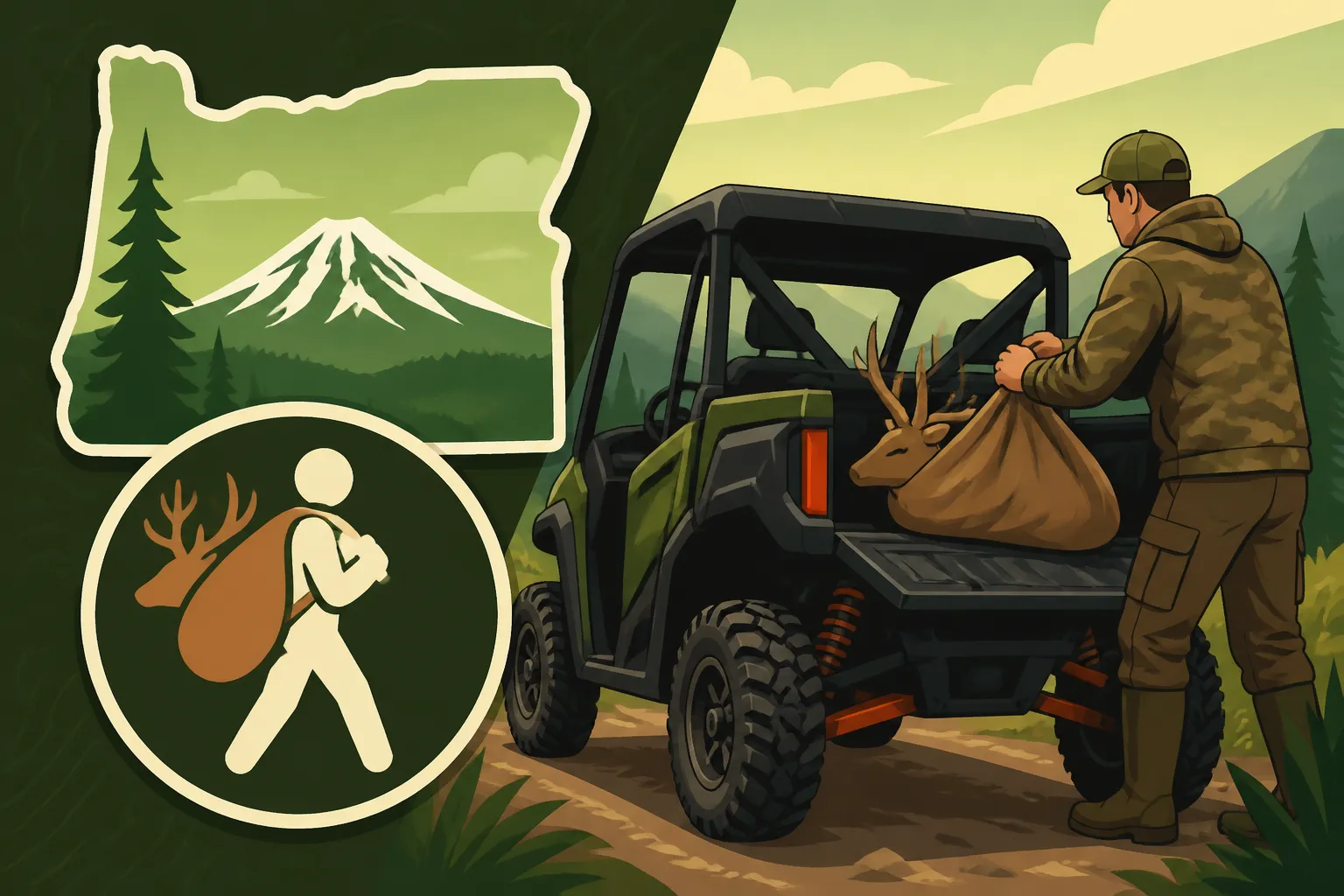
Packing out a harvested animal with an ATV or UTV can save a long, difficult carry, but a machine does not give you permission to leave an open route or drive to a carcass. In Oregon, hunting rules, land-access rules and OHV requirements all matter. The safest approach is to check each before the hunt and plan a legal recovery route.
Separate game recovery from hunting by motor vehicle
A common mistake is to assume that because an animal has already been harvested, any ATV trip to retrieve it is allowed. That may not be true. Oregon’s restrictions on using motor vehicles around wildlife, plus the rules for the land where you are hunting, can affect how and where you recover game. Do not use a machine to pursue, harass or locate an animal, and do not assume that recovery is automatically exempt from motor-vehicle restrictions.
Before heading out, check the current Oregon hunting regulations for the species and season, then confirm the motorized-access rules for the specific property. Public land can have route designations, seasonal closures and travel restrictions that differ by area. Private timberland may have its own access rules, and a road that appears on a map is not necessarily open to recreational motor vehicles.
If the regulations or land manager’s information do not clearly answer whether you may use a machine for recovery, ask the relevant authority before the hunt. A short call or written answer is preferable to relying on a hunting partner’s memory. For a broader overview of the issue, see Oregon Rules for Hunting From an ATV.
Do not use the machine to make the shot possible
Keep the distinction clear: a machine may help transport an animal where vehicle access is allowed, but it should not be used to get close to wildlife in a way that would otherwise be prohibited. Do not ride toward an animal to flush it, push it into range, follow it or keep it from escaping. Hunting rules can cover conduct beyond the moment a shot is fired.
Likewise, do not assume that riding along a road or trail is harmless if it changes how wildlife behaves. Stay on authorized routes, avoid disturbing animals, and follow any restrictions on motorized access. If the route is closed or the travel rules prohibit using a vehicle for retrieval, use a lawful nonmotorized method or arrange another permitted way to move the animal.
Confirm access for the whole route
A trip often involves more than one kind of land. You might start on a county road, continue on a federal or state road, and then reach a trail or private parcel. Check the rules for each part of the intended route rather than treating the whole trip as one access area. These references can help you identify what to verify: Oregon Rules for Riding a National Forest, Oregon Rules for Riding State Forest Land and [Oregon Rules for Riding BLM Land].
Also check whether the route is open on the day you plan to use it. Seasonal closures, fire restrictions, active work, storm damage and temporary access changes can affect travel. A route shown as open on an older map may have changed. Follow signs and barriers on the ground, and do not ride around a closed gate.
Know what your machine and permit allow
An Oregon ATV permit and compliance with OHV rules are separate from permission to hunt or retrieve game on a particular property. A permit does not authorize cross-country travel, override a closure, or grant access to private land. Review Oregon’s ATV Operating Permit and the land manager’s rules before you ride.
The machine’s class matters too. Oregon classifies OHVs by features such as width, weight, seating and controls. A quad, dirt bike, side-by-side and larger buggy may not fall under the same class or have identical operating requirements. If you are not sure which rules apply to your machine, start with Which Oregon ATV Class Your Machine Falls Into.
| Before the recovery trip | What to check | Why it matters |
|---|---|---|
| Hunting rules | Species, season and motor-vehicle restrictions | Recovery does not necessarily create an exception to hunting restrictions |
| Land access | Road or trail status, closures and property permission | A permit does not make a closed or private route available |
| Machine requirements | Class, permit decal and rider requirements | Requirements depend on the machine and rider |
| Carcass handling | Tag instructions and species-specific rules | The harvest must remain properly documented during transport |
| Recovery plan | Distance, terrain, weather and load security | A carcass can make a machine harder to control |
Riders may also have to meet safety education requirements. Requirements can depend on the rider’s age, the OHV class and whether an exemption applies. Check Oregon ATV Safety Card Requirements rather than assuming that an adult rider or a side-by-side driver is always exempt.
A machine that is legal on an authorized OHV route is not automatically legal on every road. Some roads are closed to OHVs, and some have separate access conditions. Do not use an ATV permit as a substitute for checking where the machine may travel.
Handle the tag and carcass carefully
Once an animal is harvested, follow the species-specific Oregon tagging and reporting instructions. Tag requirements can differ, so do not rely on a generic rule or a tag procedure remembered from another state. Complete any required validation steps and keep the tag associated with the animal as the regulations direct. If the carcass is divided for transport, make sure the required documentation remains with the appropriate portion or remains accessible as specified by the rules.
Keep paperwork protected from rain, mud and damage. A small waterproof pouch or dry bag can hold a tag, license details and other necessary documents, but the tag itself still needs to be attached or handled in the required way. Do not tuck it away so thoroughly that you cannot produce it if asked.
Field care is a separate practical concern. Warm temperatures, a long ride and a carcass pressed against a hot machine can affect meat quality. Field dress the animal promptly when appropriate, keep meat clean, and avoid letting it sit in mud, fuel residue or exhaust heat. Use clean game bags and secure the load so it cannot contact hot engine or exhaust components. If you need supplies, compare options at an outdoor retailer or Amazon, but choose gear suited to the animal, weather and distance.
Before leaving the recovery site, check that the load will not block lights, controls, the operator’s view or safe access to the brakes and steering. A carcass that shifts can destabilize a quad or UTV, especially on side slopes, loose gravel or soft ground. Secure it low and evenly where possible, and do not exceed the machine’s rated capacity. If the load cannot be carried safely, make more than one trip only if the route and rules permit it.
Do not ride with a passenger who has nowhere secure to sit or hold on, and do not let a heavy load turn a passenger seat into cargo space. For more on firearm handling during a ride, check Oregon Rules for Carrying a Firearm on an ATV. Keep firearms secured and handle them in accordance with applicable law and the machine’s safe operating practices.
Plan a recovery route before the hunt
A realistic pack-out plan starts before you leave the trailhead. Identify the legal route to the hunting area, where motorized access ends, and how far a nonmotorized carry might be. If the animal is likely to be beyond an authorized route, plan for a manual pack-out or other lawful method instead of counting on riding closer after the harvest.
Use current maps and confirm access with the relevant land manager. A map can help you plan, but it may not show a new closure, a locked gate or a temporary restriction. At the site, posted signs and barriers matter. If the route is marked closed, stop and turn around; do not treat the carcass as a reason to continue.
Think about the return trip as well as the approach. A route that is easy to ride unloaded may be difficult with a heavy carcass, especially in wet ground, steep terrain or tight turns. Allow enough daylight, fuel and time for a slower return. Tell someone where you plan to go and when you expect to return, and carry communication and basic recovery equipment appropriate to the area.
A simple pre-hunt checklist helps catch problems before they become urgent:
- Read the current regulations for the species and season, including rules that may apply to motorized recovery.
- Confirm land ownership, vehicle access and any closures along the full route.
- Make sure the machine, permit decal and rider meet applicable Oregon OHV requirements.
- Prepare a safe way to tag, protect and transport the carcass.
- Decide in advance what you will do if the animal is beyond legal vehicle access or the load cannot be carried safely.
If you plan to ride during fire season, check for restrictions before departure. Closures can change access quickly, and a permit does not override an active restriction. See Oregon Rules for Riding During Fire Season and confirm current conditions with the responsible land manager.
The core rule is straightforward: treat game recovery as both a hunting-regulation question and a land-access question. An ATV or UTV can be useful only where the rules allow it, on routes open to that machine, and with a load that can be transported safely. When any part is unclear, verify it before the hunt rather than improvising with a carcass on board.
Disclaimer
This article is for general informational purposes only and does not constitute professional advice. Laws, prices and regulations vary by location and change over time. Consult a qualified professional for guidance on your specific situation.