Why an Idaho Permit Does Not Work in Oregon
An Idaho OHV permit may be valid at home, but that does not automatically make it valid on Oregon trails. The confusion comes from treating permits, vehicle registration and rider safety cards as if they were interchangeable. Here’s what Oregon’s reciprocity rules mean for Idaho riders, and what to check before taking a machine across the state line.
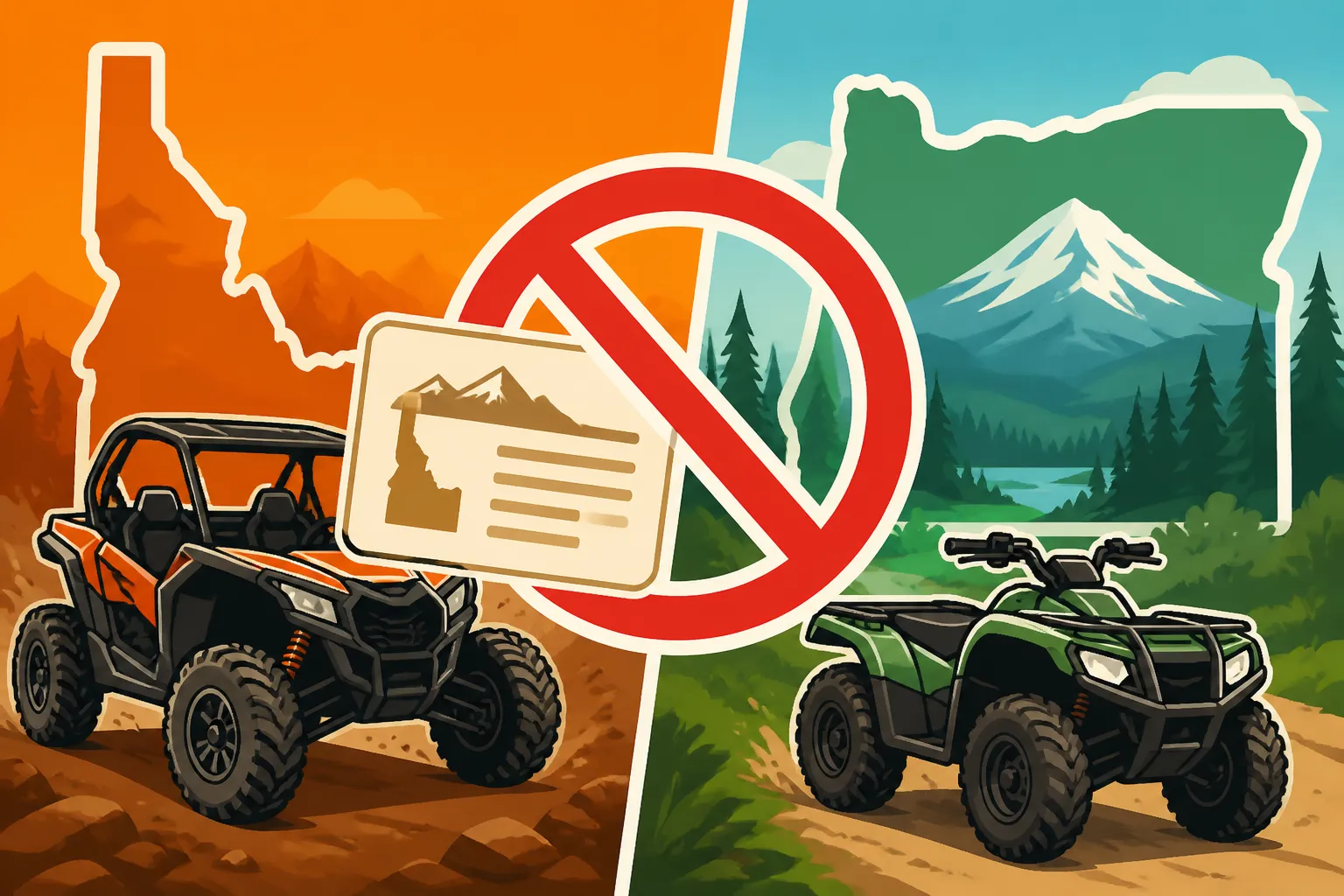
Why an Idaho permit is not accepted as an Oregon permit
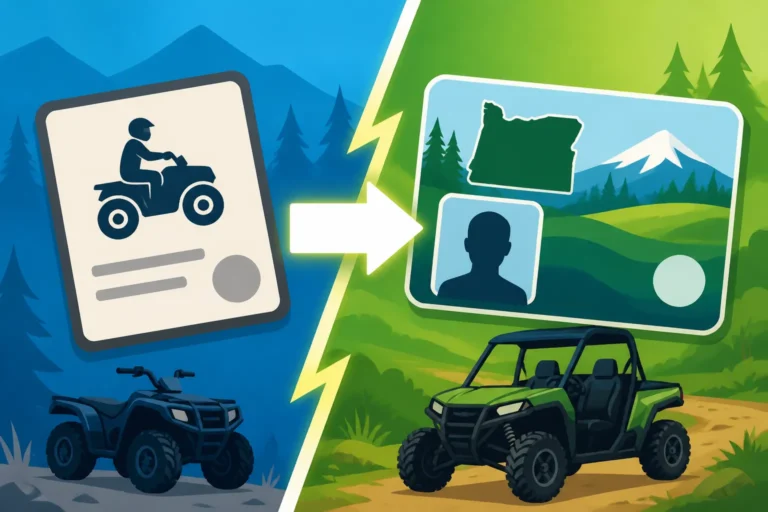
Oregon recognizes certain out-of-state OHV permits, but its reciprocity list is specific. Idaho is not on the list of states whose permits Oregon accepts in place of its own. That means an Idaho permit or sticker alone does not satisfy Oregon’s operating-permit requirement where an Oregon permit is required.
The key point is that reciprocity is not automatic between neighboring states. Each state decides which other states’ permits it will recognize. Oregon’s decision does not determine what Idaho accepts, and a permit that works in Idaho—or in another state—does not necessarily work in Oregon.
This is also why an Idaho vehicle registration should not be assumed to replace an Oregon OHV permit. Registration, an OHV permit and a safety card serve different purposes. A document that proves a machine is registered in Idaho is not necessarily proof that the machine has the permit required for riding in Oregon.
| What you have | What it generally proves | Does it replace Oregon’s ATV operating permit? |
|---|---|---|
| Idaho OHV permit or sticker | The machine has met Idaho’s applicable requirements | No, Idaho is not on Oregon’s permit reciprocity list |
| Idaho vehicle registration | The vehicle is registered under Idaho rules | Not by itself |
| Rider safety card | The rider has met a safety-education requirement recognized by the issuing program | It may be relevant to Oregon’s separate safety-card rules, but it is not a vehicle permit |
| Oregon ATV operating permit | The machine has the Oregon permit required for covered riding | Yes, when the permit and machine class fit the use |
Oregon’s rules are not a judgment about whether Idaho’s system is adequate. They are a state-specific requirement. If the state does not recognize another state’s permit, an Idaho rider needs to meet Oregon’s requirement separately.
For the broader list of states Oregon recognizes, see Oregon Permit Reciprocity List. The reason the permit list can differ from Oregon’s safety-card list is explained in Why Oregon’s Two Reciprocity Lists Differ. Those are separate reciprocity decisions, so checking one list does not answer the other question.
Permit reciprocity and safety-card reciprocity are separate
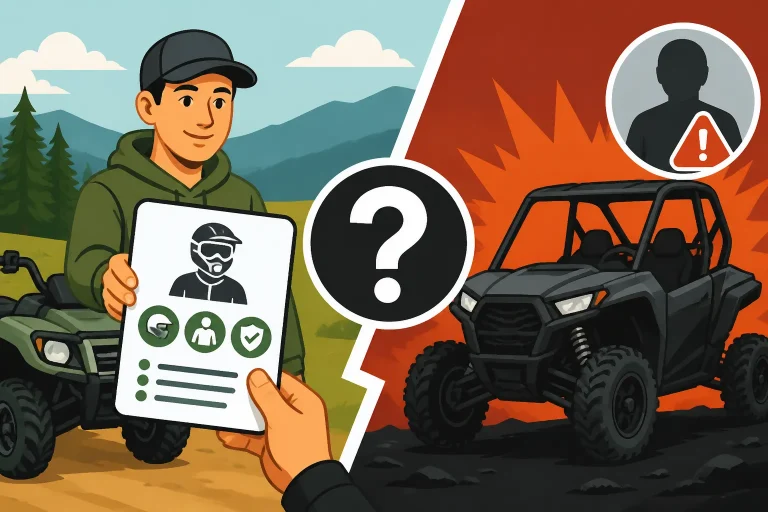
A common source of confusion is that Oregon has more than one kind of reciprocity. The operating permit applies to the off-highway vehicle. A safety card applies to the rider. The fact that Oregon may recognize a safety credential from a state does not mean it recognizes that state’s vehicle permit.
This distinction matters for visitors because a rider can have the right paperwork for one requirement and still be missing the other. An Idaho safety card, for example, should be checked against Oregon’s safety-card rules—not used as evidence that an Idaho vehicle permit is accepted. Conversely, purchasing an Oregon permit for the machine does not automatically satisfy any safety-card requirement that applies to the rider.
Oregon’s safety-card reciprocity list is not identical to its operating-permit reciprocity list. Idaho may be treated differently under those two systems. Read Does Oregon Accept an Out-of-State Safety Card? and Why Oregon Accepts an Idaho Safety Card for the safety-card question; neither changes the fact that an Idaho permit does not substitute for Oregon’s operating permit.
The practical takeaway is to check three things independently:
- The machine’s operating permit. Confirm whether Oregon requires its permit for the places you plan to ride. If the Idaho permit is your only permit, do not assume it is enough.
- The rider’s safety credential. Check Oregon’s safety-card requirements for the rider’s age and vehicle class, and whether Oregon accepts the rider’s existing card.
- The riding location’s access rules. A valid permit does not authorize riding on a closed trail, private land without permission, or a road where OHVs are not allowed.
If your trip involves a side-by-side, dirt bike, quad or another machine, confirm its Oregon class as well. Permit and safety rules can depend on the vehicle class and rider circumstances. Which Oregon ATV Class Your Machine Falls Into can help you identify the relevant category before you buy a permit or head out.
What Idaho riders should do before riding in Oregon
If your Idaho permit is not recognized, the straightforward solution is to get the Oregon operating permit required for your machine and intended riding. Do this before reaching the trailhead if possible. It avoids relying on a last-minute assumption about reciprocity, agent availability or connectivity.
Use the current Oregon permit information to confirm the purchase route and what documentation is needed. Oregon permits are available through authorized channels, which may include online purchase and permit agents. Requirements and availability can vary, so check the current instructions before setting out. The page on Where to Buy an Oregon ATV Permit covers the available options, while Buying an Oregon Permit Online focuses on the online route.
When arranging the permit, make sure the machine is classified correctly. A permit intended for one vehicle class should not be assumed to cover a different machine. Width, weight, seating and controls can affect how Oregon classifies an OHV. If you are unsure, review the class descriptions or ask the permitting authority before purchasing.
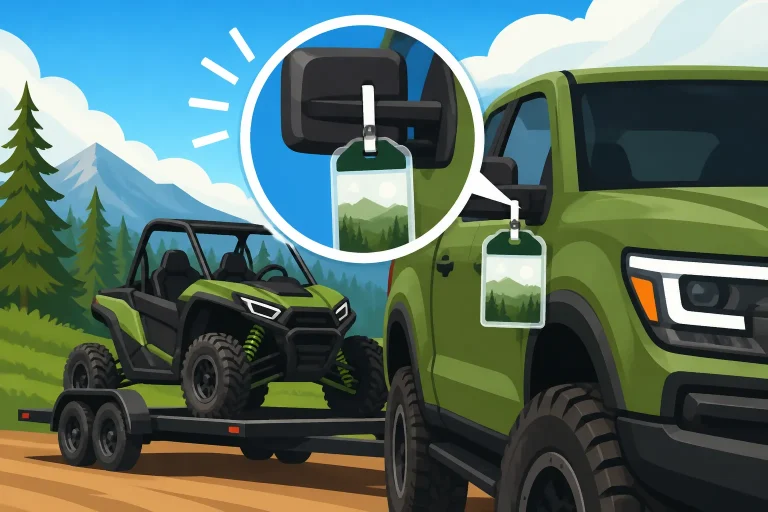
After obtaining the permit, follow the decal instructions. A permit is not useful if the required decal is missing, displayed incorrectly or too damaged to read. The placement rules depend on the vehicle type; see Oregon ATV Permit Decal Placement for an overview. Keep any supporting paperwork accessible during the ride, whether as a physical copy or in another form allowed by the current rules.
Before leaving, make a short trip checklist:
- Confirm that Oregon requires a permit for your planned riding area.
- Obtain the Oregon permit if your Idaho permit is not accepted.
- Check the vehicle class and the correct decal placement.
- Verify the rider’s separate safety-card obligations.
- Check for location-specific permits, parking or day-use fees.
- Review current closures and restrictions for the area.
- Carry the documents or records you may need to show during a stop.
The operating permit does not cover every cost or grant access to every site. Some riding areas have separate day-use or parking requirements, and access can be restricted for reasons such as seasonal closures or land-management rules. Check the specific riding area’s current information as well as Oregon’s statewide permit requirements.
If you are bringing a machine from Idaho that was recently purchased, also keep ownership and purchase records in order. Those documents can help establish who owns the machine, but they do not replace the Oregon operating permit. A title or bill of sale and a permit answer different questions. For paperwork after an out-of-state purchase, see Oregon Paperwork for a Machine Bought Out of State.
Common mistakes that lead to trouble
The most frequent mistake is assuming that a state border does not change the permit requirement. Proximity is not reciprocity: Idaho and Oregon have separate OHV systems, and Oregon’s recognition list controls what it accepts.
Another mistake is confusing an operating permit with proof of ownership. A title, registration document or bill of sale may help show that a machine belongs to you. None should be treated as a substitute for an Oregon permit unless Oregon’s current rules specifically say that document qualifies.
It is also easy to mix up the vehicle permit and rider safety card. A rider can have a valid safety card and still need the Oregon permit for the machine. A machine can have the Oregon permit while a rider still needs to meet a safety-education rule. Check each requirement separately rather than relying on a single sticker or card.
Finally, don’t assume a permit guarantees access to a particular trail or road. Permits address the vehicle’s authorization under the OHV system; land managers and local authorities can impose additional access rules. Confirm that the route is open to your type of machine and that you are allowed to ride there.
For Idaho riders, the safest plan is simple: treat the Idaho permit as valid for Idaho, then verify Oregon’s requirements independently. If Oregon does not list Idaho for permit reciprocity, obtain the Oregon permit before riding in places where it is required. Check the safety-card rules separately, and confirm the access conditions for the specific riding area.
Disclaimer
This article is for general informational purposes only and does not constitute professional advice. Laws, prices and regulations vary by location and change over time. Consult a qualified professional for guidance on your specific situation.