Oregon ATV Permit for a Machine on Private Land
It's a common question that trips up a lot of riders here in Oregon: "If I'm just riding on my own private property, why would I need an ATV permit?" You'd be surprised how often that seemingly straightforward assumption can lead to a roadside chat with a ranger or even a citation. This guide is going to clear up the confusion, explaining exactly when your private land use might trigger Oregon's ATV permit requirements and how to ensure you're always riding legally, even in your own backyard.
The Common Misconception About Private Land and Permits
Let's face it, when you own a piece of land, whether it's a sprawling ranch, a timber parcel, or just a few acres out in the country, there's an inherent feeling that what you do on it is your business. And for the most part, that's true! But the world of ATV and UTV operation in Oregon has some specific nuances that many folks overlook, particularly when it comes to permits.
Why Many Riders Assume They Don't Need One
The logic is sound on the surface: "It's my machine, I bought it, I own the land, I'm not on public trails, so why would the state care?" This line of thinking stems from the idea that permits are solely for public access areas, like the Oregon Dunes or the vast trail systems in the Tillamook State Forest. For street-legal vehicles, registration and plates are clearly tied to public road use, so it’s natural to extend that logic to off-highway vehicles. The expectation is that if you're not on a public highway, trail, or staging area, state oversight should be minimal.
Many riders purchase their machines with the primary intent of using them for work around their property, clearing brush, hauling feed, or simply enjoying a spin without ever planning to visit a designated public riding area. They might never even trailer their machine off their own land. In these truly isolated scenarios, the idea of needing a state-issued permit seems extraneous and, frankly, a bit overreaching.
When Oregon Does Require a Permit for Private Land
Here's where the rubber meets the road, or rather, where your tires might briefly touch public pavement or gravel. Oregon's ATV Operating Permit isn't just for riding on public trails; it's often required if your private land use involves accessing that land via public rights-of-way or if your property is contiguous with public riding areas. The key distinction lies in whether your machine ever traverses public property, even for a moment.
Think about how you get your machine to your private land. Do you have to cross a county gravel road? Drive a short distance down a Forest Service access road? Or perhaps your property shares a boundary with a popular OHV area, and a quick turn could put you on public land without realizing it. In these instances, the permit shifts from being optional to a legal requirement. It's less about where you primarily ride, and more about how you get there and the proximity to other open lands.
Understanding Oregon's ATV Permit System
To truly understand why a permit might be necessary, even on private land, it helps to grasp the underlying purpose of Oregon's permit system. It's not just a revenue generator; it's a fundamental component of how the state manages and funds its extensive off-highway vehicle programs.
What the Oregon ATV Permit Actually Is For
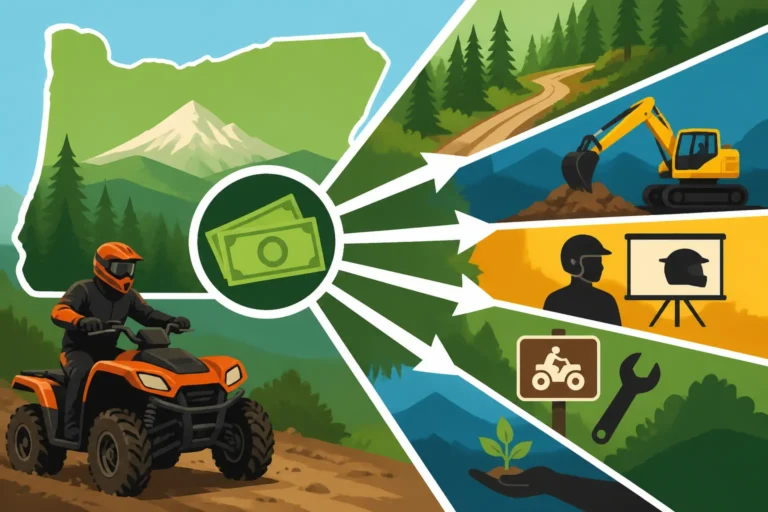
Unlike a car or truck registration, which is primarily about identifying ownership and allowing legal road use, an Oregon ATV Permit is an operating permit. It signals that your off-highway vehicle (OHV) is authorized for use on designated public OHV lands, trails, and access routes within the state. It's essentially your ticket to ride responsibly on areas maintained and managed by the Oregon Parks and Recreation Department (OPRD) and other land management agencies. You can learn more about [Where Oregon ATV Permit Money Goes] and how those funds directly support the trails and facilities many riders enjoy.
The permit system helps fund crucial services, including trail maintenance, signage, enforcement, and safety education programs. The [Oregon Parks and Recreation Department's Role] is central to this, overseeing the distribution of these funds to various projects across the state. So, even if you only use your machine to cross a public road to get to your private property, you're benefiting from the system that manages public access and safety, which is why the permit becomes relevant. It's a small contribution to the broader OHV infrastructure, even if your direct use of public trails is minimal.
The Different Classes of ATVs and UTVs
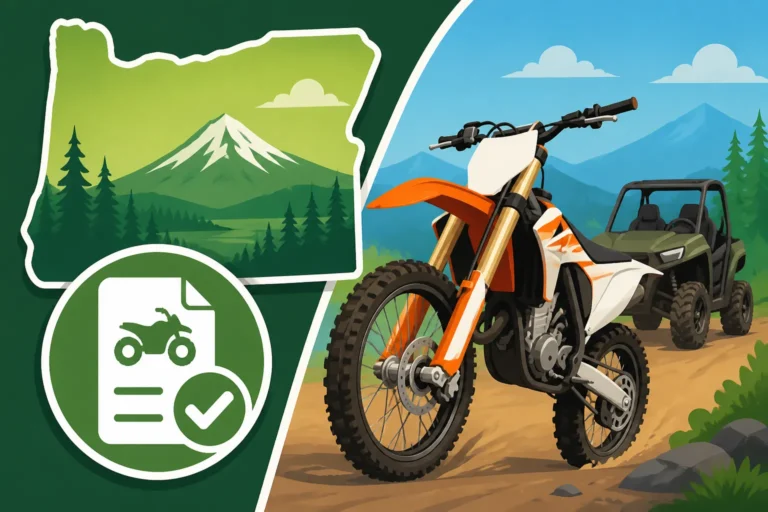
Oregon categorizes off-highway vehicles into four distinct classes: Class I (quads, usually under 50 inches wide), Class II (larger machines that can sometimes be street legal, like sand rails or dune buggies), Class III (off-road motorcycles), and Class IV (side-by-sides, or UTVs). You can dive deeper into [Oregon's Four ATV Classes Explained] to see where your machine fits.
The critical point here is that the requirement for an Oregon ATV Permit applies to all of these classes when they are operated on public lands or accessing private lands via public rights-of-way. The rules don't change based on whether you're on a dirt bike, a quad, or a big side-by-side. The state treats all these machines similarly under the permit system for public access, meaning the class of your machine doesn't exempt you from the permit requirement when those specific conditions are met, even if your primary riding is on private ground.
Scenarios Where a Permit Becomes Necessary (Even on Your Own Acreage)
It's easy to think your private property is an impenetrable bubble, but the lines between private and public land often blur in practical ways, making that permit a surprisingly frequent necessity.
Accessing Private Property Via Public Land or Roads
This is perhaps the most common scenario where private land users find themselves needing a permit. Imagine your beautiful forest parcel is nestled deep within a National Forest, and the only way to get your side-by-side to it is by driving a mile or two down a gravel Forest Service road. That Forest Service road is public land. Even if you don't intend to ride the trails in the National Forest, merely traversing that public access road with your machine requires an Oregon ATV Operating Permit.
Another classic example is if your property is split by a county road, or if you need to cross a paved state highway to move your machine from one part of your land to another. Oregon has specific [Oregon Rules for Crossing a State Highway] that often come with the expectation of a valid operating permit, even for short distances. Rangers and county deputies are aware of these scenarios, and you could be stopped and asked to show your permit and safety education card. It’s not about judging your intent; it’s about regulating the use of public infrastructure for all off-highway vehicles, regardless of their ultimate destination. Even a quick jaunt across the street to a neighbor's property, if it involves a public right-of-way, can necessitate that permit.
Riding Private Land Adjacent to Public OHV Areas
Oregon boasts some incredible public riding areas, like the Oregon Dunes National Recreation Area, the Tillamook State Forest, and Millican Valley. Many private land holdings are situated directly adjacent to, or even interspersed within, these popular areas. If your property borders public dunes or forest trails, the risk of inadvertently crossing onto public land is high. This can happen accidentally, especially if property lines aren't clearly marked, or if you're exploring the edges of your property and drift into public territory.
Enforcement officials frequently patrol the perimeters of these areas and often set up permit check stations at public staging areas. If you're riding near one of these boundaries, and a ranger observes you, they have the authority to ask for your permit, even if you claim you were "just on my land." The burden of proof to show you never touched public ground can be difficult in the field. Having a permit ensures you're covered, giving you peace of mind and avoiding a potential citation. This is especially true in areas like the coast, where private and public dune access can be very intermingled and boundaries can shift with the sand.
Lending or Renting Your Machine on Private Land
While the Oregon ATV permit is associated with the machine itself, other regulations come into play when lending or renting out your OHV, even for use on purely private land. Anyone operating an ATV, regardless of where they are riding (public or private land), must adhere to Oregon's ATV safety education card requirements, particularly for youth riders or those under 16. [Oregon's ATV Safety Education Card] is mandatory for most riders, and it's something different from the operating permit for the machine.
If you lend your machine to a friend or family member for use on your property, ensure they have their safety card, as an accident on your land could lead to questions about compliance. If you operate a business that rents ATVs for private land use, you would still need permits for your fleet if those machines ever touch public access points. Furthermore, for liability reasons, it's always wise to have clear documentation, such as a liability waiver, if you're allowing others to ride your machines on your property. Resources like LawDepot can provide customizable templates for things like equipment rental agreements or liability waivers, offering an extra layer of protection, even if an operating permit isn't strictly required for that specific, self-contained private use.
When an Oregon Permit Is NOT Required for Private Land Use
Now, let's talk about the scenarios where you truly don't need that permit. It's not a universal mandate, and there are legitimate circumstances where your private property use remains entirely outside the scope of the state's permitting requirements.
Truly Self-Contained Private Property Use
The clearest situation where an Oregon ATV Permit is not required is when your off-highway vehicle is operated exclusively on private property that has no physical connection or shared access with public lands or roads. Imagine a large, fenced parcel of land with no public road frontage, or property that is accessed via another private road or easement that is not open to public use. In these truly self-contained environments, where your ATV literally never touches a public right-of-way, trail, or staging area, the state permit isn't necessary.
This might be a large farm where the ATV is used solely within the property boundaries for agricultural tasks, or a remote hunting cabin accessed only by private logging roads that are strictly gated and not part of any public OHV system. The key is absolute isolation from public access points for your machine's operation. If you're confident your machine will never be used on, cross, or even approach public land or roads, then you're likely in the clear regarding the operating permit. However, always remember that even in these scenarios, rider safety cards and other general safety regulations may still apply to the operator.
Agricultural and Commercial Use on Private Property
Oregon law often provides specific exemptions for vehicles used primarily for agricultural or commercial purposes, particularly when their operation is confined to private land. For instance, a farmer using a utility ATV or UTV to move feed, inspect fences, or transport equipment across their own fields typically doesn't need an Oregon ATV permit, provided that machine never ventures onto public roads or trails. This aligns with the understanding that these vehicles are essential tools for a livelihood, rather than recreational machines intended for public trail systems.
Similarly, if a commercial entity, like a timber company or a large nursery, uses ATVs or UTVs exclusively on their private holdings for operational tasks, those machines are generally exempt from the operating permit requirement. These vehicles are often seen as part of industrial equipment rather than recreational OHVs in this context. It's worth noting that while the operating permit might not be needed, other state or federal regulations related to vehicle safety, equipment, and worker safety still apply. For more detailed information on specific exemptions, especially for farm use, you might look into [Oregon ATV Rules for a Farm Machine]. This distinction recognizes the practical realities of land management and commerce, separating it from recreational riding on shared public resources.
What You Need to Know to Stay Compliant
Navigating Oregon's ATV regulations can feel like a maze, but staying compliant, especially regarding private land use, comes down to understanding the nuances and having the right documentation.
Obtaining Your Oregon ATV Permit
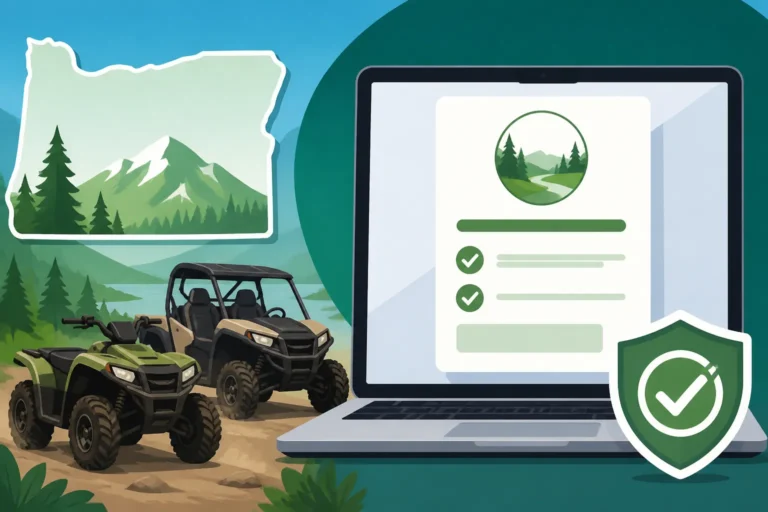
If, after considering your access routes and potential for public land interface, you determine that your machine does need an Oregon ATV permit, the process is quite straightforward. You can easily obtain one online, which is often the quickest method, or purchase it from one of the many authorized vendors across the state. The [Oregon ATV Permit Cost] is the same for all classes of machines, and it covers your vehicle for two full years from the month of purchase, making it a relatively infrequent task. You can find out [Where Oregon Sells ATV Permits] or opt for the convenience of [Buying an Oregon Permit Online] from the comfort of your home.
Once purchased, you'll receive a decal that needs to be affixed to your machine. There are specific guidelines for [Oregon Permit Decals and Where They Go], depending on whether you have a quad, dirt bike, side-by-side, or sand rail. Proper placement ensures visibility for enforcement officers and helps you avoid unnecessary stops. Remember, this permit is for the machine, allowing it to operate legally where required, but don't forget the separate requirement for the operator to have an Oregon ATV Safety Education Card.
Documenting Ownership and Use for Peace of Mind
Even in situations where an operating permit isn't strictly necessary for your private land use, having clear documentation for your ATV or UTV is always a good practice. This includes a robust bill of sale if you purchased the machine, or a title if you opted for one, even though [Titling an ATV in Oregon Is Optional]. These documents prove ownership, which is crucial for theft recovery, insurance claims, or if you ever decide to sell the machine.
Furthermore, if you allow others to ride your machines on your private property, or if your property serves as an event location, having liability waivers or agreements in place can offer significant legal protection. Services like LawDepot offer templates for various legal documents, including bills of sale, equipment leases, or personal liability waivers. Utilizing these resources can clarify terms of use, ownership, and responsibilities, which is invaluable whether you're dealing with friends, family, or commercial operations on your land. These documents provide peace of mind and can help avoid disputes down the road, acting as your personal legal safeguard.
Understanding Your Property Boundaries and Rights
A critical aspect of staying compliant, particularly when your private land borders public property or shared access routes, is having an unequivocal understanding of your property boundaries. Clearly marked property lines, especially in wooded or open areas, can prevent accidental trespass onto public lands that might require a permit, or vice versa. If you're unsure of your property lines, consider having a survey done, particularly if your land is adjacent to a National Forest, BLM land, or a State Park.
Beyond physical boundaries, it's also important to understand any easements or rights-of-way that cross your property or that you use to access your land. These can be public access easements, utility easements, or shared private roads. If there are any ambiguities or potential for disputes, seeking legal counsel or using platforms like LawDepot for drafting property agreements can help clarify usage rights and responsibilities. Staying informed about local county ordinances that might affect ATV use on private land, such as noise restrictions or hours of operation, also contributes to a harmonious relationship with your neighbors and local authorities. Knowledge of your property's legal and physical parameters is your best defense against unintended permit violations or legal issues.
Here's a quick comparison of common private land scenarios:
| Scenario Description | Oregon ATV Permit Required? | Key Consideration |
|---|---|---|
| Riding exclusively within a fully fenced, isolated private parcel | No | No public access points touched, zero public interaction |
| Accessing private land via a Forest Service road | Yes | Traversing public land, even briefly, to reach private property |
| Crossing a county gravel road to move machines between private fields | Yes | Use of public right-of-way, even for a short distance |
| Private land borders public OHV dunes or forest trails | Yes (strongly recommended) | High risk of inadvertent public land crossing, proximity to enforcement |
| Farmer using UTV on own fields for agriculture | No | Primary use is agricultural, not recreational, no public access |
| Lending a machine to a friend for private land use | Yes (if any public access) | Permit is for the machine, consider rider safety card for operator |
| Property accessed by a private, gated logging road (no public access) | No | If the road is truly private and not a public easement or bypass |
Disclaimer
This article is for general informational purposes only and does not constitute professional advice. Laws, prices and regulations vary by location and change over time. Consult a qualified professional for guidance on your specific situation.