Gravel County Roads and Oregon Riders
One of the biggest head-scratchers for Oregon ATV and UTV enthusiasts is figuring out where you can actually ride your machine legally, especially when it comes to those vast networks of gravel county roads. It’s not always as simple as seeing a dirt road and assuming it’s open season. Many riders have faced frustration, confusion, or even citations because the rules aren't always clear-cut, and they vary significantly from one corner of the state to another. This guide aims to clear up that confusion, diving deep into the specifics of riding your off-highway vehicle (OHV) on Oregon’s gravel county roads, helping you understand the regulations, prepare your machine, and ride responsibly.
The Nuance of Oregon's Road Rules for OHVs
Oregon's approach to OHV use on public roads can feel like a patchwork quilt, with different agencies and jurisdictions applying their own interpretations. While state highways generally have strict prohibitions, county roads operate under a different set of rules, often leaving riders in a gray area unless they do their homework.
Why County Roads Are Different from Highways
When we talk about "roads" in Oregon, it’s crucial to distinguish between state highways (those numbered routes like US 101 or State Route 34) and county roads. State highways fall under the jurisdiction of the Oregon Department of Transportation (ODOT) and generally prohibit OHV use, with only very specific, designated exceptions like the routes in [Oregon's Only Two Designated ATV Routes: Lakeside and Sumpter] and Sumpter. These exceptions are few and far between, requiring special legislative action and often extensive local planning.
County roads, on the other hand, are maintained by individual county road departments. This local control is key because it means that while state law sets a baseline for OHV operation, individual counties have the authority to create ordinances that either open or close their gravel roads to certain classes of OHVs. These are the roads that often crisscross our forests, lead to trailheads, or connect rural properties, and they are where most of the confusion arises for riders wanting to explore beyond designated trails. It’s not about state-level blanket permission, but rather a county-by-county decision-making process.
The Local Control Factor: County Ordinances
The biggest hurdle for riders wanting to use gravel county roads is the variability of local ordinances. What’s perfectly legal in one county might earn you a hefty fine just across the county line. A county’s board of commissioners or local governing body is responsible for passing ordinances that either permit or restrict OHV use on roads under their jurisdiction. This means you can't just assume; you must verify the specific rules for the county you plan to ride in.
These ordinances often specify which classes of OHVs are allowed, what equipment they must have, and sometimes even specific hours or seasons of operation. Imagine planning a trip to the scenic Wallowa Mountains, only to find that the beautiful gravel roads you hoped to connect trails with are entirely off-limits for your side-by-side, even though a similar road in another county allowed it. It's a common frustration, and it underscores the importance of checking with the county sheriff's office or county government website before you even load up your rig. Without this crucial research, you might inadvertently trespass or violate a local law you never knew existed.
Which Machines Can Even Consider Road Use?
Before you even think about checking county ordinances, you need to know if your machine can legally be operated on any public road in Oregon. The state categorizes OHVs into different classes, and these classifications dictate much of what’s permissible.
Oregon's Class System and Road Access
Oregon law defines four distinct classes of OHVs:
- Class I (Quads/ATVs): These are the traditional four-wheeled machines with a straddle seat and handlebars, typically under 50 inches wide.
- Class III (Off-Road Motorcycles): Dirt bikes, trials bikes, and other two-wheeled off-road machines.
- Class IV (Side-by-Sides/UTVs): Machines with non-straddle seating, a steering wheel, and often a roll cage, generally under 75 inches wide.
For these three classes (I, III, and IV), general road use is highly restricted. They are primarily designed for off-road trails and designated areas. While you might legally cross a highway at a right angle or travel a very short distance on a specific shoulder to access a trail, extensive travel on public roads, including most gravel county roads, is typically not allowed unless a specific local ordinance makes an exception. And even then, your machine will need to meet certain equipment requirements.
The Street-Legal Exception: Class II Machines
Here's where things get interesting, and often, where the confusion clears up for some riders. Oregon has a unique classification: [Oregon's Class II Under ORS 801.193]. Class II machines are defined as vehicles that are not designed primarily for off-road use but can be used off-road. Think of vehicles like a Jeep, a sand rail, a dune buggy, or even some larger custom-built UTVs that are primarily designed for general transportation but are also capable off-pavement.
The key distinction for Class II vehicles is that they can be made "street-legal" and registered with the Oregon DMV, just like a regular car or truck. This means they can be legally operated on any road open to the public, including gravel county roads, state highways, and city streets, provided they meet all the requirements for street legality. This includes having proper lights, turn signals, mirrors, a horn, and critically, liability insurance. For many riders dreaming of open-road exploration, especially on those scenic gravel routes, a street-legal Class II machine is the pathway to that freedom.
Navigating the Legalities: What Riders Need to Know
Even if a county does permit OHV use on its gravel roads, or if you have a street-legal Class II machine, there are still crucial legal and equipment requirements you must meet. Failing to adhere to these can result in citations, regardless of whether the road is open.
Essential Equipment for Road-Legal Operation
For any OHV operating on a public road in Oregon, whether it's a Class I, III, or IV on a specifically opened county road, or a street-legal Class II, certain equipment is non-negotiable.
- Lights: You'll need headlights, taillights, and brake lights that are fully functional and visible from appropriate distances. If riding at night, this becomes even more critical for your safety and the safety of others.
- Mirrors: At least one rearview mirror is typically required, positioned to give you a clear view of traffic behind you.
- Horn: A working horn is essential for signaling and alerting other road users.
- Turn Signals: For street-legal Class II vehicles, functional turn signals are mandatory, just like on a car. Some county ordinances for Class I, III, and IV might also require them.
- Fenders/Mudguards: To prevent throwing debris onto other vehicles or pedestrians.
- Spark Arrester: Every OHV operating on public land or roads in Oregon must have a U.S. Forest Service-approved spark arrester to prevent wildfires. This isn't just a trail rule; it applies to road use too. Don't overlook the [Oregon Spark Arrester Requirement].
- Sound Compliance: Your exhaust system must meet Oregon's sound limits. Riding a machine with a loud aftermarket exhaust could draw unwanted attention and potential fines, even on a gravel road. Check the [Oregon Sound Limits for ATVs] before you head out.
Many riders turn to aftermarket suppliers like SuperATV for accessories such as full windshields, roof kits, and fender flares that can make their side-by-sides more comfortable and compliant for gravel road use. These additions not only enhance the ride experience but often meet some of the necessary safety requirements for road operation.
Driver Licensing and Safety Education Requirements
Operating an OHV on any public road, even a gravel county road, means you need to be properly licensed and educated.
- Driver's License: If you're operating a street-legal Class II machine, you'll need a valid Oregon driver's license (or an equivalent valid license from another state). For Class I, III, or IV machines on specifically designated county roads, the rules can vary, but generally, a driver's license is also required if you are riding unsupervised.
- OHV Safety Education Card: Oregon law generally requires all OHV operators to carry a valid Oregon ATV Safety Education Card. This applies to most situations, whether you’re on a trail or a county road. There are specific exemptions, like if you hold a valid driver's license and are operating a Class II or Class IV vehicle (side-by-side) and are 16 years of age or older. However, for Class I and Class III, the card is almost always required, regardless of age or driver's license status. It’s always best to have one. Learn more about the [Oregon ATV Safety Card Requirements].
- Age Restrictions: There are minimum age requirements for operating OHVs, and these become even more stringent on public roads. For instance, a person under 16 operating a Class I, III, or IV OHV cannot do so on a public road, even if a county allows it, unless they are supervised and have an instructional permit. Always check the specific age guidelines, especially when riding with younger family members.
The Mandatory Insurance Element for Class II
This is a critical point that often catches riders off guard: [Insurance and Oregon Class II Machines] is mandatory if you plan to operate a Class II machine on public roads. Just like a car, your street-legal sand rail, dune buggy, or road-registered UTV must carry minimum liability insurance coverage. This protects you and others in the event of an accident.
For Class I, III, and IV machines that might be allowed on specific county roads through local ordinance, insurance is generally not required by state law for their off-road operation. However, given the risks of sharing roads with other vehicles, even on gravel, carrying some form of liability insurance is always a wise decision, even if it's not legally mandated for your particular machine or situation. Don't risk financial ruin for yourself or others; consider your options seriously.
Finding Open Gravel Roads: Research is Key
With the varying rules, how do you actually find those elusive gravel county roads where you can legally ride? It takes a bit of legwork, but it’s entirely doable.
Identifying Counties with Open Road Ordinances
Your first step should always be to identify which counties have ordinances that permit OHV use on their gravel roads. As of late, several counties in Oregon have embraced OHV tourism and access, passing ordinances that allow certain classes of machines on their county roads. For example, Union County has been a trailblazer in this regard, with ordinances opening up many of its gravel roads to OHVs, often connecting them to popular trail systems or scenic areas. Grant County is another example of a region where proactive efforts have been made to integrate OHV use into local road networks.
To find this information, you'll need to contact the county sheriff's office, the county road department, or check the county's official website. Look for terms like "OHV ordinance," "off-road vehicle use on county roads," or "motorized vehicle access plan." Don't be afraid to call and ask specific questions. While the staff might not be OHV experts, they should be able to direct you to the relevant ordinances or departments. A quick search for "Union County OHV ordinance" or "Grant County ATV roads" can often yield good starting points.
Reading Maps and Understanding Signage
Once you've identified a county that allows OHVs on its gravel roads, the next challenge is knowing which roads are open. Not all gravel roads are created equal.
- Official Maps: Many counties, especially those that have passed OHV ordinances, will publish maps detailing which roads are open, which are restricted, and which connect to designated trail systems. Forest Service maps, BLM maps, and even specialized OHV recreation maps are invaluable resources. These maps will often show different road classifications and access points.
- On-Site Signage: Always pay attention to physical signs on the ground. A road might appear open on a map, but a "No OHV" or "Road Closed" sign at the entrance takes precedence. Signs can indicate seasonal closures, [Oregon Rules for Riding a Closed Road], active logging operations, or environmental protections. Sometimes, these signs might be small or easily missed, especially after a long ride, so keep your eyes peeled.
- Road Numbers: Forest Service roads are often identified by numbers (e.g., "Forest Road 1010"). Understanding how to read these numbers and cross-referencing them with current forest closure orders or maps is crucial. A road might be open for passenger vehicles but still restricted for OHVs.
- Private vs. Public: Be acutely aware of property lines. Just because a gravel road seems public doesn't mean it stays public forever. It's easy to accidentally stray onto private timberland or farm access roads. When in doubt, turn around.
Remember, conditions can change rapidly. Active logging, seasonal closures for wildlife, or unexpected weather events can all impact road access. Always check for current conditions and closures before heading out.
Safe and Responsible Riding on Gravel County Roads
Riding on gravel county roads presents a different set of challenges and responsibilities compared to riding on dedicated trails. Safety and respect for other road users and the environment are paramount.
Sharing the Road with Other Traffic
Gravel county roads, especially in rural or forested areas, are often shared by a diverse mix of users: local residents in pickups, logging trucks, hikers, cyclists, horseback riders, and even agricultural machinery. This requires a heightened level of awareness and caution.
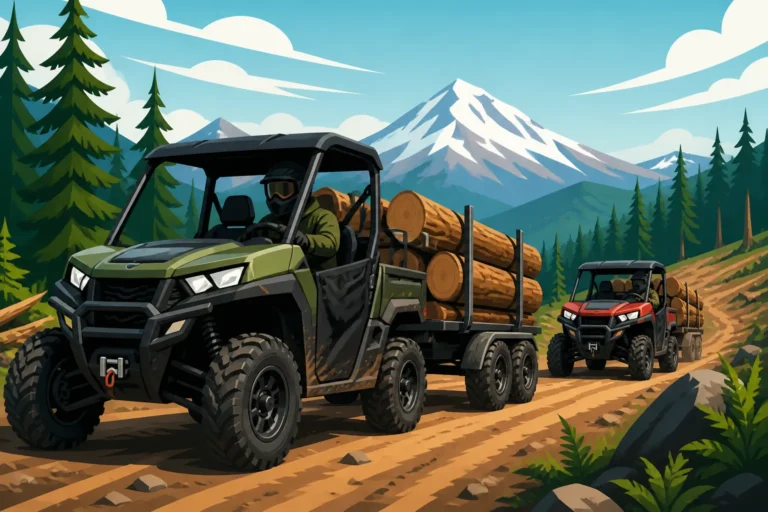
- Logging Trucks: These are perhaps the biggest concern. Logging trucks are heavy, fast, and often have blind spots. They also kick up a tremendous amount of dust. If you encounter one, move over as far as safely possible, slow down, and allow them ample room. Assume they might not see you. It's a key part of [Sharing a Gravel Road With Log Trucks].
- Dust and Visibility: Gravel roads are notorious for dust, which can severely reduce visibility for you and oncoming traffic. Reduce your speed, increase your following distance, and consider riding with your lights on (even during the day) to make yourself more visible.
- Blind Corners and Hills: Treat every blind corner and crest of a hill with extreme caution. Expect oncoming traffic or other users. Slow down significantly and be prepared to stop. A good practice is to stay to the far right of the road, even if it feels empty.
- Yielding: Always yield to larger vehicles and non-motorized users. A polite wave and a nod go a long way in fostering good relationships between OHV riders and other community members.
Respecting Property and the Environment
Part of being a responsible rider is respecting the land, whether it's public or private, and minimizing your impact.
- Stay on Designated Roads: Even on open gravel roads, resist the temptation to venture off into the ditches, shoulders, or adjacent fields. This can cause environmental damage, lead to erosion, or result in trespassing on private property. Stick to the established road surface.
- Private Property: Many gravel roads may pass through or border private land. Always assume it's private unless clearly marked as public. Do not open gates unless explicitly allowed, and if you do, close them behind you. Never litter.
- Fire Season: Oregon experiences severe fire seasons. Be aware of any fire restrictions in place, which can range from prohibiting campfires to outright closures of forest lands. Your spark arrester is crucial, but even a hot exhaust can ignite dry grass. Always check for [Oregon Fire Season and Trail Access] updates.
- Noise and Courtesy: While your machine may meet sound limits, be mindful of noise, especially near homes, campsites, or other areas where people might be seeking peace and quiet. Slow down and minimize throttle input when passing these areas.
Gear and Preparedness for Road Riding
While your standard trail gear is a great start, riding on gravel roads means you should also consider some additional items for safety and compliance.
- Helmets: Helmets are legally required for all OHV riders under 18 in Oregon, and highly recommended for everyone, regardless of age. On roads, where speeds can be higher and collision risks with other vehicles exist, a DOT-approved helmet is an absolute must for everyone in your party. Get familiar with the [Oregon Helmet Law for Adults].
- Visibility: Wearing bright, high-contrast clothing can significantly increase your visibility to other drivers, especially on dusty roads or in changing light conditions. Some riders also add reflective tape to their machines.
- Basic Tool Kit and Spares: A flat tire or minor mechanical issue on a remote gravel road can quickly turn a fun day into a miserable one. Carry a basic tool kit, tire repair kit, air pump, and perhaps a spare belt or spark plug.
- Navigation: GPS devices with pre-loaded maps or physical maps are essential. Cell service can be spotty or non-existent in many remote areas. Don't rely solely on your phone.
- First-Aid Kit: Always have a well-stocked first-aid kit for emergencies.
- Water and Snacks: Staying hydrated and fueled is crucial, especially on longer rides.
- Permit and Safety Card: Always carry your valid [Oregon ATV Permit Cost] and your Oregon ATV Safety Education Card. Rangers or law enforcement may ask to see them.
OHV Class and Road Access Summary
Here’s a quick overview of how Oregon’s OHV classes generally relate to gravel county road access, keeping in mind that local county ordinances are the ultimate authority for Classes I, III, and IV.
| OHV Class | Primary Use | General Road Access (State Law) | Specific County Road Access (Ordinance Dependent) | Street-Legal Capable | Mandatory Insurance (State) |
|---|---|---|---|---|---|
| Class I | Off-Road ATV | Very Limited (Crossing/Shoulder) | Yes, if county allows (equipment rules apply) | No | No |
| Class II | On/Off-Road | Yes, if street-legal | Yes, if street-legal (all roads) | Yes | Yes |
| Class III | Off-Road Dirt Bike | Very Limited (Crossing/Shoulder) | Yes, if county allows (equipment rules apply) | No | No |
| Class IV | Off-Road UTV | Very Limited (Crossing/Shoulder) | Yes, if county allows (equipment rules apply) | No | No |
Note: This table summarizes general state law; specific county ordinances can modify access for Classes I, III, and IV on their local gravel roads. Always verify local rules.
Oregon’s gravel county roads offer incredible opportunities for exploration and connection to nature. However, navigating the rules requires diligence and a commitment to safe, responsible riding. By understanding the distinctions between road types, checking local ordinances, properly equipping your machine, and riding with respect for others and the environment, you can enjoy these routes without unwelcome surprises. So do your homework, prepare your rig, and hit those scenic gravel roads with confidence!
Disclaimer
This article is for general informational purposes only and does not constitute professional advice. Laws, prices and regulations vary by location and change over time. Consult a qualified professional for guidance on your specific situation.