Why a Class IV Cannot Get Oregon Plates
It's incredibly frustrating, isn't it? You've got a powerful, capable side-by-side, maybe a UTV that feels almost like a small car, and you dream of cruising it down a quiet county road to the trailhead, or even just across town to grab supplies. But then you hit the wall of Oregon's vehicle laws, and suddenly your dream of a street-legal Class IV machine seems impossible. This guide is here to unravel that mystery, explaining in detail why your beloved Class IV cannot get Oregon plates, and what that means for how you can use your machine.
Understanding Oregon's ATV Classification System
Before we can dive into why your Class IV side-by-side or UTV can't be plated for street use in Oregon, we need to understand the very foundation of how the state categorizes these machines. Oregon doesn't just see an "ATV"; it sees specific classes, each with its own set of rules, definitions, and, crucially, limitations regarding road access. This classification system is the key to unlocking the street-legal puzzle, and unfortunately for Class IV owners, it's where the path to plating takes a hard turn.
The Basic Four Classes Defined by Oregon Law
Oregon's system breaks down off-highway vehicles (OHVs) into four distinct classes: Class I, Class II, Class III, and Class IV. Each class is defined by specific physical characteristics, like width, weight, seating, and steering. This isn't just bureaucratic jargon; these definitions dictate everything from where you can ride to what kind of permit you need, and most importantly for our discussion, whether your machine has any hope of ever seeing a license plate. These distinctions are absolutely critical. You might think all off-road vehicles are created equal in the eyes of the law, but in Oregon, that's simply not the case. Understanding these nuances is the first step toward understanding the limitations.
For instance, [Oregon's Four ATV Classes Explained] gives a great overview of this system. While they all share the commonality of being designed for off-highway use, their specific designs lead to vastly different legal treatments when it comes to paved roads. It's like trying to fit a square peg in a round hole – the law has very specific holes, and not all machines are designed to fit them for on-road travel.
Where Class IV Stands Apart
Class IV machines, often referred to as UTVs or side-by-sides, are the largest and typically the most vehicle-like of the off-highway classes. Oregon law defines them primarily by their bench or bucket seating (not a straddle seat like a quad or dirt bike), a steering wheel (not handlebars), and specific dimensions. They can be up to 75 inches wide and have a dry weight limit of 3,500 pounds. These are substantial machines, designed for hauling, recreation, and navigating challenging off-road terrain, often with multiple passengers.
Because of these characteristics, Class IV machines fundamentally differ from Class I ATVs, which have straddle seats and handlebars, and are limited to 50 inches in width. They even differ significantly from Class III off-road motorcycles, which are two-wheeled. The very design that makes a Class IV machine so versatile and comfortable off-road is precisely what sets it apart from vehicles that can be plated. Their size, weight, and passenger capacity are geared towards rugged trails and open country, not the precise, compact, and safety-regulated environment of public roadways. [Oregon's Class IV Side-by-Sides Under 75 Inches] delves into these specific dimensional requirements.
The Oregon DMV's Role and the "Street Legal" Standard
The Oregon Department of Motor Vehicles (DMV) is the agency responsible for titling and registering vehicles for use on public roads. Their role is to ensure that vehicles meet stringent safety, emissions, and classification standards before they can legally share the asphalt with cars, trucks, and motorcycles. For off-highway vehicles, the vast majority simply don't make the cut, and this is especially true for Class IV machines.
Why Oregon's DMV Does Not Register ATVs for Road Use
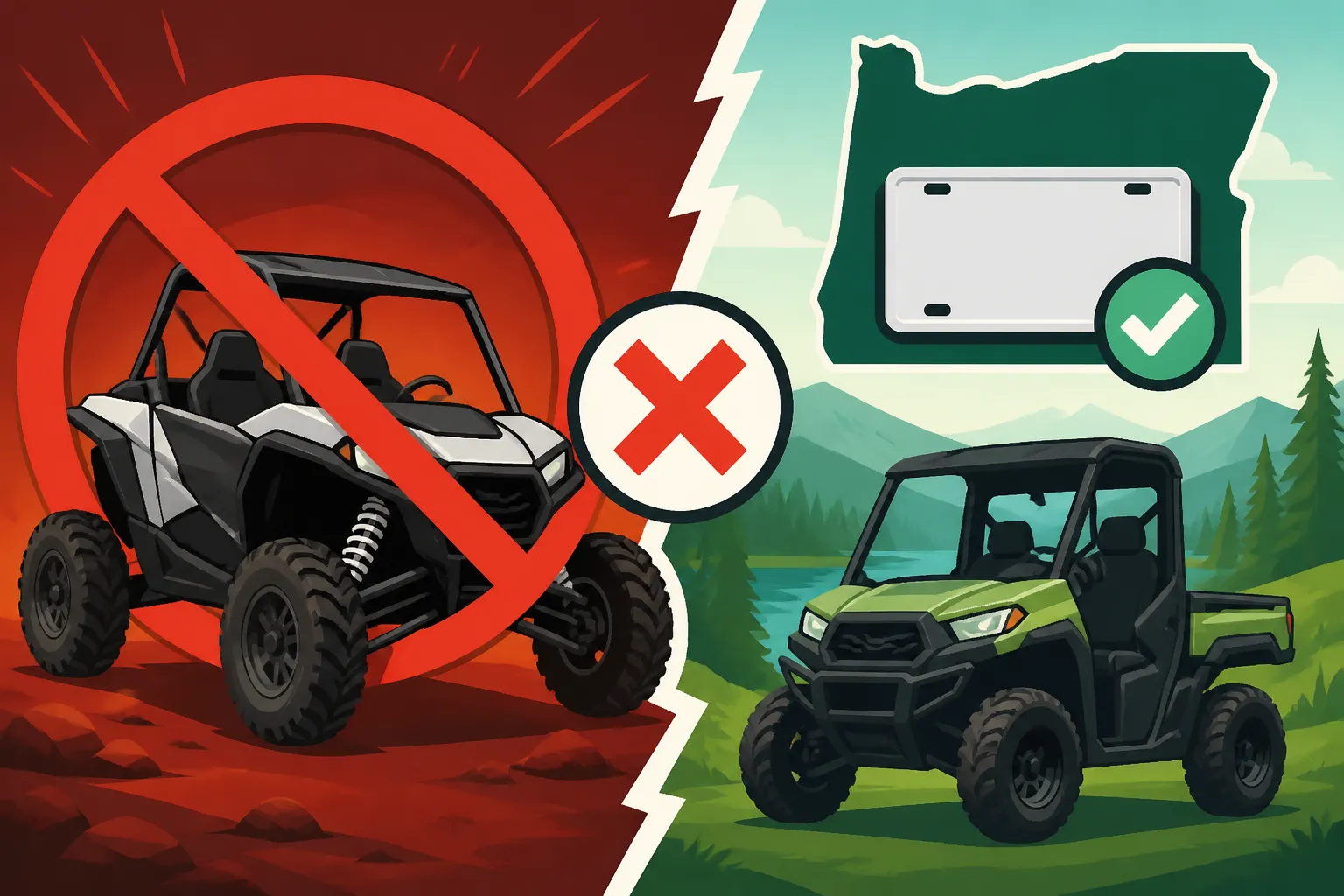
Generally speaking, Oregon's DMV does not register any off-highway vehicle, including Class I quads, Class III dirt bikes, or Class IV side-by-sides, for general road use. These machines are designed, manufactured, and regulated as off-road vehicles. They lack the federally mandated safety features found on street-legal vehicles, such as specific types of headlights, taillights, turn signals, mirrors, windshields (with wipers), and crush-zone engineering that are standard for cars and trucks.
The problem isn't just about adding a few accessories. It’s about the fundamental design and certification of the vehicle. A manufacturer produces a Class IV side-by-side as an off-road machine, not a street-legal one. Retrofitting a side-by-side with turn signals or a horn, while helpful for trail riding, does not magically transform it into a vehicle that meets federal motor vehicle safety standards (FMVSS) for highway operation. This is why [Why Oregon's DMV Does Not Register ATVs] is a crucial piece of the puzzle; the DMV’s mandate is strictly for on-road vehicle compliance.
The Singular Exception: Oregon's Class II Machines
Here's where the waters get a little murky and often lead to confusion. There is an exception in Oregon's OHV classification that allows a very specific type of off-highway vehicle to be titled and registered for street use: the Class II machine. However, Class II machines are explicitly defined as "vehicles that weigh 8,000 pounds or less and are 80 inches or less in width, and operate on three or more tires." This definition, while broad enough to potentially include some utility vehicles or custom-built buggies, is not what typically applies to most modern, factory-built side-by-sides or UTVs that fall under Class IV.
The key difference for Class II vehicles is their original design or purpose. Many Class II vehicles are modified from street-legal vehicles or are custom builds that can be engineered to meet the necessary safety standards for on-road use. This is a stark contrast to a factory-built Class IV side-by-side, which is explicitly classified as an off-highway recreational vehicle from the ground up. So, while you might see a dune buggy or a highly customized off-road truck with a license plate in Oregon, it's almost certainly classified as a Class II, not a Class IV. [Oregon's Class II Under ORS 801.193] explains this exception in more detail, highlighting just how narrow it is.
The Incompatibility of Class IV Design and Road Regulations
The inherent design of a Class IV machine, while perfect for hitting the dunes or conquering a rugged mountain trail, fundamentally clashes with the requirements for street legality in Oregon. It’s not just about a missing turn signal; it’s about deep-seated differences in safety engineering, emissions, and how vehicles are expected to perform and protect occupants on public roads.
Safety Features Not Meeting On-Road Standards
Think about what makes a car safe on the highway: crumple zones, airbags, reinforced cabin structures, specific lighting patterns, and robust braking systems designed for high-speed stops on asphalt. Most Class IV side-by-sides simply aren't built to these standards. While many now come with seat belts, roll cages (often enhanced with aftermarket components from companies like SuperATV for extreme off-road use), and even doors, these features are primarily designed to protect occupants during off-road rollovers or collisions with natural obstacles, not high-speed impacts with other highway vehicles.
For instance, the lighting on a typical side-by-side, even with powerful LED upgrades, often doesn't meet the specific brightness, beam pattern, and mounting height requirements for street-legal headlights and taillights. There are also requirements for side markers, reflectors, and brake lights that are standard on road-going vehicles but not typically present or compliant on an off-road Class IV. This is a significant hurdle, as modifying these systems to meet every single state and federal specification can be incredibly complex, if not impossible, given the vehicle's base design. [Oregon Street Legal UTV Requirements] goes into the nitty-gritty of what a vehicle needs to pass muster.
Emissions and Noise Regulations
Another significant factor is emissions and noise. Street-legal vehicles must meet strict federal and state emissions standards, which are continuously updated. Off-highway vehicles, while also having some environmental regulations (like spark arresters), generally operate under less stringent emissions rules than their on-road counterparts. It's often difficult, if not impossible, to modify an off-road engine to meet these road-vehicle emissions standards without completely overhauling the powertrain.
Similarly, noise regulations for on-road vehicles are typically stricter, especially in urban or residential areas. While an aftermarket exhaust from a brand like SuperATV might enhance performance and sound for off-road enthusiasts, it would likely push a Class IV machine far beyond acceptable noise limits for street use, leading to potential fines and citations. These environmental and noise considerations are often overlooked by owners, but they are critical components of a vehicle's street-legal status. [Oregon Sound Limits for ATVs] highlights these rules for off-road use, but on-road limits are even tighter.
What "No Plates" Means for Class IV Owners
The inability to get an Oregon license plate for your Class IV machine has very real, practical implications for how and where you can operate it. It means your opportunities for casual road travel are severely restricted, and you'll always need to think ahead about transportation.
Restricted Road Access and Transport Challenges
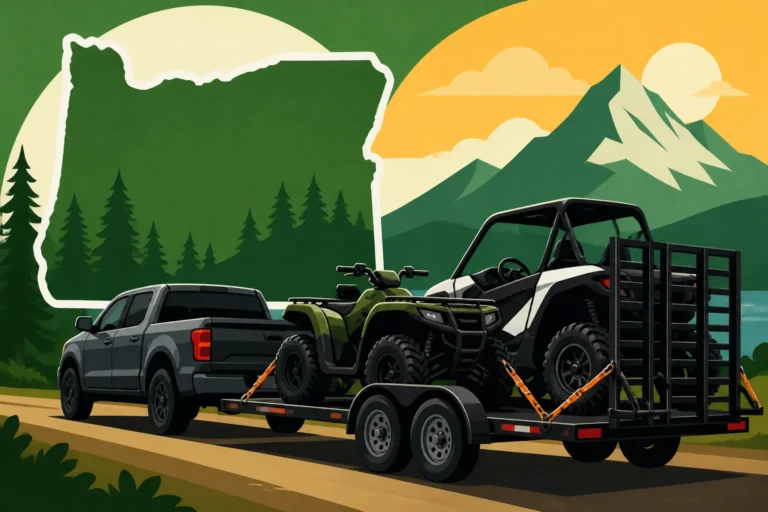
Without plates, your Class IV machine is largely confined to designated off-road areas, private property (with permission), and very specific, limited highway access routes designated by Oregon counties. This means you can't just hop on a paved road to get from your house to the closest trail system. You'll almost always need a truck and trailer to transport your machine to and from riding areas like the Oregon Dunes or the Tillamook State Forest. This adds significant time, expense, and logistical planning to every outing.
Imagine wanting to spend a weekend at Browns Camp in the Tillamook State Forest. If you live an hour away, you can't simply ride your side-by-side there. You'll need to load it onto a trailer, drive your truck, and then unload it at the staging area. This is a common reality for Class IV owners, and it's a major reason why many invest in robust trailers and tow vehicles. The convenience of a quick road ride is simply not an option for these powerful machines in most places.
Exceptions for Limited Road Use
Oregon does have extremely limited exceptions where off-highway vehicles, including Class IV machines, might legally operate on a public road. These are typically confined to:
- Crossing a Highway: You can cross a highway at approximately a 90-degree angle to get from one section of an OHV area to another, provided it's safe to do so and there's no other reasonable way. You must yield to all traffic.
- Designated Highway Access Routes: As of this writing, there are only two designated highway access routes in Oregon: Lakeside and Sumpter. These are very specific, short routes that allow OHVs, including Class IVs, to ride through a town to access trails or other services. These are rare and apply only to specific geographic areas. [Oregon's Only Two Designated ATV Routes: Lakeside and Sumpter] details these unique opportunities.
- Forest Service and County Roads (with restrictions): Some forest service roads and unmaintained gravel county roads may be open to OHV use, but this is highly variable, depends on local ordinances and signage, and often comes with its own set of rules regarding speed, time of day, and safety equipment. These are not considered general public roads for plated vehicles.
It's critical to understand that these are exceptions, not the rule. The default for a Class IV is no road use. When in doubt, always assume a road is closed to your unplated machine unless explicitly signed otherwise, or you are on one of the very few designated routes. Getting caught on an unauthorized road can lead to citations and fines under [Oregon Fines for Riding an Unopened Road].
The Importance of an Oregon ATV Operating Permit
Even though your Class IV machine can't get license plates, it absolutely does need an Oregon ATV Operating Permit decal to be ridden on public lands designated for OHV use. This decal signifies that you've paid the necessary fees that contribute to maintaining trails, staging areas, and OHV programs across the state. This is separate from registration for road use; it's an operating permit for off-highway recreation.
The permit is mandatory for all classes of ATVs, including Class IV side-by-sides, when riding on public land. It's a small but vital decal that gets affixed to the right side of your machine. Without it, you could face penalties even if you're on an otherwise legal trail. Think of it as your passport for Oregon's vast network of off-road adventures. You can easily buy an Oregon permit online or from one of the many permit agents across the state. [Oregon's ATV Operating Permit] explains this requirement in full detail.
Alternatives and Best Practices for Class IV Owners
Since plating your Class IV machine isn't an option, focusing on best practices for off-road use and efficient transportation becomes paramount. This means understanding how to get your machine to the fun places, what to do when you need to cross a road, and how to maximize its capabilities within the legal framework.
Smart Transportation Solutions
Given that your Class IV machine will spend most of its life off-road, investing in reliable transportation is key. This almost always means a sturdy trailer and a capable tow vehicle. Look for trailers designed to handle the weight and dimensions of your specific side-by-side, with good suspension and tie-down points.
When trailering, ensure your machine is securely fastened to prevent shifting during transit. Using multiple ratchet straps, even aftermarket tie-downs from a company like SuperATV, is a wise move. Always check your trailer lights and tire pressure before heading out. For longer trips, consider a spare tire for both your tow vehicle and trailer. Many popular riding areas in Oregon, like the Dunes, require you to trailer your machine to a staging area before you can begin your ride. Planning your route and knowing where staging areas are located (and if there are any associated day-use fees) will make your trip much smoother.
| Class Type | Steering | Seating | Width Limit | Dry Weight Limit | On-Road Plating? |
|---|---|---|---|---|---|
| Class I | Handlebars | Straddle | 50 inches | 1,200 pounds | No |
| Class II | Wheel or Bars | Bench, Bucket, or Pad | 80 inches | 8,000 pounds | Yes (meets other criteria) |
| Class III | Handlebars | Straddle | N/A | N/A | No |
| Class IV | Steering Wheel | Bench or Bucket | 75 inches | 3,500 pounds | No |
Navigating Road Crossings and Designated Routes
When you encounter a paved road while riding off-road, remember the rules for crossing a highway. Always stop, look both ways, and yield to any oncoming traffic. Cross at a 90-degree angle, making it as quick and direct as possible. Do not attempt to ride down the paved road, even for a short distance, unless it is a specifically designated OHV route.
For those rare designated routes, like in Lakeside or Sumpter, familiarize yourself with the specific ordinances and signage. These routes often have speed limits, time restrictions, or other local rules you must follow. A quick call to the local sheriff's office or the Oregon Parks and Recreation Department's OHV program can often clarify rules for specific areas. The goal is always to minimize your time on paved surfaces and prioritize safety for yourself and other road users. [Oregon Rules for Crossing a State Highway] provides essential guidelines.
Enhancing Your Off-Road Experience Legally
Since your Class IV is an off-road beast, focus on making it the best it can be for its intended purpose. Many owners enhance their machines with a variety of aftermarket parts to improve performance, safety, and comfort on the trails. This might include:
- Tires and Wheels: Upgrading to more aggressive tires for better traction in specific terrain (sand, mud, rocks).
- Suspension: Adding lift kits, stronger shocks, or A-arms to improve ground clearance and ride quality.
- Protection: Skid plates, rock sliders, and stronger bumpers to protect vital components from trail hazards.
- Lighting: Auxiliary light bars and pods for night riding, though remember these are for off-road use only and may need to be covered on public roads.
- Storage: Cargo boxes, racks, and tie-down systems to carry gear safely.
Companies like SuperATV offer a vast array of these types of accessories, designed to push the boundaries of off-road performance and durability. While these modifications won't make your Class IV street-legal, they will certainly make your off-road adventures safer and more enjoyable. Remember to always ride responsibly, stay on marked trails, and respect the environment and other users. This means having an [Oregon ATV Safety Education Card], which is mandatory for many riders.
In conclusion, while it can be disappointing to learn that your powerful Class IV side-by-side or UTV cannot get Oregon plates for general street use, understanding the underlying reasons is crucial. Oregon's classification system and the strict requirements for street-legal vehicles mean that these machines are simply not designed or regulated for highway travel. Embrace its true purpose as an off-road champion, equip it well, and enjoy the incredible trails and dunes that Oregon has to offer!
Disclaimer
This article is for general informational purposes only and does not constitute professional advice. Laws, prices and regulations vary by location and change over time. Consult a qualified professional for guidance on your specific situation.