Can You Plate a Side-by-Side in Oregon?
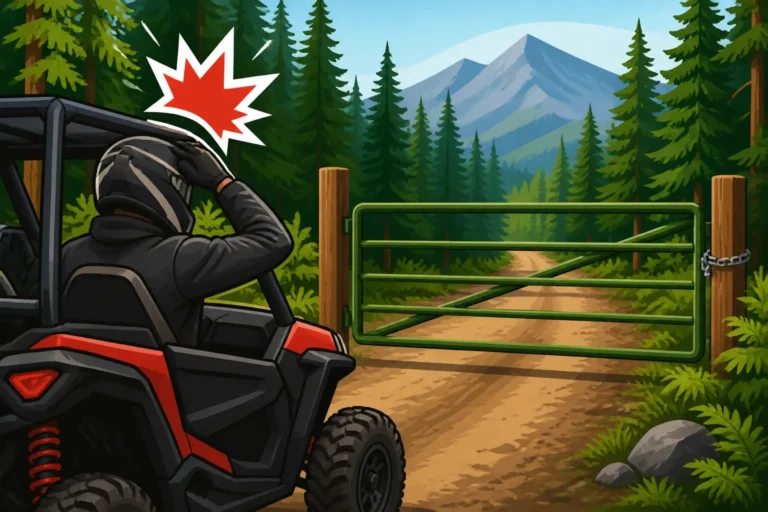
You've just bought a shiny new side-by-side, or perhaps you're eyeing one, and the dream is clear: you want to zip from your campsite to the local store for ice, or maybe even commute a short distance on paved roads. The open road calls, but the reality of Oregon's vehicle laws often brings a swift dose of confusion and frustration, especially when it comes to plating your beloved UTV. This guide is here to untangle the complexities of whether you can truly get a license plate for your side-by-side in Oregon and what your real options are for legal road use.
Understanding Oregon's ATV Classification System for Road Use
Oregon has a very specific way of classifying off-highway vehicles (OHVs), and understanding these distinctions is the absolute first step in figuring out if your side-by-side can ever wear a license plate. It's not as simple as wanting to put a plate on it; the vehicle itself has to meet certain fundamental criteria, and most recreational side-by-sides just don't fit the mold.
What Oregon Defines as a Side-by-Side (Class IV)
In Oregon, most modern side-by-sides, sometimes called UTVs or recreational off-highway vehicles (ROVs), fall squarely into what the state calls a Class IV All-Terrain Vehicle. This classification isn't just a label; it comes with a specific set of characteristics that largely dictate its legal use. A Class IV machine is generally characterized by a steering wheel for control, non-straddle seating, meaning you sit side-by-side (hence the name!) on a bench or bucket seat, and it's designed to be ridden by more than one person. Think of your typical Polaris RZR, Can-Am Maverick, or Yamaha Wolverine – these are prime examples of Class IV machines.
The state also sets limits on their physical dimensions. To be a Class IV, the machine must have a dry weight of 3,500 pounds or less and be 75 inches or less in width. While some aftermarket accessories from companies like SuperATV can enhance their performance or comfort, they don't change the fundamental classification of the machine itself. This distinction is paramount because the entire framework for legal road use in Oregon hinges on how your machine is classified under the law. Without understanding this, you're building your expectations on shaky ground. [Oregon's Four ATV Classes Explained] goes into further detail about all the classes.
Why Most Class IV Machines Cannot Be Plated
Here’s where the rubber meets the road, or rather, where it doesn't. The vast majority of Class IV side-by-sides cannot be legally plated for general on-road use in Oregon. The reason for this isn't arbitrary; it's rooted in how these vehicles are manufactured and certified. Recreational side-by-sides are designed and built specifically for off-highway use. They are not manufactured to meet the rigorous Federal Motor Vehicle Safety Standards (FMVSS) that apply to vehicles intended for public roads, such as cars, trucks, or motorcycles. These standards cover everything from crash-worthiness and emissions to lighting, braking, and tire specifications.
Because a Class IV side-by-side doesn't meet these federal standards from the factory, the Oregon Department of Motor Vehicles (DMV) simply won't issue it a license plate. It's not a matter of a missing headlight or turn signal; it's a fundamental design and certification issue. You can bolt on all the street-legal accessories you want – mirrors, horns, turn signals – but these modifications don't magically transform a non-compliant vehicle into one that meets federal safety standards. Trying to modify a recreational UTV to meet every single FMVSS requirement would be astronomically expensive, if not practically impossible, for the average owner. This is precisely [Why a Class IV Cannot Get Oregon Plates]. The state classifies these machines for what they are: off-highway vehicles, and that's how they are treated when it comes to plating.
The Rare Exception: Class II Street-Legal Vehicles
Now, before you lose all hope, there's a nuanced exception in Oregon's classification system that can allow certain vehicles to be street-legal and plated. These are Class II All-Terrain Vehicles. This is where the term "side-by-side" gets a bit murky because while a Class II machine might have side-by-side seating and a steering wheel, it is fundamentally different from a recreational Class IV UTV.
Oregon's statutes define a Class II ATV as "any motor vehicle that is 65 inches or less in width, has a dry weight of 2,500 pounds or less, travels on four or more pneumatic tires, and is designed for or capable of travel over unimproved terrain." Critically, it also explicitly includes vehicles "that are manufactured for off-highway use and are also manufactured to meet federal safety standards for highway use." This last part is the key. A Class II machine that can be plated is one that was originally manufactured to meet FMVSS requirements in addition to being capable of off-highway travel. Think of vehicles like certain purpose-built utility vehicles or specialized low-speed vehicles (LSVs) that come from the factory with a Vehicle Identification Number (VIN) that indicates they comply with on-road standards.
These aren't your typical recreational UTVs found at your local powersports dealer. They are often more expensive, have different suspension and frame designs, and sometimes come with speed restrictions to meet LSV standards. If a machine falls into this Class II category and meets the necessary federal safety standards, then yes, it can be titled and registered for street-legal use with the Oregon DMV. However, it's crucial to verify the manufacturer's certification of compliance with FMVSS before purchasing, as simply appearing to be "street-legal" with bolted-on accessories is not enough. You'll also need to have [Insurance Oregon Requires for Class II]. You can learn more about this specific category in [Oregon's Class II Under ORS 801.193] and see [Class II Machines That Can Be Plated in Oregon] for examples.
The Strict Requirements for Street-Legal Status in Oregon
When we talk about a vehicle being "street-legal" and able to receive a license plate from the Oregon DMV, we're talking about a whole different ballgame than simply being able to ride on certain designated trails or unmaintained roads. It involves a deep dive into federal and state regulations that most recreational side-by-sides were never intended to meet.
Federal Motor Vehicle Safety Standards (FMVSS)
The absolute bedrock of street legality for any vehicle in the United States is its compliance with Federal Motor Vehicle Safety Standards (FMVSS). These are a comprehensive set of regulations issued by the National Highway Traffic Safety Administration (NHTSA) that specify design, construction, performance, and durability requirements for motor vehicles and their equipment. For a vehicle to be titled and registered for on-road use, it must meet these standards as certified by the manufacturer. This is the biggest hurdle for recreational side-by-sides.
Think about what goes into making a car safe for highway speeds and potential collisions: crumple zones, advanced braking systems, airbags, emissions controls, specific types of glass, DOT-approved tires, standardized lighting and signal systems, robust seatbelt configurations, and so much more. Your typical off-road side-by-side simply isn't engineered with these requirements in mind. While you can add components like turn signals, mirrors, or a horn – and indeed, aftermarket companies like SuperATV offer excellent kits for these purposes – these additions only address superficial aspects of compliance. They don't magically change the fundamental safety structure, crashworthiness, or emissions profile of the vehicle to meet FMVSS. It's about how the vehicle was originally designed and built, not just what accessories are bolted on later.
Oregon's DMV Perspective on OHV Registration
The Oregon Department of Motor Vehicles (DMV) is primarily responsible for titling and registering vehicles that are intended for use on public highways and roads. Their role is to ensure that these vehicles meet all applicable state and federal safety and emissions standards before being allowed to operate alongside cars and trucks. For most off-highway vehicles, including the vast majority of side-by-sides, the DMV simply isn't involved in their registration process.
If you try to register a typical recreational Class IV side-by-side, the DMV will quickly tell you it doesn't meet the requirements for a license plate. They're not being difficult; they're following established laws that differentiate between vehicles manufactured for on-road use and those manufactured exclusively for off-road use. This is precisely [Why Oregon's DMV Does Not Register ATVs] in the traditional sense. Instead, off-highway vehicles in Oregon primarily operate under an Off-Highway Vehicle Operating Permit system managed by the Oregon Parks and Recreation Department, which is a different regulatory body entirely.
The Road Ahead: Modifications vs. Original Design
Many side-by-side owners dream of buying a UTV and then modifying it to make it street legal. While you can certainly enhance your machine with various aftermarket parts – perhaps a robust full windshield, a better lighting kit, or a sturdy bumper from SuperATV – it's crucial to understand that these modifications almost never transform a recreational side-by-side into a truly "street-legal" vehicle in the eyes of the law for plating purposes.
The issue isn't whether you can add the right lights or turn signals; it's whether the vehicle was certified by its manufacturer to meet FMVSS standards from the outset. Trying to reverse-engineer a recreational UTV to meet these standards would be an enormous, likely impossible, and certainly cost-prohibitive undertaking. It would involve engineering analyses, crash testing, emissions certifications, and more, tasks that are typically the domain of multi-million dollar manufacturing operations, not individual owners. The reality is that if you want a vehicle with side-by-side seating that you can legally plate and drive on Oregon's public roads, you need to purchase one that was manufactured and certified for that purpose from the factory, falling under the Class II exception we discussed earlier. Otherwise, you're looking at specific, limited road use options, which we'll explore next.
Navigating Oregon's Roads with an OHV Without a Plate
While getting a license plate for most side-by-sides in Oregon is a non-starter, that doesn't mean you're entirely confined to dirt trails. Oregon has established specific provisions for OHVs, including side-by-sides, to use certain types of roads. This is where your [Oregon's ATV Operating Permit] becomes your crucial "road pass," allowing you access to a surprising amount of terrain, albeit with strict rules.
Designated Highway Access Routes
Oregon has recognized the desire for riders to connect different riding areas or access small towns near popular OHV destinations. To address this, the state has designated specific "highway access routes" where OHVs with a valid operating permit can legally travel on public roads. These routes are carefully chosen and explicitly marked, and they are not widespread throughout the state. Currently, the two most prominent and well-known examples are in Lakeside and Sumpter.
In Lakeside, this route allows riders to travel from staging areas to the town itself, providing access to amenities like gas stations, restaurants, and shops, and connecting to different parts of the Oregon Dunes. Similarly, in Sumpter, a historic mining town, a designated route allows OHV riders to travel through the community, often connecting to extensive trail systems in the surrounding forest. These routes are a fantastic amenity, bridging the gap between off-road adventures and local services. However, it's critical to remember they are exceptions, not the rule. You must stay on the marked route, follow all traffic laws, and have your valid Oregon ATV Operating Permit and decal prominently displayed. [Oregon ATV Highway Access Routes] offers more insights, and you can delve into specifics with [Riding an ATV Through Lakeside] and [Riding an ATV Through Sumpter].
Forest Service and County Roads
Beyond the designated highway access routes, a significant amount of legal road use for side-by-sides occurs on less-traveled, unmaintained, or seasonally maintained roads. This primarily includes many Forest Service roads within National Forests and certain county roads, particularly in rural and timber-producing areas. These roads are typically gravel, dirt, or unimproved surfaces, and they often lead to trailheads, dispersed camping spots, or scenic viewpoints.
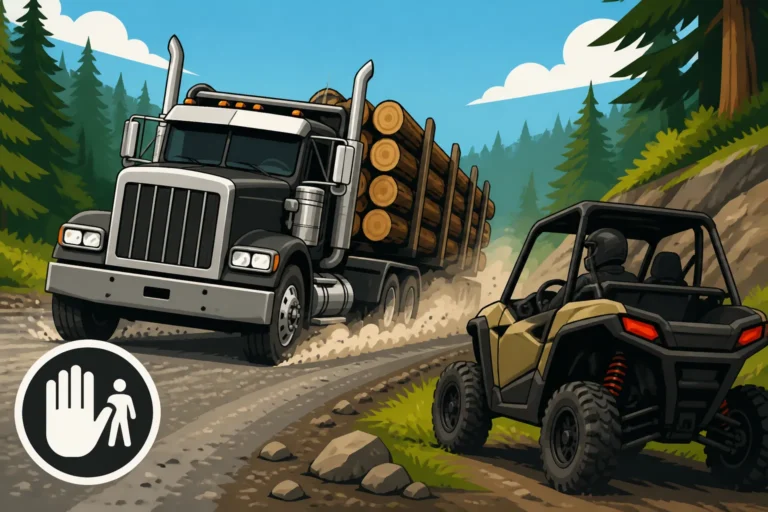
The key distinction here is that while you can ride your side-by-side on many of these roads, the machine itself is not considered street-legal or plated. Instead, your Oregon ATV Operating Permit is what grants you the privilege to use them. You'll still need to adhere to all relevant road rules, including speed limits, yielding to other traffic (especially logging trucks!), and often requiring a helmet. Many of these roads are actively used by other vehicles, so defensive driving and awareness are paramount. Always check local regulations, as closures (e.g., for fire season, logging operations, or wildlife) are common. Understanding [Oregon Rules for Riding a Forest Road] and [Oregon Rules for Riding a County Gravel Road] is essential before you head out.
Crossing a Highway or Road
There will inevitably be times when your off-road adventure requires you to cross a paved state highway or other public road to get from one trail section to another, or to reach a staging area. Oregon law does allow for these crossings under very specific conditions, even if your side-by-side isn't street-legal. The general rule is that you must cross the highway at approximately a 90-degree angle, at an intersection or designated crossing point, and you must do so as safely and directly as possible. You cannot "ride" down the highway for any distance.
Before attempting any crossing, you must come to a complete stop, yield to all highway traffic, and ensure you have a clear line of sight in both directions. Safety is the absolute priority. These crossings are meant for transitional purposes, not for cruising. Always be mindful of your surroundings and the speed of oncoming traffic. A misjudgment here can have severe consequences. For detailed guidelines on this, refer to [Oregon Rules for Crossing a State Highway]. This provision is a lifeline for connecting fragmented riding areas but should be treated with the utmost caution and respect for traffic laws.
Practical Considerations and the Reality of Ownership
Understanding the legal classifications and permissible road uses is critical, but successful side-by-side ownership in Oregon also involves practical considerations that go beyond just whether you can get a license plate. These factors will directly impact your ability to enjoy your machine legally and safely.
Insurance and Safety Cards
Even if your side-by-side isn't street-legal or plated, there are still important requirements for safe and responsible operation. For instance, any Class II machine that is legally plated for road use must carry mandatory liability insurance. This isn't optional; it's a condition of registration. Even for Class IV machines that are only used off-highway or on designated access routes, carrying insurance is highly recommended. While not legally mandated for unplated OHVs, accidents happen, and having coverage can protect you from significant financial liability if you cause damage to property or injury to another person.
Beyond insurance, every rider of an OHV in Oregon is generally required to have an Oregon ATV Safety Education Card. This card signifies that you've completed an approved safety course, demonstrating a basic understanding of safe riding practices and Oregon's OHV laws. There are specific age requirements and nuances for different classes of ATVs, but for most side-by-side operators, having this card is a must. You can take the course online and it's typically free. This is separate from your driver's license and is equally as important for legal operation. Detailed information can be found in [Oregon ATV Safety Education Card].
The Oregon ATV Operating Permit: Your Real "Road Pass"
Let's reiterate this point: for the vast majority of side-by-sides in Oregon, the operating permit is your real "road pass" for legal off-highway and designated route use. This two-year permit, issued by the Oregon Parks and Recreation Department, is what allows you to ride on the Oregon Dunes, in the Tillamook State Forest, on many Forest Service roads, and on the specific ATV highway access routes in places like Lakeside and Sumpter. It's a decal that you affix to your machine, indicating that you've paid the necessary fee and are authorized to operate on public lands.
The permit fee is standardized across all ATV classes, meaning your large Class IV side-by-side costs the same to permit as a small youth quad. This permit system funds the upkeep of trails, staging areas, and other OHV-related facilities across the state, ensuring that there are places for you to ride. Without this permit, you are riding illegally and risk significant fines if encountered by law enforcement or park rangers. Always ensure your permit is current and properly displayed as described in [Oregon Permit Decals and Where They Go]. You can find current pricing information and where to purchase one in [Oregon ATV Permit Cost].
What to Do If You Want Road Use
If extensive, general on-road use is your primary goal, trying to modify a recreational side-by-side to obtain an Oregon license plate is generally not the practical or legal path. Instead, you should consider purchasing a vehicle that was specifically manufactured and certified to be street-legal from the factory. These are typically vehicles that meet the Class II definition and comply with federal motor vehicle safety standards, often referred to as Low-Speed Vehicles (LSVs) or sometimes specific models of utility vehicles that have gone through the rigorous certification process. These machines will come with a proper VIN that designates them as road-legal and will be eligible for titling and registration with the Oregon DMV.
For those who already own a recreational side-by-side, the realistic and legal approach to road use in Oregon is to embrace the existing framework: obtain your Oregon ATV Operating Permit, get your ATV Safety Education Card, and enjoy the extensive network of designated routes, forest roads, and county roads that are legally accessible. While aftermarket parts from companies like SuperATV can significantly improve your machine's performance, safety features, and comfort for off-road adventures, they won't transform a recreational OHV into a street-legal vehicle eligible for a license plate in Oregon. Understanding and respecting these distinctions will save you a lot of headache and ensure you can enjoy your machine for years to come without legal complications.
| Feature | Recreational Class IV Side-by-Side (Typical UTV) | Street-Legal Class II Machine (LSV/Purpose-Built) |
|---|---|---|
| Primary Design Use | Off-highway recreation | On-highway travel, capable of some off-road |
| Steering | Steering wheel | Steering wheel |
| Seating | Side-by-side (bench/bucket) | Side-by-side (bench/bucket) |
| Width Limit | 75 inches or less | 65 inches or less |
| Dry Weight Limit | 3,500 pounds or less | 2,500 pounds or less |
| FMVSS Compliance | Generally, NO | YES, certified by manufacturer |
| Oregon DMV Plate | Generally, NO | YES, if FMVSS compliant |
| Required Permit | Oregon ATV Operating Permit (for OHV use) | Oregon ATV Operating Permit (for OHV use) |
| Required Insurance | Recommended (for OHV use) | Mandatory (for street use) |
| On-Road Access | Designated routes, some forest/county roads | Any public road (where legal for LSVs), plus OHV areas |
Disclaimer
This article is for general informational purposes only and does not constitute professional advice. Laws, prices and regulations vary by location and change over time. Consult a qualified professional for guidance on your specific situation.