Oregon Rules for Crossing a State Highway
We’ve all been there: you’re out on a fantastic ride in Oregon, whether it’s in the dense forest trails or on the sprawling dunes, and you see that perfect next section of public land… but it’s just across a state highway. The question immediately pops into your head: can I legally cross that highway on my ATV or UTV, or am I asking for a hefty fine? It’s a common point of confusion for many riders, and this guide is here to clear up exactly what Oregon law says about making that leap across the asphalt safely and legally.
The Critical Distinction: Crossing Versus Riding a State Highway
One of the biggest misconceptions riders have about ATVs and UTVs and state highways in Oregon revolves around the difference between crossing and riding. It’s a subtle but absolutely critical distinction, and understanding it is the key to staying on the right side of the law. I've seen too many riders get into trouble because they didn't grasp this nuance, thinking any bit of pavement is off-limits or, conversely, that a quick jaunt down the highway is fine.
Why Most ATVs Cannot "Ride" State Highways
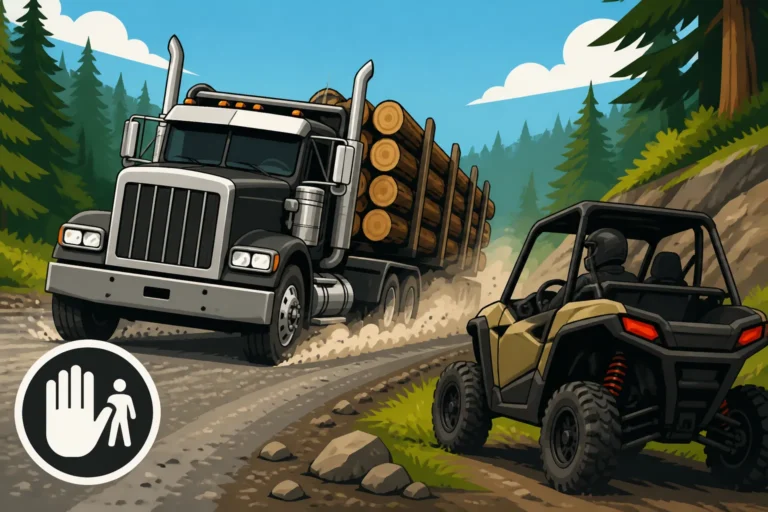
For the vast majority of all-terrain vehicles and off-highway utility vehicles in Oregon, riding along a state highway is simply not permitted. State highways, with their higher speed limits, heavy vehicle traffic, and design for conventional on-road vehicles, are not considered appropriate or safe environments for most ATVs. These machines are engineered for off-road performance, not sustained highway speeds, and lack many of the safety features required for highway travel. Imagine trying to keep up with semi-trucks on a quad designed for logging roads – it's a recipe for disaster and precisely why Oregon generally prohibits it. This rule applies whether you're on a compact Class I quad or a beefy [Oregon's Class IV Side-by-Sides Under 75 Inches].
This prohibition is about public safety, both for ATV operators and other motorists. The differences in speed, braking, visibility, and handling characteristics make it incredibly risky to mix typical off-road machines with highway traffic. So, if you're planning a trip down Highway 101 or I-5 on your quad, you need to think again. Your machine, regardless of how much aftermarket gear you've bolted on (even excellent stuff from brands like SuperATV that enhance off-road capability and visibility), is likely not designed for that kind of use on these specific roads.
The Explicit Allowance for "Crossing" State Highways
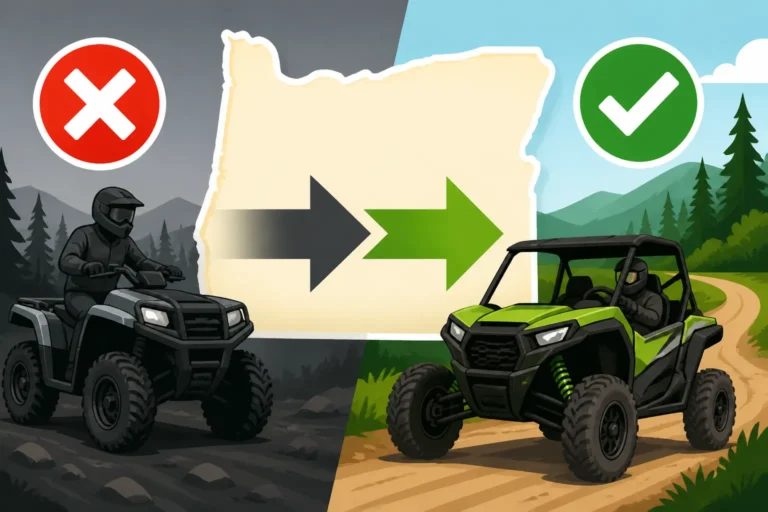
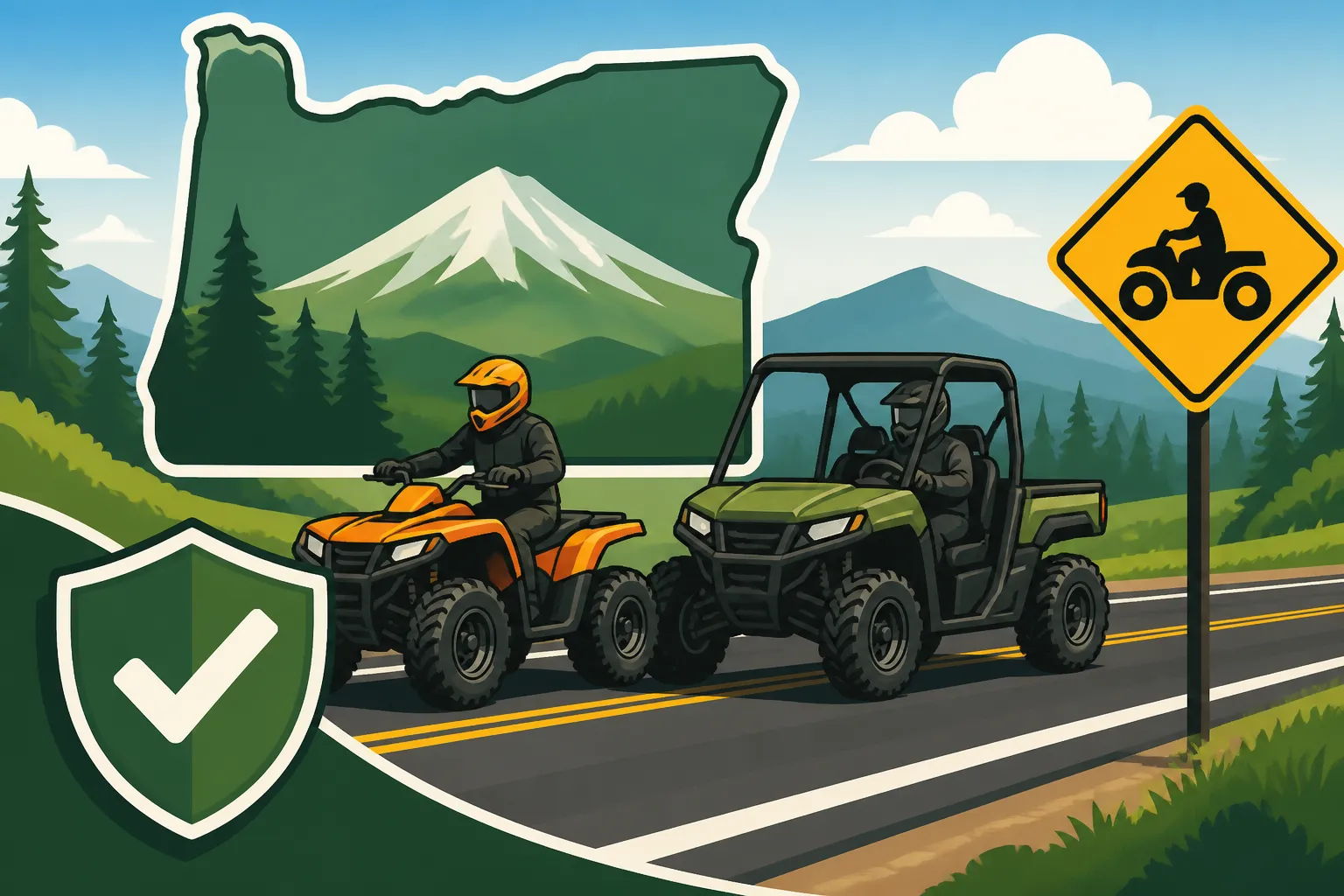
However, Oregon law makes an explicit allowance for crossing a state highway. This isn't a loophole; it's a practical necessity to connect legal riding areas that might be bisected by a paved road. The key here is that the crossing must be as direct and expedient as possible. Think of it as a brief, intentional interruption of your off-road journey, not an extension of it. The law permits you to cross a highway at approximately a right angle, taking the shortest distance to get from one legal off-road area to another. You're not meant to drive down the shoulder for a quarter-mile to find a "better" crossing spot. It's about minimizing the time your off-road vehicle spends interacting with highway traffic.
This provision acknowledges the reality of Oregon's diverse landscape, where fantastic trail systems often exist on both sides of a state highway. Without the ability to cross, many riding opportunities would be fragmented and inaccessible. It's a pragmatic approach to land access, balancing the need for safety with the desire for recreational opportunity.
Designated Highway Access Routes: A Special Exception
While direct crossing is generally allowed, Oregon has gone a step further in a couple of unique locations by establishing "designated highway access routes." These aren't just crossing points; they are specific, clearly marked segments of state highway where ATVs and UTVs are expressly permitted to operate for a longer distance, typically to connect communities with riding areas.
Oregon's Only Two Designated Routes
Currently, Oregon has only two of these special designated routes: [Lakeside and Sumpter: Oregon's Only Two Routes]. These are specific, well-defined stretches of highway where local ordinances and state approval have created an exception to the general rule.
- Lakeside: In the community of Lakeside, located right on the stunning Oregon Coast, a designated route allows riders to access the [Oregon Dunes National Recreation Area] from town, providing a way to get from accommodations, fuel, and food directly to the staging areas. This means you can ride your machine from a motel, grab some gas, and head straight to the sand without having to trailer your rig everywhere. It’s a huge convenience for riders visiting the central Oregon Coast dunes.
- Sumpter: In Eastern Oregon's historic gold mining town of Sumpter, a similar route connects the town with nearby trails. Sumpter is a hub for off-road recreation, and this route facilitates access to the extensive Wallowa-Whitman National Forest trail system without requiring riders to load and unload their machines for short distances.
These routes are incredibly valuable because they provide a sanctioned, safer way for off-road vehicles to integrate with limited on-road travel. They are usually well-signed, making it clear where you can and cannot ride your machine on the pavement.
Distinguishing Designated Routes from General Crossing
It's crucial not to confuse these designated routes with the general permission to cross a state highway. A designated route allows for riding along a segment of the highway, albeit usually at reduced speeds and with specific rules. General crossing, on the other hand, is purely about getting from one side to the other in the shortest, most direct manner possible.
Think of it this way: when you're on a designated route, you're permitted to travel down the highway. When you're simply crossing, you're making a quick, perpendicular dash across it. Never assume that just because you can cross one state highway, you can ride along a different one for any distance. Always check for official signage and local ordinances. Getting caught [Oregon Fines for Riding an Unopened Road] on a state highway can ruin your day and your wallet.
The Practicalities of Safe and Legal Highway Crossing
Even with the legal green light to cross a state highway, doing so safely requires a significant amount of caution, awareness, and adherence to specific practices. This isn't a time to be casual or distracted. You’re momentarily entering an environment designed for much faster, larger vehicles, and your visibility and speed are likely limited compared to them.
Before You Even Start to Cross
Preparation begins before your tires touch the pavement.
- Stop, Look, and Listen: This might sound like grade-school advice, but it's paramount. Bring your machine to a complete stop at the edge of the paved road. Look both ways, multiple times, for oncoming traffic. Don't just glance; actively scan the horizon. Listen for approaching vehicles, especially those that might be obscured by hills, curves, or trees. Traffic on state highways often moves at higher speeds, and a car can appear seemingly out of nowhere faster than you anticipate.
- Pick Your Spot Wisely: Choose a crossing point where you have excellent sight lines in both directions. Avoid blind curves, hills, or dense foliage that could hide approaching vehicles. The goal is to maximize your visibility and the visibility of oncoming traffic to you. This also means avoiding areas with heavy pedestrian traffic or complex intersections if possible.
- Ensure Your Machine is Ready: Before you enter a public road, even briefly, ensure your machine is in good working order. Are your lights working, especially if it’s dusk or dawn? Is your exhaust system compliant with [Oregon Sound Limits for ATVs]? Even a small issue could become a major hazard when you're quickly trying to cross traffic. You want to make sure your machine doesn't unexpectedly stall out in the middle of the highway.
The Act of Crossing
Once you've stopped, assessed the situation, and determined it's clear to cross, execute the maneuver with precision and confidence.
- Cross at a Right Angle: As mentioned, Oregon law specifies crossing at approximately a right angle to the highway. This minimizes the distance and time you spend in the travel lanes. Do not attempt to angle across or turn onto the highway to match the flow of traffic, even for a moment.
- Move Swiftly and Decisively: When you commit to crossing, do so quickly and efficiently. Don't dawdle. Accelerate smoothly across the lanes, focusing on getting to the other side as safely and quickly as possible. This isn't a race, but hesitation can be dangerous.
- Yield to All Oncoming Traffic: This should go without saying, but it bears repeating: you must yield to all oncoming traffic on the highway. They have the right of way. Never assume a driver sees you or will slow down. Wait until there is a clear and safe gap in traffic before you proceed. Even if you have enhanced lighting or a whip flag from a company like SuperATV that makes you more noticeable on trails, highway drivers might not be looking for an ATV.
- Stay Focused on Your Destination: Keep your eyes on the point where you intend to exit the highway on the other side. Don't look back or get distracted. Your sole focus should be on completing the crossing.
Essential Safety Gear for Any Road Encounter
While crossing a highway is brief, it’s a moment of heightened risk. Ensuring you have the right safety gear is non-negotiable.
- Helmets: In Oregon, [Oregon Helmet Law for ATV Riders] requires all riders under 18 to wear a DOT-approved helmet. For adults, while not universally mandated for all classes of ATVs and UTVs off-road, it is always a smart choice, especially when interacting with road traffic. Given the significant risk of highway crossings, wearing a helmet is highly recommended for all riders, regardless of age or machine class.
- Eye Protection: Dust, debris, and glare are constant companions in off-road riding, but on a highway, even for a moment, wind and potential debris from other vehicles can be a serious issue. Goggles or a helmet with a visor are crucial for maintaining clear vision.
- Bright Clothing: Consider wearing highly visible clothing, especially if your machine isn't naturally bright or if conditions are less than ideal (fog, low light). Fluorescent colors can make a huge difference in how quickly other motorists spot you. While your machine might have some excellent [Oregon Lighting Requirements for Road Use], a bit of extra visible attire goes a long way.
| Action | Legality & Safety | Best Practice |
|---|---|---|
| Crossing a state highway directly | Generally legal if done safely and perpendicularly | Stop, look both ways thoroughly, yield to all traffic, cross swiftly. |
| Riding along a state highway | Generally illegal for most ATVs/UTVs, except specific designated routes. | Never assume you can ride along; use a trailer unless in Lakeside or Sumpter. |
| Using designated highway access routes | Legal only on the specific, marked routes (Lakeside, Sumpter). | Follow all posted speed limits and rules on these routes. |
| Crossing a paved county road | Often permitted, but still requires extreme caution and yielding. | Treat like a state highway crossing: stop, look, yield, cross quickly. |
| Turning onto a state highway briefly | Illegal; no driving down the shoulder or merging with traffic. | Always cross at a right angle; do not attempt to join traffic flow. |
| Riding without a helmet (under 18) | Illegal for all ATV/UTV riders in Oregon. | Always wear a DOT-approved helmet, regardless of age, especially near roads. |
Penalties and Enforcement: What Happens If You Get It Wrong
Ignoring Oregon's rules for highway crossings and road usage for ATVs and UTVs can lead to more than just a stern talking-to. The penalties can be significant, ranging from fines to potentially having your machine impounded. Law enforcement, including Oregon State Troopers and county sheriffs, are well aware of the regulations and are tasked with ensuring everyone's safety on and around public roads.
Fines and Citations
The most immediate consequence of improper highway use is a citation. Riding an ATV or UTV on a public highway where it's not permitted is often considered a Class C traffic violation. While specific costs can vary, these fines are not trivial. You could be looking at hundreds of dollars, which can quickly drain your riding budget. [Oregon's Class C Traffic Violation for No Permit] illustrates the severity of similar violations, and unauthorized highway use falls into this category of serious offenses.
Furthermore, if you are riding without proper permitting for your machine, that can be an additional citation. Every ATV and UTV used off-road in Oregon requires an [Oregon's ATV Operating Permit], displayed prominently with its [Oregon Permit Decals and Where They Go]. Even if you're just crossing, you're still "operating" the machine.
Impoundment and Other Consequences
In more severe cases, especially if your actions are deemed reckless or repeatedly violate the law, your ATV or UTV could be impounded. The cost of retrieving an impounded vehicle, including towing and storage fees, can be exorbitant and far exceed the initial fine. Imagine having your side-by-side hauled away and facing a bill that could be well over a thousand dollars just to get it back, let alone any fines.
Beyond the immediate financial hit, there are other potential consequences. An incident on a state highway could lead to charges for reckless endangerment or other serious offenses, especially if an accident occurs. Your driving record could be affected, and if you're a young rider, this could impact your ability to get a driver's license in the future.
What Law Enforcement Checks
When a law enforcement officer encounters an ATV or UTV on or near a state highway, they're looking for several key things:
- Permit Decal: Is your Oregon ATV permit decal properly displayed and current? [What an Oregon Trooper Checks Roadside] will certainly include this.
- Crossing Protocol: Were you crossing directly and safely, or were you traveling along the road?
- Safety Gear: Are helmets being worn where required, especially for youth riders? [Oregon Helmet Law for Adults] should not be ignored, even if optional in some off-road scenarios for adults.
- Driver's License/Safety Card: For certain machines and age groups, a valid driver's license or an [Oregon's ATV Safety Education Card] may be checked, particularly if you're operating a larger UTV on a designated route.
The bottom line is that the rules are in place for a reason: safety. By understanding and adhering to Oregon's specific regulations for crossing state highways, you can ensure your rides remain fun, safe, and free from unnecessary legal headaches. Always err on the side of caution when your off-road machine approaches a paved public road.
Disclaimer
This article is for general informational purposes only and does not constitute professional advice. Laws, prices and regulations vary by location and change over time. Consult a qualified professional for guidance on your specific situation.