Riding an Oregon Logging Road Midweek
Riding Oregon's vast network of logging roads can be an incredible experience, offering access to stunning natural beauty and miles of uninterrupted trail. However, venturing out midweek, especially on a road that might look quiet, comes with its own set of serious considerations and potential hazards that many riders overlook. This guide will walk you through everything you need to know to safely and responsibly navigate these working roads during the week, helping you prepare for active operations and ensure a smooth, enjoyable ride.
Understanding Oregon Logging Roads and Their Unique Challenges
Oregon's landscape is a mosaic of public and private forest lands, all crisscrossed by roads that are primarily built and maintained for timber harvesting. While many of these roads eventually open up for recreational use, their fundamental purpose remains industrial. Understanding this distinction is key to a safe midweek ride.
Who Owns These Roads, Anyway?
It’s easy to assume that if a road looks like a public thoroughfare, it must be. But in Oregon, especially in the vast stretches of timber country, this simply isn't the case. You'll encounter a mix of ownership, each with its own set of rules and expectations:
- Private Timberland: This is often where riders get into trouble. Large timber companies own massive tracts of land, and the roads on these properties are private. While some companies might grant recreational access on weekends or during specific seasons, midweek is almost always prime time for active logging. Access might be restricted by locked gates, or by implied permission that can be revoked at any time. Tresspassing on private timberland, even unknowingly, can lead to fines or worse. It's crucial to know [Oregon Rules for Riding a Timber Company Road] before you even load up.
- State Forests (e.g., Tillamook State Forest): Lands managed by the Oregon Department of Forestry (ODF) are generally more accessible for recreation, but they are also working forests. You'll still encounter active logging, especially during the drier seasons. These roads are typically better maintained for public use, but the principle of sharing the road with industrial traffic remains paramount. [Tillamook Forest Road Access] is a great example of a system with both recreational opportunities and active resource management.
- National Forests and Bureau of Land Management (BLM) Lands: These federal lands usually offer the most consistent public access. Roads here are often maintained by the Forest Service or BLM. However, even on public lands, contractors might be actively logging or performing road maintenance. You'll often see signs indicating active operations or temporary closures. It's important to remember that "public land" doesn't always mean "public road" without restrictions.
The bottom line is, never assume. Always do your homework to understand the ownership of the roads you plan to ride.
The Midweek Realities: Logging Operations and Heavy Equipment
This is the biggest differentiator for midweek riding. On a Saturday, you might only encounter fellow recreationalists. On a Tuesday, however, you're entering a bustling industrial zone.
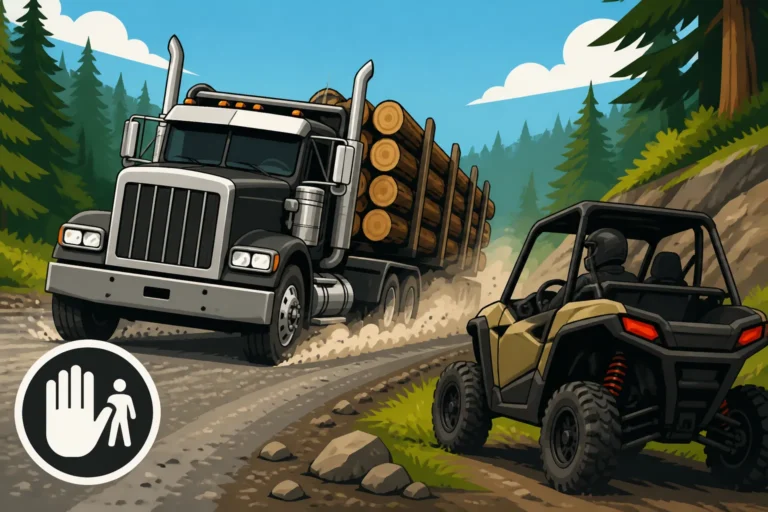
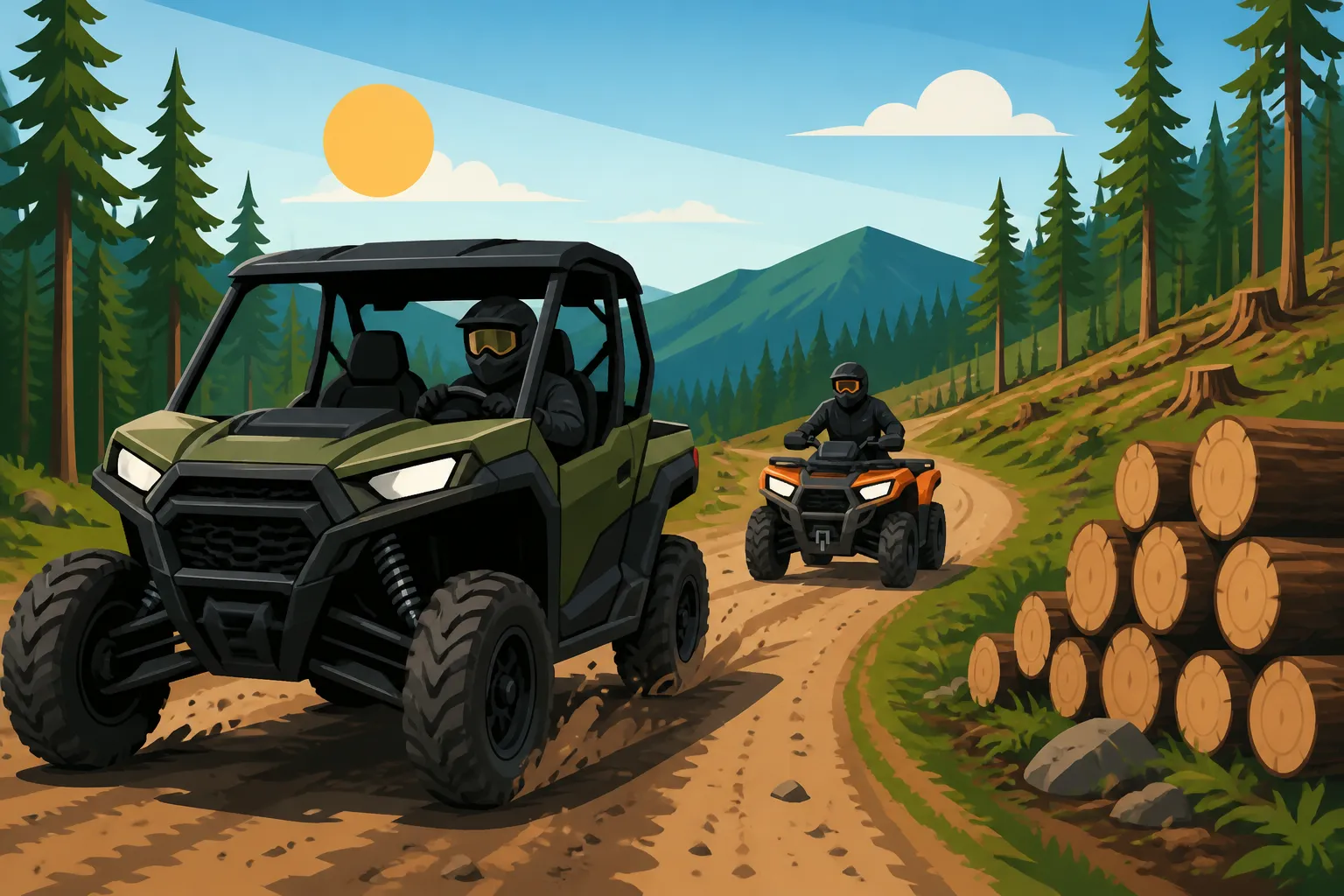
- Active Hauling: The most significant hazard is active logging trucks. These are enormous vehicles, often fully loaded with massive logs, and they move with purpose. They often travel at speeds that seem too fast for dusty gravel roads, and they are usually on a strict schedule. They are not expecting recreational vehicles, and they cannot stop or maneuver quickly. Imagine a semi-truck carrying 80,000 pounds of logs – it's not going to swerve for your quad. The sheer size difference means you will always lose in an encounter.
- Dust and Blind Corners: Logging roads are, by nature, dusty in dry weather. When a heavy truck passes, it kicks up a plume that can completely obscure visibility for hundreds of feet. Combine this with the often winding and steep nature of logging roads, and you have a recipe for disaster. [Dust and Blind Corners on a Logging Road] are a real threat, and your ability to see and be seen will be severely compromised. Always assume something is coming around every blind corner, especially if you hear the rumble of heavy machinery.
- Other Heavy Equipment: Beyond trucks, you might encounter feller bunchers, skidders, excavators, graders, and other heavy machinery actively working. These machines operate slowly but occupy significant space and have massive blind spots. Their operators are focused on their task, not on recreational riders. Giving them a wide berth and making eye contact is essential.
Navigating Access: Gates, Closures, and Maps
Many logging roads are not permanently open. Access can change suddenly and without much warning.
- Sudden Gates and Closures: A road that was open last week might be gated and locked this week because of active logging, fire danger, or seasonal closures. [Roads Closed Seasonally by the Forest Service] are common, especially for winter protection or during spring thaw to prevent road damage. A gate can appear on a forest road midweek, even if it wasn't there when you checked your map last. Ignoring or attempting to bypass a closed gate is trespassing and can lead to serious legal consequences. It also puts you in a dangerous situation if you're suddenly trapped inside an active logging site.
- The Importance of Current Maps: Your old paper map from last season might not cut it. Timber companies and land managers frequently update road statuses. Rely on the most current information available, which often means checking official websites, local ranger stations, or specific timber company hotlines. GPS apps with offline mapping capabilities can be invaluable, but ensure their data is regularly updated. Sometimes, maps simply disagree with signs on the ground, and in those cases, the sign always wins.
- [Oregon Rules for Riding Around a Locked Gate]: Simply put, don't do it. A locked gate means no entry, regardless of what your map says or what you think you know. It's there for a reason, usually safety or land protection.
Essential Preparation for a Midweek Logging Road Adventure
Riding logging roads midweek isn't just about fun; it's about being prepared for a serious environment. Your pre-ride checklist needs to be more thorough than usual.
Researching Road Status and Regulations
This is your first and most critical step. Never hit the trail blind.
- Official Sources Are Your Friends:
- Oregon Department of Forestry (ODF): If you're heading into a State Forest like Tillamook, check the ODF website for current closures, fire restrictions, and any ongoing operations. They often have maps and notices posted.
- U.S. Forest Service (USFS) / Bureau of Land Management (BLM): For federal lands, visit the specific district office website or call their ranger station. They can provide information on road conditions, active contracts, and temporary closures.
- Timber Company Websites/Hotlines: For private industrial timberlands, many companies have public access policies and provide maps or hotlines for recreationists. Weyerhaeuser, for example, has an online recreation site. Always look up the specific company that owns the land you're interested in.
- Local Intel: Don't underestimate the power of local knowledge. Visit a local outfitter, gas station, or even a diner. People who live and work in the area often have the most up-to-date information on road conditions, active logging, and recent closures. Forums and online riding groups for [Oregon ATV & UTV] enthusiasts can also be a good source, but always cross-reference.
Equipping Your Machine for Safety and Visibility
Your ATV or UTV needs to be ready to stand out and handle the rigors of these working roads.
- High-Visibility Gear: A brightly colored whip flag is an absolute must, especially in dusty conditions or on rolling terrain. [Oregon Dune Flags and Whips] are standard on the coast, but they're just as vital in the forests. Consider adding additional reflective tape to your machine. For you, a high-visibility helmet and jacket aren't just a suggestion; they're a life-saver.
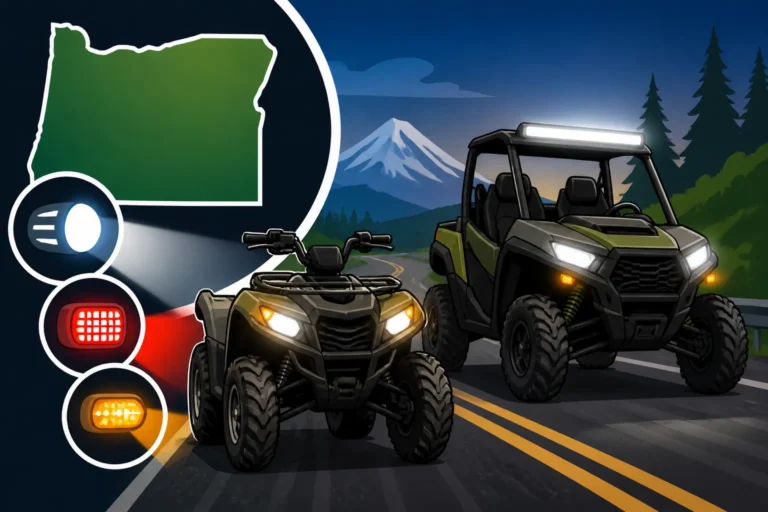
- Enhanced Lighting: Stock headlights and taillights are good, but consider auxiliary lights. Dust and shadows can drastically reduce visibility, even in daylight. Extra LED light bars or pods can help you see better and, more importantly, be seen by others. Products from brands like SuperATV offer a wide range of lighting solutions that can significantly improve your visibility on dimly lit or dust-choked logging roads.
- Horn and Communication: Ensure your horn is loud and working perfectly. It's your primary way to alert approaching traffic, especially logging trucks. Some groups even carry two-way radios to communicate with each other, or even CB radios if they know logging companies in the area use them (though this is less common now).
- Tires and Protection: Logging roads are often rocky, rutted, and unforgiving. Ensure your tires are in good condition and suited for the terrain. Heavy-duty skid plates and A-arm guards can protect vital components from unexpected rocks or debris. SuperATV also offers durable protection parts that can withstand the abuse of these tough roads, helping prevent costly breakdowns far from help.
- [Oregon Rules for Riding the Right Edge of a Roadway]: This isn't just good manners; it's a safety imperative on logging roads. Keep as far right as possible at all times.
Personal Gear and Emergency Preparedness
When you're far from civilization and on active industrial roads, self-reliance is paramount.
- Communication Devices: Cell service is notoriously spotty or non-existent in many logging areas. Carry a satellite communication device (like a Garmin inReach or Spot device) for emergency communication. A fully charged power bank for your phone is also a good idea.
- First Aid Kit: A comprehensive first aid kit is non-negotiable. Know how to use it. Consider taking a wilderness first aid course.
- Navigation Tools: Beyond your phone, carry a physical map and a compass, and know how to use them. Electronics can fail.
- Food and Water: Carry more than you think you'll need. Dehydration and hunger can quickly turn a minor inconvenience into a major problem.
- Repair Kit and Tools: Flat tire repair kit, tire pump, basic tools, zip ties, duct tape, and a small shovel can be invaluable for minor breakdowns or recoveries. A portable winch, especially if you’re riding a heavier side-by-side or solo, can get you out of a bind quickly. Many SuperATV UTVs come with or can be easily outfitted with robust winches that are perfect for self-recovery on these isolated roads.
- Warm Layers and Rain Gear: Oregon weather can change in an instant, even in summer. Always pack layers and waterproof outer shell.
Riding Etiquette and Legal Requirements on Oregon Logging Roads
Once you've done your homework and prepared your machine, knowing how to behave on the roads is the next crucial step.
Sharing the Road Safely with Commercial Traffic
This is where the rubber meets the road, quite literally. Your behavior can determine your safety and the continued access for all recreational riders.
- Yield to Logging Trucks and Heavy Equipment: This is the golden rule. Always, always, always yield to commercial traffic. They have the right of way. If you see or hear a logging truck approaching, pull over to the absolute furthest right shoulder, stop, and wait for them to pass. Make eye contact if possible.
- Dust Management: If you're following another vehicle, especially a truck, maintain a significant distance to avoid their dust cloud. If a truck is coming towards you and the dust is thick, slow down, pull over, and even turn on your headlights to make yourself visible.
- Communicate Your Presence: Flash your headlights, honk your horn, or use hand signals to alert oncoming traffic to your presence. Assume they haven't seen you until you've made positive contact.
- Be Predictable: Ride at a consistent, safe speed. Avoid sudden maneuvers. When pulling over, do so smoothly and well in advance of the approaching vehicle.
- [Sharing a Gravel Road With Log Trucks]: This is a serious topic for a reason. These trucks are focused on their job, and you need to be hyper-aware of your surroundings to avoid becoming an obstruction or, worse, a casualty.
Permit and Decal Requirements for Public and Private Lands
Oregon has clear rules for operating ATVs and UTVs, and these apply to logging roads just as they do to designated trails.
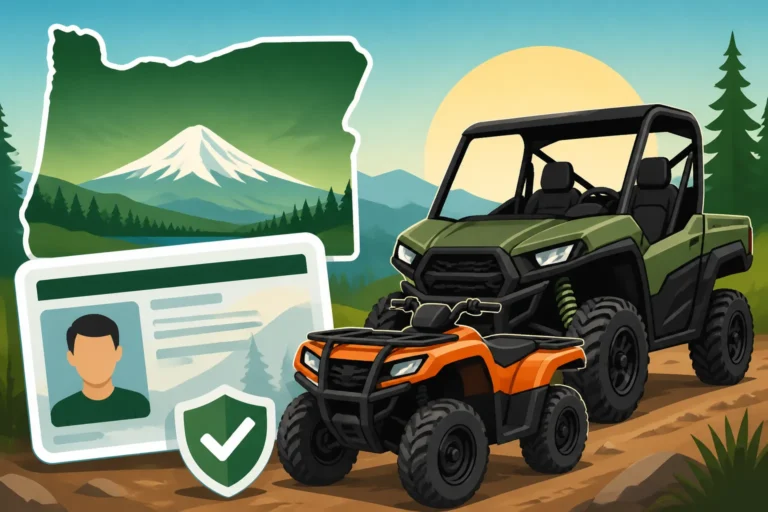
- [Oregon's ATV Operating Permit]: Almost universally, if you're riding an ATV or UTV on public land in Oregon, you need an operating permit. This includes most state forest and federal logging roads. The permit is a sticker (decal) that must be displayed on your machine.
- [Oregon Permit Decals and Where They Go]: Make sure your permit decal is correctly placed on your machine, typically on the right side of a quad or visible on the rear for a side-by-side. Rangers and law enforcement will be looking for it.
- Exceptions and Nuances: There are some very specific exceptions, such as machines used exclusively for agricultural purposes on private land. However, if you're riding for recreation, assume you need a permit. Even on private industrial timberland where you have permission, if that land connects to or accesses public roads, you likely still need the permit.
Sound, Spark Arresters, and Environmental Responsibility
Respecting the environment and minimizing your impact ensures these roads remain open for everyone.
- [Oregon Spark Arrester Requirement]: All ATVs and UTVs operating on public lands in Oregon must be equipped with a U.S. Forest Service approved spark arrester. This is crucial for preventing wildfires, especially in the dry summer months. Check your exhaust system to ensure it's in good working order and has an approved arrester.
- [Oregon Sound Limits for ATVs]: Oregon has specific sound limits to minimize noise pollution. Your machine must not exceed these limits. Aftermarket exhaust systems are often louder than stock, so if you've modified yours, ensure it's still compliant. Riding a loud machine can draw negative attention and contribute to trail closures. Even some performance exhausts from SuperATV are designed to meet specific sound requirements, but always double-check the specs for your local regulations.
- Stay on Designated Roads and Trails: Do not create new trails, cut through switchbacks, or ride off-road unless it is a clearly designated and marked trail. Logging roads are typically not open for "free-range" off-roading. Stick to what's marked and allowed.
- Pack It In, Pack It Out: Leave no trace. This means carrying out all your trash, including any maintenance waste from your machine.
Finding Your Path: Recommended Areas and Resources
While private timberlands require significant research and often have limited midweek access, certain public forest systems offer more consistent opportunities for responsible logging road riding.
Navigating the Tillamook State Forest
The Tillamook State Forest, managed by the ODF, is one of Oregon's largest and most accessible state forests, offering thousands of miles of roads and trails.
- Extensive Road Network: The Tillamook features a massive network of gravel and dirt roads, many of which are logging roads. While active operations occur, ODF is generally proactive in posting closures and information.
- Designated OHV Areas: Within the Tillamook, areas like Browns Camp and Diamond Mill offer designated OHV trail systems that connect to various roads. These are excellent starting points for exploring. While the trails themselves might be busy on weekends, the larger road network often feels more secluded midweek.
- ODF Resources: The ODF website provides maps, closure alerts, and information specific to the Tillamook State Forest. Always check their current advisories before heading out. [Riding Tillamook in the Rain] or during drier periods can present different challenges, so check conditions carefully.
Utilizing Online Resources and Local Intel
Beyond official government sites, there are other tools that can help you plan.
- Mapping Apps: Apps like Gaia GPS, OnX Offroad, or Avenza Maps allow you to download maps for offline use, often showing land ownership boundaries and road statuses. These can be lifesavers where cell service is absent.
- Online Forums and Social Media Groups: Communities focused on [Oregon ATV & UTV] riding often share real-time updates on road conditions, recent gate closures, or active logging areas. However, always verify information from these sources with official channels.
- Local Businesses: ATV dealers, outdoor gear shops, and gas stations in towns near forested areas often have the most current information. They cater to riders and understand the local conditions.
Pre-Ride Checklist for Logging Road Adventures
| Item | Why It's Crucial | Check Before You Go |
|---|---|---|
| Road Status Research | Active logging means heavy trucks, closures, and extreme danger. | Check ODF, USFS, BLM websites/hotlines. Call local ranger stations. Verify land ownership. |
| Current Maps | Old maps can be dangerously outdated. | Download offline maps to your GPS/phone. Carry a physical map and compass. |
| [Oregon's ATV Operating Permit] | Required for public land access. | Ensure your decal is current and properly displayed. |
| Spark Arrester | Prevents wildfires, especially in dry conditions. | Verify your machine has a USFS-approved spark arrester. |
| High-Visibility Whip | Essential for being seen by logging trucks and other vehicles, especially over hills. | Ensure your whip is tall enough (often 8 feet above ground level) and securely mounted. |
| Working Horn | Crucial for alerting others to your presence, especially on blind corners. | Test your horn before leaving. |
| Communication Device | Cell service is unreliable; emergency communication is vital. | Carry a satellite messenger (inReach/Spot). Bring a fully charged phone and power bank. |
| First Aid Kit | For handling injuries far from medical help. | Stocked, accessible, and know how to use it. |
| Repair Kit | For unexpected breakdowns (flats, minor mechanical issues). | Tire plug kit, air pump, basic tools, zip ties, duct tape. Consider a portable winch. SuperATV has great winch options for UTVs. |
| Food & Water | Stay hydrated and energized, especially if delayed. | Carry more than you think you need. |
| Layers & Rain Gear | Oregon weather is unpredictable. | Pack waterproof layers and insulating clothing. |
| Full Fuel Tank | Fuel stops can be few and far between. | Start with a full tank and consider extra fuel in an approved container. |
Riding Oregon's logging roads midweek offers a unique sense of solitude and adventure, far from the weekend crowds. But it demands a heightened level of preparation, awareness, and respect for the working environment. By understanding the rules, equipping yourself properly, and maintaining vigilance, you can safely explore some of the most beautiful and challenging terrain Oregon has to offer.
Disclaimer
This article is for general informational purposes only and does not constitute professional advice. Laws, prices and regulations vary by location and change over time. Consult a qualified professional for guidance on your specific situation.