DOT and Snell Helmets in Oregon
Oregon's trails and roads offer incredible experiences for ATV and UTV riders, but the joy of the ride absolutely must be balanced with a commitment to safety. One of the most critical pieces of safety gear, and often a point of confusion for riders, is the helmet. Navigating the rules around DOT and Snell certifications, especially when you're just trying to enjoy a weekend out, can feel like trying to read a legal textbook, leaving many folks wondering exactly what they need to wear to stay legal and safe. This comprehensive guide will clear up all that confusion, detailing Oregon's helmet laws, explaining the crucial differences between DOT and Snell standards, and helping you pick the perfect helmet for your adventures.
Understanding Oregon's Helmet Law for ATV Riders
Let's be real, no one wants to get stopped by a ranger or a trooper and face a citation because of a helmet issue. Oregon takes ATV and UTV safety seriously, and that includes specific laws about head protection. It's not just about avoiding a fine; it's about protecting yourself and your loved ones while enjoying the incredible outdoor opportunities our state offers.
Who Needs to Wear a Helmet in Oregon?
This is where a lot of riders get confused. In Oregon, the general rule is quite straightforward: everyone operating or riding as a passenger on a Class I (quad), Class III (off-road motorcycle), or Class IV (side-by-side that's not Class II) all-terrain vehicle needs to wear an approved safety helmet. The law doesn't differentiate between adults and minors for these classes. If you're on a quad or a dirt bike, or even a side-by-side used strictly off-road, a helmet is mandatory, full stop. This applies whether you're hitting the dunes, tearing up a forest trail, or just puttering around a staging area. Many people assume adults are exempt, but when it comes to off-highway vehicles in Oregon, that's simply not the case. The rules are clear: [Oregon Helmets for Every Rider Under 18] and [Oregon Helmet Law for Adults] apply equally when you're on the trails.
Now, things get a little different when you're talking about a Class II all-terrain vehicle. These are the machines that are technically designed for highway use but also capable of off-road adventures, like some larger utility vehicles or specialized sand rails that have been modified to be street-legal. Even here, if you're under 18, a helmet is still generally required. However, for adults operating or riding as passengers in a Class II machine, there can be exceptions, which we'll dive into more. But for the vast majority of off-road riding in Oregon, assume a helmet is required for everyone.
The "Chin Strap Rule" and What It Means
Okay, so you've got your helmet, but just having it on your head isn't enough. Oregon's helmet law isn't just about wearing a helmet; it's about wearing it correctly. And that's where the "chin strap rule" comes into play. Simply put, your helmet must be securely fastened with the chin strap. It might seem like a minor detail, but it's absolutely critical for the helmet to do its job. An unbuckled helmet is essentially useless in a crash; it can easily fly off, leaving your head completely unprotected.
Imagine you're out on a trail in the Tillamook State Forest, cruising along, maybe even hitting a few bumps. If your chin strap isn't buckled, the first sudden jolt or minor fall could send your helmet bouncing down the trail, leaving you vulnerable. Troopers and rangers know this, and when they check for helmet compliance, they're not just looking for a helmet on your head; they're checking to make sure it's properly secured. It’s a small step that makes a monumental difference in your safety. So, always make sure that strap is snug!
When a Roof or Roll Bar Might Affect Helmet Use
This is perhaps one of the most debated and misunderstood aspects of Oregon's helmet laws, particularly for those riding side-by-sides or dune buggies that might fall into the Class II category. The general rule is that if you're operating or riding as a passenger in a Class II all-terrain vehicle that is equipped with both a roll bar and a roof, and you are 18 years of age or older, then the helmet requirement may be waived. This is a big "may," and it comes with specific conditions and interpretations.
For the most common Class IV side-by-sides, which are designed primarily for off-road use, the helmet rule still applies to everyone, regardless of a roof or roll bar. The exception primarily targets those Class II machines that are essentially street-legal vehicles capable of off-road use, similar to a modified Jeep or an older sand rail that might technically be considered an ATV. Even then, [When a Class II Roof Exempts You] explains that this exemption is very specific and doesn't apply universally to all caged vehicles. You need to be certain your machine truly qualifies as a Class II under Oregon law and meets all the criteria for the exemption. If there's any doubt, or if you're under 18, always wear a helmet. Safety is non-negotiable, and a helmet provides an extra layer of protection even in a caged vehicle.
Deciphering Helmet Safety Standards: DOT vs. Snell
When you're looking for a new helmet, you'll inevitably see labels like "DOT approved" or "Snell certified." These aren't just fancy marketing terms; they refer to rigorous testing standards that determine how well a helmet will protect your head in an impact. Understanding the difference is key to making an informed decision about your safety gear.
The Baseline: What DOT Certification Guarantees
The DOT certification, which stands for the U.S. Department of Transportation, is the minimum legal standard for helmets used on public roads in the United States. This includes many situations where you might be riding your ATV or UTV, especially on [Oregon ATV Highway Access Routes] or designated county roads. A DOT-certified helmet has passed a series of tests designed to ensure it meets basic safety requirements. These tests include impact attenuation (how well it absorbs a blow), penetration resistance (preventing sharp objects from piercing the shell), and retention system strength (ensuring the chin strap doesn't fail).
The DOT standard focuses on impact energy management, particularly how the helmet performs in a single, significant impact. It ensures that the helmet can effectively disperse the energy of a crash over a larger area, protecting your brain from severe trauma. When you see that little "DOT" sticker on the back of your helmet, it means the manufacturer has self-certified that their product meets these federal safety regulations. It's an important baseline, and any helmet you wear for ATV or UTV riding in Oregon must at least meet this standard to be legal.
Going Above and Beyond: The Snell Memorial Foundation Standard
While DOT sets the legal minimum, Snell certification goes a significant step further. The Snell Memorial Foundation is a private, non-profit organization dedicated to helmet safety research and testing. Their standards are typically much more stringent than DOT, often involving multiple impact tests in the same location, higher impact velocities, and more demanding penetration tests. A Snell-certified helmet is designed to withstand multiple impacts and more severe forces, making it an excellent choice for aggressive riding or racing.
Snell standards are updated frequently, with new versions released every five years (e.g., M2015, M2020). This continuous evolution means that Snell-certified helmets incorporate the latest advancements in head protection technology. While Snell certification isn't legally mandated for off-road riding in Oregon, many serious riders and racers choose Snell helmets for the enhanced protection they offer. It's like having an extra layer of peace of mind, knowing your helmet has been put through some of the toughest tests out there. Think of it as a significant upgrade from the basic legal requirement, offering superior protection in a wider range of accident scenarios.
Why Both Certifications Matter for Off-Road and Road Use
Understanding both DOT and Snell is important because your riding might involve both off-road trails and occasional road use. For instance, if you have a Class II machine that's street-legal, or you're just crossing a highway at a designated intersection, your helmet needs to meet the DOT standard to be legal for road use. For the challenging terrain of the Oregon Dunes or the technical trails of Millican Valley, the added protection of a Snell-certified helmet can be invaluable.
Here’s a quick comparison of the two standards:
| Feature | DOT (Department of Transportation) | Snell (Snell Memorial Foundation) |
|---|---|---|
| Mandatory | Yes, for on-road use (and off-road in OR) | No, voluntary for manufacturers |
| Testing | Self-certified by manufacturer; basic tests | Independent third-party testing; rigorous |
| Impact Tests | Single impact at various points | Multiple impacts at same point; higher energy |
| Penetration | Resistance to a single pointed object | More demanding, multi-point penetration |
| Focus | Minimum legal safety; single severe impact | Enhanced safety; multiple impacts, higher energy |
| Updates | Less frequent | Every five years (e.g., M2020) |
| Cost | Generally more affordable | Often higher due to advanced testing/materials |
While a helmet with both DOT and Snell certification offers the best of both worlds, remember that the fit of the helmet is just as crucial as its certification. Even the most highly certified helmet won't protect you properly if it's too loose or too tight. Always prioritize a secure, comfortable fit alongside the appropriate safety standard.
Choosing the Right Helmet for Your Oregon Adventures
Selecting the right helmet isn't just about meeting the legal requirements; it's about finding a helmet that fits well, offers adequate protection for your specific type of riding, and keeps you comfortable. Oregon's diverse riding environments – from the dusty high desert trails to the damp, forested singletrack – mean you'll want to consider different features.
Helmets for Quads and Dirt Bikes (Class I and III)
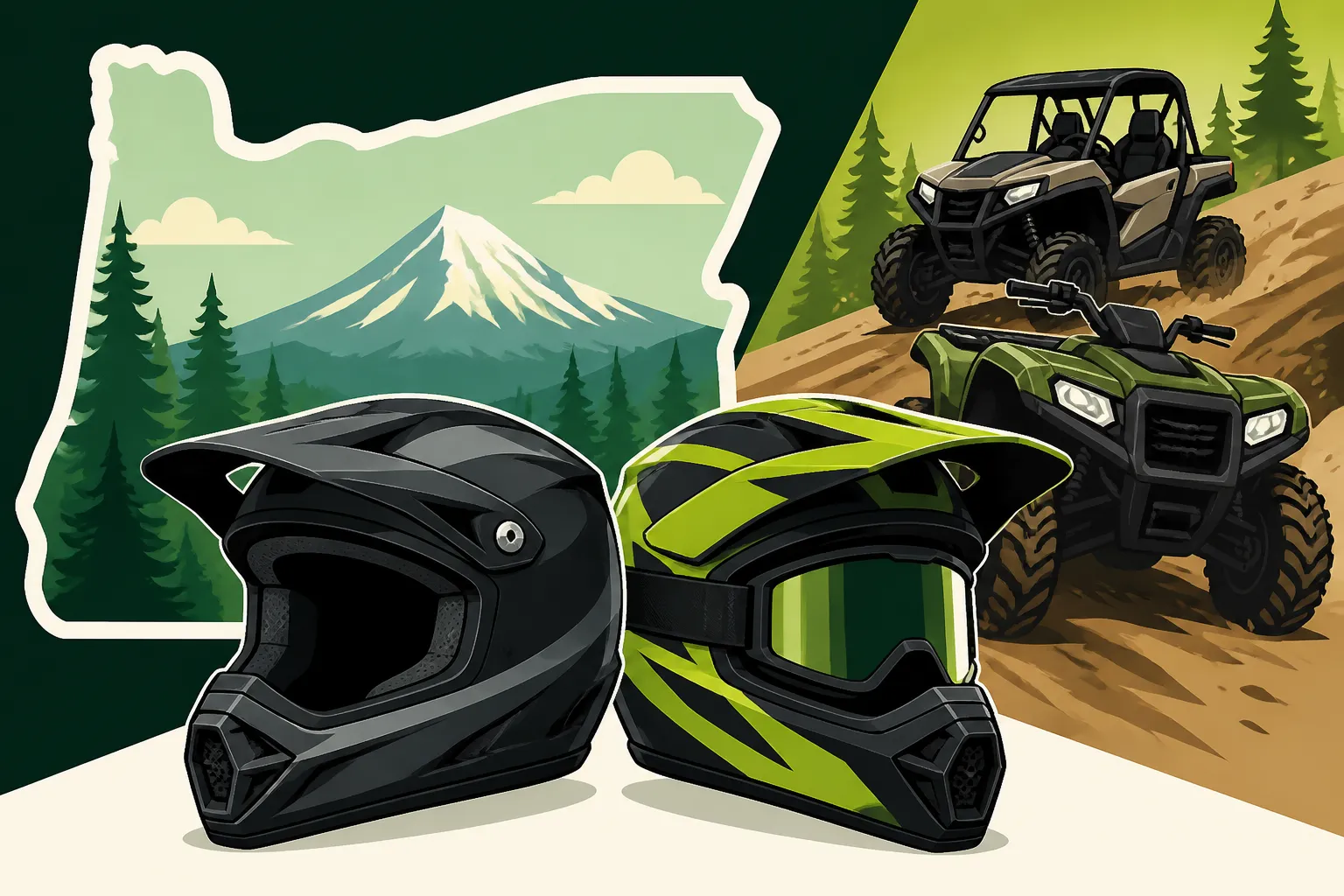
For riders of Class I (quads/ATVs) and Class III (off-road motorcycles/dirt bikes), full-face off-road helmets are the gold standard. These helmets are designed with extended chin bars for facial protection, large eyeports to accommodate goggles, and good ventilation to keep you cool during strenuous riding. They are distinct from street motorcycle helmets, which often have visors that aren't ideal for dusty or muddy conditions. Look for a helmet that is both DOT and, if possible, Snell certified (such as M2015 or M2020) for optimal protection.
When choosing one, consider the type of riding you do most. If you're tackling technical singletrack in the Coast Range, good ventilation and moisture-wicking liners are crucial to prevent fogging and discomfort. If you're kicking up dust in the desert, a helmet with a removable, washable liner will be your best friend. Brands like Fox Racing, Bell, and Klim offer a wide range of helmets specifically designed for the rigors of off-road riding, balancing protection with practical features for dirt and mud.
Helmets for Side-by-Sides and Dune Buggies (Class IV and II)
Riding a side-by-side (Class IV) or a street-legal dune buggy (Class II) often presents a slightly different set of considerations, though the helmet requirement for Class IV remains the same as for quads and dirt bikes. While some riders in side-by-sides might opt for a more open-face or modular helmet, especially if they are adults in a Class II machine with a roll bar and roof, the safest choice is still typically a full-face off-road helmet. The reason is simple: even with a cage, debris can still enter the cab, and rollovers can still expose your head to impacts.
However, for those looking for options that blend more visibility with protection, some side-by-side specific helmets incorporate features like integrated visors that work well with goggles, or even built-in communication systems, which are fantastic for group rides or guiding. If you're looking for accessories to enhance your side-by-side's safety features, many riders turn to companies like SuperATV for sturdy windshields, roofs, and even full doors that can complement your helmet's protection by keeping more debris out of the cabin. Regardless of your choice, ensure it's DOT approved, and consider Snell certification, especially if you plan on aggressive dune riding or challenging trails. Remember, while a cage offers some protection, your head is still vulnerable to impacts, particularly during rollovers or sudden stops.
Considering Fit, Comfort, and Ventilation
Beyond the certifications, the fit of your helmet is paramount. A helmet that's too loose can shift during an impact, compromising its protective ability. One that's too tight can be uncomfortable, distracting, and even cause headaches. Here's how to ensure a proper fit:
- Measure Your Head: Use a cloth measuring tape around the largest part of your head, just above your eyebrows.
- Try It On: When you put on the helmet, it should feel snug all around your head, with no pressure points. It shouldn't wiggle or slide around when you shake your head.
- Check the Chin Strap: Buckle the chin strap securely. You should be able to slide no more than one finger between the strap and your chin. Try to pull the helmet off your head from the back – if it comes off, it's too big or the strap isn't tight enough.
- Field of Vision: Ensure your field of vision isn't obstructed. You need to see clearly to react to obstacles and other riders.
- Comfort Features: Look for helmets with good ventilation systems to prevent overheating and fogging, especially on cooler, damp Oregon days. Removable and washable liners are a huge plus for hygiene, particularly after a sweaty ride in the dust or mud.
Don't rush this process. A well-fitting, comfortable helmet makes a huge difference in your enjoyment and safety on the trails.
Common Misconceptions and Practical Realities of Oregon Helmet Rules
It's easy to get caught up in rumors or misunderstandings, especially when laws vary from state to state or even change over time. When it comes to helmets in Oregon, there are a few persistent myths that need busting to ensure everyone stays safe and legal.
The Myth of the "Adult Exemption" for Helmets
This is a big one that we touched on earlier, and it often trips up experienced riders. Many states have helmet laws that only apply to minors, or they have specific age exemptions for adults. Oregon is different for off-highway vehicles. For most ATVs and UTVs (Class I, III, and IV), there is no adult exemption for helmets. Whether you're 16 or 60, if you're on one of these machines, you are required to wear a DOT-approved helmet with the chin strap securely fastened. It's a critical piece of [Oregon Helmet Law for Adults] that often gets overlooked.
This rule exists for a good reason: ATVs and UTVs are inherently risky vehicles, and head injuries are among the most serious. Oregon's law prioritizes rider safety universally across these vehicle classes, rather than relying on an age cutoff. So, if you've been riding without a helmet thinking you're exempt because you're over 18, it's time to get one and wear it every single time you ride.
What a Trooper or Ranger Looks For During a Stop
When you're out riding and a law enforcement officer, whether it's an Oregon State Police Trooper or a State Parks Ranger, pulls you over or approaches you at a staging area, they're looking for several things. When it comes to helmets, their checklist is pretty straightforward:
- Presence: Is there actually a helmet on your head (and on your passenger's head, if applicable)?
- Certification: Does the helmet have a visible DOT sticker? While Snell is great, DOT is the legal minimum. They won't usually check for Snell unless there's a specific local ordinance or event rule.
- Proper Use: Is the chin strap securely fastened? This is huge. An unbuckled helmet might as well not be there in their eyes. [What an Oregon Trooper Checks Roadside] often includes a quick glance at the chin strap.
- Condition: Is the helmet in good repair? A severely damaged helmet (cracked shell, missing padding) might indicate it's no longer effective, even if it has a DOT sticker.
Remember, these officers are there to enforce safety rules and protect riders. Cooperating and demonstrating you're following the rules, like wearing a proper helmet, goes a long way. They're also checking for other things, like your [Oregon's ATV Operating Permit] and your [Oregon ATV Safety Card Requirements], so make sure all your paperwork and gear are in order.
Ensuring Your Helmet Stays Legal and Effective
A helmet isn't a "buy it once and forget it" piece of equipment. Its effectiveness diminishes over time and with use. Here are some tips to keep your helmet legal and, more importantly, protective:
- Inspect Regularly: After every significant ride, check your helmet for cracks, dings, or signs of wear. Even dropping your helmet can compromise its structural integrity, even if there's no visible damage. If you've been in a crash, always replace your helmet, even if it looks fine.
- Keep it Clean: Dust, sweat, and grime can accumulate, making your helmet less comfortable and hygienic. Many helmets have removable, washable liners. Clean the exterior with mild soap and water.
- Store Properly: Don't leave your helmet baking in the sun for extended periods or exposed to harsh chemicals. Store it in a cool, dry place, ideally in a helmet bag, to protect it from accidental drops and environmental damage.
- Replace When Needed: Helmet manufacturers generally recommend replacing helmets every 3-5 years, even if they haven't been in a crash. Materials degrade over time, reducing their protective qualities. If your helmet is older, or shows signs of significant wear, it's time for a new one. This ensures you're always riding with the most effective protection available.
Insurance, Street-Legal Machines, and Helmet Considerations
While helmets are a physical safety measure, understanding how they interact with other aspects of riding, like insurance and street-legal vehicle requirements, provides a fuller picture of responsible ATV and UTV operation in Oregon.
Mandatory Insurance and Its Link to Safety Gear
In Oregon, mandatory liability insurance is specifically required for Class II all-terrain vehicles if they are operated on public roads or highways. This includes any Class II machine that has been made street-legal. The reason behind this is clear: if you're operating a vehicle on a public roadway, you need to be financially responsible for any damage or injury you might cause to others. You can learn more about this by checking out [Mandatory Insurance on Every Oregon Class II] and [Oregon Insurance Requirements for Class II].
While there isn't a direct legal link between wearing a helmet and your insurance policy for off-road use, there's an undeniable practical connection. Insurance exists to help you recover from accidents. If you sustain a serious head injury in an off-road incident while not wearing a helmet (and one was legally required), your insurance company might review the circumstances of the claim. While they might still cover your medical expenses, it underscores the importance of minimizing risk wherever possible. Moreover, wearing a helmet drastically reduces the likelihood and severity of head injuries, which could mean less extensive medical bills and a faster recovery, reducing the overall impact on your health and finances. It all ties back to [Why Insurance Is Compulsory for Class II Only].
Helmet Rules for Street-Legal Class II Machines
As mentioned earlier, Class II machines that are registered for street use in Oregon have a unique set of helmet rules. If you're an adult (18 or older) operating or riding as a passenger in a Class II ATV that is equipped with both a roll bar and a roof, you may be exempt from the helmet requirement. However, this is a very specific exemption and does not apply to Class IV side-by-sides, nor does it apply to anyone under 18. Even with a roll bar and roof, many adult riders in these vehicles still opt for helmets for added safety, especially when venturing off-road.
It's crucial to understand that if your Class II machine is registered as street-legal, you'll also be subject to other road rules that apply to motor vehicles, such as having a valid driver's license. [Oregon Driver's License Rules for Class IV] outlines the requirements for various classes, and it's important to know where your machine fits in. The idea behind the Class II exemption, where it exists, is that the vehicle provides a level of occupant protection similar to a car, but the open nature of many of these vehicles still leaves occupants vulnerable. If you're ever in doubt, or if your machine doesn't perfectly fit the description of a Class II with both a roll bar and a roof, play it safe and wear your helmet.
Beyond the Law: Why Safety Always Comes First
Ultimately, while understanding the letter of the law is important to avoid [Oregon Fines for Riding Without a Permit] or other citations, the primary reason for wearing a helmet goes far beyond legal compliance. It's about protecting yourself and your loved ones. Head injuries can be life-altering, leading to permanent disabilities or worse. A good helmet is the single most effective piece of equipment you can wear to prevent or mitigate these devastating outcomes.
Oregon offers some of the most spectacular ATV and UTV riding experiences in the country. From the towering dunes to the winding forest trails, these adventures are thrilling. But the thrill should never come at the expense of safety. Always wear a DOT-approved helmet, ensure it fits correctly, and consider upgrading to a Snell-certified helmet for enhanced protection. Companies like SuperATV also provide a vast array of aftermarket safety accessories, such as harnesses, doors, and upgraded roll cages, that can further improve occupant protection in your UTV. Taking these precautions allows you to fully enjoy everything Oregon's backcountry has to offer, confident that you've done your best to protect yourself.
Disclaimer
This article is for general informational purposes only and does not constitute professional advice. Laws, prices and regulations vary by location and change over time. Consult a qualified professional for guidance on your specific situation.