Oregon Helmet Law for Adults
It can feel like navigating a legal jungle when you're just trying to enjoy a ride out on the dunes or through the forest, and one of the most common questions adults grapple with in Oregon is about helmets. Nobody wants to be caught off guard or, worse, risk a serious injury because they weren't clear on the rules. This guide is here to untangle the specifics of Oregon's helmet law for adult ATV and UTV riders, giving you the peace of mind to ride safely and legally.
The Core Rule: Who Needs a Helmet in Oregon?
Let's cut right to it. The idea that adults are automatically exempt from helmet laws on ATVs and UTVs in Oregon is a widespread myth that can get you into trouble. While there are nuances, the law generally leans towards requiring helmets for most riders, especially on traditional ATVs and certain off-road motorcycles. Understanding these specifics is crucial for every adult who loves to ride.
Riders Under 18: A Clear-Cut Case
First, a quick but important note on younger riders, as it often sets the context for adult rules. If you're under 18 years old and riding an ATV, an off-road motorcycle (Class III), or a side-by-side (Class IV), Oregon's law is absolutely crystal clear: you must wear an approved helmet. There are no exceptions for age or machine type for minors, whether you're on public land, private property that's open to the public, or a designated [Oregon ATV Highway Access Route]. This is non-negotiable and designed for their safety, as well as to simplify enforcement.
For parents or guardians, this means ensuring your kids are properly geared up every single time they throw a leg over a quad or buckle into a side-by-side. The consequences for non-compliance for youth can include fines for the supervising adult and can also lead to citations that put a damper on everyone's day. It's a reminder that safety always comes first, and the law backs that up unequivocally for our younger riders.
What About Adults on ATVs and Side-by-Sides?
Now, for the adults. The general rule for operators and passengers on Class I ATVs (quads) and Class III off-road motorcycles is that a helmet is required, regardless of age. This means if you're riding your typical four-wheeler or a dirt bike, you should be wearing a helmet. Many riders, especially those new to Oregon or coming from states with different regulations, often miss this detail, assuming that because they're adults, helmets are optional. That assumption can lead to a citation if you encounter a ranger or law enforcement officer.
However, things get a bit more complex when it comes to Class IV machines, commonly known as side-by-sides or UTVs, and some Class II vehicles. While we'll dive deeper into the specific exemption for Class II machines that are street-legal later, the baseline for most off-road riding by adults is to have your head protected. It's not just about avoiding a fine; it's about protecting yourself from the inherent risks of off-road riding, where unexpected terrain changes, sudden stops, or even other riders can lead to falls or collisions.
Decoding Helmet Standards and What 'DOT Approved' Really Means
When the law says "approved helmet," it's not just some casual suggestion. It means a helmet that meets specific safety standards. You can't just slap on any old construction hard hat or bicycle helmet and expect it to pass muster, either legally or for actual protection. Knowing what to look for can literally be a lifesaver.
DOT, Snell, and ECE: More Than Just a Sticker
The most common standard you'll hear about for off-road helmets in Oregon, and across the US, is "DOT approved." This refers to helmets that meet the safety standards set by the U.S. Department of Transportation (DOT FMVSS 218). A DOT sticker signifies that the helmet has been tested to withstand certain impacts and penetration levels, offering a baseline of protection. This is often the minimum legal requirement. When buying a helmet, always look for this sticker, usually on the back. It's your first sign of a compliant helmet.
Beyond DOT, you'll often see "Snell" or "ECE" ratings, which indicate even more rigorous testing. Snell Memorial Foundation (Snell) is a non-profit organization that performs more stringent, voluntary testing, often for motorsports and racing. ECE (Economic Commission for Europe) is another high standard widely recognized internationally. While not always legally required for recreational riding in Oregon, a Snell or ECE certified helmet provides an even higher level of protection. The key is that any helmet you choose should fit snugly but comfortably, without obstructing your vision, and it should not move easily when you shake your head. A poorly fitting helmet, even a highly rated one, offers diminished protection. You can read more about these standards in [DOT and Snell Helmets in Oregon].
The Chin Strap Rule Oregon Enforces
One detail that often gets overlooked, but is absolutely critical for compliance and safety, is the chin strap. Oregon's law, like many others, specifies that the helmet must be securely fastened with a chin strap. It's not enough to simply wear the helmet on your head; if it's not strapped on properly, it offers virtually no protection in a crash and is considered non-compliant with the law. Think about it: an unfastened helmet is just a decoration that will fly off at the first sign of trouble.
Rangers and law enforcement officers are trained to look for this. A common scenario involves riders wearing helmets but leaving the chin strap dangling, either for comfort or out of forgetfulness. In the event of a stop or an accident, an unfastened chin strap can lead to a citation for not wearing an approved helmet, or worse, can mean the helmet wasn't there to protect you when you needed it most. Always remember: "strap it before you ride it." It's a simple habit that makes a world of difference for both your safety and your legal standing. For more on this, check out [The Chin Strap Rule Oregon Enforces].
The Class II Exception: When a Roof and Roll Bar Might Exempt You
Here's where things get a little more specific and often lead to confusion. Oregon's helmet law has a particular carve-out that applies to certain types of off-highway vehicles, primarily those designated as Class II. This exception is why you might see some adult riders in specific vehicles without helmets, while others are still required to wear them.
Understanding Oregon's Class II Machines
Oregon defines Class II machines as vehicles that are designed for or capable of travel over natural terrain, weigh more than 800 pounds, and are wider than 50 inches. This often includes some larger UTVs, dune buggies, and even modified Jeeps or sand rails that might have been converted for off-road use. The critical difference is their size, weight, and the fact that they often come equipped with specific safety features more akin to a traditional car. You can dive deeper into the definition with [Oregon's Class II Under ORS 801.193].
These machines are distinct from the typical Class I ATV (quad) or Class III off-road motorcycle. Because of their size and typical design, they often have structural safety components that change the risk profile for occupants. This distinction is key to understanding the helmet exception, as it specifically applies to the design elements that a Class II machine often provides as standard.
When a Cage and Seatbelts Change the Game
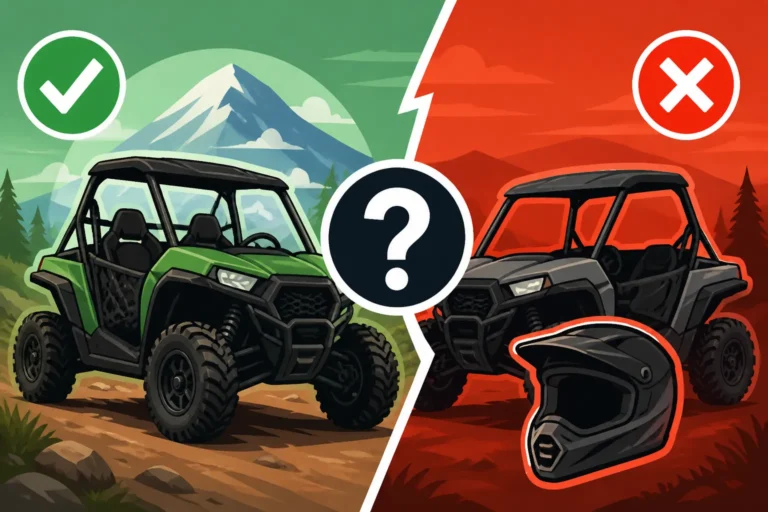
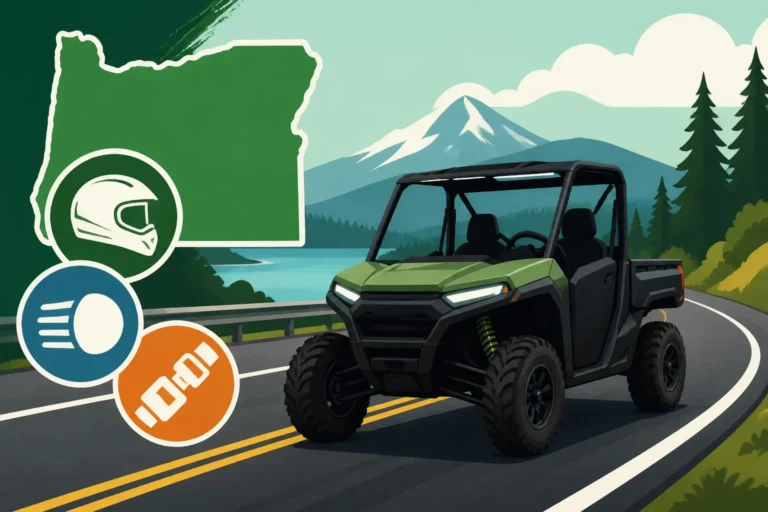
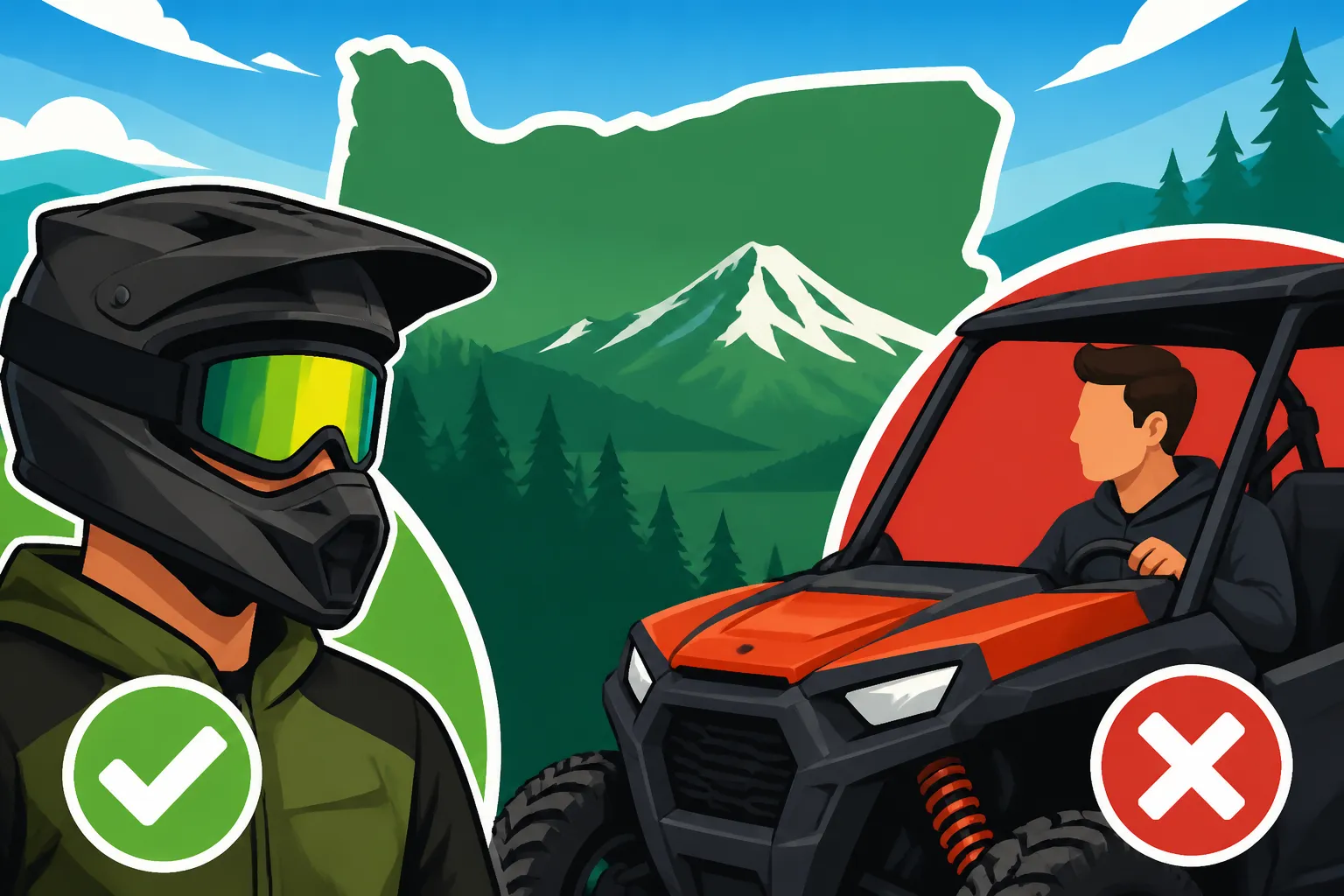
So, what's the big exception? For an adult operating or riding as a passenger in a Class II off-highway vehicle, a helmet is not required if the vehicle is equipped with both a roll bar or cage and seatbelts. This is a crucial point. It’s not just one or the other; you need both. The intent here is that the structural integrity of the roll cage provides significant protection in a rollover event, while the seatbelts keep you securely restrained within that protective zone.
This exemption is often why you'll see adults in modern side-by-sides (many of which fall into Class IV, but the principle sometimes extends if they meet specific criteria for safety features) without helmets, provided their vehicle has these factory-installed safety features. It's important to note that this is a specific exemption and should not be generalized. If your machine doesn't have a roll bar and seatbelts, or if it's a traditional Class I ATV or Class III motorcycle, the helmet rule still applies. While aftermarket enhancements from companies like SuperATV can significantly improve the safety and robustness of your machine with stronger roll cages, harnesses, and doors, these modifications don't inherently change the legal classification or helmet requirement for a vehicle that wasn't originally defined as Class II with these features. It's about the vehicle's design and equipment as defined by Oregon law, not simply adding an aftermarket roll cage to a Class I quad.
| Machine Type | Adult Operator Helmet Required? | Adult Passenger Helmet Required? | Key Features for Exemption (if applicable) |
|---|---|---|---|
| Class I ATV (Quad) | Yes | Yes | None |
| Class II OHV (e.g., Dune Buggy, UTV) | No (with specific features) | No (with specific features) | Roll Bar/Cage AND Seatbelts |
| Class III Off-Road Motorcycle | Yes | Yes | None |
| Class IV Side-by-Side (UTV) | Yes (unless it meets Class II criteria) | Yes (unless it meets Class II criteria) | Roll Bar/Cage AND Seatbelts |
Note: For all machine types, riders under 18 years old always require a helmet.
Beyond the Law: Why Helmets Are Always a Good Idea
Even with legal exemptions, there's a strong argument to be made for always wearing a helmet when you're off-road. The wilderness doesn't care about regulations; it presents its own set of challenges and unexpected situations where protection can make all the difference. As an experienced rider, I've seen enough close calls to know that an ounce of prevention is worth a pound of cure, every single time.
The Unpredictability of Off-Road Riding
Unlike paved roads, off-road trails are inherently unpredictable. You're dealing with constantly changing terrain: loose gravel, slick mud, hidden rocks, roots that grab your tires, and sudden dips or rises. Even a familiar trail can change dramatically after a rainstorm or heavy use. You could be cruising along perfectly one moment and encounter an unexpected obstacle the next, leading to a sudden stop, a fall, or even a rollover. [Riding Tillamook in the Rain] or [Snow on High Desert Trails] can highlight just how quickly conditions can shift.
These aren't hypothetical scenarios; they happen all the time. A small error in judgment, a momentary lapse in concentration, or an unforeseen trail hazard can instantly turn a fun day into a medical emergency. Wearing a helmet, even when not legally mandated, provides a critical layer of protection against these inevitable bumps and scrapes, or worse, serious head trauma. It's about preparing for the worst-case scenario, even if you hope it never happens.
Protecting Your Most Important Asset
Your brain is the most important asset you take with you on any ride. A traumatic brain injury (TBI) can have devastating, life-altering consequences, ranging from cognitive impairment and memory loss to severe physical disabilities. The cost, both human and financial, of a TBI far outweighs the minor discomfort or expense of a quality helmet. When you think about what you stand to lose, the decision to wear a helmet, regardless of the law, becomes a no-brainer.
Companies like SuperATV offer fantastic aftermarket upgrades for your machine – from heavy-duty bumpers and skid plates to full doors and windshields – all designed to make your ride safer and more enjoyable. These are excellent investments in overall machine protection and rider comfort. However, none of these replace the personal protection a helmet offers for your head. Even if your Class II or Class IV machine has a robust cage and seatbelts, a helmet can protect against smaller impacts, flying debris, or even the jolting forces within the cab during an abrupt stop. It’s about comprehensive safety, not just meeting the minimum legal threshold.
Disclaimer
This article is for general informational purposes only and does not constitute professional advice. Laws, prices and regulations vary by location and change over time. Consult a qualified professional for guidance on your specific situation.