Oregon Rules for an Electric UTV on a Road
It's incredibly frustrating when you invest in a cool new electric UTV, picturing yourself cruising down a quiet county road to the trailhead, only to discover that the rules for getting it on the pavement are murkier than a muddy trail after a spring storm. This guide will cut through the confusion and explain Oregon's specific regulations regarding electric UTVs on public roads, helping you understand what's possible and what's definitely not.
Understanding Oregon's ATV/UTV Classification System
Before we even talk about electricity or roads, we have to talk about how Oregon views your machine. The state has a very specific classification system for Off-Highway Vehicles (OHVs), and your electric UTV, regardless of its power source, falls into one of these categories. The problem is, most of these categories are designed only for off-road use, not for mingling with regular traffic on public highways.
The Four Classes of OHVs
Oregon law defines four distinct classes of OHVs. For most UTV owners, the focus will be on Class IV, but understanding all of them helps clarify why street legality is such a challenge.
- Class I (Quads/ATVs): These are the traditional four-wheelers, designed to be straddled by the operator. They typically have handlebars for steering. Your electric quad, if it fits these specifications, would be a Class I. These machines are explicitly not street legal in Oregon, except for very limited crossing purposes. You'll need an [Oregon ATV Permit for a Youth Quad] if it's a smaller model for kids.
- Class II (Off-Highway Motor Vehicles): This is where things get interesting, but also complicated. Class II vehicles are a broader category, often encompassing sand rails, dune buggies, and even some highly modified UTVs that can meet specific highway vehicle standards. The critical distinction here is that these vehicles can potentially be titled and registered for street use if they meet all the rigorous equipment and safety standards of a regular motor vehicle. However, it's not simply a matter of adding turn signals; it's a complete conversion process.
- Class III (Off-Road Motorcycles): These are dirt bikes. Again, if you happen to have an electric dirt bike, it falls here. Like Class I, these are generally not street legal.
- Class IV (Side-by-Sides/ROVs): This is where most electric UTVs will land. Class IV vehicles are designed to be ridden with a non-straddle seat (like a bench or bucket seat), have a steering wheel, and are typically wider than 50 inches. Most modern UTVs, whether gas or electric, fit this description. Unfortunately, like Class I and Class III, Class IV vehicles are generally not street legal in Oregon.
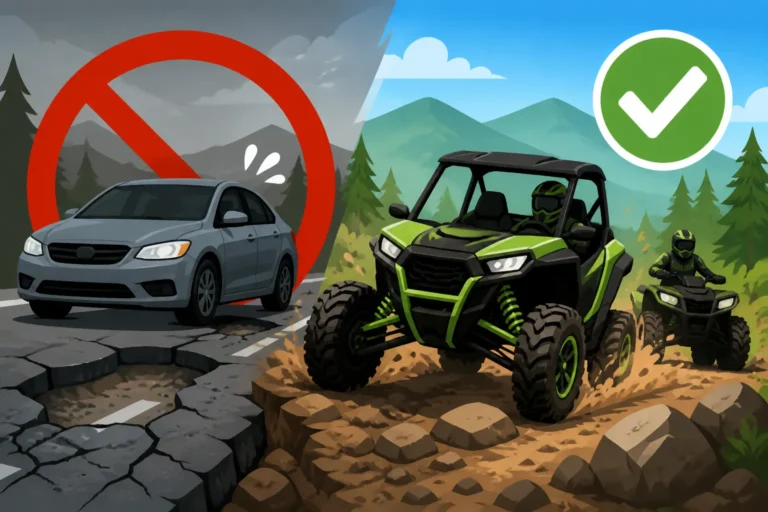
The key takeaway here is that your electric UTV, by its very nature as an "off-highway vehicle," is primarily intended for trails, dunes, and other designated off-road areas. To operate it on a public road, you're not just dealing with the "electric" part; you're fundamentally trying to change its legal classification from an OHV to a street-legal motor vehicle, which is a significant hurdle. Many people wonder, [Can You Plate a Side-by-Side in Oregon?] and the short answer for most is no.
Why "Electric" Doesn't Automatically Mean "Street Legal"
Many people assume that because an electric UTV is quiet and produces zero emissions, it might get a pass for street use, especially in communities that are keen on green initiatives. This is a common misconception and a source of significant frustration for owners. In Oregon, the power source (gasoline, electric, diesel) is largely irrelevant to its street legality. What matters is its fundamental design, its classification as an OHV, and whether it can meet the strict safety and equipment standards set for regular on-road vehicles.
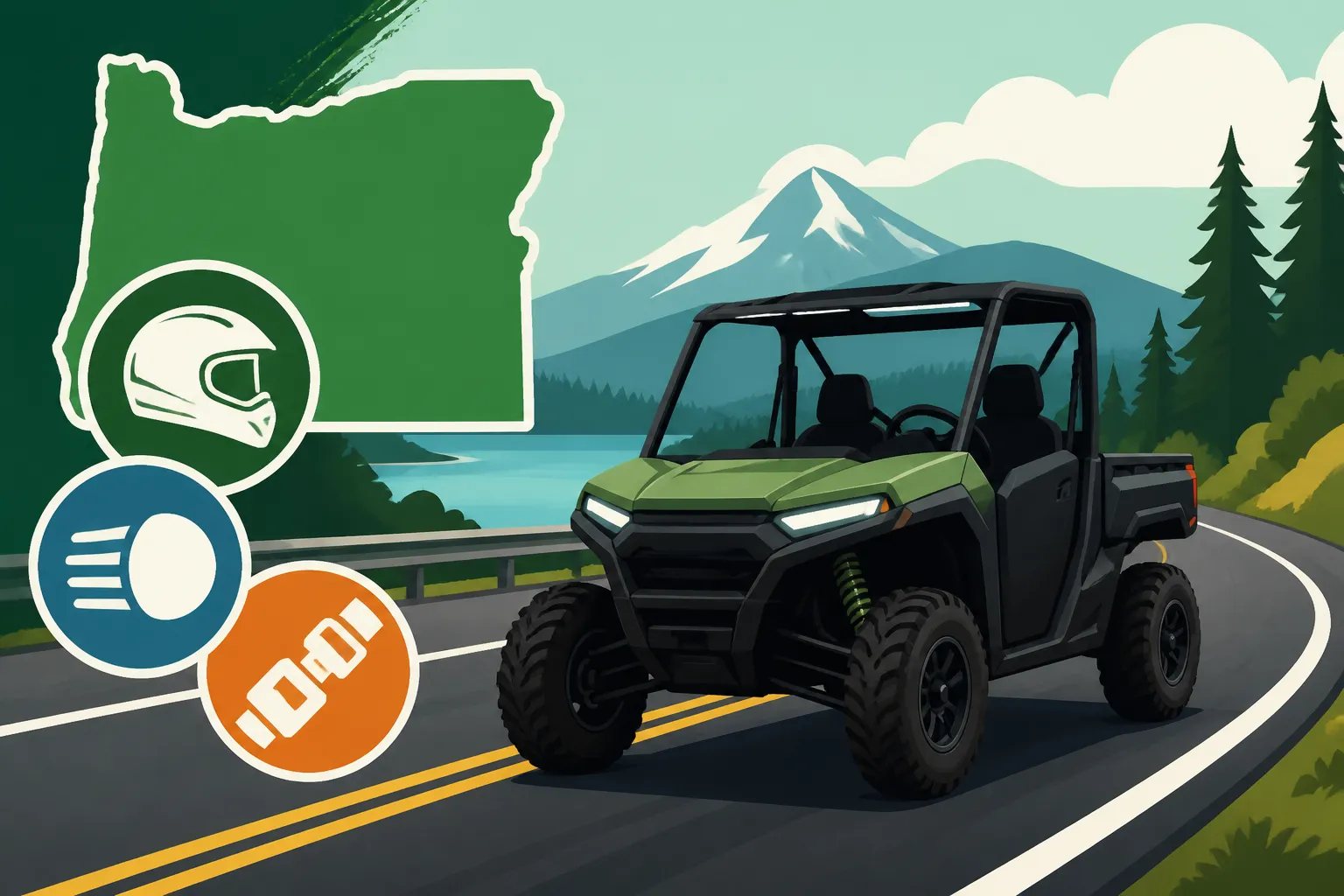
An electric UTV still has to contend with the same requirements as its gas-powered counterparts. It needs proper lighting (headlights, taillights, brake lights, turn signals, reflectors), a horn, DOT-approved tires, a windshield, mirrors, seat belts, and many other specific safety features to even be considered for street use. Furthermore, it must be capable of maintaining minimum speeds on certain roads, which can be an issue for some electric models designed primarily for low-speed off-road torque. Merely being electric doesn't exempt it from any of these checks and balances.
The Limited Avenues for On-Road Use in Oregon
While the general rule is "no street-legal UTVs," Oregon does have a few, very specific exceptions and designations that might allow for limited on-road operation. These are often misunderstood or misinterpreted, leading to tickets and confusion. It's crucial to know exactly what applies to your machine and your intended route.
Designated Highway Access Routes
Oregon has designated a handful of very specific highway access routes where OHVs, including UTVs, are permitted to travel on certain public roads. Currently, the most notable examples are in Lakeside and Sumpter. These routes are usually marked with clear signage and are designed to connect riders from staging areas or campgrounds to different trail systems or specific points of interest within those towns.
- Lakeside and Sumpter: These are the two primary examples of towns that have successfully navigated the process of designating limited routes for OHV access. In these areas, you might see side-by-sides, quads, and even sand rails sharing the road with cars, but only on the designated routes. Straying from these routes, even by a block, can result in a citation. These routes are a local solution to a local need, allowing riders to get from point A to point B without trailering. Understanding the precise boundaries is critical. You can learn more about [Oregon's Only Two Designated ATV Routes: Lakeside and Sumpter].
- Applying for New Routes: The process for designating new routes is rigorous and involves local government, community input, and approval from the Oregon Transportation Commission and the [Oregon Parks and Recreation Department's Role]. It's not a quick or easy process, so don't expect your local county to suddenly open all roads to UTVs. This explains [Why Most Oregon Towns Have No Route].
If you plan to ride on one of these routes, your electric UTV still needs its valid [Oregon's ATV Operating Permit] and decal, as well as all standard safety equipment required for OHVs (like a flag on the dunes). While you're on the designated route, you must obey all traffic laws, just like any other vehicle.
Riding Forest and County Roads
This is another area where many riders get confused. Just because a road is unpaved, gravel, or within a national forest, it doesn't automatically mean your electric UTV is street legal there. Many forest and county roads are indeed public roads, maintained by the U.S. Forest Service, Bureau of Land Management (BLM), or local counties.
- OHV Designations vs. Public Roads: Some forest roads are specifically designated as OHV trails or connector routes, and you can ride your permitted electric UTV on them. However, many other forest roads are considered public thoroughfares, even if they're gravel, and require a street-legal vehicle for normal travel. The distinction can be subtle and confusing, often requiring careful reading of local maps and signage. Always look for specific OHV signage, and when in doubt, assume it's a public road requiring a street-legal vehicle. [Riding a County Road in Grant County, Oregon] can be very different from a designated OHV route.
- The Six Counties Exception: While not a blanket "street legal" status, Oregon law allows counties to pass ordinances opening specific roads to OHV use. This is separate from the state-designated highway access routes. You'd need to check with individual county sheriff's offices or road departments to see if such ordinances exist for the roads you plan to ride. Even where allowed, these are typically limited to specific, often unpaved, county roads and usually come with their own set of rules regarding speed, time of day, and safety equipment. [The Six Oregon Counties That Opened Their Roads] is a testament to this patchwork approach.
In any scenario involving forest or county roads, your electric UTV must still adhere to all standard OHV requirements, including proper permitting and [Oregon Spark Arrester Requirement] (even for electric, though it's less about sparks and more about the vehicle classification), and sound limits if applicable.
Low-Speed Vehicles (LSVs) and Golf Carts: A Different Animal
This is a critical distinction, especially for electric vehicles. Many electric UTVs are designed for similar speeds and purposes as Low-Speed Vehicles (LSVs) or golf carts, but they are not the same thing in Oregon's eyes, and their street legality rules are vastly different. This is often where the biggest misunderstandings arise.
What is an LSV in Oregon?
Oregon defines a Low-Speed Vehicle (LSV) as a four-wheeled motor vehicle, other than a golf cart, that is designed to be operated at a maximum speed of 25 miles per hour and that is manufactured to meet certain federal safety standards. These vehicles must be capable of traveling at least 20 mph. Critically, LSVs can be legally operated on public roads with a speed limit of 35 mph or less, provided they are properly registered, insured, and equipped.
- Key Equipment: For an electric UTV to qualify as an LSV, it would have to be manufactured and certified to specific federal motor vehicle safety standards (FMVSS 500 for LSVs). This means it would need headlights, taillights, brake lights, turn signals, reflex reflectors, a rearview mirror (or two side mirrors), a parking brake, a VIN, seat belts, and a windshield. Crucially, most UTVs, even electric ones, are not manufactured to these LSV standards. You can't just add the parts; the vehicle itself has to be certified by the manufacturer. This is a common hurdle for many SuperATV aftermarket accessory owners who find great parts but realize the base vehicle isn't compliant.
- Registration and Insurance: If by some chance your electric UTV was an LSV, it would need to be titled and registered with the Oregon DMV, just like a regular car. It would also require mandatory liability insurance. This is a very different process from simply getting an OHV permit.
Golf Cart Rules
Golf carts have their own separate rules in Oregon, which are even more restrictive than LSVs. Generally, golf carts are only permitted on private property or on public roads within specially designated golf cart zones, usually found in planned communities or specific small towns that have passed local ordinances. For example, [Oregon Golf Cart Rules on Manzanita's Streets] are specific to that town.
- No General Road Use: A golf cart cannot just drive on any public road. It needs to be on a designated golf cart path or a road specifically opened by a local ordinance.
- Not a UTV: While some electric UTVs might resemble golf carts in speed or seating, Oregon law differentiates them. Your electric UTV, if it has off-road tires, higher ground clearance, and is marketed as an "UTV" or "side-by-side," will likely be classified as an OHV, not a golf cart, regardless of its electric power.
In summary, for your electric UTV to be street legal as an LSV or golf cart, it needs to meet very specific manufacturing and/or local ordinance criteria that most recreational electric UTVs simply do not. This is a fundamental barrier for many who wish to use their electric UTV for quick trips to the store or around the neighborhood.
What it Takes to Make Any UTV Street Legal in Oregon
If you're absolutely determined to get your electric UTV on public roads, you're looking at a full-blown conversion process to reclassify it as a Class II "Off-Highway Motor Vehicle" that meets all Oregon's highway vehicle requirements. This is a significant undertaking, not just a matter of adding a few accessories. It's often more practical to buy a vehicle specifically designed for road use or to only ride your OHV on designated trails.
The Class II Conversion Path
For your electric UTV to become street legal, it would essentially need to be reclassified as a Class II vehicle and meet the Oregon DMV's requirements for a regular motor vehicle. This is complex and expensive.
- Oregon's Class II: As mentioned earlier, Class II includes vehicles like sand rails and dune buggies that can be manufactured or extensively modified to meet highway standards. This is the only path for a recreational UTV to gain street-legal status in Oregon. [Oregon's Class II Under ORS 801.193] details the broad definition.
- Mandatory Equipment for Road Use: This list is extensive and non-negotiable for street-legal status:
- Lights: DOT-approved headlights (high/low beam), taillights, brake lights, turn signals (front and rear), and reflectors. All must be properly wired and functional.
- Mirrors: At least one rearview mirror, typically a driver's side mirror and an interior mirror, or two exterior mirrors.
- Windshield: A laminated safety glass windshield, with a functional wiper system. Many SuperATV windshields are great for protection, but they may not be DOT-approved for street-legal use without further modifications.
- Horn: A working horn audible from 200 feet away.
- Tires: DOT-approved street tires. Your knobby off-road tires are unlikely to pass muster for highway use.
- Brakes: A fully functional braking system, including a parking brake.
- Seat Belts/Restraints: DOT-approved seat belts for all occupants.
- Speedometer and Odometer: Functional units are required.
- Fenders/Mudguards: To prevent debris from being thrown by the tires.
- License Plate Mount: A clearly visible mounting location with illumination for the rear plate.
- Inspection and Certification: After adding all this equipment, your electric UTV would need to pass a rigorous inspection by the Oregon DMV or a certified inspector to ensure it meets all federal and state motor vehicle safety standards. This isn't just a casual glance; it's a deep dive into every component.
- Titling and Registration: If it passes inspection, you would then apply for a title and registration, paying all applicable fees. This is also when you'd need to provide proof of [Mandatory Insurance on Every Oregon Class II] vehicle, which is required for any street-legal machine.
This conversion process is rarely cost-effective for a standard electric recreational UTV. The expense of parts, labor, and the potential for not passing inspection often leads owners to conclude that it's simply not worth it. For most, an electric UTV is, and should remain, an off-road machine, requiring an [Oregon ATV Permit for an Electric Machine] for use on designated trails.
Insurance and Driver's License Considerations
Even if you manage to jump through all the hoops to make your electric UTV street legal as a Class II vehicle, you'll still face the same requirements as any other driver on the road:
- Mandatory Insurance: Oregon law requires all motor vehicles operating on public roads to have liability insurance. For a street-legal Class II electric UTV, this means purchasing a policy that meets the state's minimum coverage requirements. This is separate from any off-road insurance you might carry.
- Driver's License: The operator of a street-legal Class II electric UTV must possess a valid Oregon driver's license. The age and licensing rules for off-road use with an OHV safety card are entirely different from those for operating a registered vehicle on public highways.
Essentially, once your electric UTV achieves street-legal status, it's treated just like a small car in the eyes of the law, with all the associated responsibilities and requirements. If your goal is to have a low-speed electric vehicle for neighborhood cruising, exploring [Oregon Low-Speed Vehicle Rules] or even [Oregon Golf Cart Street Rules] might lead you to a different type of purchase altogether.
Where to Ride Your Electric UTV in Oregon
Given the significant challenges of making an electric UTV street legal in Oregon, the most practical and legal approach is to enjoy your machine on the vast network of trails and riding areas specifically designated for off-highway vehicles.
Dedicated OHV Riding Areas
Oregon boasts incredible OHV opportunities, from the iconic coastal dunes to challenging forest trails and high-desert play areas. These are the places where your electric UTV will shine and where you can ride legally with your [Oregon's ATV Operating Permit] without worrying about street-legal conversions.
- Oregon Dunes National Recreation Area: This is arguably Oregon's most famous OHV destination, offering miles of towering sand dunes. Your electric UTV can provide a unique, quiet experience here, but you'll still need your permit, a whip flag, and adherence to all dune rules, including seasonal closures for wildlife. You can find out more about [Oregon Dune Riding Areas Compared].
- Tillamook State Forest: Located closer to Portland, the Tillamook State Forest offers hundreds of miles of diverse trails, from muddy climbs to scenic forest routes. [Oregon's Tillamook State Forest Trails] provide excellent opportunities for electric UTVs, allowing you to explore the lush Coast Range.
- Millican Valley: East of Bend, Millican Valley offers high-desert terrain with a mix of trails and open riding areas. This is another fantastic spot for electric UTVs, providing a different kind of adventure away from the coast.
- Other Areas: There are many other areas throughout the state, including Prospect OHV near Crater Lake and Christmas Valley's inland dunes, all offering unique riding experiences. [Where to Ride an ATV in Oregon] offers a comprehensive overview.
When riding in these designated OHV areas, remember that while you're off the pavement, you still have rules to follow regarding safety gear (like helmets), sound limits, spark arresters (even for electric, as it's part of the OHV classification), and respecting closures or private land boundaries.
Planning Your Ride
Always check local regulations and trail conditions before you go, especially regarding fire season closures or specific area restrictions. Using an electric UTV means being mindful of battery range and charging opportunities, which might differ from gas-powered machines. Consider how far you can travel on a charge and where you might need to return for a top-up. Many SuperATV accessories like cargo boxes or extra battery mounts can help you extend your range or carry charging equipment if needed.
The most important thing is to understand that Oregon's rules are designed to keep everyone safe, whether on or off the road. While it might be disappointing that your electric UTV isn't easily street legal, the state offers incredible opportunities to enjoy it in its natural habitat – the trails!
| Feature | Recreational Electric UTV (OHV) | Low-Speed Vehicle (LSV) | Golf Cart | Street-Legal Class II (Converted UTV) |
|---|---|---|---|---|
| Primary Use | Off-road recreation | Neighborhood/Local travel | Golf courses, specific communities | General on-road travel |
| Power Source | Electric (or Gas) | Electric (typically) | Electric (typically) | Electric (or Gas) |
| Street Legal (General) | No (except specific routes/laws) | Yes (on roads ≤ 35 mph) | Only on designated routes/ordinances | Yes (like a regular vehicle) |
| Oregon Classification | Class I or Class IV (OHV) | Separate LSV definition | Separate Golf Cart definition | Class II (OHMV) |
| Permit/Registration | OHV Permit (decal) | DMV Title & Registration | Varies by local ordinance | DMV Title & Registration |
| Insurance | Optional (for OHV permit) | Mandatory (liability) | Varies | Mandatory (liability) |
| Driver's License | OHV Safety Card (age-dependent) | Standard Driver's License | Standard Driver's License | Standard Driver's License |
| Required Equipment | Basic OHV safety, flag (dunes) | FMVSS 500 certified, lights, etc. | Basic safety, as required by ordinance | Full DOT standards, lights, windshield, etc. |
Disclaimer
This article is for general informational purposes only and does not constitute professional advice. Laws, prices and regulations vary by location and change over time. Consult a qualified professional for guidance on your specific situation.