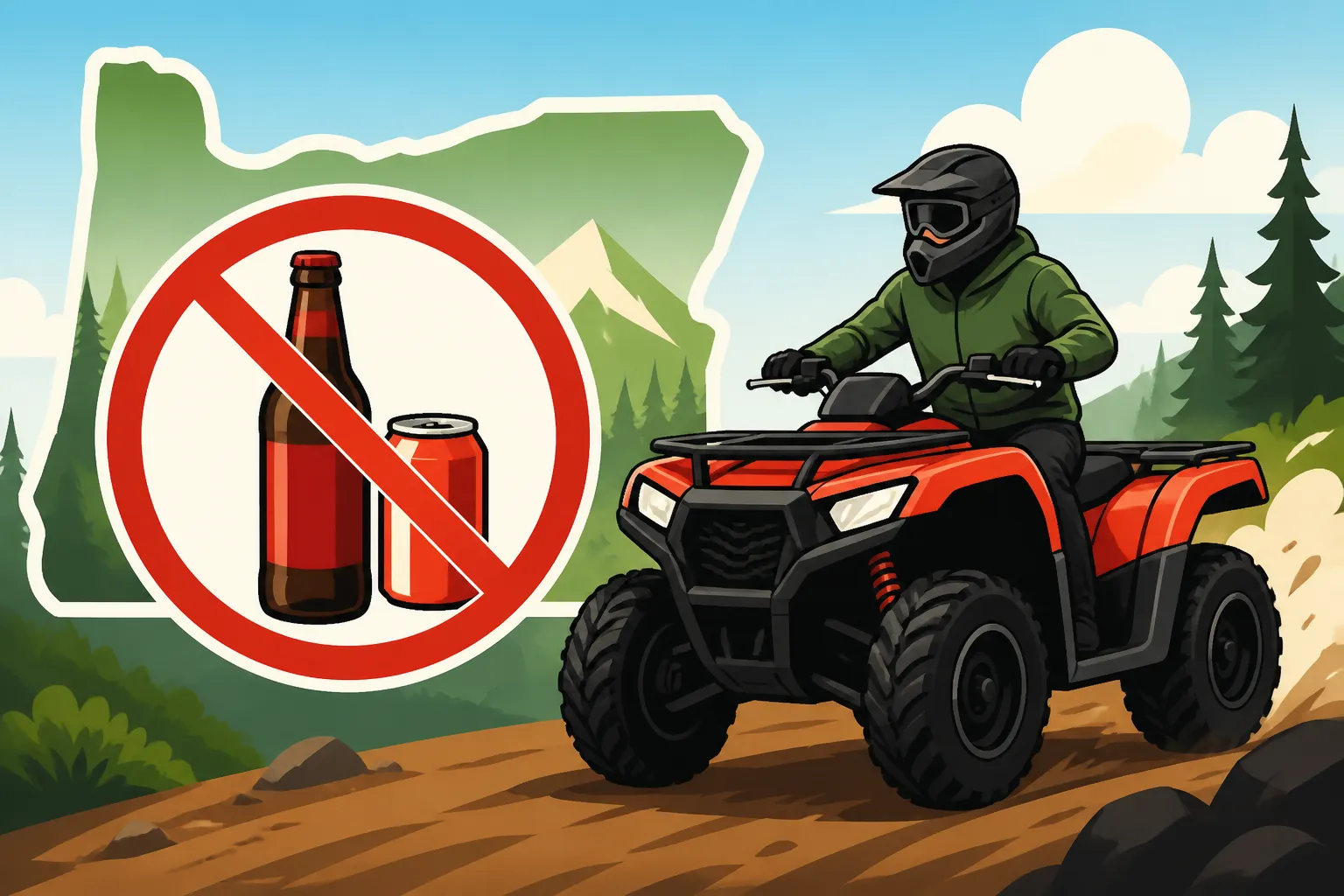
Oregon Open Container Rules on an ATV
There's nothing quite like heading out on your ATV, feeling the wind, and exploring Oregon's incredible trails and backroads. But as much as we love the freedom of off-road riding, it's easy to get confused about what's allowed and what's not, especially when it comes to things we might do in a regular car. One area that often trips riders up is the open container law – can you have an alcoholic beverage with you on your quad or side-by-side? This guide will clear up that confusion, diving deep into Oregon's specific rules so you can ride safely and legally, avoiding any unwelcome surprises from law enforcement.
The Basics of Oregon's Open Container Law (and Why ATVs Are No Exception)
It’s tempting to think that once you're off the paved highways and out in the backcountry, the rules somehow become less stringent. After all, you're not in a "car," right? And you're not on a "road" in the traditional sense. But this line of thinking can lead you straight into trouble. Oregon's open container laws are designed to prevent impaired operation of any motor vehicle, and that includes your ATV or UTV, whether you're ripping through the sand dunes or cruising down a forest service road.
What "Open Container" Truly Means for Any Vehicle
Let's start with the definition of an "open container" itself, because it's broader than many people realize. In Oregon, an open container is essentially any bottle, can, or other receptacle containing an alcoholic beverage that has been opened, or whose seal has been broken, or from which a portion of the contents has been removed. It doesn't matter if you've only had one sip or if you’ve recapped it; if the seal is broken, it's considered open.
Imagine you're out for a ride, and you've got a cooler strapped to your SuperATV cargo rack. Inside, there's a six-pack of your favorite craft beer. If you pop one open, take a drink, and then put it back in the cooler, that container is now "open" in the eyes of the law, even if you put the cap back on or it’s mostly full. The spirit of the law is simple: if it's readily accessible and could be consumed, it's a no-go. This applies whether it’s a standard beer can, a wine cooler, or even a fancy growler that you brought along for a post-ride celebration – if the seal is broken before you're done riding, it's an open container.
The Broad Reach of the Law: It's Not Just Cars
This is where the rubber meets the trail, or rather, where the law applies to the trail. Many riders mistakenly believe that open container laws only apply to street-legal vehicles on public roads. However, Oregon's statutes are far-reaching. They typically apply to "motor vehicles" operated on "highways" or "premises open to the public." The definition of a "highway" in Oregon is also quite broad and can include any public way or place that's maintained for vehicular travel. This means that many of the places we love to ride our ATVs and UTVs—forest service roads, county gravel roads, and even designated OHV trails—can fall under this umbrella.
So, while it might feel like you're in the middle of nowhere and nobody's watching, the reality is that the law follows you. Enforcement agencies, including Oregon State Police, county sheriffs, and even Forest Service rangers, are well aware that OHV areas are considered "premises open to the public" and often patrol these spots. The key takeaway is this: if you're operating your ATV or UTV anywhere that the public has access for vehicular travel, you are subject to Oregon's open container laws. It's a common frustration for riders who feel the rules are overly strict in a recreational setting, but understanding and respecting them is crucial for a smooth day out.
Specific Scenarios: Where Oregon's Open Container Rules Apply to ATVs
Navigating the various types of riding areas in Oregon can be a bit of a maze, and each one might feel like it has its own set of unwritten rules. But when it comes to open containers, consistency is key: if it's public land and accessible to vehicles, the law is likely in effect. Let's break down some common scenarios.
On Designated OHV Trails and Riding Areas
Oregon boasts incredible designated OHV areas, from the vast stretches of the [Oregon Dunes National Recreation Area] to the challenging singletrack of [Oregon's Tillamook State Forest Trails] or the high desert landscapes of [Millican Valley Outside Bend, Oregon]. Within these parks and riding areas, you are definitely subject to open container laws. This applies not just on the trails themselves but also in staging areas, parking lots, and even some campsites within the boundaries if they are accessible by vehicle.
Think about pulling into a staging area like Spinreel or Browns Camp before your ride. While you might be prepping your gear and visiting with friends, if you have an open alcoholic beverage in your machine, or even sitting out on a tailgate while you're still "operating" or "in control" of your ATV, you're at risk. Rangers and other law enforcement frequently patrol these areas, and they are trained to look for violations. It's a common sight for riders to finish up a day on the trails, head back to camp, and then crack open a cold one. That's the safe and legal way to do it.
On Forest Service and County Roads
Many of Oregon's most scenic riding opportunities come from exploring the extensive network of Forest Service roads and county gravel roads. These roads often connect trails, provide access to remote camping spots, or simply offer miles of beautiful, unpaved cruising. It's easy to assume these aren't "real" roads, but they are. When you're [Riding Forest and County Roads in Oregon], you are considered to be operating on a public thoroughfare, and that means open container laws are fully in force.
Consider a long day exploring the high desert near Christmas Valley. You might be a hundred miles from the nearest paved road, on a dusty track maintained by the Bureau of Land Management or the Forest Service. Even here, having an open can of beer in your cup holder is a violation. The law doesn't differentiate between the condition or maintenance level of the road; if it's open to public vehicular travel, it's treated like any other road. This is why it’s so important to be mindful, even when you feel completely alone. You can find detailed information on how these roads are managed in resources like [Oregon Rules for Riding a Forest Road] and [Oregon Rules for Riding a County Gravel Road].
Crossing Highways and Riding Designated ATV Routes
Oregon has a couple of unique situations where ATVs can legally access public roads: the specially designated ATV routes in Lakeside and Sumpter. These are [Oregon's Only Two Designated ATV Routes: Lakeside and Sumpter] where OHVs are permitted to ride on paved public roads under specific conditions. In these areas, there should be absolutely no question that open container laws apply, just as they would for any car. You are sharing the road with regular traffic, and the same rules of safe operation are paramount.
Even outside these designated routes, riders sometimes need to cross a highway to get from one section of a trail system to another. While these crossings are usually quick and direct, they are still moments when your ATV is legally on a public road. Therefore, having an open container during a [Oregon Rules for Crossing a State Highway] is a clear violation. The best practice is always to keep all alcoholic beverages securely stowed and sealed until you're completely finished riding for the day and are at a private camping spot or home.
Consequences and Common Misconceptions
It’s easy to get caught up in the fun of riding and let small details slip, but when it comes to open containers, ignoring the rules can lead to real headaches and financial penalties. Understanding the gravity of the consequences and debunking common myths can help keep your rides safe and legal.
The Legal Penalties: Fines and More
An open container violation in Oregon is typically classified as a Class C traffic violation. While this might sound minor, it carries a fine that can significantly impact your wallet. Remember, these aren't just polite suggestions; they are enforceable laws. A single infraction can cost you a few hundred dollars, and that's money you'd much rather spend on gear, fuel, or another great trip!
Beyond the immediate fine, there can be compounding issues. If a law enforcement officer finds an open container, it might lead them to suspect impaired driving, even if you feel perfectly fine. This can escalate to sobriety tests and, if you fail, a much more serious charge of operating under the influence (OUI). An OUI can result in hefty fines, loss of driving privileges (yes, even for ATV operation), mandatory alcohol education, and even jail time. In severe cases, especially if combined with other violations or safety concerns, your ATV could even be impounded. No one wants to end a riding day watching their machine get loaded onto a tow truck. While these are different, it's worth noting the seriousness of similar penalties discussed in [Oregon Fines for Riding Without a Permit], as the enforcement approach for traffic violations is consistent.
Safely Transporting Alcohol on Your ATV
So, does this mean you can't bring any alcohol with you on a multi-day trip? Absolutely not! The key is to transport it safely and legally, meaning all containers must be sealed and inaccessible for consumption while riding. Think of it this way: if you’re riding through a bumpy section of trail and you need to grab something, the alcohol should not be the easiest thing to reach.
Here’s how to do it right: Keep all alcoholic beverages in their original, sealed containers. Place them in a secure storage compartment, like a sturdy cargo box on your ATV or UTV. Many riders utilize robust storage solutions from companies like SuperATV that offer secure, waterproof cargo boxes designed specifically for off-road vehicles. Make sure these containers are out of the immediate reach of both the operator and any passengers. The goal is to prevent immediate consumption and clearly demonstrate to any patrolling officer that you are transporting, not consuming, alcohol. This level of diligence also applies to other items, as outlined in [Oregon Rules for Carrying a Firearm on an ATV], where proper storage is paramount.
Why These Rules Matter: Safety First
Behind every law, there's a reason, and with open container rules, it's overwhelmingly about safety. Operating an ATV or UTV requires your full attention, quick reflexes, and sound judgment. Trails can be unpredictable, conditions can change rapidly, and hazards like downed trees, sudden turns, or other riders can appear without warning. Even a small amount of alcohol can impair your judgment, slow your reaction time, and reduce your ability to assess risks accurately.
The consequences of impaired riding extend beyond just a ticket. It significantly increases your risk of an accident, which could lead to serious injuries for yourself or your passengers. It also puts other riders, hikers, and even wildlife at risk. The rules are not there to spoil your fun; they are there to protect everyone who uses Oregon's amazing outdoor spaces. Responsible riding means making choices that prioritize safety, and that includes keeping the alcohol sealed until the ride is truly over.
Best Practices for Responsible Riding and Enjoyment
Enjoying the great outdoors on your ATV or UTV in Oregon is an experience unlike any other. Making sure that experience is safe and legal is paramount. When it comes to alcoholic beverages, a little planning and common sense go a long way in ensuring a stress-free trip.
Planning Your Refreshments Wisely
The simplest way to avoid open container issues is to plan your refreshments thoughtfully. If you want to enjoy an adult beverage, save it for after your ride, when your machine is parked, keys are out of the ignition, and you're settled into your campsite or back home. Pack plenty of water, sports drinks, and non-alcoholic options for hydration during your ride. Staying hydrated is crucial for maintaining focus and energy on the trails, especially on hot days or during strenuous rides.
For those multi-day trips where you want to have a cold beer at the end of a long day, ensure all alcoholic beverages are purchased sealed and remain sealed until you're truly done riding. Store them securely in a cooler or cargo box, ideally out of immediate reach in your side-by-side or quad. This approach respects the law and clearly separates your riding time from your relaxation time, reducing any ambiguity for law enforcement. Consider [Oregon Riding That Costs Nothing but the Permit] as a pure riding experience, where refreshments should be all about hydration.
Designated Driver for Your ATV Group?
The concept of a "designated driver" isn't just for cars heading to a party; it's a valuable practice for ATV groups as well. If your group plans to have alcoholic beverages after the ride, it’s a smart idea to ensure at least one person remains completely sober. This designated sober individual can be responsible for any late-day maneuvers, emergency situations, or simply driving the tow vehicle and trailer.
Having a clear-headed individual ensures that if a mechanical issue arises, someone is capable of addressing it without impaired judgment. It's also crucial if there's an injury or an unforeseen event that requires a quick response or communication with emergency services. This commitment to safety elevates the experience for everyone, making sure that even after the day's adventure, everyone gets home safely.
Understanding Local Ordinances and Ranger Discretion
While state law provides the overarching framework, it's important to remember that local jurisdictions and specific land management agencies can sometimes have additional rules or more stringent interpretations. For example, a particular county or a specific park might have a blanket ban on alcohol in certain areas, regardless of whether it's open or sealed. Always check the specific regulations for the [Oregon OHV Areas Near Portland] or [Oregon Dune Riding Areas Compared] where you plan to ride. Information is usually available on the managing agency's website or at staging area kiosks.
Furthermore, while laws are written, their enforcement often involves an officer's discretion. A ranger might observe behavior that, while not a direct violation, suggests a potential for future issues. Being respectful, cooperative, and clearly demonstrating that you understand and follow the rules goes a long way. The safest bet is to eliminate any doubt: if you're riding, keep all alcohol sealed and stowed. If you're done riding and at camp, enjoy responsibly.
| Container Status | Example | Legal on ATV While Operating? | Location |
|---|---|---|---|
| Sealed | Unopened beer can, full wine bottle with unbroken seal | YES (if properly stowed) | Cargo box, cooler, out of reach |
| Open | Half-empty soda bottle with alcohol, wine bottle with cork reinserted, beer can with broken tab | NO | Anywhere in or on the ATV |
| Empty | Crushed empty beer can | NO (still considered an open container if it previously held alcohol and was consumed during operation) | Anywhere in or on the ATV |
Disclaimer
This article is for general informational purposes only and does not constitute professional advice. Laws, prices and regulations vary by location and change over time. Consult a qualified professional for guidance on your specific situation.