Crossing a Paved Highway at a Right Angle
Ah, the moment every Oregon off-road rider knows: you're in the groove, the dirt is flying, the engine's humming a happy tune, and then BAM! You hit a paved road. It’s a common scenario, especially when trying to connect different trail systems or simply get from one section of public land to another. That sudden switch from unpaved bliss to asphalt often brings a jolt of anxiety, wondering if you're doing it right, if a friendly ranger is watching, or worse, if you're accidentally breaking a rule. This guide is all about demystifying that crucial, quick maneuver: crossing a paved highway at a right angle in Oregon, helping you navigate these moments safely and legally so you can get back to the good stuff without a worry.
Understanding the Oregon Rules for Crossing Paved Roads
Let’s be honest, nobody wants to get a citation just because they needed to cross a road to keep riding. Oregon has specific rules for how ATVs and UTVs interact with paved highways, and while the state generally restricts OHV use on public roads, there are allowances for crossing. It’s all about safety and preventing accidents, both for you and for regular road traffic. The core principle for off-highway vehicles (OHVs) is that unless a road is specifically designated as an access route or a particular county has an ordinance allowing broader use, you generally cannot ride on paved highways. However, simply crossing one to access another trail or riding area is often permitted, provided you do it correctly.
Why a Right-Angle Crossing is Mandated
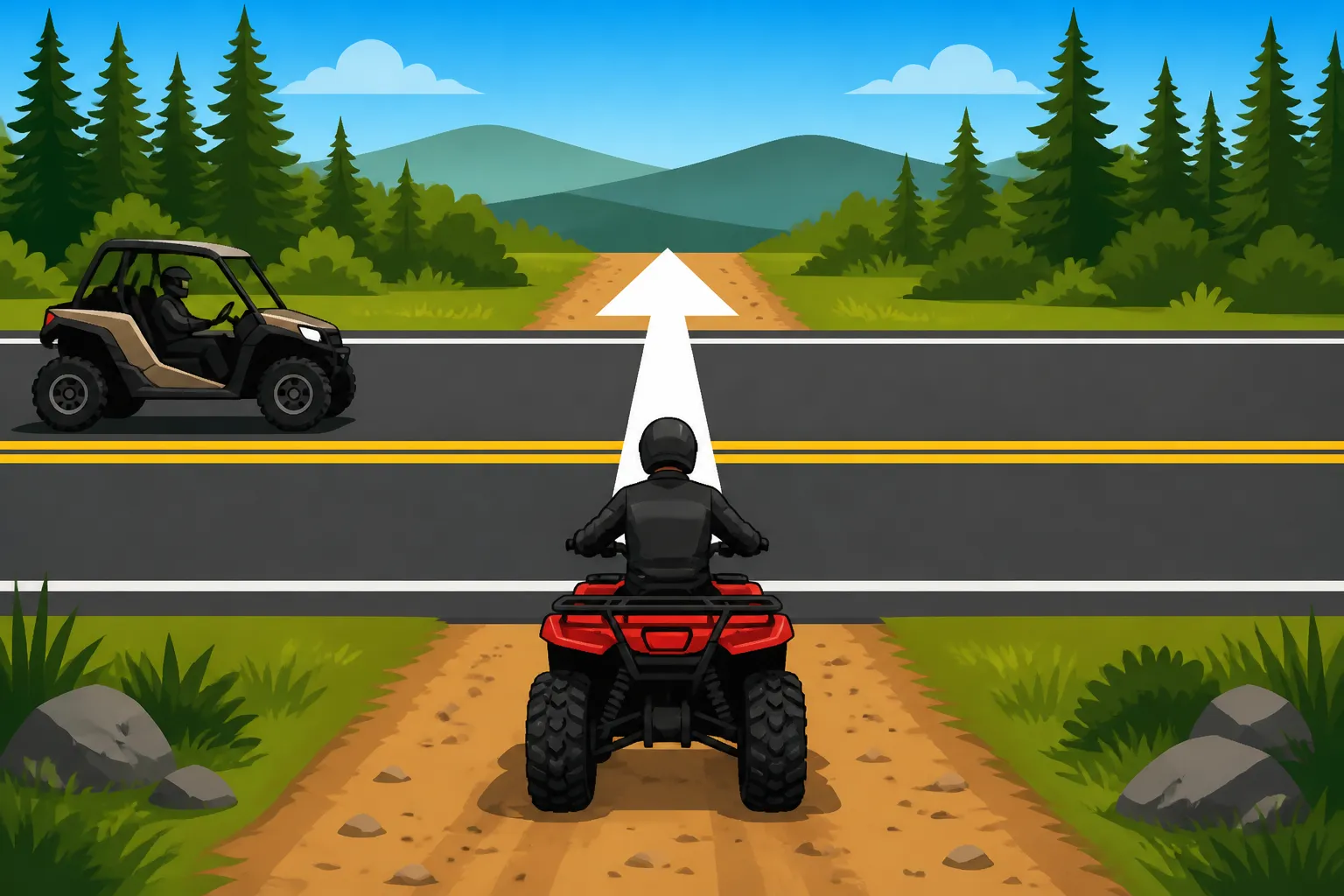
You might wonder why Oregon specifically dictates a "right-angle" crossing. It's not just some arbitrary rule designed to make things complicated; it's a critical safety measure. Imagine trying to merge onto a busy highway at a shallow angle on a nimble ATV or a wider UTV. Your visibility is often limited compared to a passenger car, your acceleration and braking characteristics are different, and the perception of other drivers might be impaired. A right-angle approach minimizes the time your vehicle is actually in the traffic lane, reducing the risk of a collision. It makes your intentions clear to oncoming traffic: you're crossing, not trying to ride alongside them. This quick, perpendicular movement reduces the chance of misjudgment by other drivers and makes the crossing as predictable as possible for everyone involved. It’s about getting from point A on one side of the road to point B on the other, as directly and quickly as safety allows.
When Crossing is Permitted Versus Prohibited
It’s crucial to know the difference between a legal crossing and an illegal ride down the road. Oregon law is pretty clear: an OHV, including most ATVs and UTVs, is generally not street legal for sustained travel on paved highways. There are exceptions for certain Class II machines with proper registration and insurance, and designated [Oregon's Only Two Designated ATV Routes: Lakeside and Sumpter] where you can ride on pavement. But for the vast majority of our machines, a paved road is a barrier, not a path. You are typically allowed to cross a paved highway at a right angle to get from one section of an OHV trail or riding area to another. This usually applies when two legal off-road segments are directly opposite each other on either side of a public road. What you cannot do is ride down the paved shoulder, use the highway to connect distant trailheads, or treat it as a shortcut. The moment your wheels touch pavement, you are expected to execute the crossing with intent and immediate exit. Any deviation could lead to a [Oregon Fines for Riding Without a Permit] or other citations.
The Critical Steps for a Safe Right-Angle Crossing
Okay, so you’ve found yourself at the edge of the pavement, needing to cross. This isn’t the time to hesitate or guess. There’s a specific, methodical way to approach this to ensure your safety and adherence to Oregon law. Think of it like a carefully choreographed dance with traffic, where your moves are precise and predictable.
Stopping at the Edge of the Pavement
This first step is non-negotiable: you must come to a complete stop before entering any paved roadway. Do not roll out, do not slow down and look – stop. Position your machine as close to the edge of the paved surface as safely possible without impeding traffic or losing traction in loose gravel. This gives you the best vantage point to see oncoming vehicles in both directions. It’s also a clear signal to any drivers on the highway that you are aware of their presence and are waiting for a safe opportunity. Use this moment to take a deep breath, get your bearings, and scan the road thoroughly. Look left, then right, then left again. Check your mirrors if your machine is equipped with them – a good wide-angle mirror from a brand like SuperATV can significantly improve your rearward visibility, especially on a wider UTV where you might have blind spots. Make eye contact with any drivers you see if possible, ensuring they see you. This pause isn't just a legal requirement; it's your first line of defense.
Yielding to All Oncoming Traffic
Once stopped, your primary directive is to yield the right-of-way to all vehicles on the paved highway. This means cars, trucks, motorcycles, bicycles – anything that is legally operating on that road has priority. Do not assume a driver sees you or will slow down for you. You must wait until there is a sufficient gap in traffic that allows you to cross safely without forcing any oncoming vehicle to alter its speed or direction. This isn't a race; it's a calculated decision. Consider the speed of oncoming traffic, the width of the road you're crossing, and the acceleration capabilities of your machine. A wide, busy highway requires a much larger gap than a quiet country road. Patience is your best friend here. Rushing this step is one of the most common causes of near-misses and accidents. If there's any doubt, wait. It's better to spend an extra minute waiting than to risk a collision.
Executing the Crossing Directly and Quickly
When you've identified a clear, safe window, it’s time to move. Engage your gear, look one final time, and then proceed directly across the paved highway at a right angle. This isn't the time for fancy maneuvers or cutting corners. Drive straight across, perpendicular to the flow of traffic, aiming for the opposite edge of the pavement. Accelerate smoothly but firmly to minimize the time you spend on the paved surface. The goal is to get off the road as efficiently as possible and back onto the dirt or designated off-road area. Avoid swerving, making wide turns, or attempting to ride parallel to the highway for even a short distance. Your focus should be 100% on the crossing itself, from pavement edge to pavement edge. Once your tires are fully off the paved surface and you're back on the trail or staging area, you can relax and continue your ride.
Essential Gear and Visibility for Road Intersections
Safety on the trails isn't just about how you ride; it's also about what you wear and what equipment you have on your machine. This becomes even more critical when you're interacting with public roads, where you're sharing space with vehicles that are often larger and moving much faster. Being seen is paramount, and having the right gear can make all the difference.
Enhancing Visibility: Lights, Flags, and Reflectors
When preparing to cross a paved highway, anything that makes you more visible to oncoming traffic is a huge asset. Your machine should already have working headlights and taillights, which are required for most OHV areas. Consider turning them on even during the day, especially if it's overcast or visibility is poor. Adding extra auxiliary lights, even if not strictly required, can greatly increase your presence. A brightly colored whip flag is mandatory in many riding areas, particularly the Oregon Dunes, and having one can also help car drivers spot you over crests or around turns before you even reach the pavement. If you frequently ride in areas where you might encounter roads, especially at dawn, dusk, or night, consider adding reflective tape to your machine or wearing reflective gear. You can find high-quality [Oregon Lighting Requirements for Road Use] options and safety accessories from brands like SuperATV that are designed to withstand off-road abuse while enhancing your visibility on and off the trails. Remember, every little bit of conspicuity helps prevent you from becoming an unseen hazard.
Rider Gear: Helmets and Eye Protection
Beyond your machine, your personal protective equipment is vital. In Oregon, anyone riding an ATV or UTV must wear a [Oregon Helmet Law for ATV Riders]. This isn't just for impacts on the trail; it's just as important, if not more so, when you're briefly exposed to road traffic. A DOT-approved helmet provides critical head protection in case of an accident. Eye protection, such as goggles or a face shield, is also essential. Not only does it protect your eyes from dust, debris, and branches on the trail, but it also ensures clear vision when you're scanning for traffic. Imagine trying to make a critical judgment about a safe crossing gap with mud splattered on your goggles or dust irritating your eyes. Clear, unobstructed vision is key to safe road interactions, so always ensure your eye protection is clean and properly fitted.
Communication and Spotters for Group Crossings
Riding with a group is a blast, but it adds a layer of complexity when crossing paved roads. It's not safe for an entire convoy of OHVs to try and cross simultaneously. Designate a lead rider and a sweep rider. The lead rider should stop, assess traffic, and signal when it's safe for one machine to cross. Each rider should then cross individually, maintaining a safe distance from the machine in front, and repeating the stop, look, and yield process. For larger groups, or at particularly busy intersections, consider having a spotter. A spotter (who must be off the paved road themselves) can help signal when the road is clear. This person could use hand signals or even a two-way radio to communicate with the lead rider, ensuring a coordinated and safe crossing for the entire group. This kind of teamwork minimizes risk and prevents stragglers from being caught in unsafe situations. [Oregon Rules for a Group Ride] often emphasize staggered riding and clear communication, and this extends to road crossings.
Common Mistakes and How to Avoid Them
Even experienced riders can sometimes get complacent or make errors when it comes to road crossings. It's easy to fall into bad habits, especially if you're riding with others who might not be following best practices. However, these small slips can have big consequences.
Misjudging Traffic Speed and Distance
One of the most dangerous mistakes is misjudging how fast oncoming traffic is moving or how much distance you actually need to cross safely. On a wide-open highway, cars often travel much faster than they appear, and what looks like a distant vehicle can be upon you in seconds. The perception can be even more challenging if you're looking into bright sunlight or dealing with fog. Your ATV or UTV, while nimble, might not accelerate as quickly as you think, especially if you're climbing a slight incline or carrying a heavy load. It's always better to err on the side of caution. If you're unsure, wait for a larger gap. Don't try to "beat" traffic. A common scenario is when a driver sees you and thinks you're going to proceed, but you hesitate, leading to confusion. Be decisive once you have a clear opening, but only after you are absolutely certain of that opening. This careful assessment of [Crossing a Highway on an Oregon ATV] is paramount.
Riding Alongside the Pavement or Shoulder
This is a big no-no and a common source of citations. Remember, the rule is to cross at a right angle – not to ride along the shoulder or even parallel to the highway for a short distance. It might seem convenient to scoot down the shoulder for a hundred feet to a better crossing point or to connect to another trail you can see just ahead, but this is illegal and incredibly dangerous. Paved shoulders are for cars that might need to pull over, and they put you in direct proximity to high-speed traffic for an extended period. Your machine is designed for off-road travel, not highway shoulders. Stick to the immediate, perpendicular crossing. If the spot where you initially encounter the road isn't safe for a direct crossing, you need to find an alternative off-road route or choose a different access point. Riding on the shoulder also gives the impression that you intend to travel on the highway, which could prompt a law enforcement stop.
Assuming You Have the Right-of-Way
Never, ever assume you have the right-of-way when attempting to cross a paved highway in Oregon. Oncoming traffic always has the right-of-way. This mindset is crucial for safe operation. Even if you see a driver wave you on, proceed with extreme caution and only if you are absolutely sure it’s safe. That driver might be well-intentioned, but they might not see a second vehicle, or their judgment of your speed and distance might be off. Rely on your own assessment of the situation, not on signals from other drivers. Your job is to yield and cross when clear, not to be granted passage. This applies whether you're dealing with a quiet logging road or a busy state highway. The law is clear: [Oregon Rules for Crossing a State Highway] prioritizes highway traffic.
Legal Requirements and Documentation
Beyond the immediate mechanics of a safe crossing, there are legal requirements you need to meet to be riding your ATV or UTV in Oregon at all. Even for a brief road crossing, you’re still subject to these regulations. Ignoring them can lead to fines and spoil an otherwise perfect day on the trails.
Oregon ATV Operating Permit and Safety Card
Before you even think about hitting the trails or crossing a road, ensure your machine has a current [Oregon's ATV Operating Permit]. This permit is essentially your registration for off-road use and the decal must be properly displayed on your machine. You can pick up an [Oregon ATV Permit Cost] at various locations, including many dealerships or online. In addition to the permit, almost everyone operating an ATV or UTV in Oregon needs an [Oregon's ATV Safety Education Card]. This card proves you've completed a state-approved safety course and understand the rules of the trail. While there are some exceptions for drivers with a valid driver's license operating certain Class IV machines, it's generally a good idea for every rider to have one. Carry both your permit card and your safety card with you when you ride – a waterproof pouch or a secure spot on your machine is ideal in Oregon's often damp climate. A ranger or trooper might stop you at a [What a Ranger Checks at an Oregon Staging Area] and ask to see these documents, even if you’re just attempting to cross a road.
Insurance Requirements for Class II Machines
This is a specific point that often causes confusion. While insurance isn't generally mandatory for all OHVs in Oregon, it is compulsory for all Class II machines. What's a Class II machine? It's typically a vehicle designed for off-road use but which also meets certain criteria that allow it to be registered for limited on-road use (think sand rails, dune buggies, or certain larger UTVs that might be plated for specific highway access routes). If your machine falls into [Oregon's Class II Under ORS 801.193], you are legally required to carry liability insurance. Even if you only intend to cross a paved highway briefly, if your machine is a Class II, you must have this insurance. Make sure you understand [Oregon Insurance Requirements for Class II] and carry proof of insurance with you, just as you would for any street-legal vehicle. This is particularly important for machines that might be occasionally driven on designated [Oregon's ATV Highway Access Routes] in places like Lakeside or Sumpter.
What a Trooper Checks Roadside
Let's say a state trooper or county sheriff's deputy observes you making a road crossing. What are they likely to check? First, they'll verify you completed the crossing legally – at a right angle, yielding to traffic, and not riding on the pavement. Then, they will likely ask for your [Oregon ATV Permit Decal Placement] and [Oregon's ATV Safety Education Card]. They may also check your machine for basic safety equipment like working headlights, taillights, and a spark arrester. They’ll also confirm that your machine adheres to [Oregon Sound Limits for ATVs]. For Class II machines, they'll ask for proof of insurance. They might also inquire about your destination and origin to ensure you're not attempting to use the road illegally for sustained travel. Having all your paperwork in order and your machine in good working condition will make any roadside interaction quick and painless, allowing you to get back to your adventure.
| Requirement | Applies to All OHVs? | Applies to Class II OHVs Only? | Why It Matters for Road Crossings |
|---|---|---|---|
| Oregon Operating Permit | Yes | No | Proof of legal off-road use, checked roadside. |
| ATV Safety Card | Yes (most riders) | No | Demonstrates understanding of safety rules, including road interactions. |
| Liability Insurance | No | Yes | Mandatory for Class II; crucial for potential road accidents. |
| Working Lights | Yes | Yes | Essential for visibility to other drivers, day or night. |
| Spark Arrester | Yes | Yes | Prevents fires, part of general OHV compliance. |
| Helmet | Yes | Yes | Head protection is vital, especially near road traffic. |
Crossing a paved highway on your Oregon ATV or UTV is a quick, necessary step for many riders. By understanding the rules, practicing safe crossing techniques, ensuring your machine is properly equipped for visibility, and carrying all your required documentation, you can navigate these brief interactions with confidence. Stay safe out there, and happy trails!
Disclaimer
This article is for general informational purposes only and does not constitute professional advice. Laws, prices and regulations vary by location and change over time. Consult a qualified professional for guidance on your specific situation.