County Roads Inside a National Forest
Riding your ATV or UTV in Oregon is an incredible experience, but it often comes with a layer of complexity when you start looking at maps and road signs. It can be incredibly frustrating to be out there, surrounded by what feels like open country, only to second-guess whether the gravel road you're on is legal for your machine. One common source of confusion is navigating those county roads that weave their way right through the heart of a national forest. This guide is here to untangle that knot, explaining exactly what you need to know about identifying and legally riding county roads when they're smack dab in the middle of a national forest in Oregon.
The Patchwork Quilt of Oregon's Backcountry Roads
When you're out exploring Oregon's vast natural landscapes, especially within our beautiful national forests, it's easy to assume every dirt or gravel path is just a "forest road." But if you’ve spent any time with an Oregon MVUM (Motor Vehicle Use Map) or even a good old-fashioned paper map, you’ve probably noticed that the lines indicating road ownership and jurisdiction are anything but simple. It's truly a patchwork quilt, and understanding who maintains and sets the rules for each piece is crucial for a stress-free ride.
Understanding Jurisdictions: Who Owns What?
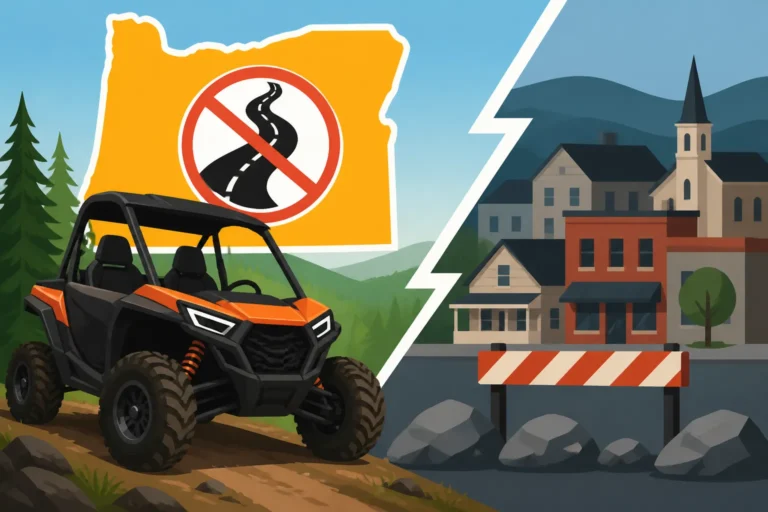
Not every road you encounter inside the boundary of a national forest is actually a Forest Service road. This is a critical distinction that many riders overlook until they run into an issue. You might find roads maintained by the county, roads that are privately owned by timber companies (and often have very strict access rules, if any at all), Bureau of Land Management (BLM) roads, or even old state forest roads. Each of these entities has its own set of regulations for travel and use, and these can sometimes differ from the rules of the national forest land they pass through.
For instance, a county road within a national forest is still primarily governed by county ordinances regarding traffic laws, speed limits, and vehicle types, even if the surrounding land is federal. These roads are typically established to provide access to homes, ranches, or private timberlands that existed before or concurrently with the national forest designation. They might see regular maintenance from county road crews, even if it's just grading gravel once a year. The signage can be a real giveaway, sometimes clearly marked with a county road number, while other times, you might find only the ubiquitous green and white Forest Service signs, making identification trickier. The lack of consistent signage can be a real headache, leaving you wondering if you're on public access or inadvertently trespassing.
Why County Roads Matter to Riders
County roads within national forests aren't just an administrative curiosity; they are vital arteries for ATV and UTV riders. Often, these roads serve as critical connectors, linking a small town to a popular trailhead, providing essential access through stretches of forest that might otherwise be closed to OHVs, or even forming part of a [Oregon's Only Two Designated ATV Routes: Lakeside and Sumpter] where ATVs and UTVs are specifically permitted to share the pavement (or gravel) with cars.
Imagine you're heading to a staging area deep in the woods, and the last few miles are on a well-maintained gravel road. Is it okay to ride your side-by-side on it? If it's a designated county road that's open to OHVs, then yes, with the right permits and safety gear. If it's a purely Forest Service administrative road, the rules might be different, perhaps only allowing plated, street-legal vehicles or closing it to OHVs entirely. Understanding this distinction can literally be the difference between a legal, enjoyable ride and a potential citation. Knowing which roads fall under county jurisdiction allows you to plan routes that maximize your riding time and avoid unexpected detours or conflicts with enforcement officers.
Navigating the Rules: What Changes on a County Road?
Riding on any public land in Oregon means adhering to a baseline set of rules, but when you transition from a dedicated trail to a county road, even a gravel one inside a national forest, some specific nuances come into play. It's not just about common sense; it's about legal compliance, which means being prepared for slightly different expectations from local law enforcement or forest rangers.
Permit and Safety Card Requirements: The Constants
First things first: regardless of whether you’re on a single-track trail, a Forest Service road, or a county road deep within a national forest, certain Oregon requirements remain absolute. You absolutely need to have your machine equipped with an [Oregon's ATV Operating Permit]. This permit is your golden ticket for riding on any public land in Oregon. It’s a physical sticker that goes on your machine, proving you’ve paid your dues and are legally allowed to operate off-highway. Without it, you’re looking at potential fines.
Equally important is your [Oregon's ATV Safety Education Card]. This card signifies that you've completed the required safety education course, ensuring you understand safe operating practices and regulations. While adult drivers of Class IV (side-by-side) machines with a valid driver's license might have an exemption for carrying the physical card, it's still best practice for everyone to have either the card or appropriate proof. These two items – the permit and the safety card – are non-negotiable foundations for riding responsibly and legally anywhere in Oregon’s backcountry, including those county roads. You can learn more about securing these essentials at places like [Where Oregon Sells ATV Permits] or check out the [Oregon ATV Permit Cost] for current figures.
Vehicle Requirements and Modifications
When you venture onto a county road, even one that's unpaved, you're essentially entering a shared roadway environment, which often entails stricter vehicle requirements than a typical trail. While your basic ATV or UTV might be trail-ready, it might need additional equipment to be legally compliant for road use. This typically includes working headlights, taillights, brake lights, and in many cases, at least one rearview mirror. Some county ordinances might even require turn signals, especially if the machine is registered for street-legal use (which is a whole different ballgame for most ATVs and UTVs in Oregon, with specific exceptions for Class II machines).
Ensuring your machine is properly equipped is not just about avoiding a ticket; it's about safety. Visibility is key when sharing roads with larger vehicles or even other OHVs, especially on dusty or winding gravel roads. Many riders opt for aftermarket accessories from reputable brands like SuperATV to enhance their machine's road-worthiness. Whether it's robust lighting kits for better visibility, durable mirrors that can withstand vibrations, or even a full street-legal kit if you're pursuing that route for a Class II machine, companies like SuperATV provide options that help ensure your machine meets these varying demands. Beyond road-specific gear, don't forget the universal requirements: a U.S. Forest Service approved [Oregon Spark Arrester Requirement] is a must, and adherence to [Oregon Sound Limits for ATVs] is always enforced on public lands.
Operational Rules: Speed, Passengers, and Lane Discipline
The moment your tires hit a county road, even an unmaintained gravel track inside a national forest, you typically become subject to standard traffic laws for that jurisdiction. This means obeying posted speed limits (and if none are posted, default county limits often apply, which are usually slower than you think for an unpaved road). It also means staying on the right side of the road, especially on blind corners or hills where oncoming traffic (be it another OHV, a truck, or a car) could appear suddenly. These aren't just suggestions; they're enforceable laws designed to keep everyone safe.
Passenger rules are also crucial and depend heavily on your machine's class and design. For example, if you're on a quad, [Oregon Passenger Rules on a Quad] typically state that passengers are only allowed if the ATV is specifically designed by the manufacturer to carry more than one person, with separate seating and handholds. In a side-by-side, [Oregon Passenger Rules in a Side-by-Side] generally mean passengers must be secured in seats with seatbelts, matching the machine's factory design. Children, especially, have specific age and supervision requirements regardless of the road type. [Oregon Helmet Law for ATV Riders] is also universal, requiring all riders under 18 to wear a DOT-approved helmet, and it’s always a good idea for adults, too, even if not legally mandated in all specific situations for adults in caged machines.
Practical Tips for Riding County Roads in National Forests
Riding county roads within national forests can be a fantastic way to link up trails, access remote areas, or simply enjoy a different kind of scenery. However, doing so safely and legally requires a proactive approach and a good understanding of your surroundings. It's all about preparation and awareness, ensuring your adventure doesn't turn into a headache.
Mapping Your Adventure: Know Before You Go
This cannot be stressed enough: good mapping is your best friend when navigating the complexities of forest roads and county roads. Don't rely solely on what looks like a well-used path. Invest in current, detailed maps that clearly delineate land ownership and road jurisdictions. Motor Vehicle Use Maps (MVUMs) from the Forest Service are invaluable for identifying specific Forest Service roads and their access rules, but they often don't clearly show county roads or private lands. You'll want to cross-reference these with county road maps or GPS apps that show property lines and jurisdictional boundaries.
It’s incredibly easy to accidentally wander off a designated public route onto private timberland or a closed Forest Service road, which can lead to trespassing charges or simply a frustrating dead end. Take the time before you leave to trace your intended route, noting any transitions between different land or road types. Understanding nuances like [Reading a Forest Service Road Number] can help you discern between different categories of roads. Carrying both physical and digital maps is always a good idea, as cell service can be spotty in many remote parts of Oregon.
Encountering Other Road Users
County roads, even those in a national forest, are shared spaces. Unlike a dedicated OHV trail where you primarily expect other riders, these roads can be used by a wide array of people and vehicles. You might encounter logging trucks, especially on weekdays – and sharing a narrow gravel road with a fully loaded log truck is an experience that demands extreme caution. [Sharing a Gravel Road With Log Trucks] can be incredibly dangerous due to their size, speed, and potential for blind spots, so always yield and give them plenty of space.
Beyond industrial traffic, you'll likely see passenger cars, campers, hikers, cyclists, and even local residents. Always assume there's someone around the next bend. Slow down, especially on dusty sections, to minimize the impact of your ride on others. Kicking up a massive dust cloud might feel fun, but it severely limits visibility for everyone else and can be a real nuisance. A courteous and respectful approach ensures a positive experience for all users of these shared backcountry routes. Remember, [Oregon Rules for Riding a Forest Road] and [Oregon Rules for Riding a County Gravel Road] generally prioritize safe, shared use.
Staying Legal and Safe on Varied Terrain
Even if a county road feels like a rough track, it's still a road, not a free-for-all trail. This means staying on the designated road surface and not veering off into the adjacent forest. Off-roading on the shoulders or into the trees can lead to environmental damage, create new unauthorized trails, and potentially result in fines. It's about respecting the land and the established rules.
Weather can dramatically alter the conditions of these unpaved roads. A dry, dusty road can quickly turn into a muddy, slick, and rutted mess after a rain shower. Be prepared for changing conditions, and adjust your speed and riding style accordingly. Robust tires, reliable brakes, and even heavy-duty suspension components, like those offered by SuperATV, can provide a significant advantage in maintaining control and comfort over varied and challenging road surfaces. Ensuring your machine is well-maintained and capable of handling these conditions is part of responsible riding. Always double-check [Oregon Trail Closures to Check First] before heading out, as road conditions can change rapidly due to weather or forest operations.
| Road Type | Typical Jurisdiction | Key Rules/Considerations | Common Users |
|---|---|---|---|
| Forest Service Road | Federal (USFS) | MVUMs define OHV access; may be gated/seasonal closure; [Oregon Spark Arrester Requirement] applies; often unmaintained. | OHVs, hikers, Forest Service, hunters, loggers. |
| County Road (within NF) | Local County | OHV permit & safety card needed; traffic laws apply; often connects private lands; may have specific speed limits. | OHVs, cars, trucks, residents, loggers. |
| Private Timber Road | Private Company | Strictly no public access without permission; often gated & signed; trespassing laws apply. | Timber company vehicles. |
| BLM Road | Federal (BLM) | Rules similar to Forest Service; maps specify OHV use; often in high desert areas. | OHVs, ranchers, hunters. |
| Designated ATV Route | State/Local (specific areas) | Specific ordinances allow mixed-use (e.g., [Oregon's Only Two Designated ATV Routes: Lakeside and Sumpter]); must follow all street-legal requirements. | OHVs, cars, tourists. |
Disclaimer
This article is for general informational purposes only and does not constitute professional advice. Laws, prices and regulations vary by location and change over time. Consult a qualified professional for guidance on your specific situation.