Tillamook Forest Road Access
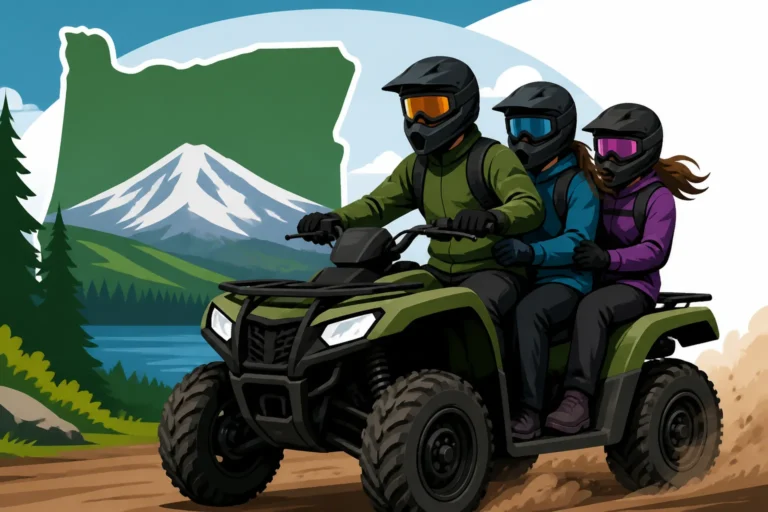
The thought of exploring the vast, green expanses of Oregon's Tillamook State Forest on your ATV or UTV is incredibly appealing, but many riders find themselves scratching their heads when it comes to understanding exactly where they're allowed to ride their machine. The rules around forest road access can feel like a tangled web, leaving you worried about accidentally breaking a rule or even facing a fine. This guide aims to untangle that web, providing clear, actionable information on how to legally and safely access roads within the Tillamook State Forest for your off-highway vehicle (OHV) adventures.
Understanding Oregon's General Rules for Forest Roads
Before we dive specifically into the Tillamook State Forest, it’s crucial to grasp the foundational rules that apply to riding your ATV or UTV on pretty much any public forest road in Oregon. The biggest misconception riders often have is assuming that if a road is "open to the public," it's automatically fair game for their OHV. Unfortunately, it's rarely that simple, and misunderstanding this can quickly lead to an unwanted interaction with law enforcement or a ranger.
The Nuance of "Open to the Public" Roads
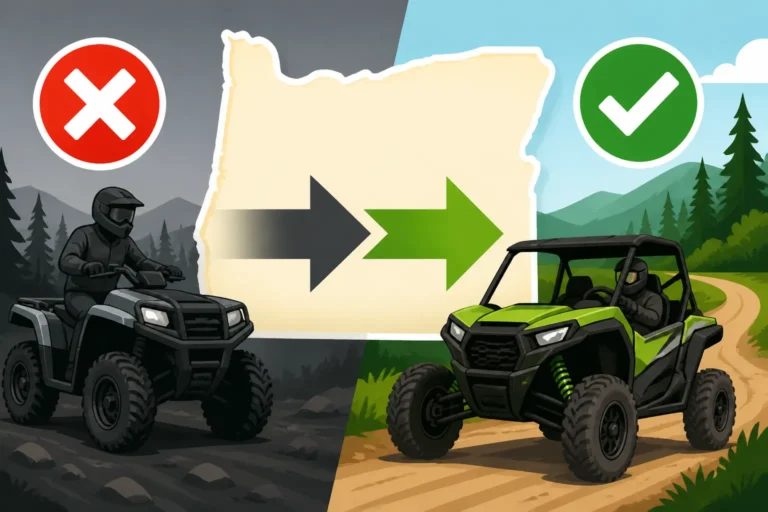
When you see a sign indicating a forest road is "open to the public," it usually refers to vehicles designed and legal for highway use – think your average passenger car, pickup truck, or SUV. These roads are maintained for standard vehicle traffic, and while they might be unpaved and winding, they're generally not considered part of the designated OHV trail system. Many of these roads are under the jurisdiction of the U.S. Forest Service, the Bureau of Land Management (BLM), or even county governments, and each entity can have slightly different regulations regarding OHV access. The key takeaway here is that "public access" for general vehicles does not automatically equate to "public access" for ATVs and UTVs. You must look for specific signage or published maps that explicitly permit OHV use on those roads. Just because a logging road looks inviting doesn't mean your side-by-side can legally be there without proper authorization.
Sometimes, roads might be open to licensed, street-legal vehicles that meet certain criteria, such as a Class II machine that has been registered with the DMV. However, most ATVs and UTVs fall into Class I, III, or IV, which are generally not street-legal and therefore restricted from most public roads unless specifically designated as an OHV route or for the purpose of crossing. This distinction is critical and often overlooked by riders eager to explore.
Permit and Safety Card Requirements on All Public Lands
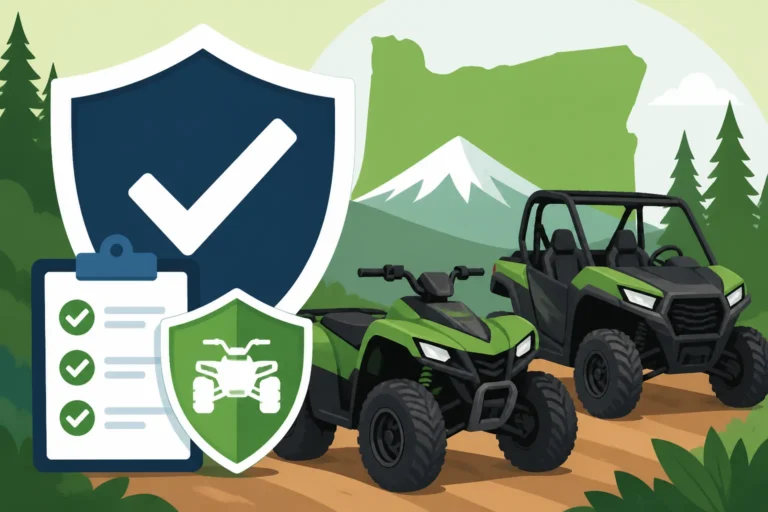
Regardless of where you’re riding in Oregon – be it on designated trails, within a specific OHV park, or on any forest road where OHV use is permitted – your machine and, in most cases, you as the rider, must meet certain requirements. The two most fundamental are the Oregon ATV Operating Permit and the Oregon ATV Safety Education Card.
Your ATV or UTV needs a current Oregon ATV Operating Permit decal visibly affixed to it. This decal is your proof that you’ve paid the necessary fee that helps fund the state’s OHV programs, including trail maintenance and safety education. Without it, you’re riding illegally. You can read more about this requirement in [Oregon ATV Permits Explained]. This permit is not just for the dunes or dedicated trail systems; it’s required for any public land where you operate your OHV.
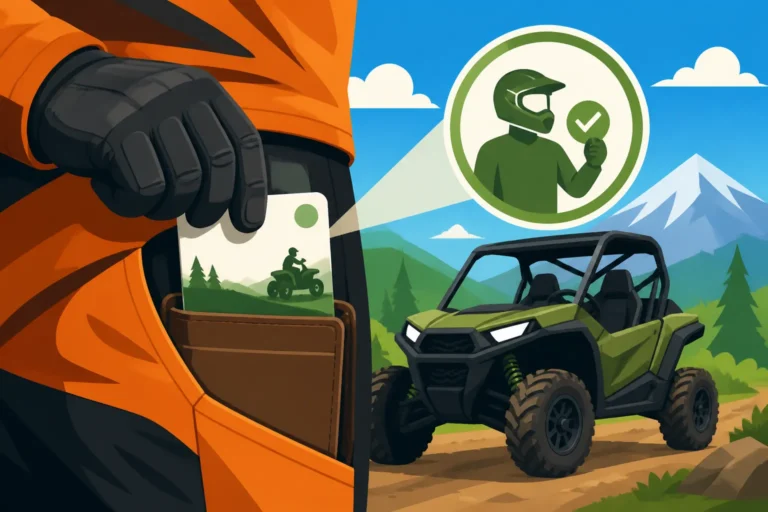
Secondly, most riders need an Oregon ATV Safety Education Card. This card signifies that you've completed a state-approved safety course, demonstrating your understanding of safe riding practices and the rules of the trail. While there are some exceptions for drivers of certain Class IV machines who hold a valid driver's license, and for those riding on an [Oregon's 180-Day Instructional Permit] under supervision, generally, if you're operating an OHV on public land, you'll need this card. The card is free and can be obtained online, but it's mandatory. This requirement applies to almost everyone, from seasoned veterans to new riders. You can get more details by looking into [Oregon's ATV Safety Education Card]. These two pieces of documentation are non-negotiable for riding on any public land, including forest roads within the Tillamook State Forest.
Basic Equipment and Sound Regulations
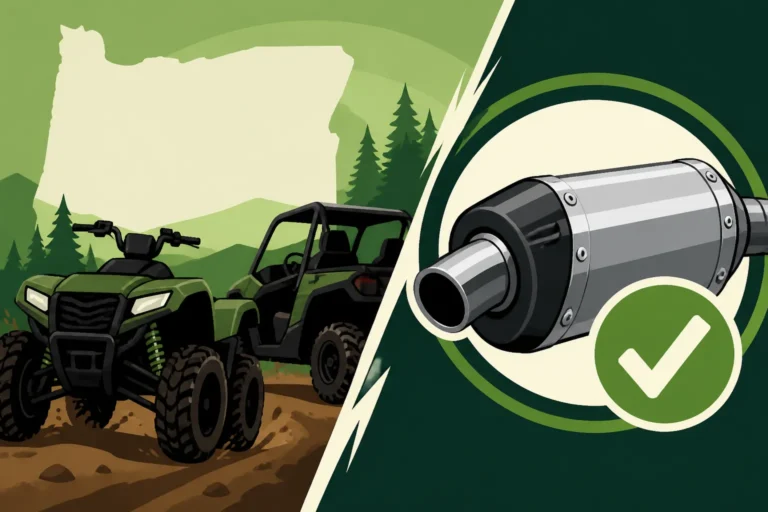
Beyond the required permits and safety cards, your machine itself needs to meet certain basic equipment standards, particularly when riding in forest environments. One of the most important is a properly functioning U.S. Forest Service-approved spark arrester. This device is designed to prevent hot carbon particles from escaping your exhaust and potentially igniting dry vegetation, which is a serious fire hazard in Oregon's forests, especially during warmer months. Operating without one is not only illegal but incredibly irresponsible, and rangers actively check for them. Ignoring this rule can lead to significant fines and contribute to devastating wildfires. For a deeper dive, check out [Oregon Spark Arrester Requirement].
Sound limits are another critical aspect. Oregon has regulations concerning the noise level of OHVs, typically set at 93-99 decibels, depending on the machine type and testing method. Excessive noise can disturb wildlife, other forest users, and nearby residents. Aftermarket exhausts are a common way for riders to unintentionally exceed these limits, so if you've modified your exhaust, it’s wise to check its compliance. Manufacturers like SuperATV often design exhaust systems that balance performance with adherence to noise regulations, but it's always the rider's responsibility to ensure their machine is compliant. Understanding these limits is crucial for maintaining access and good relations with other forest users. [Oregon Sound Limits for ATVs] provides more information on this topic.
Finally, adequate lighting is essential, especially if you anticipate riding in low-light conditions, early mornings, late evenings, or even crossing a paved road where allowed. Most OHVs come with factory headlights and taillights, but ensuring they are in good working order is key for both visibility to others and your own safety on winding forest roads.
Specifics for Tillamook State Forest Road Access
The Tillamook State Forest, managed by the Oregon Department of Forestry (ODF), is a popular destination for OHV enthusiasts, offering a diverse landscape of trails and roads. However, accessing its roads isn't quite the same as just pulling onto a random Forest Service road or a county gravel road. The ODF has its own set of rules and a well-defined system for OHV recreation.
Oregon Department of Forestry (ODF) Rules vs. Federal Lands
Unlike vast tracts of land managed by the U.S. Forest Service or the Bureau of Land Management (BLM), the Tillamook State Forest falls under the direct jurisdiction of the Oregon Department of Forestry. This distinction is important because while many rules align across different public land managers, ODF often has specific regulations and management philosophies, especially concerning sustainable forestry practices and recreation. ODF views OHV recreation as one component of a multi-use forest and manages it accordingly, often designating specific areas and routes for OHV use to minimize conflict with other users and protect natural resources.
What this means for you as a rider is that you can't assume a rule that applies to a National Forest automatically applies in Tillamook. Always check the ODF's official resources for the most current information. They regularly update their maps and information regarding closures, open seasons, and designated routes. While the core permit and safety card requirements remain the same, the specifics of where you can ride might differ. ODF manages the Tillamook State Forest with a strong emphasis on maintaining a working forest, so you'll frequently encounter active logging operations, which brings us to our next point about closures and industrial traffic.
Designated Routes and Area Specifics in Tillamook
The ODF uses a system of designated routes to manage OHV access within the Tillamook State Forest. This means that to legally ride your ATV or UTV, you must stick to roads and trails that are explicitly marked and designated for OHV use. You won't find a blanket permission to ride every forest road; instead, you'll find specific trailheads and staging areas that lead to networks of OHV-legal routes.
One of the most well-known staging areas in the Tillamook State Forest is Browns Camp. From here, riders can access a vast network of marked trails and designated forest roads that are part of the OHV system. These routes are usually clearly signed, indicating whether they are open to ATVs, UTVs, or motorcycles. It's crucial to pay attention to these signs and stay on the marked path. Venturing off-trail or onto undesignated roads is not only illegal but can cause environmental damage, disturb sensitive habitats, and lead to citations. If you're planning a trip to Browns Camp, it's a good idea to research [Browns Camp and Oregon's 2026 Reservations] beforehand, especially for camping, as it can get busy.
The Tillamook State Forest is unique in its terrain, offering everything from technical singletrack for dirt bikes to wider, more forgiving gravel roads suitable for UTVs. Many of these designated routes are old logging roads that have been repurposed for recreation. When gearing up your UTV for these diverse conditions, considering robust aftermarket parts like those from SuperATV, such as heavy-duty A-arms or skid plates, can provide extra peace of mind against the rocks and roots you might encounter. Always carry a current map, either paper or digital, that clearly shows the designated OHV routes. Relying solely on memory or an outdated map could lead you astray onto non-OHV roads.
Navigating Road Closures and Industrial Traffic
Riding in a working forest like Tillamook means you'll often be sharing the roads with industrial traffic, particularly log trucks and other heavy equipment. This is a critical safety consideration that riders sometimes underestimate. Log trucks are large, heavy, and often travel at speed, especially when empty. They have the right-of-way and can create significant dust clouds, impairing visibility for everyone.
Key considerations for industrial traffic:
- Dust and Blind Corners: Forest roads are often gravel and dirt, meaning dust can be a major issue, especially in dry weather. Combine this with winding roads and blind corners, and the risk of a head-on collision or rear-ending a slow-moving vehicle increases significantly. Always assume there's oncoming traffic, especially around corners. Slow down, stay to the right, and be prepared to stop. You can learn more about these hazards in [Dust and Blind Corners on a Logging Road].
- Active Logging Operations: ODF regularly conducts logging operations throughout the forest. This can result in temporary road closures or specific areas being off-limits for recreational use for safety reasons. These closures are usually well-marked with signs, but it’s your responsibility to check for current information before heading out. Ignoring a closure sign, even if it looks like an old road, is a serious offense and extremely dangerous due to falling trees or heavy machinery.
- Weekday Riding: If you want to avoid the heaviest industrial traffic, consider riding on weekends. Weekdays are often when logging operations are in full swing. However, even on weekends, always be vigilant.
- Emergency Access: Remember that these roads are also used by emergency services, ODF personnel, and other authorized vehicles. Always yield to them.
For more information on dealing with industrial traffic, refer to [Log Trucks and Weekday Riding]. Staying informed about [Oregon Trail Closures to Check First] due to logging, fire danger (especially during fire season), or inclement weather is paramount for a safe and legal ride in the Tillamook State Forest.
Gear, Etiquette, and Staying Prepared for Tillamook Roads
Riding in the Tillamook State Forest offers incredible scenery and exhilarating experiences, but it also requires a responsible approach to ensure safety for yourself, other users, and the environment. Being prepared with the right gear and understanding proper etiquette will make your trip much more enjoyable and hassle-free.
Essential Gear for Forest Road Riding
Beyond your ATV Operating Permit and Safety Education Card, there's a host of other gear that's absolutely essential for a safe and successful trip into the Tillamook. Forest environments can be unpredictable, and being prepared means you can handle most minor issues yourself.
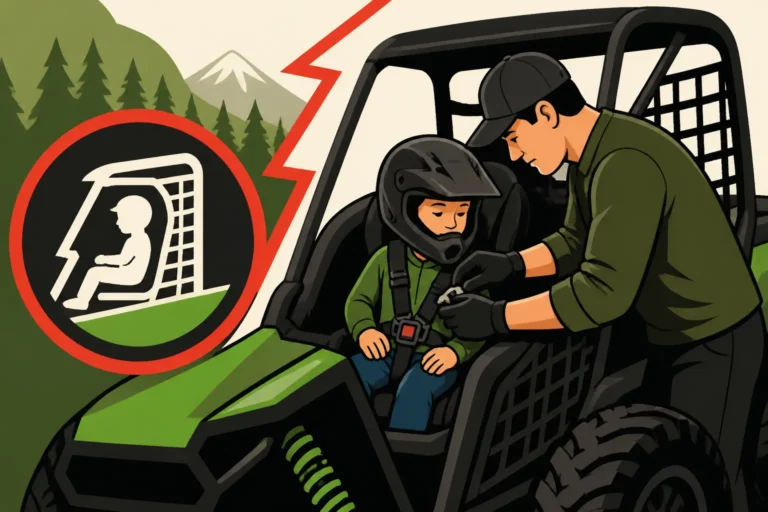
First and foremost, protective riding gear is non-negotiable. This includes a DOT or Snell-approved helmet, eye protection (goggles or a visor), sturdy gloves, long pants, a long-sleeved shirt, and over-the-ankle boots. Even if you're in a caged UTV, a helmet is often still recommended, especially for younger riders, and sometimes mandated depending on the specifics of the machine and the rider's age. [Helmet Rules for Oregon Riders] provides comprehensive information on these requirements.
For your machine, consider navigation tools. While many designated OHV routes in Tillamook are signed, a reliable map (paper or GPS) is crucial. Cell service can be spotty or nonexistent in many parts of the forest, so don't rely solely on your phone. A quality GPS unit or a downloaded offline map can be a lifesaver. A well-equipped first-aid kit is also vital, capable of handling minor scrapes and cuts, or more serious injuries while you wait for professional help.
Additionally, a basic repair kit for your ATV or UTV can save you from a long walk out. This might include a tire repair kit, a small air compressor, basic tools (wrenches, screwdrivers), extra spark plugs, and zip ties. Carrying extra fuel, especially if you plan an extended ride, is also a smart move. For UTVs, components like aftermarket windshields from SuperATV can protect you from dust and debris on forest roads, and their heavy-duty bumpers can offer added protection from unexpected impacts on rough terrain.
Respecting the Environment and Other Users
The Tillamook State Forest is a shared resource, used by hikers, mountain bikers, equestrians, hunters, campers, and timber workers. Practicing good trail etiquette is not just about being polite; it's about ensuring continued access for everyone and protecting the natural environment.
- Stay on Designated Routes: This cannot be stressed enough. Riding off designated roads and trails causes erosion, damages sensitive habitats, and can spread invasive species. It also contributes to a negative perception of OHV riders, which can lead to further restrictions.
- Yield the Right-of-Way: Be courteous. Generally, OHVs should yield to non-motorized users like hikers and horses. Slow down to a crawl when passing, give them a wide berth, and turn off your engine if a horse seems spooked.
- Pack It In, Pack It Out: Leave no trace. Everything you bring into the forest should leave with you, including trash, food scraps, and anything else.
- Minimize Your Impact: Avoid making excessive noise, especially near campsites or residential areas. Drive responsibly, avoiding reckless behavior that could endanger others or damage the environment. Remember, the goal is to enjoy the forest without leaving a lasting negative footprint.
How to Confirm Road Status Before You Go
Given the dynamic nature of forest management, logging operations, and weather events, the status of roads and trails in the Tillamook State Forest can change frequently. The best way to ensure you're riding legally and safely is to always check the most current information before you head out.
- Oregon Department of Forestry Website: This is your primary source for information on the Tillamook State Forest. Look for sections on recreation, OHV use, and specifically for trail and road status updates or closure notices. They often have downloadable maps highlighting designated OHV routes.
- Local ODF Offices: Don't hesitate to call the local ODF office covering the Tillamook State Forest. Their staff can provide real-time updates and answer specific questions about road conditions, closures, or any special restrictions.
- Reputable OHV Clubs and Forums: Local OHV clubs often have members who ride the Tillamook frequently and can share recent observations or insights. Just be sure to cross-reference any information with official ODF sources.
- Printed Maps: Always carry a current printed map. While GPS is great, batteries die, and signals drop. A good paper map, especially one designed for OHV use, is an invaluable backup.
By taking these proactive steps, you can significantly reduce the risk of encountering unexpected closures, dangerous industrial traffic, or inadvertently riding on an unauthorized road.
Here's a quick comparison of what "Open to the Public" might mean in different contexts for forest roads:
| Feature/Condition | "Open to Passenger Cars" (Typical Forest Road) | "Open to ATVs/UTVs" (Designated OHV Route/Road) |
|---|---|---|
| Primary Users | Cars, trucks, hikers, bicyclists, log trucks | ATVs, UTVs, motorcycles, mountain bikes, hikers |
| Signage | General road signs, speed limits | Specific OHV route markers, numbered trails |
| Permit Required | Vehicle registration (highway legal) | Oregon ATV Operating Permit (for OHV) |
| Safety Card Required | Driver's license | Oregon ATV Safety Education Card (for most OHV) |
| Street Legal Required | Yes, for general travel | No, unless crossing a designated highway |
| Spark Arrester | Not typically required | Mandatory |
| Industrial Traffic | Common, high priority | Possible, exercise extreme caution |
| Closures | Due to fire, snow, washouts, logging | Due to fire, snow, logging, seasonal habitat closure |
Remember, your best defense against fines and unsafe situations is knowledge and preparation. Enjoy the incredible riding opportunities that Tillamook State Forest has to offer responsibly!
Disclaimer
This article is for general informational purposes only and does not constitute professional advice. Laws, prices and regulations vary by location and change over time. Consult a qualified professional for guidance on your specific situation.