Optional Titling and Why People Still Do It
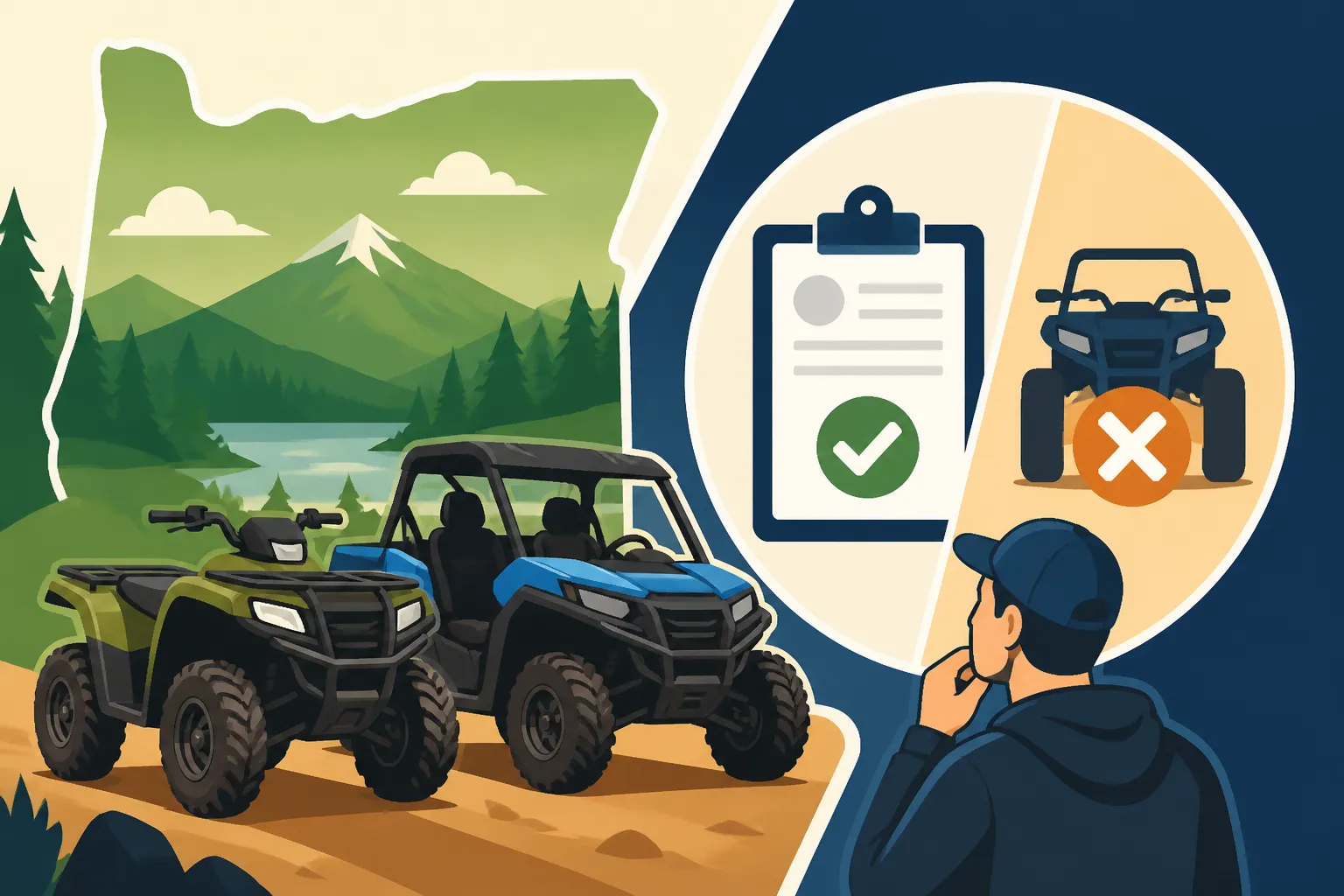
Many ATV and UTV enthusiasts in Oregon find themselves scratching their heads over one particular rule: the state makes titling your off-road machine completely optional. This can feel counterintuitive, especially if you're used to titling every other vehicle you own, and it raises a lot of questions about ownership, proof, and future sales. This guide will dive deep into Oregon's optional titling rule, explain the reasons behind it, and help you understand why, despite it being optional, getting a title is almost always a smart move for your peace of mind and protection.
Understanding Oregon's Unique Approach to ATV Titling
Oregon has a reputation for being a fantastic place to ride off-road, with diverse terrain from the coastal dunes to the high desert. But it also has a few quirks in its rules, and one that often catches new riders or those moving from out of state by surprise is the optional nature of ATV titling. You're not legally required to get a title for your quad, side-by-side, or dirt bike if it's used exclusively off-road. This is a crucial distinction that sets ATVs apart from street-legal vehicles in the state. It might seem strange at first, but there's a rationale behind this approach that helps clarify why things are done this way.
Why Titling Isn't Mandatory for Off-Road Vehicles
The primary reason titling isn't mandatory for ATVs and UTVs in Oregon boils down to their intended use: they are designed for off-highway recreation, not for regular street driving. In Oregon, the Department of Motor Vehicles (DMV) handles vehicle registration and titling for street-legal machines, while the Oregon Parks and Recreation Department (OPRD) oversees the off-highway vehicle (OHV) program, which includes the permit system for riding on public lands. Since ATVs are not typically street-legal (with very few exceptions for specific Class II machines), they fall outside the traditional scope of the DMV's mandatory titling and registration processes. This distinction means that for a long time, these machines operated in a kind of legal gray area regarding formal ownership documentation through a state-issued title. You can read more about this division in responsibility here: [Why Oregon's DMV Does Not Register ATVs].
Historically, the focus for off-road recreation has been on ensuring machines are permitted for environmental protection and trail maintenance, rather than tracking ownership via title. The state recognized that many off-road machines are bought, sold, and traded without the same formal processes as cars or motorcycles, and they wanted to avoid adding unnecessary bureaucratic hurdles for enthusiasts. Instead of a mandatory title, the state opted for a permit system, where riders pay a fee to operate on public lands, funding trail maintenance and safety programs. While this system makes it easier to get out and ride, it does leave a gap when it comes to official, state-recognized proof of ownership for the machine itself.
What 'Optional' Really Means for Your Machine
When Oregon says ATV titling is "optional," it means exactly that: you have the choice. There's no legal penalty for not having a title if your ATV or UTV is only used off-road. You won't be fined, and you won't be stopped by law enforcement for simply lacking a title document. You can still buy an ATV, acquire an operating permit, and ride on designated public lands without ever formally titling the machine with the state. This freedom sounds appealing, and for many riders, it's a simplification they appreciate, especially if they never plan to sell their machine or are inheriting it within the family.
However, this optionality also implies that the state isn't providing a centralized, indisputable record of who legally owns your specific off-road vehicle. For a private sale, for instance, a simple bill of sale might be the only document transferring ownership. While legally sufficient, a bill of sale isn't as robust as a state-issued title, which involves a government agency formally recognizing and recording the ownership chain. This means that while you're not required to title your machine, the choice comes with certain implications regarding establishing and proving ownership, which can become critical in various real-world scenarios.
The Compelling Reasons to Title Your ATV in Oregon Anyway
Even though Oregon doesn't make it mandatory, choosing to title your ATV or UTV is almost always a smart decision for several practical reasons. Think of it as an insurance policy for your ownership rights and your investment. While you can certainly operate your machine without one, you might find yourself in a sticky situation down the road if you haven't taken this extra step. Many seasoned riders, myself included, will tell you that the small effort involved in titling can save a world of hassle later on.
Establishing Clear Proof of Ownership
Without a state-issued title, proving clear ownership of your ATV can be surprisingly difficult. Imagine this scenario: you bought your quad years ago in a private sale, got a handwritten bill of sale, and now, years later, you've lost that piece of paper. Or perhaps your machine is stolen. How do you definitively prove to law enforcement or an insurance company that it's yours? A title is the single most authoritative document to establish ownership. It prevents disputes, especially if you ever find yourself in a situation where someone else claims your machine or if there's any ambiguity in the transaction history.
The absence of a title can turn an otherwise straightforward situation into a legal headache. While a comprehensive bill of sale, especially one drafted professionally using a service like LawDepot, can offer a strong foundation, it's still a private contract. A state-issued title, on the other hand, is a public record of ownership that is much harder to dispute. If your machine is ever stolen, having a title greatly assists law enforcement in its recovery and helps you reclaim it once it's found. For more on this, check out [Proving Ownership Without a Title].
Streamlining Future Sales and Transfers
When the time comes to sell your beloved ATV or UTV, having a title makes the process significantly smoother, especially if you're selling it to someone from out of state or to a buyer who is accustomed to titled vehicles. Most buyers, particularly those who are cautious and financially savvy, will prefer to purchase a titled machine. It offers them peace of mind, knowing that the ownership history is clear and undisputed, and that they won't run into issues when trying to title it in their own name, whether in Oregon or elsewhere.
Selling a non-titled ATV often requires more effort on your part to reassure the buyer, perhaps involving more extensive paperwork like a notarized bill of sale or even a visit to the DMV to perform a VIN check. This extra friction can sometimes deter potential buyers or lead to lower offers. While a solid [Oregon Bill of Sale for an ATV] is essential for any private sale, a title simplifies the transaction immensely. If you anticipate upgrading your machine every few years, having a title will undoubtedly make the selling process much less stressful and potentially more profitable.
Protecting Your Investment from Theft and Fraud
ATVs and UTVs are valuable assets, and unfortunately, they are also targets for theft. Having your machine properly titled with the state provides an official record that can be invaluable in the event of theft. When a vehicle is titled, its unique Vehicle Identification Number (VIN) is recorded in a state database alongside your ownership information. This makes it easier for law enforcement to track, identify, and recover stolen machines. Without a title, the process of proving ownership and getting your machine back can be much more complicated and time-consuming.
Furthermore, a title protects you from unknowingly purchasing a stolen ATV. When you buy a titled machine, you can usually verify its history through a title search, ensuring it hasn't been reported stolen and that the seller is the legal owner. This due diligence is much harder when a title doesn't exist, increasing your risk of purchasing a machine with a clouded history. Before buying any used machine, it's always wise to perform a [Checking a VIN Before Buying Used] query. This protective measure safeguards both your current investment and any future purchases you might make.
| Aspect | Pros of Titling | Cons of Not Titling |
|---|---|---|
| Proof of Ownership | Indisputable, state-recognized documentation | Relies on bill of sale; easily lost or disputed |
| Theft Recovery | Easier for law enforcement to track and return | More difficult to prove ownership for recovery |
| Resale Value | Attracts more buyers; smoother transactions | May deter buyers; requires more effort to sell |
| Fraud Prevention | Helps verify legitimate sellers; avoids stolen goods | Higher risk of buying a machine with a questionable past |
| Out-of-State Use | Simpler to transfer or register elsewhere | Can complicate future registration/titling in other states |
| Initial Effort | Requires a trip to the DMV and paperwork | Minimal initial effort after purchase |
| Cost | Involves a small fee for the title | No direct titling fee |
Navigating the Oregon ATV Titling Process
Even though it's optional, the process for titling an ATV in Oregon is quite similar to titling any other vehicle. It involves a visit to the DMV and submitting the correct paperwork. While it might feel like an extra step you don't have to take, many riders find the peace of mind well worth the nominal effort. Understanding what's involved can demystify the process and make it feel less daunting, especially if you're more familiar with the permitting system.
The Steps to Obtain an Oregon ATV Title
To get an Oregon title for your off-road machine, you'll need to visit a local DMV office, even though [Titling an ATV in Oregon Is Optional]. You'll typically need to bring a few key documents. If you're titling a brand-new machine, you'll need the Manufacturer's Certificate of Origin (MCO) or Manufacturer's Statement of Origin (MSO), which is essentially the birth certificate of your ATV. For a used machine, you'll need the previous owner's title (if one existed) or a comprehensive bill of sale. You will also need to complete an Oregon Title Application form. In some cases, particularly for machines that have never been titled before or if there's any discrepancy, a VIN inspection might be required to verify the machine's identity.
The DMV staff will process your application, verify your documents, and collect any applicable fees. It’s a good idea to call your local DMV office beforehand or check their website to confirm their current requirements and hours. While the state doesn't charge much for the title itself, knowing the [Oregon ATV Title Cost] upfront can help you budget for this small but important investment. Once processed, you'll receive your official Oregon title, making your ownership legally recognized and recorded.
When You Might Encounter Specific Titling Challenges
While the process is generally straightforward, certain situations can present unique challenges. If you're buying a used ATV that has never been titled by a previous owner, or if the bill of sale is handwritten and lacks crucial details, you might need to provide additional documentation or information to the DMV. This is where a strong, comprehensive bill of sale becomes absolutely essential. Using a service like LawDepot to generate a formal, legally sound bill of sale can significantly smooth out these transactions, especially when there's no previous title to rely on.
Purchasing an ATV from out of state can also add layers of complexity. The requirements for transferring an out-of-state title or proving ownership might vary slightly. Similarly, inheriting a machine can involve probate documents or other legal paperwork to establish your rightful ownership before you can title it in your name. In these less common scenarios, thorough preparation and potentially even a consultation with the DMV or a legal professional can help you navigate the process efficiently. For detailed guidance on what's needed, refer to [Oregon ATV Title Requirements].
Titling a Used ATV Versus a Brand New One
The paperwork required for titling largely depends on whether your ATV is brand new or used. For a brand-new machine purchased from a dealership, the process is usually very simple, as the dealer will provide you with the MCO/MSO. This document, along with your bill of sale from the dealer and the title application, is typically all you need. The dealer might even assist you with some of the initial paperwork.
When you're titling a used ATV, the situation can be a bit more varied. If the machine was previously titled in Oregon or another state, you'll need the existing title, properly signed over to you by the previous owner. If the used machine has never been titled, then your primary proof of ownership will be a detailed bill of sale. This is especially common for older off-road vehicles that predated stricter titling requirements or were simply never brought to the DMV. When considering [Buying a Used Quad in Oregon], always prioritize getting a clear bill of sale and verifying the VIN. The cooperation of the seller is paramount in both scenarios to ensure a smooth transfer of ownership. It also helps to be aware of what is involved when [Selling an ATV in Oregon].
Common Misconceptions and Key Takeaways
The optional nature of ATV titling in Oregon can lead to some confusion, especially for new riders or those transitioning from other states with different regulations. It's easy to mix up titling with the separate requirement of getting an operating permit, but they serve very different purposes. Understanding these distinctions is key to being a responsible and well-informed ATV owner in Oregon.
Titling vs. Permitting/Registering – Understanding the Difference
This is perhaps the biggest area of confusion for many. An Oregon ATV operating permit, issued by the Oregon Parks and Recreation Department, is mandatory if you plan to ride your off-highway vehicle on public lands. This permit ensures that you're contributing to the upkeep and management of the trails and riding areas. Without this permit, you could face fines for illegal operation. The permit essentially grants you the right to ride on designated public land. You can easily obtain one, and they typically last for two years. Get more information on the mandatory permit system here: [Oregon's ATV Operating Permit].
In contrast, a title, handled by the Oregon DMV, is purely about proving ownership of the machine itself. It has nothing to do with whether you can legally ride it on a trail. You can have a titled ATV that isn't permitted, meaning you own it but can't legally ride it on public land. Conversely, you can have a permitted ATV that isn't titled, meaning you can ride it, but lack the ultimate proof of ownership. While both are important aspects of ATV ownership, they are distinct processes managed by different state agencies, and one does not negate the need for the other.
Deciding What's Right for Your Off-Road Machine
Ultimately, the decision to title your ATV or UTV in Oregon is a personal one, but after weighing the pros and cons, most experienced riders will lean towards getting the title. The minor cost and effort involved in titling are often a small price to pay for the significant benefits of clear ownership, easier resale, and protection against theft. For a machine that sees heavy use, or that you might want to upgrade in the future, a title is almost a necessity.
If you have a very old machine of low value that you've owned for decades and never intend to sell, and you're comfortable relying on a sturdy bill of sale or simply informal family records, then perhaps foregoing the title might make sense. However, for any machine of significant value, or one you anticipate selling or passing down, obtaining an Oregon title is a prudent step. It offers an official, state-backed document that eliminates ambiguity and provides a strong legal foundation for your ownership. Even for a machine used exclusively off-road, having an [Oregon Title for a Machine Used Only Off-Road] is a sound investment in your peace of mind. The reasons [Why Oregon Made Titling Optional] are valid, but the reasons to still title are equally compelling for many of us.
Disclaimer
This article is for general informational purposes only and does not constitute professional advice. Laws, prices and regulations vary by location and change over time. Consult a qualified professional for guidance on your specific situation.