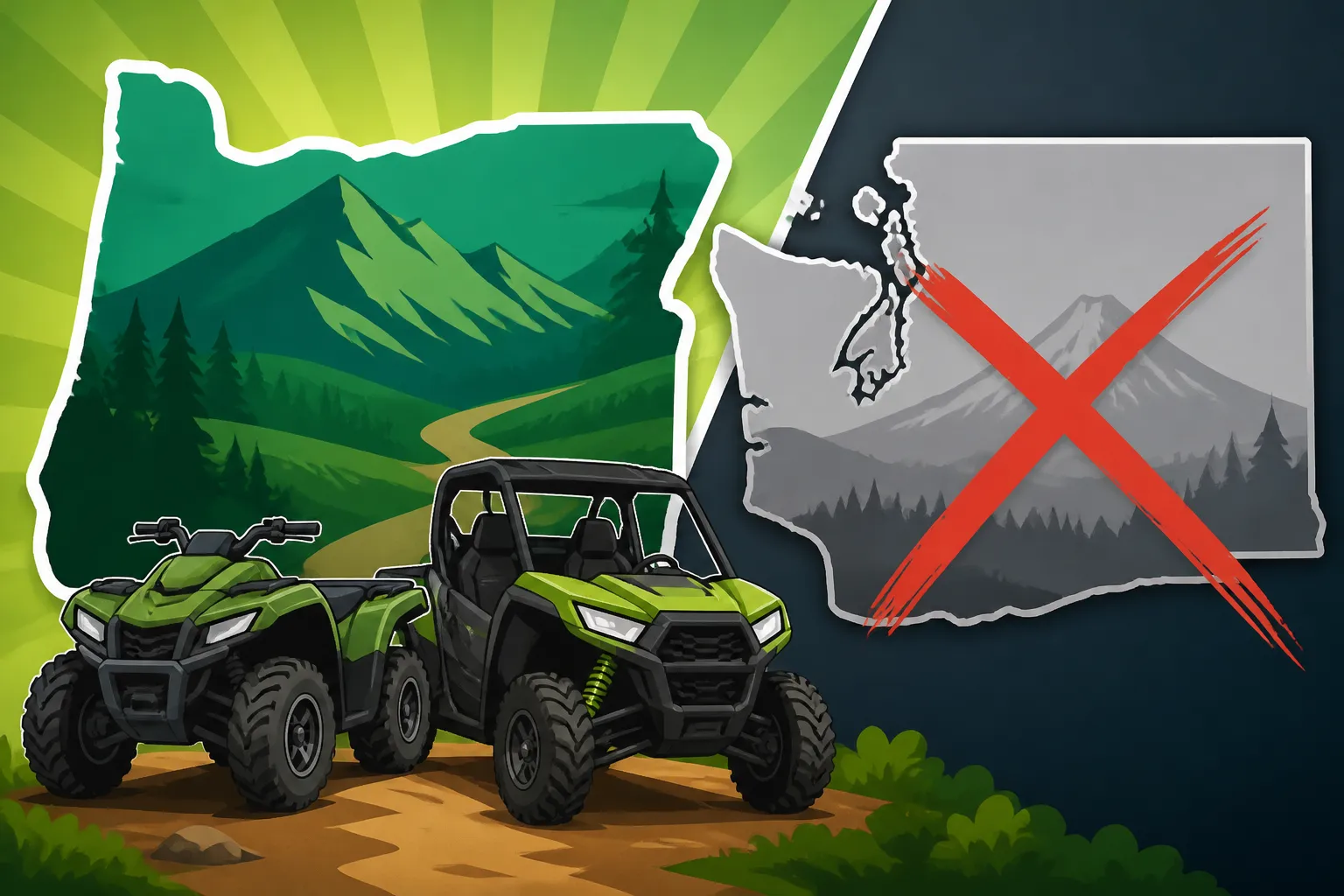
Why Washington Is Not on Oregon’s List
Why Washington Is Not on Oregon’s List
Washington riders heading south may expect their home-state off-road credential to cover an Oregon ride. It may not: Oregon’s permit reciprocity list does not include Washington. Here’s what that means, why reciprocity lists don’t automatically match across state lines, and how to check what your machine and trip require before unloading.
What Oregon’s reciprocity list actually does
Oregon requires an operating permit for off-highway vehicles used in places where that permit is required. The state recognizes certain out-of-state credentials under its reciprocity rules, but that recognition is not automatic for every state or every type of sticker, registration, or permit.
Washington is not on Oregon’s published permit reciprocity list. That means a Washington credential should not be assumed to substitute for an Oregon ATV operating permit. The deciding factor is not simply whether your machine is legal to ride in Washington. It is whether Oregon recognizes the specific credential you have under its rules.
That distinction matters because a registration or decal can serve different purposes. A document may show that a machine is registered in its home state, authorize its use on certain local trails, or meet requirements for a particular land manager. Those purposes do not necessarily make it equivalent to an Oregon operating permit.
Oregon’s list is specific. It identifies credentials from states Oregon recognizes for reciprocity; it is not a general promise to honor every neighboring state’s system. For details on the states and credentials covered, see Oregon Permit Reciprocity List. For the separate rules about a visiting rider’s stay, How Long a Visitor Can Ride Oregon explains why duration can also matter.
| Situation | What to take from it | Practical next step |
|---|---|---|
| Your machine has a Washington registration or off-road credential | Oregon does not list Washington for permit reciprocity | Check Oregon’s current rules for your machine and trip before riding |
| You have a permit from a state Oregon recognizes | It may qualify for reciprocity, subject to Oregon’s conditions | Confirm the credential, machine class, and applicable time limit |
| Your credential is only a Washington safety card | A safety card is not an operating permit | Check Oregon’s safety-card rules separately |
| You will ride on land with its own access requirements | A state permit may not cover day-use access, parking, or other site rules | Check the land manager’s requirements as well |
| Your trip is near or beyond an exemption period | The rules may differ from a short visit | Confirm the time limit and whether you need an Oregon permit |
The absence of Washington from the list is about Oregon’s recognition rules. It does not mean Washington credentials are invalid in Washington, nor does it necessarily mean Oregon and Washington have no cooperation on other ATV matters. It means riders should not treat a Washington credential as an Oregon permit substitute unless Oregon’s current official guidance says it qualifies.
Why Washington and Oregon credentials do not automatically match
States design off-highway vehicle programs around their own laws, machine categories, fees, land access systems, and enforcement needs. One state may issue a permit decal for a defined class of vehicle; another may use registration or an off-road vehicle tab. Even when both systems use a visible sticker, the legal authority behind it may differ.
Reciprocity is a decision by the state that would otherwise require its own credential. Oregon decides which out-of-state permits it will recognize in Oregon. Washington’s rules do not, by themselves, require Oregon to accept a Washington credential. Likewise, Washington determines what it accepts from other states for riding in Washington.
That is why “I can ride with this in Washington” and “I can ride with this in Oregon” are separate questions. A credential that works at home may not satisfy Oregon’s permit requirement. The same principle applies to machine class: a credential covering one type of OHV may not necessarily cover a different vehicle or use.
A useful way to think about reciprocity is that Oregon is looking for a qualifying credential under Oregon’s own criteria, not simply proof that the vehicle has been documented somewhere. The state’s list is the practical reference point. If Washington is not named there, the safe approach is not to guess that a Washington registration is close enough.
The specific reason a state is absent from a reciprocity list may not be stated publicly in a way that explains every decision. It is better to avoid treating a possible difference in systems as the definitive reason Washington is excluded. What matters for planning is the rule as Oregon publishes it: Washington is not listed for permit reciprocity. For a closer look at how registration and operating permits differ, see Does Oregon Honor a Washington Registration?.
There are two related but separate reciprocity questions:
- Does Oregon recognize your out-of-state operating credential? This is the permit question.
- Does Oregon recognize your out-of-state ATV safety card or training credential? This is the education question.
A yes to one does not answer the other. Oregon maintains separate rules for permits and safety cards, and the recognized states may not be identical. Two Lists That Do Not Match in Oregon explains why a rider should check both lists rather than assume that acceptance of one credential means acceptance of another.
What Washington riders should do before riding in Oregon
The easiest way to avoid a problem is to confirm your requirement before travel, while there is still time to obtain any Oregon credential you need. Start with the machine and the planned riding area, then check the relevant permit, safety-card, and site-access rules.
- Identify the machine’s Oregon class. Oregon’s OHV classes are based on vehicle features and measurements, not just the name a manufacturer uses. A quad, dirt bike, side-by-side, or dune buggy may fall under different class rules. Use Which Oregon ATV Class Your Machine Falls Into if you are unsure.
- Check the current permit reciprocity list. Do not rely only on your Washington registration or the fact that you have ridden in Washington. Confirm whether Oregon recognizes the exact credential you hold.
- Check the safety-card requirement separately. A permit allows the machine to meet an operating-permit requirement; a safety card relates to rider education. Read Oregon ATV Safety Card Requirements and confirm whether your out-of-state card is accepted.
- Check the visitor time limit. Oregon’s treatment of an out-of-state credential can depend on how long the machine has been in the state. Do not assume a short-trip rule continues to apply for an extended stay.
- Check the land manager’s access rules. A state operating permit does not automatically cover a day-use fee, parking pass, campground reservation, or local closure. Review Oregon Day Use Fees Explained for the separate site-cost question.
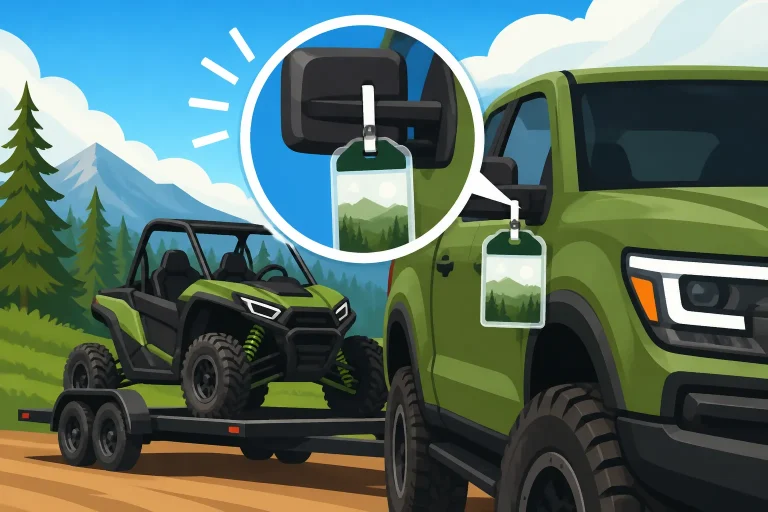
- Keep proof accessible. If you obtain an Oregon permit, keep the required decal properly displayed and carry any required documents in a place where they will stay dry and easy to find. See Oregon ATV Permit Decal Placement for placement guidance.
If Oregon’s rules indicate that you need an Oregon permit, arrange it before you ride rather than waiting to see whether an agent or staging-area check will accept your Washington paperwork. Oregon permit purchasing options and current requirements are covered in Where to Buy an Oregon ATV Permit.
Take the same care if you borrow or rent a machine in Oregon. The vehicle may already have an Oregon permit, but the rider may still need to meet separate safety or age requirements. Ask the owner or rental provider what the machine includes and what the rider must bring or complete. A permit on the vehicle does not automatically settle every rider requirement.
Permit reciprocity is not the same as safety-card reciprocity
The word “reciprocity” can make two different systems sound like one. For Oregon OHV riding, it is important to separate the machine’s operating permit from the rider’s safety education requirement.
An operating permit generally concerns the vehicle and permission to operate it under the applicable OHV rules. A safety card concerns the rider and whether required education has been completed or recognized. A Washington credential in one category does not automatically establish that Oregon accepts a credential in the other category.
That difference can affect a group ride. One adult might have an out-of-state permit that Oregon recognizes, while a younger rider still needs to satisfy Oregon’s safety-card rules. Or a visitor might have an accepted education card but still need an Oregon operating permit for the machine. Check each person and machine separately rather than treating the group as covered by one sticker or one document.
Oregon’s rules also distinguish among vehicle classes and rider ages. Requirements that apply to a Class I quad or Class III off-road motorcycle may not be the same as requirements for a Class IV side-by-side. Rider age can change which safety-card rule applies. For the education side, see Oregon Safety Card Reciprocity List and the linked rules for the relevant rider and machine class.
For Washington riders, the practical point is simple: do not use a safety card as proof of permit reciprocity, or a vehicle registration as proof that the rider has met an education requirement. They answer different questions.
Common assumptions that can lead to trouble
A few plausible assumptions cause avoidable confusion. Checking them before a trip is easier than trying to resolve the issue at a trailhead.
“Washington is next door, so Oregon must accept its credential”
Geographic proximity does not create reciprocity. Oregon’s list is the reference, not the state border. A credential from a nearby state can still be outside the list.
“My machine is registered, so it must have an Oregon permit”
Registration and an operating permit may have different legal purposes. Oregon’s question is whether the out-of-state credential qualifies under its reciprocity rules. If it does not, registration alone may not resolve the Oregon permit requirement.
“The sticker looks like the one Oregon uses”
Appearance is not enough. The issuing authority and the credential’s legal status matter. Two decals can look similar while authorizing different things.
“If my permit is accepted, my safety card is accepted too”
Permit reciprocity and safety-card reciprocity are separate. Check both requirements, especially if the group includes young riders or machines from different classes.
“The permit covers every fee at the riding area”
An operating permit is not necessarily an admission or parking pass. Federal, state, and local land managers may have separate access requirements. Review the specific site’s information before traveling.
“A short-visit rule will cover an entire season”
Time limits and exemptions can matter for visitors. Confirm the applicable duration rather than relying on a past trip or another rider’s account. If you are moving to Oregon or keeping a machine there for an extended period, review Oregon ATV Permit After Moving to the State.
“If no one checked last time, the credential must be accepted”
Not being stopped does not confirm that a credential meets Oregon’s rules. Enforcement may vary by location and day, but the legal requirement does not depend on whether a check occurs. Check the rules and carry the correct documents before riding.
How to confirm your exact requirement
Before a ride, gather the details that help determine what applies:
- The machine’s make and model, and the features needed to classify it in Oregon
- The Washington document or decal you currently have
- The rider’s age and any safety card or training record
- The length of the planned stay in Oregon
- The land manager and riding area you plan to visit
- Whether the machine will be used only off-road or also on a road where separate rules apply
Then compare those details with Oregon’s current official permit and safety-card information. If the site wording does not clearly address your Washington credential, ask the relevant Oregon agency or land manager before the trip. Be ready to describe the exact document; “Washington sticker” may not be specific enough to get a reliable answer.
If you need an Oregon permit, check the current purchasing and display instructions. Requirements and fees can change, so confirm current figures with the official provider rather than relying on an old receipt, online discussion, or another rider’s memory. If you are unsure whether a credential qualifies, obtaining clarification before riding is safer than assuming that the state will recognize it.
The central takeaway is narrow but useful: Oregon does not include Washington on its permit reciprocity list. A Washington credential may be valid for riding under Washington rules, but that alone does not make it an Oregon permit. Check permit reciprocity, safety-card reciprocity, time limits, and the riding site’s access rules as separate items.
Frequently Asked Questions
Does Oregon accept a Washington ATV registration as its operating permit?
Washington is not on Oregon’s permit reciprocity list, so do not assume a Washington registration substitutes for an Oregon permit. Confirm the current requirement for your machine and trip with Oregon’s official guidance.
Is a Washington safety card the same as an Oregon permit?
No. A safety card concerns rider education; an operating permit concerns the vehicle. Oregon has separate rules for the two, so check each one independently.
Does being a Washington resident change the reciprocity rule?
Residency alone does not make Washington a state on Oregon’s reciprocity list. Your machine, credential, length of stay, and riding location can all matter, so verify the rule that applies to your circumstances.
Does an Oregon permit cover parking or day-use charges?
Not necessarily. Site access charges and parking requirements may be separate from the OHV operating permit. Check the land manager’s rules for the specific riding area.
Disclaimer
This article is for general informational purposes only and does not constitute professional advice. Laws, prices and regulations vary by location and change over time. Consult a qualified professional for guidance on your specific situation.