Oregon ATV Safety Card for Children
Children riding ATVs or UTVs in Oregon may need an ATV safety education card, but the rule depends on the machine’s class and the rider’s age. Parents also have to sort out course steps, supervision and the separate operating permit. Here’s how to tell what a child needs before heading to a trail or riding area.
When a Child Needs an Oregon ATV Safety Card
Oregon’s safety-card requirement is based mainly on ATV class, not on whether a child has ridden before. In general, operators of Class I and Class III machines need an ATV Safety Education Card. For Class IV machines, the card requirement applies to operators under 16. The details are covered in Oregon ATV Safety Card Requirements.
That makes the first practical step identifying the machine’s class. A youth quad is often Class I, while an off-road motorcycle is Class III and many side-by-sides are Class IV. Those are common examples, not a substitute for checking the machine’s actual design and classification. If you are unsure, use Which Oregon ATV Class Your Machine Falls Into before deciding whether a card is required.
| Machine type or class | General safety-card rule for a child |
|---|---|
| Class I, such as many quads | Operators need a card, including children |
| Class III, such as an off-road motorcycle | Operators need a card, including children |
| Class IV, such as many side-by-sides | Operators under 16 need a card |
| Class II | Check the rules for the specific machine and use; do not assume Class I rules apply |
A child’s age still matters even when a card is required for everyone in that machine class. Oregon has separate requirements and training steps for riders under 16. Review Oregon Rules for Riders Under 16 and [Oregon Minimum Age to Ride an ATV] before choosing a machine or planning a ride.
The safety card is not permission to ride any machine, anywhere, or without supervision. It documents completion of a safety education requirement. A child still needs a machine appropriate for their size and ability, must follow applicable riding and supervision rules, and may need a separate operating permit for the ATV. Site day-use fees or passes can also apply. These are separate requirements, so having one document does not replace the others.
For clarity, the Oregon ATV operating permit is generally associated with the machine, while the safety card is associated with the rider. Read Oregon’s ATV Operating Permit for the machine permit rules, and keep the card question separate from the permit-decals question. A child can have a valid safety card while the machine still needs its own permit or decal.
How the Course and Card Work for Riders Under 16
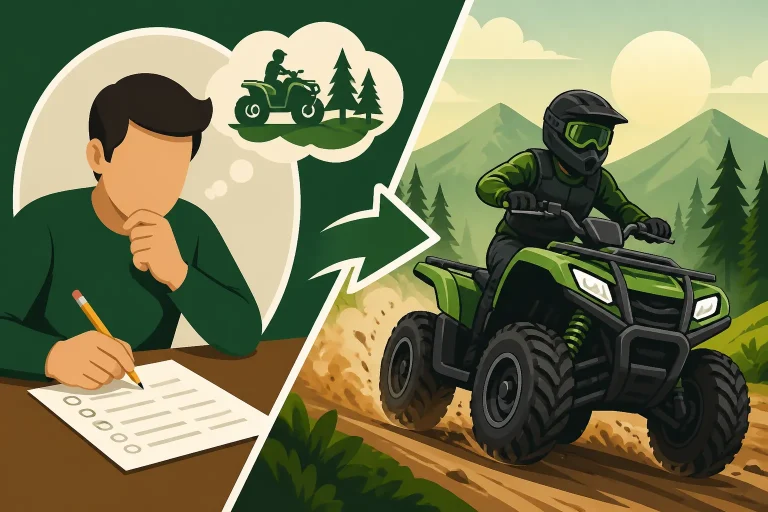
Oregon’s safety education process involves more than handing a child a card. The course pathway for riders under 16 includes online instruction and hands-on training. A child may receive an instructional permit after completing the online portion, allowing them to practice while they work toward completing the hands-on requirement. The instructional permit is temporary, so parents should not treat it as a permanent substitute for the card. Check How to Get an Oregon ATV Safety Card and Oregon Hands-On Training Requirements for the current steps.
A sensible way to manage the process is:
- Identify the machine’s class. Confirm whether the child will operate a Class I, III, IV or another type of machine. The class affects whether the card is required.
- Complete the required online course. Follow the current course instructions and make sure the child completes the work themselves. If an adult helps with navigation or reading, the child still needs to understand the safety material.
- Keep any instructional permit available. If the child is in the instructional-permit stage, know its restrictions and expiration. The Oregon’s 180-Day Instructional Permit article explains why the temporary permit has a limited period.
- Arrange hands-on training. Do not put off this step until the end of the permit period. Training availability and travel can take planning, and the child needs practical instruction, not just a passing online result.
- Keep the completed card accessible. Carry it as required when riding, either in an accepted physical or digital form. Confirm what is accepted before relying on a phone, particularly where reception may be limited.
The online course teaches concepts; hands-on training helps a young rider apply them. A child may be able to repeat a rule without being ready to judge a slope, control speed, or respond to changing terrain. Practical instruction gives a qualified trainer an opportunity to assess basic control and reinforce safe habits. For details about course providers and training arrangements, see Oregon Course Providers and Where They Teach.
Parents should also distinguish a passing score from competence. A completed course is a required milestone, not proof that a child is ready for every trail, every machine, or every riding condition. Start with a controlled area and close supervision. Increase difficulty only when the child can consistently manage the machine and respond calmly to instructions.
The process can be easy to confuse because an instructional permit, a safety card and an ATV operating permit all have different purposes. The instructional permit relates to a rider’s training stage; the safety card records the required education; the ATV operating permit applies to the machine. If you are preparing for a first ride, check each item independently rather than assuming that a course completion email covers everything.
Supervision, Machine Choice and Riding Readiness
A safety card does not answer whether a particular child should ride a particular machine. That depends on physical fit, judgment, experience and the conditions where the ride will take place. Oregon has supervision rules for young riders, so confirm which adult must accompany the child and what the applicable limits are. Oregon Supervision Rules for Young Riders is a useful place to start.
Before the ride, check whether the child can comfortably reach and use the controls, maintain a stable riding position, and understand how to stop. A machine that is too heavy or powerful can be difficult for a young rider to control, even if the child is confident. Do not use an adult-size machine simply because the child can reach the seat or because the ride is expected to be short.
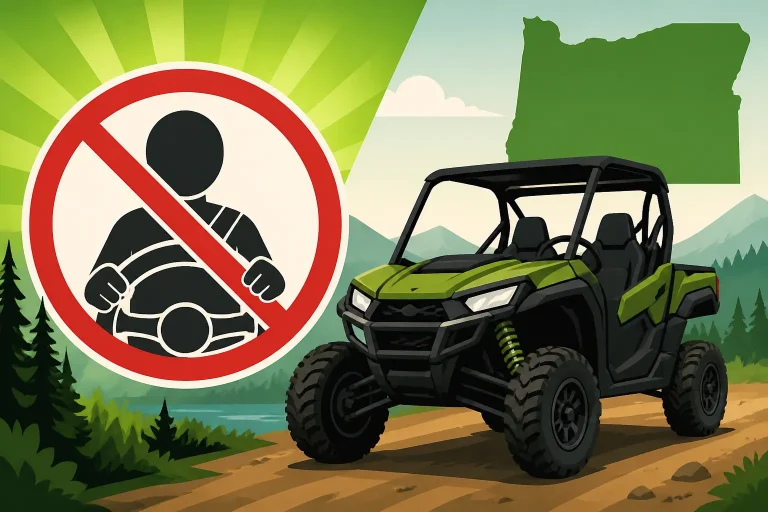
For a side-by-side, the child’s role matters. A child operating the machine and a child riding as a passenger may be subject to different requirements. The card rule for Class IV applies to operators under 16; do not assume that every passenger must meet the operator’s card requirement, or that a passenger can ride without the appropriate seat, restraint and supervision. Check Oregon Passenger Rules in a Side-by-Side for passenger-specific details.
Use the following checks before leaving:
- Match the machine to the child. Consider the manufacturer’s age and size guidance, the child’s reach, and whether they can manage the machine’s weight and controls.
- Confirm the card and training status. Check the machine class and the rider’s age, then make sure the child has completed the applicable course steps.
- Review supervision requirements. Know who needs to be present and close enough to supervise. A group ride with other adults does not automatically satisfy a rule if the required supervisor is not there.
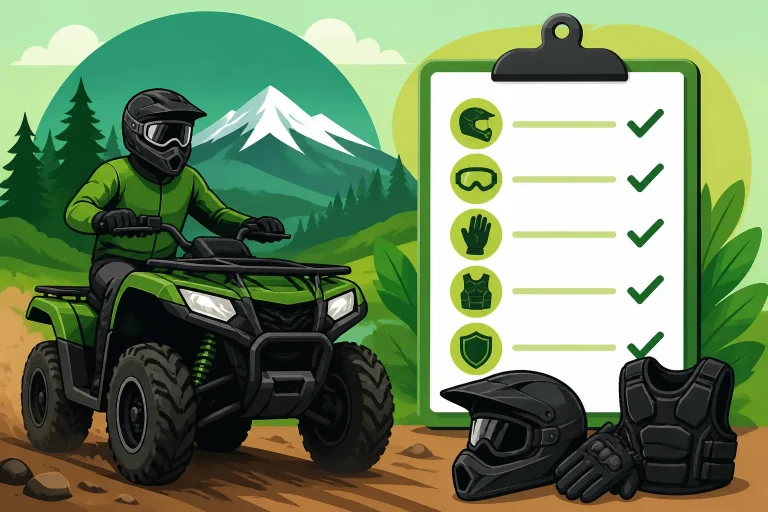
- Fit protective equipment before riding. A properly fitting helmet is essential, and eye protection, gloves, long sleeves, long pants and sturdy footwear help reduce common riding injuries. If shopping through a retailer such as Amazon, check that the helmet is the correct size and meets the applicable safety standard rather than choosing by appearance alone.
- Choose a suitable route and conditions. Avoid steep, crowded or unfamiliar terrain for a child who is still learning. Fog, soft sand, dust, mud and poor visibility can make a beginner’s ride much harder.
- Set clear rules. Agree on speed, stopping points, hand signals or communication, and what the child should do if they lose sight of the supervising adult.
A child’s comfort level can change during a ride. Fatigue, cold, heat or a difficult stretch of trail can make safe control harder. Plan breaks and be prepared to turn around. A card does not remove the parent’s responsibility to make a reasonable decision about whether conditions remain appropriate.
It is also useful to prepare children for the riding area itself. Explain that signs and closures matter, that other riders may approach from different directions, and that the child should stop and wait if uncertain. On dunes or trails, a route that looks simple from the staging area may involve blind rises, loose surfaces or traffic. Choose a beginner-friendly area and check local restrictions before riding.
Common Mistakes Parents Can Avoid
The most common mistake is treating the card as a general ATV license. Oregon’s card requirement depends on the machine class, and completion of the course does not override other rules. A child can satisfy the card requirement and still be too young for a particular use, lack required supervision, or be riding a machine that does not fit their ability.
Another mistake is assuming all machines follow the same rules. A quad, off-road motorcycle and side-by-side may fall into different classes. If a family owns more than one type, check each one separately. Do not use the card rule for a quad to make assumptions about a side-by-side or motorcycle.
Parents can also confuse the training permit with the operating permit. The temporary instructional permit is part of the youth training pathway; it is not the ATV’s operating permit. Similarly, a machine’s decal does not prove that the child has completed safety education. For permit purchasing and placement information, use Oregon Permit Decals and Where They Go.
A few simple habits make paperwork easier:
- Save a clear copy or photo of the child’s card, while carrying it in the format accepted for the ride.
- Keep the machine’s permit information with the vehicle documents, not only on a parent’s phone.
- Record when the child completed the online and hands-on parts of training.
- Check the card and permit before a trip rather than at the staging area.
- Reconfirm requirements if the child changes machine class, begins operating a side-by-side, rides in a different setting, or uses a rental.
Rental machines deserve an extra check. Ask the rental provider what safety-card or training requirements apply to the child and whether the rental has its own operating permit. A rental agency may provide instructions or documentation, but parents should still confirm the child’s eligibility and supervision needs before booking. Oregon Rules for a Rented Machine explains the separate rules that can apply.
If a child has completed the course but has not finished the hands-on step, do not assume that a receipt or test result counts as the finished card. Check the status and allowed next steps with the course provider or Oregon Parks and Recreation Department. The safest plan is to complete the required training before a planned trip, leaving time to resolve any missing record or scheduling issue.
Disclaimer
This article is for general informational purposes only and does not constitute professional advice. Laws, prices and regulations vary by location and change over time. Consult a qualified professional for guidance on your specific situation.