Oregon Minimum Age to Ride an ATV
Oregon does not have one minimum age that applies to every ATV or UTV. The answer depends on the machine’s class, the rider’s age and size, and where the ride takes place. Here’s how to sort out the main youth rules, including when a safety card, hands-on training, or adult supervision may be required.
Oregon’s minimum age depends on the machine
For a young rider, the first step is identifying the ATV’s Oregon class. A quad, dirt bike, side-by-side, and dune buggy do not necessarily follow the same rules. The machine’s appearance or the name a seller uses is not enough to settle its legal class; features such as how it is operated and its width can matter. If you’re unsure, start with Which Oregon ATV Class Your Machine Falls Into.
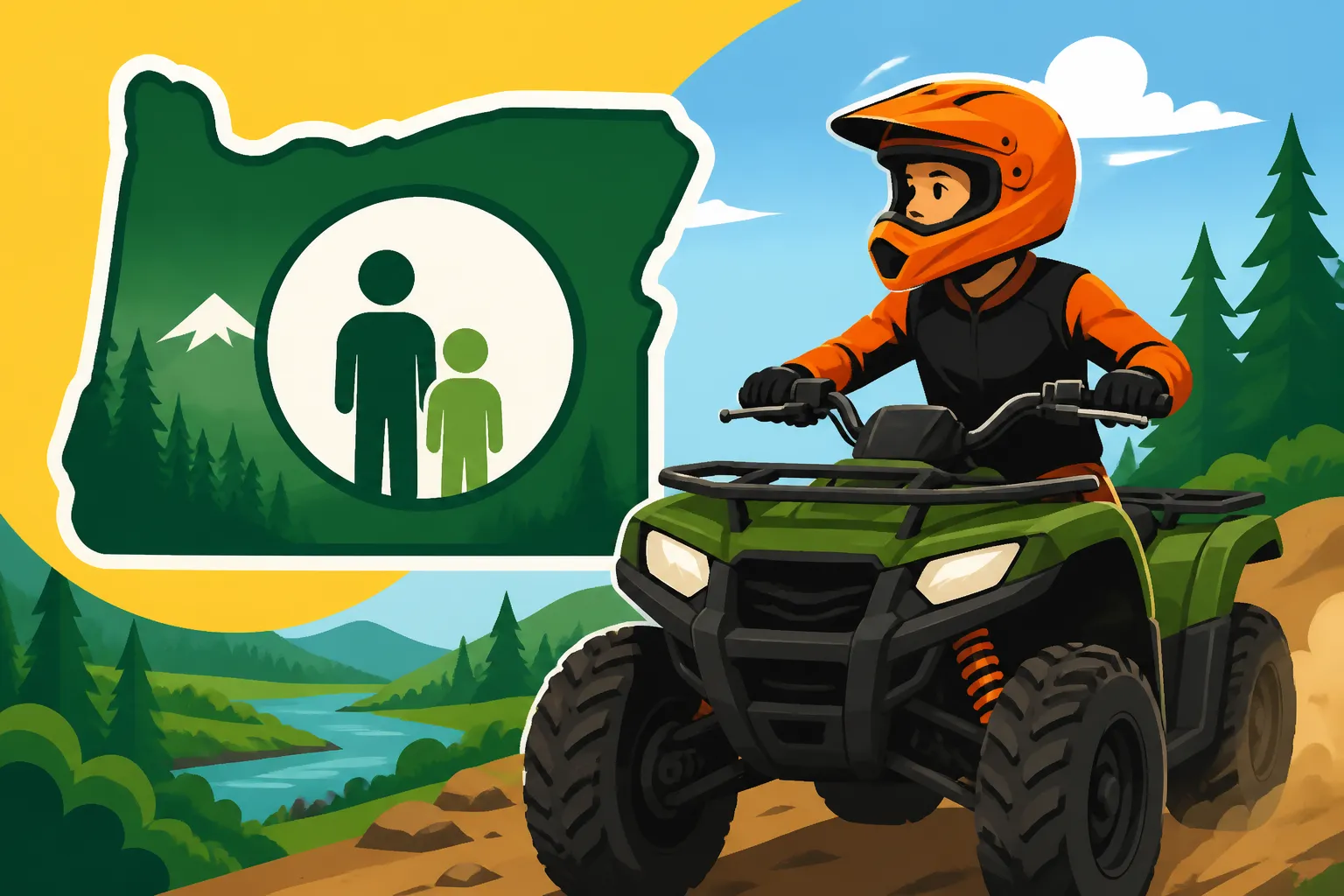
For Class I ATVs, which commonly include quads, Oregon has minimum-age and engine-size limits for younger operators. The general age bands used for youth operation are:
| Rider’s age | Class I engine-size limit |
|---|---|
| Younger than 7 | Not permitted to operate a Class I ATV |
| 7–9 | 70cc or less |
| 10–11 | 90cc or less |
| 12–15 | 200cc or less |
| 16 and older | Youth engine-size limits no longer apply |
These limits are not a recommendation to put a child on a machine simply because its engine falls within the listed size. A rider still needs the strength, judgment, and coordination to control it, and the machine must fit the rider. Check Oregon’s current rules before a ride, especially if you have a newer or unusual machine. For additional detail, see Oregon Rules for Riders Under 16 and Oregon Minimum Age to Ride an ATV.
The age bands in the table apply to Class I youth operation, not automatically to every machine in Oregon’s ATV system. Class III off-road motorcycles have their own considerations, while Class IV side-by-sides bring questions about who may operate them, who needs a safety card, and whether the ride is off-road or on a road. A Class II machine used on the road has different legal requirements again. For comparisons, see Oregon’s Four ATV Classes Explained and Oregon ATV Permit for a Side-by-Side.
Age rules also do not replace the rules of the place where you plan to ride. A trail system, land manager, organized event, or private property owner may set additional conditions, and some areas restrict access seasonally or by vehicle type. Confirm that the riding area is open to the specific machine and rider before you leave.
Supervision, safety cards, and hands-on training
A child meeting the age and engine-size limit does not automatically mean they can ride without an adult or without completing required training. Oregon has ATV safety education requirements, and the details depend on the machine class and the rider’s age.
For Class I and Class III operation, Oregon requires an ATV Safety Education Card. Riders under 16 also have additional training and supervision requirements. Class IV has a different card rule: operators under 16 need a card. Because these requirements vary by class, don’t assume a card that applies to one machine type automatically covers another. The full breakdown is in Oregon ATV Safety Card Requirements and Class IV Cards Only for Riders Under 16.
For young riders operating a Class I or Class III ATV, Oregon requires adult supervision. Check the current state requirements for who qualifies as a supervisor and what the adult must do; having an adult somewhere at the staging area is not a reliable substitute for meeting the rule. If your child will be riding with a club or a group, ask the organizer how supervision is handled and whether it meets Oregon requirements. More detail is available in Oregon Supervision Rules for Young Riders.
Hands-on training is a separate step from completing the online safety course. A youth may need both, so confirm the requirements before treating the card as the only thing left to do. Oregon’s course and training process is explained in Oregon Hands-On Training Requirements. Requirements can also differ for a rider who qualifies for an exception, so check the relevant details rather than relying on another family’s experience.
A rider should be able to show the required card when asked. Keep it accessible during the ride, whether that means carrying the card or using an accepted digital version. If the card is lost or damaged, see [Oregon Safety Card Replacement]. For a child who has not yet completed the course, Oregon ATV Safety Card for Children can help clarify the next steps.
A driver’s license is not a general replacement for ATV training or permission to ride off-road. A license may matter for certain machines or road use, but it does not erase the rules that apply to youth on a trail. Riders approaching age 16 should check [Oregon Rules for a Rider Aged 16] rather than assuming all requirements disappear on a birthday.
A safety card is not a permit or permission to use any trail
Several different requirements can apply to one ride. A safety card concerns rider education. An operating permit concerns the machine. Land-access rules determine whether the machine may use a particular trail, road, or riding area. Meeting one requirement does not cancel the others.
Before heading out, check each of these:
- Machine class: Identify the class using the machine’s features, not just its model name.
- Rider’s age and engine size: For a Class I quad, confirm that the engine size fits the rider’s age band.
- Safety card and training: Check what applies to the machine class and whether the rider needs hands-on training.
- Supervision: Confirm the adult-supervision requirements for a rider under 16.
- Operating permit: Find out whether the machine needs an Oregon permit and whether it already has one. The permit is not a rider’s safety card; see Oregon’s ATV Operating Permit.
- Land access: Verify that the site is open to the machine and that youth riders may use it under the site’s rules.
- Protective equipment: Choose a properly fitting helmet and other suitable gear, and follow any applicable helmet requirements.
If a machine is used only on private land, that may affect which operating-permit rules apply, but it does not make a child’s age, training, or safety irrelevant. Private-property access also depends on permission from the owner. For the permit question, see Oregon ATV Permit for a Machine on Private Land; for helmet information, see Helmet Rules for Oregon Riders.
If you’re buying gear online, including through Amazon, check the product’s fit, certification information, and return policy rather than relying on a product photo or a size label alone. A helmet that shifts, blocks vision, or is uncomfortable can make a young rider less safe, even if it is the right general type.
How to decide whether a young rider is ready
Oregon’s legal minimums are a starting point, not a safety assessment. A child may meet the age rule and still be too small, inexperienced, or nervous for a particular machine or trail. A responsible decision considers the rider, the ATV, and the conditions together.
Use this practical sequence before the first ride:
- Confirm the machine’s class. If it is a quad, side-by-side, dirt bike, or other machine that may fit more than one description, resolve the class before applying age rules.
- Check the age and engine limit. For a Class I ATV, compare the rider’s age with the engine size. Do not rely on an adult’s judgment that the machine “feels small enough.”
- Complete required education and training. Make sure the rider has the appropriate safety card and any required hands-on training before operating.
- Arrange compliant adult supervision. Confirm who will supervise and stay close enough to respond if the rider needs help.
- Match the route to the rider’s ability. Start with a suitable area and manageable terrain. Avoid steep slopes, deep water, heavy traffic, and crowded trails while a young operator is learning.
- Check the site’s current conditions. Closures, weather, visibility, and trail difficulty can change. A legal route may still be a poor choice for a beginner or small rider.
- Practice basic controls and stops. Before joining other riders, the child should be able to start, stop, steer, and respond to instructions in a controlled area.
A parent or supervising adult should be able to stop the ride if the child is tired, frightened, or struggling with the controls. Children can lose concentration quickly, and an ATV that is manageable on flat ground may become difficult on a slope or loose surface. Keep the ride short enough that the rider can stay alert and in control.
Do not carry a second person on a quad that was designed for one operator. A passenger can affect balance and control, and Oregon has specific passenger requirements. Check Oregon Passenger Rules on a Quad before taking another rider along. A side-by-side built for multiple occupants has different seating and restraint considerations, but it does not make age, supervision, or site rules irrelevant.
If the rider is too young for the applicable Class I minimum, choose a non-operating role instead of trying to work around the age restriction. A child can learn about protective gear, trail signals, and safe behavior without operating a machine. For an older youth who is eligible to ride, proper training, a well-fitting machine, and active supervision are more useful than simply choosing the most powerful ATV the age limit allows.
Disclaimer
This article is for general informational purposes only and does not constitute professional advice. Laws, prices and regulations vary by location and change over time. Consult a qualified professional for guidance on your specific situation.