Why a Side-by-Side Driver May Not Need One
A side-by-side driver may be told they do not need an Oregon ATV Safety Education Card, then discover there is a separate permit requirement. The key is knowing which rule covers which credential. This article explains when a Class IV operator may not need a safety card, what still applies on public riding areas, and how to check that your machine actually qualifies as a side-by-side under Oregon’s ATV rules.
Which credential might a side-by-side driver not need?
The credential people often mean is an ATV Safety Education Card. Oregon’s rule for Class IV side-by-sides differs from the rule for quads and off-road motorcycles: a Class IV operator needs a valid driver’s license or instruction driver permit, while an ATV Safety Education Card is relevant for operators under 16. The Oregon Parks and Recreation Department sets these safety education requirements.
That does not mean every side-by-side driver can skip safety credentials. The operator’s age and driving privileges matter. According to the Oregon Parks and Recreation Department, operators under 16 on Class IV machines need an ATV Safety Education Card unless they have an Instruction Driver Permit. Operators with a suspended or revoked driver’s license may not operate any class of ATV.
The distinction is easier to see alongside the rules for other classes:
| Machine class | Safety credential described by Oregon Parks and Recreation Department |
|---|---|
| Class I, such as a quad | An ATV Safety Education Card is required for all ages |
| Class III, such as an off-road motorcycle | An ATV Safety Education Card is required for all ages |
| Class II, such as some trucks and sand rails | A valid state-issued driver’s license or Instruction Driver Permit is required |
| Class IV, such as a qualifying side-by-side | A valid driver’s license or permit is required; an ATV Safety Education Card applies to operators under 16 unless they have an Instruction Driver Permit |
The important takeaway is that a side-by-side driver may be able to meet the safety-education credential rule through driving privileges instead of carrying an ATV Safety Education Card. That is not the same as being exempt from all ATV requirements. The distinction between a card, a driver’s license, and the operating permit is central to understanding Oregon ATV Safety Card Requirements.
A safety card and an operating permit are not interchangeable
An ATV Safety Education Card concerns operator education. An ATV Operating Permit concerns the machine’s authorization to operate on lands open to ATV use. Having a driver’s license does not replace the operating permit.
The Oregon Parks and Recreation Department requires an ATV Operating Permit for a machine operated on lands open to ATV use. The permit is valid for two years, and it can be purchased online or from an onsite permit agent. An online purchase provides a temporary permit valid for 30 days while the permanent permit is being processed.
This is why a driver might accurately say, “I don’t need the safety card,” but still need to check whether the side-by-side has a current operating permit. For a broader explanation of what the decal covers, see [Oregon ATV Permits Explained]. If you are checking what to arrange before heading out, Where to Buy an Oregon ATV Permit covers the available purchase routes.
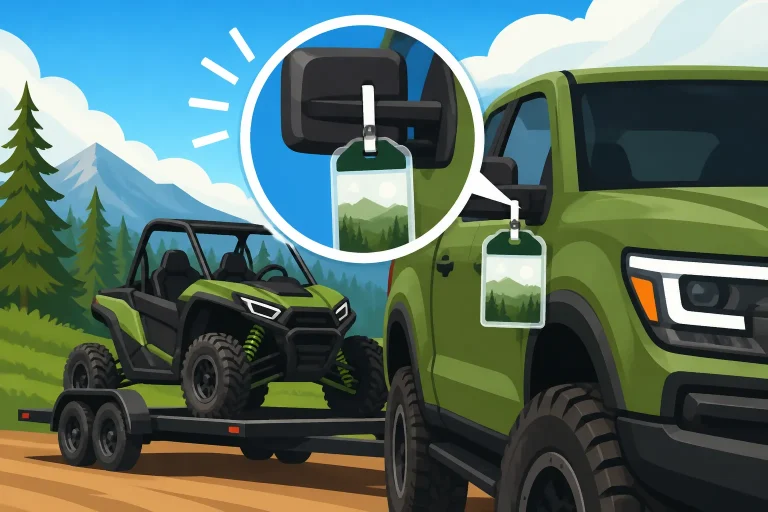
For side-by-sides, the permit also has to be displayed correctly. The Oregon Parks and Recreation Department says permits on side-by-sides, jeeps, trucks, and passenger vehicles must be visible from the rear. A permit that is in the vehicle but cannot be seen in the required location may not satisfy the display rule. Decal Placement on a Class IV Machine explains the placement question in more detail.
The permit rule applies to the vehicle, not just the person at the wheel. A passenger’s safety card status does not provide a permit for an unpermitted machine, and a driver’s license does not turn a machine without its required permit into a permitted one. Keep the credentials separate when planning:
- Driver’s license or instruction driver permit: relates to who may operate a Class IV machine.
- ATV Safety Education Card: relates to safety education and may apply to a Class IV operator under 16.
- ATV Operating Permit: relates to operating the machine on lands open to ATV use.
- Permit decal placement: makes the permit visible on the machine as required.
For a short-term situation, such as buying a permit online just before a ride, check that the temporary permit is available and keep it accessible. The Oregon Parks and Recreation Department says an online purchase includes a 30-day temporary permit. Do not assume the permit is unnecessary because the operator has a license or because the machine is rented or borrowed. For rentals, see Oregon Rules for a Rented Machine.
Make sure the machine is actually a Class IV side-by-side
The safety-card rule only helps if the machine fits the class you think it does. Oregon has four ATV classes defined by law in ORS 801.190 through 194, according to the Oregon Department of Transportation. A vehicle’s everyday name or marketing description is not enough to establish its legal class.
The Oregon Parks and Recreation Department describes a Class IV ATV as a machine originally manufactured for off-road use only, with a dry weight of 3,500 pounds or less and a width of 75 inches or less at its widest point. Those limits are useful starting points, but the overall class definition matters too. If the vehicle does not meet the Class IV definition, do not rely on Class IV safety-card rules without verifying its classification.
This matters for vehicles that resemble side-by-sides but have different designs or uses. A truck or SUV may fall under a different class, and some machines built for highway use have separate street-legal treatment. The Oregon Parks and Recreation Department notes that ATVs manufactured for highway use can be registered as street legal in Oregon, while the Oregon Department of Transportation says the DMV does not issue registration for ATVs. These are different questions from whether a machine qualifies as a Class IV ATV for off-road use.
A quick class check can prevent the wrong assumption:
- Check the vehicle’s original design. Class IV is for machines originally manufactured for off-road use only, according to the Oregon Parks and Recreation Department.
- Confirm width and dry weight. The department defines Class IV machines as no wider than 75 inches and no heavier than 3,500 pounds in dry weight.
- Compare the machine with Oregon’s class definitions. The Oregon Department of Transportation identifies the classes in ORS 801.190 through 194. For more detail, see Which Oregon ATV Class Your Machine Falls Into and Oregon’s Four ATV Classes Explained.
- Check the operator’s credentials for that class. A Class IV conclusion does not automatically determine whether the operator needs a license, permit, or safety card.
- Check the operating permit separately. Even if the operator does not need an ATV Safety Education Card, the machine may still need its ATV Operating Permit on lands open to ATV use.
If a machine’s classification is unclear, use the vehicle specifications and official class definitions rather than relying only on a dealer’s informal description, a prior owner’s decal, or what other riders call it. You can also review Oregon ATV Width Limits by Class and Oregon ATV Weight Limits by Class. Where the classification affects whether a young operator may drive, it is especially important to confirm before riding.
A practical pre-ride check for side-by-side operators
Before taking a side-by-side onto a public riding area, check the vehicle class, operator credentials, and permit as separate items. The Oregon Parks and Recreation Department requires safety education for people operating ATVs on public land, but its Class IV rule is not identical to the all-ages card rule for Class I and Class III machines.
Start with the driver. If the operator is an adult or otherwise holds valid driving privileges, verify those credentials are current and appropriate. If the operator is under 16, check the Class IV safety-card or Instruction Driver Permit requirement and any applicable supervision and manufacturer age guidance. The Oregon Parks and Recreation Department says operators under 16 on Class IV side-by-sides must meet the manufacturer’s age recommendations. For additional age and supervision details, see Oregon Rules for Riders Under 16 and Oregon Supervision Rules for Young Riders.
Then check the machine. Confirm that it meets the Class IV definition rather than assuming that every side-by-side-shaped vehicle is automatically Class IV. Verify the operating permit is current and that its decal is visible from the rear. Keep any temporary permit information with the vehicle if the permit was purchased online.
A final check should cover ride-specific requirements as well. A safety card or driver’s license does not establish that a route is open to the machine, and an ATV permit does not make a public road legal for ATV use. Road access, required equipment, and age restrictions can depend on the location and the kind of road. If your plan includes public roads, check Oregon Rules for Riding a County Gravel Road or Oregon Rules for Riding a Forest Road rather than assuming the off-road permit covers road travel.
The bottom line: a side-by-side driver may not need an ATV Safety Education Card when the Class IV rules allow the operator to rely on valid driving privileges. But the machine still needs to qualify as Class IV, the operator must meet the applicable requirements, and the ATV Operating Permit remains a separate issue on lands open to ATV use.
Sources
- Oregon Parks and Recreation Department — Oregon Parks and Recreation : ATV Permits : Ride ATVs : State of Oregon (checked November 3, 2026)
- Oregon Department of Transportation — Oregon Department of Transportation : Vehicle Types : Oregon Driver & Motor Vehicle Services : State of Oregon (checked November 3, 2026)
- Oregon Parks and Recreation Department — Oregon Parks and Recreation : ATV Permits : Ride ATVs : State of Oregon (checked November 3, 2026)
- Oregon Parks and Recreation Department — Oregon Parks and Recreation : ATV Safety Card : Ride ATVs : State of Oregon (checked November 3, 2026)
- Oregon Parks and Recreation Department — Oregon Parks and Recreation : ATV Safety Card : Ride ATVs : State of Oregon (checked November 3, 2026)
- DEPARTMENT OF TRANSPORTATION DRIVER AND MOTOR VEHICLE SERVICES — 463.pdf (checked November 3, 2026)
- Oregon Parks and Recreation Department — Oregon Parks and Recreation : ATV Safety Card : Ride ATVs : State of Oregon (checked November 3, 2026)
- Oregon Parks and Recreation — Oregon Parks and Recreation : Youth Riders : Ride ATVs : State of Oregon (checked November 3, 2026)
- Oregon Parks and Recreation Department — Oregon Parks and Recreation : Types of ATVs : Ride ATVs : State of Oregon (checked November 3, 2026)
- Oregon Parks and Recreation Department — Oregon Parks and Recreation : Need to Know : Ride ATVs : State of Oregon (checked November 3, 2026)
- Oregon Parks and Recreation Department — Oregon Parks and Recreation : FAQ : Ride ATVs : State of Oregon (checked November 3, 2026)
Disclaimer
This article is for general informational purposes only and does not constitute professional advice. Laws, prices and regulations vary by location and change over time. Consult a qualified professional for guidance on your specific situation.