Does Oregon Honor an Idaho Sticker?
An Idaho OHV sticker can make it easy to assume your machine is already covered for a trip into Oregon. The key distinction is that Oregon does not treat every neighboring state’s sticker as a substitute for its own permit. Here’s how to check what you need, keep permit rules separate from safety-card and site-fee rules, and avoid arriving at a riding area with the wrong paperwork.
Does Oregon honor an Idaho OHV sticker?
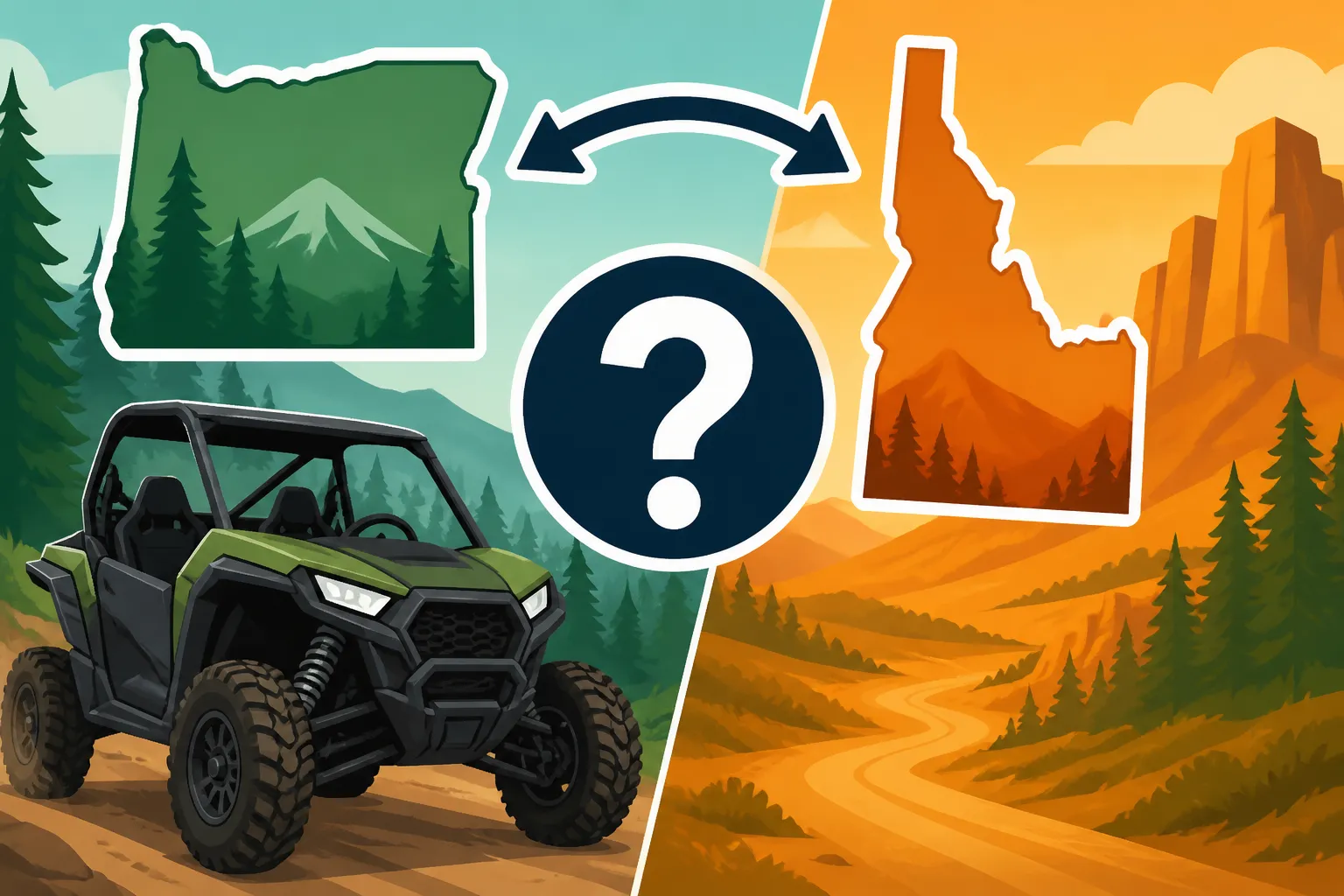
No. An Idaho OHV sticker does not substitute for an Oregon ATV operating permit. Oregon recognizes qualifying permits or registrations from certain states under its reciprocity rules, but Idaho is not on Oregon’s permit reciprocity list. If you plan to ride in Oregon, arrange the required Oregon permit for the machine rather than relying on its Idaho sticker.
The distinction matters because a sticker is not automatically valid everywhere just because it is current in the state that issued it. Each state decides whether it will recognize another state’s permit, registration or decal. Oregon’s rules are state-specific, so an Idaho sticker should not be treated as permission to ride Oregon trails or other areas where an Oregon permit is required. For the state-by-state overview, see Oregon Permit Reciprocity List and Why Idaho Is Not on Oregon’s List.
| What you have or need | What it means in Oregon |
|---|---|
| Idaho OHV sticker | Does not replace the Oregon ATV operating permit |
| Oregon ATV operating permit | The permit to arrange for a machine that needs Oregon authorization |
| Idaho safety card | A separate credential; its recognition does not settle the permit question |
| Site or day-use pass | May be required separately at a riding area or parking location |
This answer concerns the operating permit for off-highway use. It does not mean an Idaho machine is prohibited from entering Oregon, nor does it mean every Oregon riding location has identical access requirements. It means you should not count the Idaho sticker itself as Oregon’s required permit.
If you are bringing a quad, dirt bike, side-by-side, sand rail or another off-highway machine, first identify its Oregon class. Oregon’s permit system applies to different types of machines, but class affects how the vehicle is categorized and may affect decal placement. If you’re unsure where your machine fits, start with Which Oregon ATV Class Your Machine Falls Into.
What Idaho riders should do before riding in Oregon
The practical fix is to get an Oregon operating permit for the machine before riding in a place where the permit is required. Buying or applying for the permit is a separate step from owning an Idaho sticker. A permit purchased for one machine should not be assumed to cover a different one, and an Idaho registration document does not automatically transfer to an Oregon permit.
Oregon permits are generally issued for a defined period, and temporary options may also be available in qualifying circumstances. The right option depends on your trip and the current program rules. Check Oregon’s official permit information before you buy, especially if you are making a short visit or buying close to your riding date. For an overview of the visitor process, see Oregon ATV Permit for a Nonresident and Oregon’s Thirty-Day Temporary Permit.
A useful pre-trip sequence is:
- Confirm the machine’s Oregon class. Use its design and specifications, not just the name on the Idaho paperwork. A side-by-side, motorcycle and quad may be treated differently in Oregon’s class system.
- Check whether your machine needs an Oregon permit. Do not assume that being registered or stickered in Idaho creates an exemption.
- Choose the right Oregon permit option. Review current eligibility and validity details through Oregon’s official program information or an authorized permit seller.
- Apply the Oregon decal as instructed. Follow the class-specific placement directions and make sure the decal can be seen and read. Oregon ATV Permit Decal Placement covers why placement is worth checking before the ride.
- Check the destination’s access rules. A permit does not necessarily cover parking, camping or every day-use charge. Confirm any separate site requirements before leaving.
If you are only passing through Oregon, don’t wait until you reach a trailhead to sort this out. Some riding areas have limited services, and access rules can vary by land manager. Having the right permit is also different from having the right to ride a particular road, trail or beach. A valid permit does not override a closure, private-land restriction or route-specific rule.
For a current purchase route, review Where to Buy an Oregon ATV Permit. If you prefer to purchase in person, check whether an authorized agent is open and able to issue the permit before making a detour. A seller’s availability and the options offered can vary.
Permit reciprocity is not the same as safety-card reciprocity
Oregon has separate rules for operating permits and rider safety credentials. The Idaho sticker question is about whether Oregon accepts Idaho’s vehicle permit or registration decal. That is different from whether Oregon recognizes an Idaho safety card.
Oregon may recognize an Idaho ATV safety card under its separate safety-card rules. That recognition does not make the Idaho vehicle sticker valid as an Oregon operating permit. In other words, you might have a safety credential Oregon accepts and still need to obtain the Oregon permit for the machine. The reverse is also important: having the right vehicle permit does not necessarily satisfy a rider’s safety-card requirement.
| Requirement | Applies to | What to verify |
|---|---|---|
| Operating permit | The machine | Whether Oregon accepts the state-issued permit or requires an Oregon permit |
| Safety card | The rider | Whether the rider’s credential is accepted and whether it satisfies Oregon’s age-based rules |
| Area access or day-use fee | The visit or vehicle, depending on the site | What the land manager requires for that location |
Before riding, check the safety-card rules for each person in your group, not just the paperwork for the machine. Riders can have different obligations depending on the vehicle and their circumstances. The state’s general requirements are explained in Oregon ATV Safety Card Requirements, while Does Oregon Accept an Out-of-State Safety Card? addresses recognition of another state’s card.
It is also worth confirming whether a rental, borrowed machine or machine in a family group has its own permit. A rider’s credentials do not cover the machine, and the machine’s permit does not automatically satisfy each rider’s requirements. Keep the relevant paperwork accessible during the trip so you can answer questions without relying on memory.
What an Oregon permit does and does not cover
An Oregon operating permit addresses the machine-permit requirement. It is not a universal pass for every type of riding, every public land area or every fee. Before you head out, think of the requirements as separate layers: vehicle authorization, rider credentials, destination access, and compliance with the rules for the route or site.
It does not grant access to every route
A permit does not open a road or trail that is closed, restricted to another use or located on land where you do not have permission to ride. Public land can be managed by different agencies, and a route that looks passable on a map may have a gate, seasonal closure or other restriction. Check the current signs and land-manager information at the riding location.
Road access is especially easy to misunderstand. An off-highway permit does not make a machine street legal, and it does not grant blanket permission to ride on Oregon roads. Some routes have specific access arrangements, while many roads have separate restrictions. Review Which Oregon Roads You May Legally Ride before planning a route that connects trails, campsites or towns.
It does not automatically cover parking or day use
A state operating permit and a site’s day-use charge serve different purposes. Depending on where you ride, you may need to pay a separate fee or display an additional pass for parking or access. This is why it helps to look up the specific staging area rather than assuming the Oregon permit covers everything. Oregon Day Use Fees Explained gives more detail on that distinction.
Camping fees, reservations and other site rules are also separate considerations. If your ride includes an overnight stay, verify the campground requirements with the operator or land manager. A permit for the machine is not a substitute for a campsite reservation or a fee that applies to the site.
It does not replace safe preparation
Paperwork is only one part of getting ready. Check the route conditions, weather, closures, equipment rules and any requirements for your machine. A vehicle that is allowed at one destination may be unsuitable or restricted at another. Carry the permit information and rider credentials in a way that protects them from water and damage, and keep the decal clean enough to remain readable.
If you already have an Idaho sticker, leave it in place if it is required for your Idaho registration, but do not treat it as the Oregon permit. Before the ride, verify the Oregon permit’s current validity and application instructions, confirm any safety-card requirements, and check the rules for the exact area you plan to visit. That small check prevents a common mix-up: having a valid Idaho sticker but not the separate authorization Oregon requires.
Disclaimer
This article is for general informational purposes only and does not constitute professional advice. Laws, prices and regulations vary by location and change over time. Consult a qualified professional for guidance on your specific situation.