Taking the Exam After Five Years of Riding
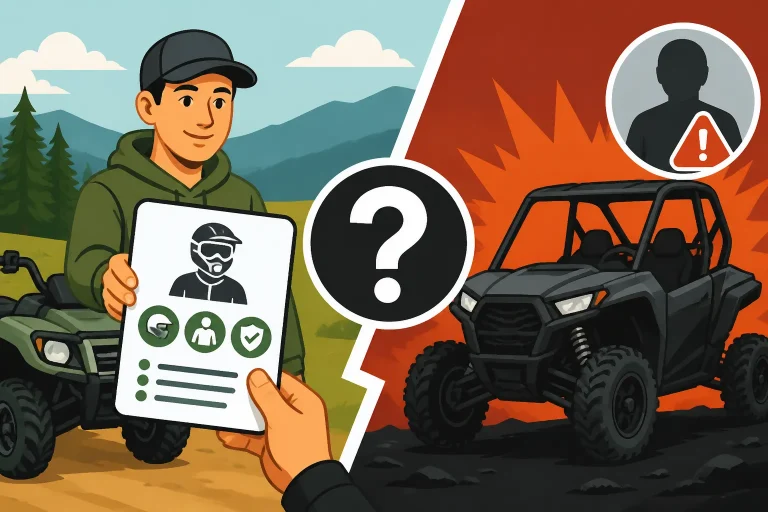
Five years on an ATV can make the safety material feel familiar, but riding experience does not automatically replace Oregon’s safety-card rules. If you are considering the experienced-rider exam, the key questions are whether you qualify, what the exam covers, and what you must still do after passing. Here’s how to approach it without assuming your experience is a blanket exemption.
What the five-year exam is for
Oregon provides an equivalency exam route for some experienced ATV riders. It is intended for riders who already know the safety material and want to demonstrate that knowledge without taking the standard course in the same way as a new rider. The important distinction is that experience may make you eligible to attempt an exam; it does not itself count as a safety card.
The exam is connected to Oregon’s ATV safety education requirements. Those requirements depend on the type of machine and, for some classes, the rider’s age. Class I and Class III operators have safety-card requirements that apply at every age. For Class IV machines, the card requirement applies to riders under 16. A Class II machine has different rules, so identify your machine’s class before deciding which requirements apply. Oregon ATV Safety Card Requirements and Which Oregon ATV Class Your Machine Falls Into explain those distinctions.
A rider with five years of experience should not assume that the exam is a riding test. It is a way to show knowledge of the rules and safe operating practices. It does not assess whether you can handle a particular trail, ride in sand, or operate a machine safely in every situation. Nor does passing it give you permission to ride where machines are not allowed, replace an operating permit, or satisfy separate land-use rules.
| Question | Practical answer |
|---|---|
| Does five years of riding automatically give me a card? | No. You still need to complete the accepted safety education or exam process. |
| Is the exam a skills test on a machine? | Treat it as a knowledge assessment unless Oregon’s current instructions say otherwise. |
| Does a safety card replace an ATV operating permit? | No. A safety card and an operating permit serve different purposes. |
| Does passing change which rules apply to my ATV class? | No. Class-specific requirements still matter. |
| Should I check the current exam instructions first? | Yes. Confirm eligibility, the application process, and any follow-up requirements with Oregon’s official ATV safety education program. |
If you are not sure whether you need a card, first check the requirements for your machine and age. The card requirement is not universal in exactly the same way across every class. Oregon ATV Safety Card for Adults and Oregon ATV Safety Card for Children can help you sort out the age-specific side of the rules.
Check eligibility before you study
Five years of riding is a useful starting point, not a reason to skip the eligibility check. Before preparing for the exam, read the current instructions from Oregon’s ATV safety education program. Confirm that the equivalency option is available for your situation and that your experience meets the program’s stated criteria.
Do not rely on a friend’s description of how the process worked for them. The exam route, the way eligibility is confirmed, and any requirements after passing should be checked directly with the official program. If you are unsure, ask before you begin; it is easier to clarify the route in advance than to discover after an exam that you needed to complete another step.
It also helps to identify your machine correctly. Oregon’s classes are based on characteristics such as the machine’s design and how it is operated, not simply the name printed on the side. A side-by-side and a quad, for example, do not necessarily fall into the same class. If you are riding more than one type of machine, check whether your safety-card obligation changes with the class you operate.
Keep the exam separate from two other common requirements:
- The ATV operating permit: This concerns permission to operate a machine in places where Oregon requires a permit. A safety card does not replace it. See [Oregon ATV Permits Explained] for an overview.
- Trail and property rules: A permit or safety card does not make a closed trail, private road, or restricted area open to riding. You still need to follow the rules for the land and route.
For an experienced rider, this distinction matters because familiarity with riding can create a false sense that paperwork is already handled. A safety card is proof that you completed an accepted education process; an operating permit and access rules address different issues.
Prepare for the exam, not just the riding
Experience gives you useful context, but it can also leave gaps. A rider who has spent years on familiar trails may know their machine well while being less comfortable with legal requirements, signs, or procedures for unfamiliar terrain. Prepare as if you need to demonstrate current knowledge, not simply describe what you have done in the past.
Start with the official course materials or study resources provided for the exam. Pay particular attention to topics that are easy to overlook in day-to-day riding:
- Machine class and operating rules: Know which class your machine belongs to and whether requirements differ for other classes.
- Protective equipment: Review the rules that apply to the rider, passengers, and machine.
- Riding areas and access: Understand that a trail’s appearance does not tell you whether it is open to ATVs.
- Safe operation: Review speed control, visibility, terrain, stopping distance, and how to ride around other users.
- Passengers and youth riders: Make sure you understand the rules for the particular machine and rider, rather than assuming they are the same everywhere.
- Permits and documents: Know what a safety card proves and what separate documents may be required.
The goal is not to memorize a handful of answers. It is to make sure your riding habits line up with the rules. If a practice question seems different from what you have seen on a particular trail, check the official material rather than relying on local custom. A trail being used a certain way by other riders does not prove that the use is permitted.
Oregon’s stated pass threshold is 80 percent. Review Oregon’s 80 Percent Pass Mark for the significance of that score, and use the official study materials to focus your preparation. If you are deciding whether to use the exam route or take the full course, compare both options against your comfort with the material. A rider who has been active for years may still prefer the structured course if it fills gaps or makes the rules easier to retain.
Do not confuse passing the knowledge exam with practical instruction. If a hands-on component or other follow-up applies to your age or machine class, the exam result does not automatically erase that requirement. Check Oregon Hands-On Training Requirements and the instructions for your particular situation before riding on the assumption that all requirements are complete.
What to do after you pass
Passing the exam is a significant step, but make sure you finish the process. Follow the official instructions for obtaining or displaying proof of your safety education. Keep a copy of the card or record where you can access it when you ride. If the program allows an electronic card, save it somewhere available offline; cell service may not be reliable at a riding area. A printed backup can also be useful.
Then check whether anything else remains for you:
- Confirm that the card or completion record has been issued. Do not assume that submitting an exam automatically means you have proof in hand.
- Check whether a class-specific or age-specific step applies. Some riders may have requirements beyond the knowledge assessment. Review Oregon ATV Safety Card Requirements again if your machine or age makes the rules unclear.
- Get the required operating permit separately. The safety card does not serve as an operating permit. For permit details, see How to Get an Oregon ATV Safety Card for the card process and Where to Buy an Oregon ATV Permit for the separate permit question.
- Check the riding area before leaving. Confirm that your chosen trails or roads are open to your machine and that any local access conditions are satisfied.
- Keep your information current. If you lose your proof or need a replacement, consult Oregon Safety Card Replacement rather than assuming an old email or screenshot will be enough.
If you do not pass on the first try, do not treat that result as a judgment on your riding ability. It means you did not meet the exam’s knowledge threshold that time. Review the topics you missed, use the official preparation material, and follow the program’s current instructions for another attempt. If the process is not clear, contact the program before retesting.
The practical takeaway is straightforward: five years of experience may make the equivalency exam a reasonable option, but it is not a substitute for checking eligibility or completing every applicable step. Confirm that you qualify, study Oregon’s rules rather than relying only on trail experience, and wait until you have the required proof before treating the card requirement as complete.
Disclaimer
This article is for general informational purposes only and does not constitute professional advice. Laws, prices and regulations vary by location and change over time. Consult a qualified professional for guidance on your specific situation.