Bringing a Machine From Washington
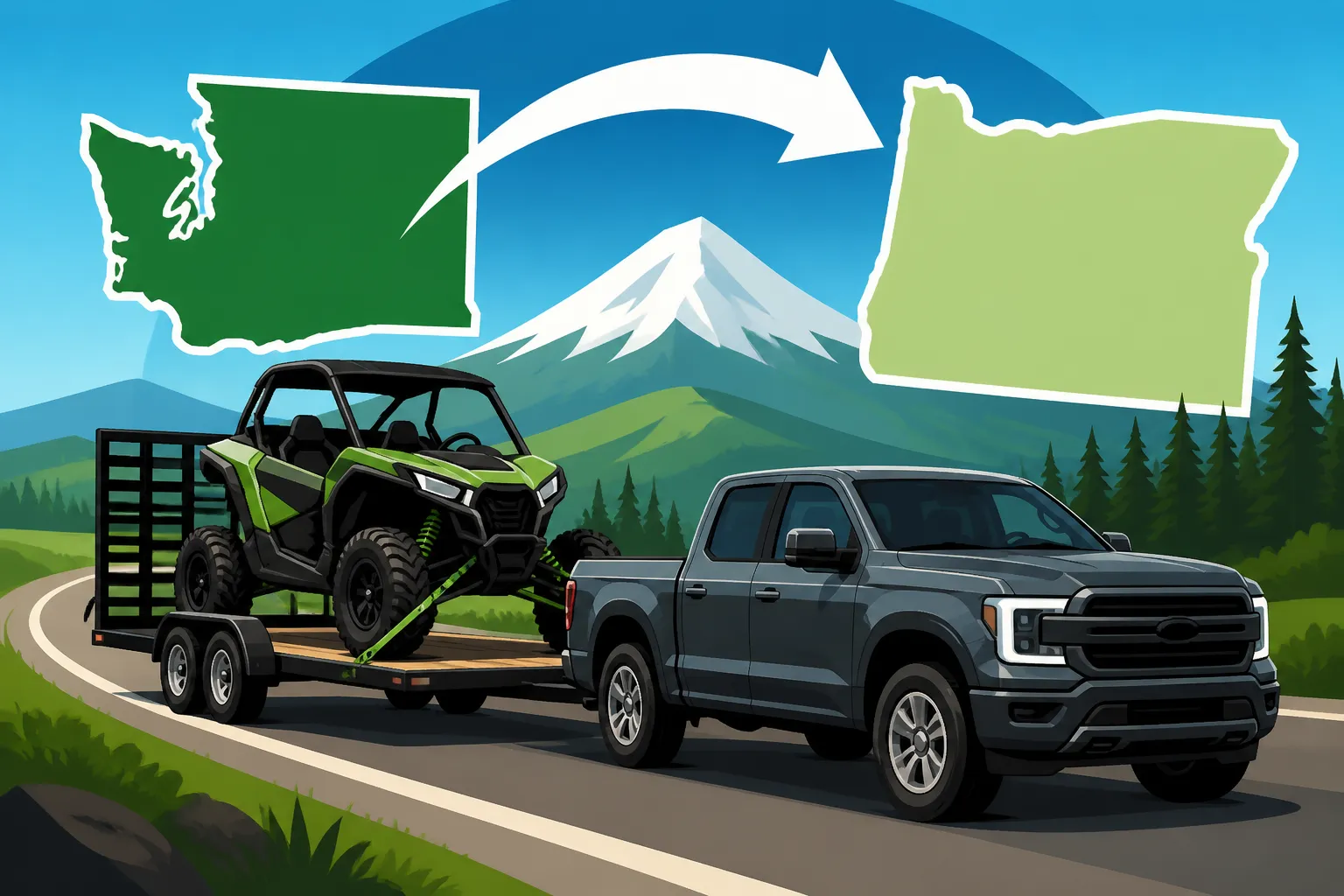
Moving your beloved ATV or UTV across the border from Washington into Oregon, or even just planning a riding trip, can feel like stepping into a whole new world of regulations. Many riders from Washington are used to their state's registration system for off-road vehicles, and it's easy to assume Oregon works the same way. The truth is, Oregon has a distinctly different approach, and navigating it can be confusing, frustrating, and even lead to unexpected fines if you're not prepared. This guide is here to clear up that confusion, specifically for Washington riders, and walk you through everything you need to know to legally and confidently hit Oregon's incredible trails and dunes.
Understanding Oregon's Unique Approach to OHV Permits (Not Registration!)
One of the biggest hurdles for Washington riders is wrapping their heads around Oregon's fundamental difference in how it manages off-highway vehicles (OHVs). In Washington, you deal with tabs and registration much like a street-legal vehicle, just for off-road use. Oregon, on the other hand, operates on a completely different philosophy.
Why Oregon Doesn't "Register" ATVs Like Washington Does
Let's get this straight from the start: Oregon's Department of Motor Vehicles (DMV) does not handle the registration of ATVs, UTVs, or any other off-highway recreational vehicle (OHV) for off-road use. This is often the first point of confusion for those coming from states like Washington, where the DMV plays a central role in nearly all vehicle-related paperwork. In Oregon, if your machine isn't street-legal and intended for public roads, the DMV largely stays out of it.
Instead of "registration," Oregon requires an "ATV Operating Permit." Think of this as a user fee and a way for the state to identify machines using its public lands, rather than a formal vehicle registration for ownership tracking. The permit system is managed by the Oregon Parks and Recreation Department (OPRD), not the DMV. This distinction is crucial because it means the process, the paperwork, and the enforcement all differ significantly from what you might be accustomed to in Washington. You won't be getting license plates or tabs from the Oregon DMV for your off-road machine; you'll be getting a decal from OPRD. To dive deeper into this, you might find [Why Oregon's DMV Does Not Register ATVs] helpful.
The Two-Year Permit and What It Covers
Oregon's ATV Operating Permit isn't just a formality; it's a vital part of keeping Oregon's extensive OHV trail system and riding areas in top shape. When you purchase this permit, it’s valid for two years, beginning from the month you buy it. So, if you pick up your permit in April, it will be good until the end of April two years from then. This two-year validity is a nice change of pace compared to annual renewals some other states might require, offering a bit more longevity for your investment.
This permit is absolutely mandatory for any ATV, UTV, or off-road motorcycle that will be operated on designated public lands within Oregon. It doesn't matter if your machine is brand new, decades old, or whether you just rode it across the Columbia River from Washington for a day trip. If you're on public land, you need that Oregon permit decal. This isn't just about identification; the funds generated from these permits are directly reinvested into the OHV program, supporting essential services. This includes everything from maintaining trails and building new riding facilities to funding safety education programs and even providing grants for local OHV projects. It's a user-pay, user-benefit system, meaning your permit directly contributes to the places you love to ride. For more detail on the permit itself, check out [Oregon's ATV Operating Permit], and to understand where your money goes, see [Where Oregon ATV Permit Money Goes].
How Non-Residents and New Residents Acquire an Oregon Permit
This is where many Washington riders face a bit of a rude awakening. While some states have robust reciprocity agreements, Oregon has a specific set of rules, particularly concerning permits for out-of-state machines.
The Reciprocity Rule for Washington Visitors
Unfortunately, for Washington residents, Oregon does not offer permit reciprocity for your Washington OHV registration or tabs. This is a common point of confusion and frustration, as many assume that if their machine is legally registered in their home state, it should be recognized elsewhere. However, Oregon's system is distinct.
What this means for you: Even if your ATV or UTV has current Washington off-road vehicle tabs, you must obtain an Oregon ATV Operating Permit to ride on any designated public OHV land in Oregon. This applies whether you're planning a quick day trip to the Oregon Dunes or a multi-day adventure in the Tillamook State Forest. There is no grace period, no temporary waiver for Washington machines. If you're on an Oregon trail that requires a permit, you need an Oregon permit decal. This is a critical piece of information to understand before you load up your rig and head south. For a more detailed explanation of why Washington isn't on the list, read [Why Washington Is Not on Oregon's List]. The process for obtaining this permit is straightforward and exactly the same for you as a non-resident as it would be for an Oregon resident.
Making Oregon Your Home: Permitting Your Washington Machine
If you're making the big move from Washington to Oregon and bringing your ATV or UTV with you, the rules are quite simple once you establish residency. Your previous Washington registration or tabs for your off-road vehicle become irrelevant in the context of Oregon's OHV system. Oregon doesn't care about your past state's registration for off-road use; it only cares that you have an active Oregon Operating Permit to ride on its public lands.
So, once you're an Oregon resident, you'll simply follow the standard process for obtaining an Oregon ATV Operating Permit for your machine, just like any other Oregonian. This means purchasing the two-year decal and affixing it properly. There's no special transfer process from a Washington registration to an Oregon permit because Oregon's permit isn't a "registration" in the same sense. It's an operating privilege that applies to the machine, regardless of its origin. This simplifies things in some ways, as you don't have to navigate a complex inter-state transfer for off-road purposes. You just get the Oregon permit. For more on this, check out [Oregon ATV Permit After Moving to the State].
The Practical Steps to Getting Your Oregon Permit Decal
Now that you understand the "why" behind Oregon's permit system, let's get into the "how." Getting your permit is a fairly simple process, designed to be accessible to both residents and non-residents alike.
Where to Purchase Your Oregon Permit
Oregon provides several convenient ways to purchase your ATV Operating Permit, making it easy to comply with the rules before you hit the trails.
- Online: This is often the quickest and most convenient option. You can purchase your permit directly from the Oregon Parks and Recreation Department's website. The best part? You'll receive a temporary permit via email almost immediately after your purchase. This temporary permit can be printed out and carried with you, allowing you to ride legally right away while you wait for your physical decal to arrive in the mail. This means you don't have to put off your weekend ride! More details can be found in [Buying an Oregon Permit Online].
- Authorized Permit Agents: Oregon has a wide network of authorized vendors throughout the state. These are typically ATV dealerships, sporting goods stores, and various outdoor recreation shops. Many riders prefer this option as it allows for an in-person transaction, and you can often get your physical decal right on the spot. It's a great way to support local businesses, and if you have any questions, you can ask a real person. Before heading out, it's a good idea to check the OPRD website for a list of agents near your destination or along your travel route. [Oregon Permit Agents You Can Walk Into] provides more information on this.
- Oregon State Parks: Some Oregon State Parks also sell ATV Operating Permits. If you're planning to camp or stage your ride at a state park that offers OHV access, this can be a convenient option to pick up your permit right where you're starting your adventure.
No matter which method you choose, the cost is the same for all classes of ATVs and UTVs, keeping things simple. To see a general overview of purchasing options, you can check out [Where Oregon Sells ATV Permits].
Applying the Decal Correctly
Once you've purchased your Oregon ATV Operating Permit, you'll receive a physical decal. This isn't just a keepsake; it's your proof of compliance and must be properly affixed to your machine. Incorrect placement can lead to questions from rangers or even a citation.
The general rule is that the decal must be placed in a visible location on your machine. For most ATVs (Class I quads), this means on the right side of the machine, typically on the rear fender or another easily viewable, flat surface. For side-by-sides (Class IV machines), it's often placed on the right side of the vehicle, perhaps on the bodywork or a roll bar, as long as it's clearly visible. For off-road motorcycles (Class III), it generally goes on the left side of the rear fender. The key is visibility for enforcement personnel, so avoid placing it somewhere it might be obscured by mud, equipment, or your riding gear. Ensure the surface is clean and dry before applying the decal for maximum adhesion. The last thing you want is for your brand-new permit decal to peel off mid-ride! For specific instructions, refer to [Oregon Permit Decals and Where They Go].
Essential Paperwork and Considerations
When purchasing an Oregon ATV Operating Permit, you generally won't need an extensive amount of paperwork. The vendor or online system will ask for basic information about your machine, such as the make, model, year, and Vehicle Identification Number (VIN). You don't need to provide proof of your Washington registration or title, as those are not directly relevant to obtaining the Oregon operating permit.
However, even though an Oregon title is optional for purely off-road machines, it's always a good practice to keep proof of ownership readily accessible. This could be your original bill of sale from when you purchased the machine, or if you bought it used, a signed bill of sale from the previous owner. While the permit process doesn't require it, having these documents can be invaluable for proving ownership in case of theft, an accident, or if you decide to sell your machine down the road. If you find yourself needing a formal bill of sale for your records or a future sale, especially if you didn't get one when you first purchased the machine, services like LawDepot offer customizable templates that can help you create a legally sound document quickly. This foresight can save you headaches later. While Oregon makes [Titling an ATV in Oregon Is Optional], holding onto solid ownership documents is never a bad idea.
Beyond the Permit: Safety, Rules, and Ownership Considerations
Getting your Oregon ATV Operating Permit is a huge step, but it's not the only piece of the puzzle. Oregon has additional requirements and recommendations that are crucial for all riders, especially those new to the state's system.
Oregon's Safety Education Card Requirement
This is another critical area where Oregon's rules often differ from other states, including Washington. In Oregon, an ATV Safety Education Card is required for all riders, regardless of age, who operate an ATV, UTV, or off-road motorcycle on public lands. Yes, that means adults too! This often catches experienced riders by surprise, as some states only require youth to have a safety card.
The good news for Washington riders is that Oregon does honor valid ATV safety education cards from other states that meet or exceed Oregon's standards. So, if you already have a Washington ATV safety card, it will generally be recognized in Oregon. You'll just need to carry it with you when you ride. If you don't have one, or if you're uncertain whether your existing card qualifies, you can easily obtain an Oregon Safety Education Card online. The course is free and covers crucial information about safe riding practices, environmental responsibility, and Oregon's specific rules. Passing a simple online test earns you your card. This is just as important as your operating permit for legal riding. For more details, refer to [Oregon ATV Safety Card Requirements] and [Does Oregon Accept an Out-of-State Safety Card?].
Titling Your Machine (Optional, but Recommended)
As mentioned earlier, Oregon treats titling for purely off-road ATVs and UTVs differently than street-legal vehicles. While it's optional, it's a decision worth considering, especially if you're moving to Oregon with a machine previously titled or registered in Washington.
If your machine was titled in Washington for off-road use, that title served as your official proof of ownership. When you move to Oregon, you can choose to title your machine with the Oregon DMV. While not required for off-road operation, having an Oregon title provides clear, undisputed proof of ownership, which can be invaluable for several reasons:
- Theft Protection: A title makes it much harder for a stolen machine to be legally resold.
- Proof of Ownership: If your machine is ever involved in an accident or impounded, a title is the definitive document proving it belongs to you.
- Easier Resale: When you eventually sell your ATV or UTV, having a clear Oregon title simplifies the transaction for the buyer and demonstrates legitimate ownership. It avoids any ambiguity about the machine's history.
To title a machine brought from Washington, you'll generally need your Washington title (if you had one), or a robust bill of sale if a title wasn't issued or is lost. Again, tools like LawDepot can be immensely helpful for creating legally compliant bills of sale or other ownership documentation, especially for private sales or situations where original paperwork might be missing. Even if you choose not to title, keeping a well-documented bill of sale is critical. For arguments in favor of titling, even if optional, check out [Why an Oregon Title Is Worth Having Anyway].
Understanding Road Access and Other Rules
Oregon has specific rules governing where and how ATVs and UTVs can be operated, especially concerning public roads. While Washington may have different allowances, it's crucial to understand Oregon's system to avoid fines.
- Forest and County Roads: Many gravel forest service roads and county roads are open to OHV use in Oregon, often providing access to trailheads and dispersed camping. However, rules can vary by county and specific land management agency (e.g., Forest Service, BLM, State Forests). Always look for signage and consult local maps.
- State Highways: Generally, ATVs and UTVs are not permitted on paved state highways in Oregon, except for very limited, specific designated routes like those in Lakeside and Sumpter. These routes are rare exceptions to the rule. You cannot just ride your machine on the shoulder of a state highway from one town to the next. Learn more at [Oregon ATV Highway Access Routes].
- Crossing Roads: You may be allowed to cross paved public roads at a 90-degree angle if it's safe to do so and necessary to get from one section of a trail system to another.
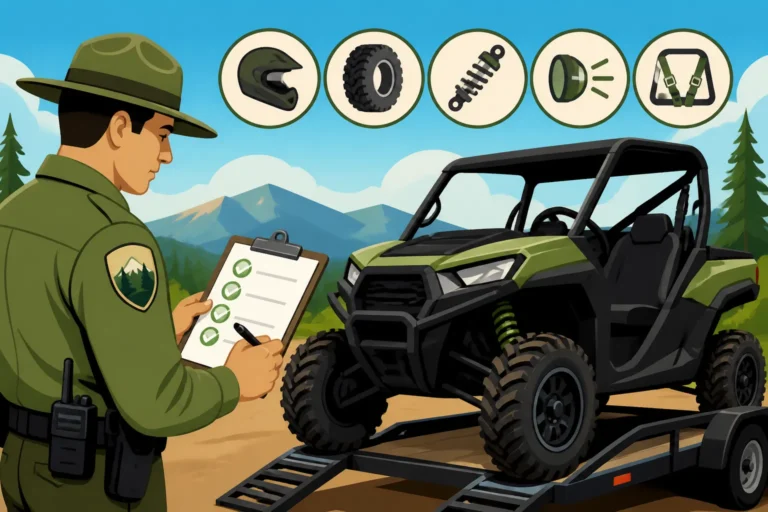
- Helmets: Oregon mandates helmet use for all ATV and UTV riders, regardless of age, whenever the machine is operated on public land. The helmet must meet DOT standards and be properly fastened. [Oregon Helmet Law for ATV Riders] is a good resource here.
- Spark Arresters and Sound Limits: All OHVs operating on public land in Oregon must be equipped with a U.S. Forest Service-approved spark arrester to prevent wildfires. There are also sound limits in place to minimize noise pollution.
- Environmental Responsibility: Oregon places a strong emphasis on staying on marked trails, preventing the spread of invasive species, and practicing Leave No Trace principles.
Always do your homework on the specific riding area you plan to visit. Websites for the Oregon Parks and Recreation Department, Forest Service, and Bureau of Land Management are excellent resources for up-to-date maps and rules.
Here's a quick comparison of general OHV requirements between Washington and Oregon, keeping in mind specific regulations can always vary:
| Feature | Washington State (OHV) | Oregon State (OHV) |
|---|---|---|
| Primary Requirement | Off-Road Vehicle Tabs/Registration | ATV Operating Permit |
| Permit Reciprocity | Honors some states (permit) | Honors some states (Washington NOT on permit list) |
| Safety Education Card | Required for youth (under 16) | Required for ALL riders |
| Safety Card Reciprocity | Accepts cards from other states | Accepts cards from other states (Washington card honored) |
| Permit/Tab Duration | 1 year (tabs) | 2 years (permit) |
| Titling | Generally mandatory for ownership record | Optional for purely off-road machines |
| Managing Agency | Department of Licensing | Parks and Recreation Department |
Moving your riding adventures from Washington to Oregon, or just visiting, means adapting to a different set of rules. While it might seem like extra hoops to jump through, understanding Oregon's permit-based system, its safety card requirements, and its specific road access rules will ensure you have a safe, legal, and enjoyable experience on some of the Pacific Northwest's best trails and dunes. Get your permit, know the rules, and enjoy the ride!
Disclaimer
This article is for general informational purposes only and does not constitute professional advice. Laws, prices and regulations vary by location and change over time. Consult a qualified professional for guidance on your specific situation.