Oregon Rules for Passengers on a Quad
Many ATV riders, especially those new to Oregon's diverse trails and dunes, often assume that if there's enough space on their machine, it's perfectly acceptable to bring along a passenger. This common misconception, however, can quickly lead to confusion, unsafe riding conditions, and unwanted run-ins with law enforcement or park rangers. Understanding Oregon's specific rules regarding passengers on quads – which are generally classified as Class I ATVs – is crucial for both safety and legal compliance. This comprehensive guide will break down these regulations, helping you navigate Oregon's off-road world responsibly with any potential riders.
Understanding Oregon's ATV Classification System
Before diving into the specifics of passenger rules, it's vital to grasp how Oregon categorizes off-highway vehicles. These classifications aren't just bureaucratic distinctions; they directly inform everything from where you can ride to how many people can legally be on board. The rules are designed with the machine's factory design and intended use in mind, which is paramount when considering passenger capacity.
Why Classification Matters for Passengers
Oregon's ATV classifications dictate a machine's inherent design, and thus, its safe and legal carrying capacity. A vehicle designed for a single operator simply isn't built to safely accommodate a passenger, regardless of perceived space. Trying to force a second person onto a single-rider machine can drastically alter its balance, braking, and steering capabilities, turning a fun ride into a dangerous situation. The legal framework aligns with these safety principles, making the machine's class the foundational element for passenger rules. It’s not about how big your buddy is, but about what the manufacturer built the machine to do. You can find a deeper dive into these categories in [Oregon's Four ATV Classes Explained].
Class I ATVs and Their Single-Rider Design
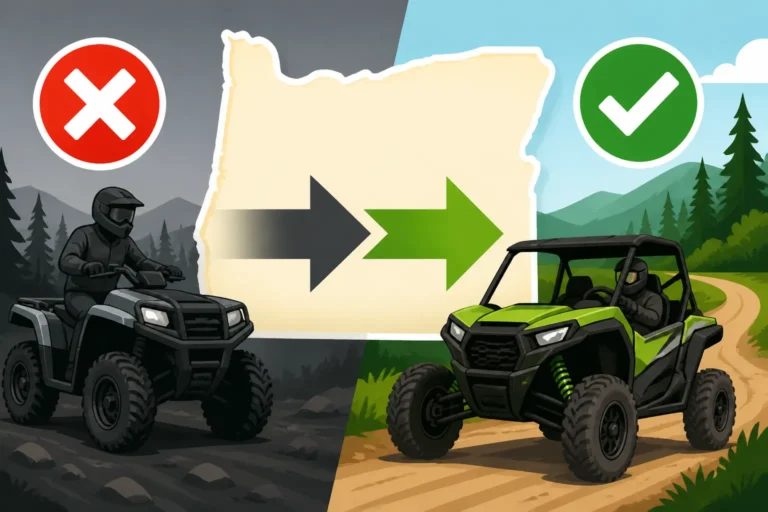
Most traditional "quads" or "four-wheelers" fall under Oregon's Class I ATV designation. These machines are specifically defined by Oregon Revised Statutes as having handlebars for steering, a seat designed to be straddled by the operator, and being 50 inches or less in width. Crucially, the key phrase here is "a seat designed to be straddled by the operator." This definition strongly implies a single-rider design. Even if a quad appears to have a long seat, if it doesn't explicitly come from the factory with features for a second passenger – like separate handholds and foot pegs – it's generally considered a single-rider machine under Oregon law. The design prioritizes the operator's control and ability to shift weight independently, which is compromised with an extra person. More detail on this specific class can be found in [Oregon's Class I Under ORS 801.190].
Class IV Machines and Their Multi-Passenger Intent
In stark contrast to Class I ATVs, Oregon's Class IV designation encompasses "side-by-sides" or UTVs (Utility Terrain Vehicles). These machines are built with a completely different design philosophy. They feature a steering wheel, non-straddle seating (often bench or bucket seats), and can exceed 50 inches in width, up to 75 inches. Class IV machines are explicitly designed by manufacturers to carry multiple occupants, with proper seating, seatbelts, and often a roll cage for enhanced safety. Because of this inherent multi-passenger design, the rules for carrying passengers on a Class IV machine are far more permissive, aligning with the vehicle's engineering. Understanding this distinction is absolutely key to knowing when you can legally and safely bring friends or family along for the ride. For a full breakdown, check out [Oregon's Class IV Side-by-Sides Under 75 Inches].
The Core Rule: One Rider Per Designed Seat
When it comes to carrying passengers on ATVs in Oregon, the golden rule is straightforward: your machine can only carry as many people as it was designed by the manufacturer to carry. For the vast majority of traditional quads (Class I ATVs), this means one person and one person only – the operator. This rule exists not to inconvenience riders, but to prevent serious accidents that can result from an overloaded or improperly balanced machine.
The "Straddle Seat" and Single-Passenger Quads
As mentioned, Oregon's definition of a Class I ATV specifically references a "seat designed to be straddled by the operator." This is a critical indicator. If your quad has a long, bench-like seat that seems like it could fit two people, but it doesn't have dedicated handholds and separate foot pegs for a passenger, then it's considered a single-rider machine. The manufacturer built that seat length to allow the operator to shift their weight and position for optimal control and comfort during varied terrain, not to accommodate an additional person. Riding with a passenger on such a quad can make it incredibly difficult to lean into turns, maintain balance on uneven ground, or react quickly to obstacles, drastically increasing the risk of a rollover or loss of control. The focus is always on the factory-intended design, which for most quads, is squarely on the lone operator.
Foot Pegs and Oregon's Passenger Rule
One of the most immediate and visible indicators of a quad's passenger capacity under Oregon law is the presence (or absence) of factory-installed, separate foot pegs for a passenger. If your quad only has one set of foot pegs – those meant for the operator – then it is unequivocally a single-rider machine. Even if you try to make space for a passenger to put their feet elsewhere, or share your own foot pegs, it's not only illegal but extremely unsafe. Passengers need stable, dedicated footrests to maintain their balance and posture, especially over rough terrain or during sudden maneuvers. Without proper foot support, a passenger can easily be jolted off the machine, their legs can get caught in moving parts, or their weight can shift unpredictably, unsettling the quad. This specific detail is so important that Oregon law often refers to [Foot Pegs and Oregon's Passenger Rule] as a key component of enforcement.
No Riding in the Operator's Lap
It might seem obvious, but it bears repeating because it's a surprisingly common sight: carrying a passenger, especially a child, in the operator's lap is strictly prohibited and incredibly dangerous in Oregon. When someone is seated in your lap, it severely restricts your ability to steer, use the controls, and properly shift your body weight. Your passenger's presence can block your view, interfere with your arms' movement, and make it impossible to respond effectively to changing trail conditions. In an emergency braking situation or a sudden turn, the passenger can be thrown forward, or their weight can cause the quad to become dangerously unbalanced. This practice dramatically increases the risk of serious injury to both the operator and the passenger. Oregon law is clear that [No Riding in the Operator's Lap] is a serious violation, and rangers or troopers will not hesitate to issue a citation.
Exceptions and Nuances: When Can You Carry a Passenger?
While the general rule for Class I quads is a single rider, there are specific circumstances and types of machines where carrying passengers is perfectly legal and safe in Oregon. Understanding these nuances is crucial for enjoying the trails with company without breaking the law.
Factory-Designed Two-Up Quads
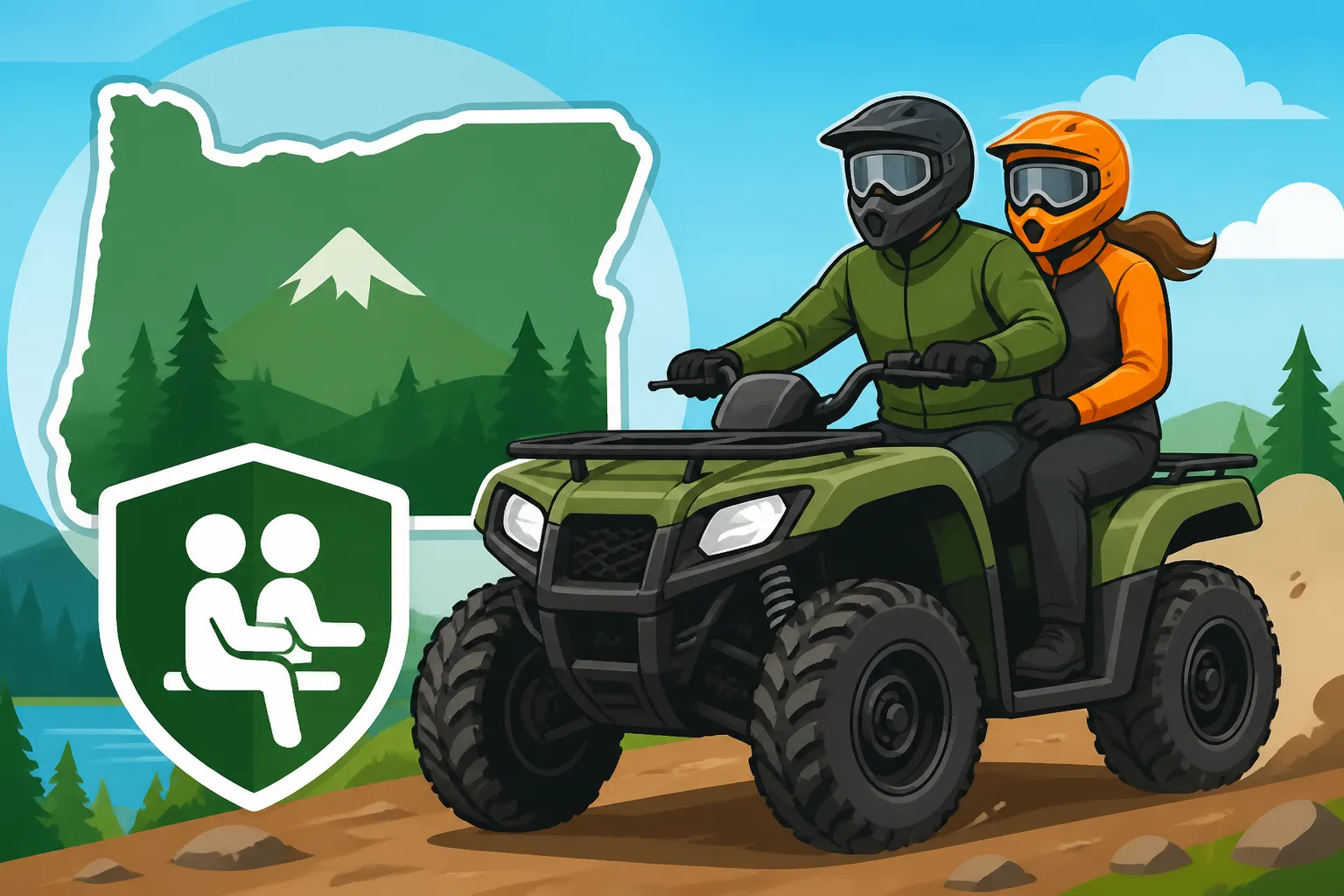
Not all quads are built the same! While the vast majority of Class I ATVs are indeed single-rider machines, some manufacturers produce "two-up" or "tandem" models. These are specifically designed from the factory to safely carry an operator and one passenger. How do you identify them? They will have an extended frame, a longer seat with distinct contours for two riders, dedicated handholds for the passenger, and, critically, a separate set of factory-installed footrests for the passenger. These machines are engineered with the additional weight distribution in mind, often featuring more robust suspension and a longer wheelbase to maintain stability. If you own one of these specialized machines, Oregon law permits you to carry a passenger, provided all other safety regulations (like helmet laws for minors) are followed. When you're considering buying a quad, always check the manufacturer's specifications to confirm its intended passenger capacity.
Side-by-Sides and Multi-Passenger Seating
This is where the distinction between Class I and Class IV really shines. Side-by-sides (UTVs) are fundamentally designed for multiple occupants. With their bench or bucket seats, steering wheel, and often a full roll cage, they inherently allow for passengers in a way that traditional quads do not. If your side-by-side has multiple designated seating positions, each equipped with a seatbelt, then you can legally and safely transport passengers up to that vehicle's design capacity. This makes UTVs an excellent choice for families or groups who want to explore Oregon's trails together. Brands like SuperATV offer a wide range of accessories for UTVs, from enhanced protection to cargo solutions, further cementing their versatility for group outings. Remember, even with a side-by-side, every occupant must utilize the provided safety restraints, and age restrictions for drivers still apply. For more specific details on this class, check out [Oregon's Class IV Side-by-Sides Under 75 Inches].
Age and Size Considerations for Passengers
While Oregon law primarily focuses on the machine's design capacity, common sense and best safety practices dictate that you should also consider the age and physical capabilities of any passenger you intend to carry, especially children. Even on a factory-designed two-up quad or a side-by-side, a passenger needs to be able to sit securely, reach the handholds, and keep their feet firmly on the footrests throughout the ride. Young children who are too small to do this properly can be easily jostled or lose their grip, putting them at severe risk. Furthermore, a passenger, particularly a child, needs to understand and follow instructions from the operator, such as leaning with the machine or keeping their hands and feet inside the vehicle. There are specific rules regarding [Buckling a Child Into a Cage] within a UTV, reinforcing the importance of proper restraint for all ages. Always assess if your passenger can safely participate in the ride, even if the machine technically allows for them.
Safety Gear for All Occupants
Oregon takes rider safety very seriously, and these regulations extend to anyone on an ATV, whether they are the operator or a passenger. Ensuring every person on your machine is properly equipped with the right safety gear is not just about avoiding a citation; it's about protecting lives. The rules are clear, and understanding them before you hit the trail is non-negotiable.
Helmet Rules for Every Rider Under 18
This is one of Oregon's most steadfast and strictly enforced rules: any person, operator or passenger, who is under 18 years of age must wear a safety helmet while riding an ATV. This rule applies across all ATV classes (I, II, III, and IV) and in all riding environments, whether on public lands, private property, or designated trails. There are no exceptions for enclosed cabins or roll cages for minors. The helmet must be properly fitted and securely fastened to meet this requirement. This law is in place because head injuries are a leading cause of severe injury and fatality in ATV accidents, and minors are particularly vulnerable. As such, always ensure your young passengers have a certified helmet that fits them correctly before they even get on the machine. You can learn more about this in [Oregon Helmet Law for Riders Under 18].
Helmet Rules for Adults on ATVs
For adults (18 years and older), Oregon's helmet laws have a few important distinctions depending on the ATV class. If you're riding a Class I (quad) or Class III (off-road motorcycle) ATV, a helmet is mandatory for both the operator and any legally permitted passenger, regardless of age. There's no exception for these machines. However, for Class II (street-legal ATVs or larger vehicles) and Class IV (side-by-sides/UTVs), adults are not always required to wear a helmet if the vehicle is equipped with a roof and roll cage and the occupants are wearing seatbelts. It's a critical "if" that many riders overlook. Even with these conditions met, many experienced riders and safety experts still strongly recommend helmets for all occupants in side-by-sides, especially in challenging terrain, as helmets offer protection against impacts from loose objects, low-hanging branches, and rollovers that even a cage can't completely prevent. Understanding [Helmet Rules for Oregon Riders] is essential for compliance.
The Chin Strap Rule Oregon Enforces
It's not enough to simply wear a helmet; it must be worn correctly. Oregon law, like many states, emphasizes the importance of a properly secured helmet. This means the chin strap must be fastened securely. A helmet that is not properly strapped on can come off in a crash, rendering it useless. Even a minor bump or jolt can cause a loose helmet to shift, obstructing vision or becoming a distraction. Troopers and park rangers conducting roadside checks are trained to look for this detail, and an unfastened chin strap can lead to a citation just as easily as not wearing a helmet at all. Before every ride, take a moment to double-check your own helmet and that of any passengers. Ensuring the chin strap is snug, but not uncomfortably tight, is a simple step that significantly enhances safety. For information on accepted helmet types, refer to [DOT and Snell Helmets in Oregon].
Seatbelts and Restraints in Side-by-Sides
For Class IV machines (side-by-sides/UTVs), the presence of seatbelts is a primary safety feature, and Oregon law mandates their use. If your side-by-side is equipped with seatbelts from the factory, then all occupants must wear them while the vehicle is in operation. These restraints are designed to keep riders securely inside the vehicle during sudden stops, turns, or rollovers. Even at low speeds, being jostled out of a side-by-side can lead to serious injury. While a roll cage provides a degree of protection, the seatbelt is what keeps you within the protected zone. Many riders opt for aftermarket harnesses from reputable brands like SuperATV to provide even greater security and comfort, especially in competitive or aggressive riding scenarios. These enhanced restraints can prevent occupants from being thrown around inside the cage, reducing the risk of impact injuries. Always ensure that everyone is properly buckled in, and that children are in appropriate restraints if necessary, before moving an inch.
Legal Implications and Penalties for Violations
Ignoring Oregon's passenger rules for ATVs isn't just a safety risk; it also carries significant legal and financial consequences. Enforcement officers, whether they are State Troopers, county sheriffs, or Oregon Parks and Recreation Department rangers, regularly patrol popular riding areas, and they are well-versed in these regulations. Getting caught violating passenger rules can quickly turn a fun day on the trails into a costly and frustrating experience.
Oregon Fines for Riding Two Up Where Oregon Allows One
The most immediate consequence of carrying an illegal passenger on an ATV is a citation and a fine. Riding a Class I ATV (quad) with a passenger when the machine is only designed for one operator is a violation of Oregon law. The specific amount of the fine can vary, but it's often categorized as a Class C traffic violation. These aren't typically cheap tickets, and the cost can quickly add up, especially if other violations (like an unpermitted ATV or lack of a safety card) are also issued. The intent behind these fines is to deter unsafe practices and encourage compliance with regulations that are designed for public safety. Many riders are shocked to find out the cost of [Oregon Fines for Riding Two Up Where Oregon Allows One] only after they've been pulled over.
What a Trooper Checks Roadside
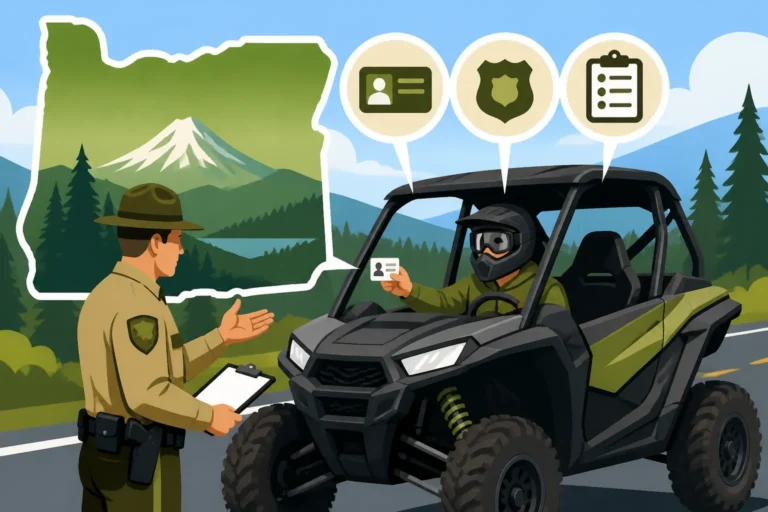
When a law enforcement officer or ranger stops an ATV on a trail or at a staging area, they're typically conducting a comprehensive check. Beyond looking for valid permits and safety cards, they'll pay close attention to the number of occupants and their compliance with safety gear rules. They'll quickly assess whether a quad is a single-rider Class I machine or a factory-designed two-up. Key indicators they'll look for include:
- The presence of dedicated, factory-installed passenger foot pegs.
- Separate handholds for a passenger.
- The overall design of the seat and frame.
- For Class IV machines, they'll ensure all occupants are wearing seatbelts and that minors have helmets.
- They'll also verify that all helmets, if required, are properly secured with the chin strap.
Being prepared for [What a Trooper Checks Roadside] means making sure every aspect of your ride, from permits to passenger seating, is compliant.
Insurance Ramifications of Overloading
Beyond the immediate fines, carrying an illegal passenger can have severe repercussions if an accident occurs. Most ATV insurance policies are predicated on the assumption that the machine is being operated legally and within its manufacturer's specifications. If you're involved in an accident while carrying an unauthorized passenger, your insurance provider could potentially deny coverage for injuries or damages, arguing that you were operating the vehicle negligently or in violation of state law and the policy's terms. This could leave you personally liable for substantial medical bills, property damage, and legal fees. Even if your insurance pays out, a violation could lead to higher premiums or even policy cancellation. It's a risk that far outweighs the convenience of squeezing an extra person onto a quad not designed for them. While [Oregon Insurance Requirements for Class II] exist for street-legal machines, the principle of legal operation applies to all ATV classes.
Best Practices for Riding with Passengers
Even when you're legally carrying a passenger on a factory two-up quad or a multi-seat side-by-side, it's crucial to adopt best practices to ensure everyone's safety and enjoyment. Riding with a passenger is inherently different from riding solo, and adjusting your approach can prevent accidents and make for a much smoother experience.
Communicating with Your Passenger
Effective communication is paramount when riding with a passenger. Before you even start the engine, have a clear conversation about expectations, safety protocols, and how you'll communicate during the ride. Discuss hand signals for "slow down," "stop," or "okay." Instruct your passenger on where to hold on, how to keep their feet securely on the pegs or floorboards, and the importance of leaning with you in turns. Remind them not to make sudden movements that could unbalance the machine. Periodically check in with your passenger during the ride – especially after rough sections – to ensure they are comfortable, not fatigued, and still securely positioned. A well-informed and engaged passenger is a safer passenger, reducing unexpected reactions that could compromise stability. For riders on a quad, instructions on [Passengers Behind the Operator on a Quad] are particularly important to emphasize leaning and holding on correctly.
Adjusting Riding Style for Extra Weight
Adding a passenger significantly changes the dynamics of an ATV. The machine will handle differently due to the increased weight and altered center of gravity. You'll notice slower acceleration, longer braking distances, and a different feel in turns. It's essential to adjust your riding style accordingly:
- Reduce Speed: Ride at a slower, more conservative pace, especially on unfamiliar or challenging terrain.
- Increase Braking Distance: Start braking earlier and more gently to accommodate the extra momentum.
- Smooth Turns: Execute turns more smoothly and gradually, avoiding sharp or sudden changes in direction.
- Maintain Balance: Be extra mindful of weight distribution. Encourage your passenger to lean with you, but remember you'll still need to compensate for their weight.
- Anticipate: Look further ahead on the trail to anticipate obstacles and plan your movements well in advance.
Failure to adapt your riding style to the increased load is a recipe for losing control, especially on hills or in tight maneuvers.
Pre-Ride Checks When Carrying a Passenger
Before every ride, but especially when you're bringing a passenger, a thorough pre-ride inspection is critical. The added weight puts more stress on several components of your ATV.
- Tire Pressure: Check and adjust tire pressure. Many manufacturers recommend slightly higher tire pressure when carrying maximum loads to maintain stability and prevent tire damage.
- Suspension: Inspect your suspension components. If your machine has adjustable shocks, you might consider increasing the preload to compensate for the added weight and maintain optimal ground clearance.
- Brakes: Test your brakes thoroughly. Ensure they are responsive and effective with the extra weight.
- Fluids: Check oil, coolant, and brake fluid levels. The engine and braking system will be working harder.
- Fasteners: Give the machine a quick once-over to ensure all critical nuts and bolts are tight.
- Safety Gear: Double-check that all required safety gear for both you and your passenger is present, functional, and properly fitted.
Taking these extra few minutes for a detailed check can significantly enhance safety and prevent mechanical issues that could leave you stranded or, worse, cause an accident.
Choosing the Right Machine for Multiple Riders
If your primary goal is to share the joy of off-road riding with family and friends, then your choice of machine becomes incredibly important. Trying to make a single-rider quad serve as a multi-passenger vehicle is not only illegal in most cases in Oregon but inherently unsafe. Investing in a machine designed for group riding from the outset will provide a much better, safer, and more compliant experience.
The Limitations of Single-Seat Quads
Single-seat quads are engineered for one specific purpose: providing exhilarating, agile off-road performance for a lone operator. Their dimensions, weight distribution, suspension tuning, and power-to-weight ratio are all optimized for that solo experience. Introducing a second person, even a small child, fundamentally compromises these design parameters. The machine becomes top-heavy, difficult to steer, and prone to tipping. Braking performance degrades, and the suspension can bottom out over bumps, leading to harsh impacts and loss of control. Furthermore, without dedicated handholds and footrests, a passenger is in a precarious position, constantly fighting to stay on and inadvertently influencing the operator's control. For these reasons, attempting to carry a passenger on a single-seat quad, even for a short distance, poses significant risks and is precisely why Oregon law prohibits [Riding Two Up Where Oregon Allows One] on these machines.
Why Side-by-Sides are Often the Better Choice
For those who prioritize riding with passengers, a Class IV side-by-side (UTV) is almost always the superior and safer choice. These machines are purpose-built for multiple occupants, featuring:
- Multi-Person Seating: True bench or bucket seats designed to comfortably and securely hold multiple adults or children.
- Seatbelts and Roll Cages: Integrated safety systems that provide a much higher level of occupant protection in the event of a rollover or impact.
- Four-Wheel Steering/Stability: Their wider stance and often heavier chassis provide greater stability, especially with multiple passengers.
- Cargo Capacity: Many UTVs, enhanced with accessories from brands like SuperATV, offer substantial cargo space, making them ideal for carrying gear for a family outing.
- Comfort and Ease of Use: The steering wheel and foot pedals make UTVs feel more familiar to car drivers, and the seated position is generally more comfortable for longer rides, particularly for passengers.
While UTVs may not offer the same "straddle seat" agility as a sport quad, they deliver an unparalleled ability to share the adventure safely and legally.
Aftermarket Solutions and Their Legality
The aftermarket industry offers a vast array of accessories for ATVs, from performance upgrades to comfort enhancements. When it comes to passenger seating, however, caution is strongly advised. While you might find aftermarket "buddy seats" or "passenger kits" for Class I quads, installing such an item does not magically make your single-rider quad legally capable of carrying a passenger in Oregon. The law bases its definition on the original manufacturer's design, not aftermarket modifications. Changing a single-seat quad into a two-up machine via aftermarket parts typically will not satisfy the legal requirement for a factory-designed two-up vehicle and could still result in a citation. For side-by-sides, however, aftermarket accessories from reputable brands like SuperATV can enhance existing passenger safety and comfort, such as upgraded harnesses, grab handles, or specialized child seating solutions that fit within the vehicle's original multi-passenger design intent. Always ensure any aftermarket accessory complies with Oregon law and, more importantly, genuinely enhances safety without compromising the vehicle's fundamental design or stability.
Here’s a quick overview of how passenger rules often differ between Oregon’s main ATV classes:
| Feature/Category | Class I ATV (Quad) | Class IV (Side-by-Side/UTV) | Class III (Off-Road Motorcycle) |
|---|---|---|---|
| Designed Seats | One (operator straddle seat) | Multiple (bench/bucket seats) | One (operator straddle seat) |
| Passenger Legality | Generally prohibited (unless factory 2-up model) | Permitted up to designed seating capacity | Prohibited |
| Foot Pegs | One pair (for operator) | Designated floorboards/footrests for all occupants | One pair (for operator) |
| Handholds/Restraints | Handlebars (operator) | Seatbelts for all occupants; grab handles | Handlebars (operator) |
| Helmet Rules (Adult) | Mandatory | Mandatory IF no roof/cage/seatbelt; otherwise optional | Mandatory |
| Helmet Rules (Under 18) | Mandatory for all occupants | Mandatory for all occupants | Mandatory for all occupants |
| Examples of Machines | Honda TRX, Polaris Scrambler, Yamaha Raptor | Polaris RZR, Can-Am Maverick, Yamaha Wolverine | Dirt bikes (Kawasaki KX, Honda CRF) |
Disclaimer
This article is for general informational purposes only and does not constitute professional advice. Laws, prices and regulations vary by location and change over time. Consult a qualified professional for guidance on your specific situation.