Riding an ATV Through Lakeside
Navigating the unique rules for ATVs and UTVs in Oregon can feel like trying to solve a complicated puzzle, especially when you hear whispers about certain towns where you can actually ride on the pavement. The common frustration is that ATVs are generally considered off-highway vehicles, meant for dirt, trails, and dunes, not paved roads. However, there are a couple of very special exceptions. This guide is dedicated to one of those rare gems: Lakeside, Oregon. We're going to dive deep into exactly what you need to know to legally and safely cruise your machine through this charming coastal town.
Understanding Oregon's ATV Road Rules: The Big Picture
Let's be honest, the idea of driving your ATV or side-by-side down a public road in Oregon often feels like a pipe dream, or worse, a guaranteed ticket. It’s confusing, right? You see folks on side-by-sides in other states driving right down Main Street, but Oregon has its own set of rules that can feel like a maze, leading to a lot of head-scratching moments for riders. Most of the time, that gut feeling is correct – off-highway vehicles (OHVs) are generally not permitted on paved public roads in our state. This blanket rule exists to keep everyone safe, as ATVs and UTVs aren't typically designed with the same safety features as conventional street-legal vehicles.
The General Rule: No Street Legal ATVs (Mostly)
For the vast majority of Oregon's roads, your ATV or UTV belongs on a trailer, headed to a designated riding area. This is the baseline rule for good reason; these machines lack many of the safety requirements for on-road vehicles, like crumple zones, advanced braking systems for high speeds on pavement, and sometimes even proper turn signals or mirrors. This can be a real bummer if you're used to other states where a "street legal kit" means you can go anywhere. You can dive deeper into the general prohibitions by checking out articles like [Are ATVs Street Legal in Oregon?] and [Can You Plate a Side-by-Side in Oregon?]. It’s vital to understand this foundational rule before we discuss the exciting exceptions, because straying from the designated paths can lead to fines and a ruined ride.
Oregon's Department of Motor Vehicles (DMV) doesn't even handle registration for most OHVs, which is a clear indicator of their off-highway status. While some states have robust systems for plating ATVs and UTVs, Oregon's system is distinct. So, if you're thinking about adding a license plate to your quad and hitting Highway 101, you're likely going to be disappointed. The state prioritizes safety and keeping specialized off-road machines in their intended environment. This strict approach, while frustrating at times, aims to prevent accidents and maintain the integrity of our public road system.
The Rare Exception: Designated Highway Access Routes
Now for the good news, the beacon of hope for riders: Oregon does have a specific, legislated exception for OHVs to use certain public roads. These aren't just any roads; they are very clearly marked and designated as "Highway Access Routes." These routes are primarily designed to connect riders from staging areas or campgrounds to trails, or to allow access to essential services like gas stations, restaurants, or lodging within specific towns. This isn't about joyriding down a highway; it's about practical connectivity for the riding community.
There are only two such designated routes in the entire state: one in Sumpter and, you guessed it, one right here in Lakeside. You can explore more about these unique pathways in [Oregon's Only Two Designated ATV Routes: Lakeside and Sumpter]. The process for designating these routes is rigorous and involves local government, state agencies, and community input, ensuring that they serve a genuine need while maintaining safety for all road users. Understanding that these are carefully considered exceptions, rather than a loophole, helps riders appreciate the privilege and responsibility that comes with using them. The process of [Getting a Town Route Designated] is complex and shows how rare these opportunities are.
These designated routes are not carte blanche to ride anywhere. They come with their own set of rules, clearly posted signage, and specific boundaries. Riders must pay close attention to where the route begins and ends, and respect all traffic laws that apply to other vehicles on those roads. Think of them as a special pathway, rather than an open invitation to roam. The beauty of these routes is that they eliminate the hassle of loading and unloading your machine for short distances, letting you maximize your ride time and truly integrate your off-road experience with the local community.
Navigating Lakeside: Your Designated ATV Route
Lakeside is a fantastic example of a community that has embraced its OHV riders, creating a welcoming environment that bridges the gap between the trails and town amenities. Being able to ride your ATV or side-by-side directly into town is a huge convenience and really enhances the overall experience of visiting the Oregon Dunes National Recreation Area.
What Makes Lakeside Special for ATV Riders
Lakeside holds a special place for Oregon's OHV community because it's one of only two towns in the entire state with a designated ATV highway access route. This is a game-changer for riders looking to access amenities or simply connect different parts of the riding area without having to load up your machine on a trailer. Imagine finishing a thrilling session on the dunes, then being able to roll straight into town for gas, ice cream, or a meal, all while still on your machine. This convenience is a testament to the community's support for the riding lifestyle. To understand the full scope of this benefit, take a look at [Riding an ATV Through Lakeside] and [Riding From a Campsite to the Sand at Lakeside].
This route allows riders to truly immerse themselves in the experience, extending the adventure beyond just the immediate riding areas. It’s not just about convenience; it’s about making the entire trip smoother and more enjoyable. For families, it means less logistical wrangling and more time focused on fun. For solo riders, it means more independence and flexibility. This unique access point is a huge draw for the town and a significant advantage for anyone planning an OHV trip to the central Oregon Coast.
Specific Rules and Restrictions Within Lakeside
While the ability to ride through Lakeside is a fantastic perk, it comes with strict adherence to specific rules and restrictions. This isn't a free-for-all; it's a privilege that riders must respect to ensure the safety of everyone in the community, both on and off their machines. Just because you can ride on the street doesn't mean you can forget your off-road safety habits, in fact, you need to elevate them for mixed traffic. Speed limits are strictly enforced, often lower than you might expect for a typical road, so pay close attention to posted signs. Right-of-way rules are paramount, and you must treat your ATV or UTV as a conventional vehicle when on these roads, yielding to pedestrians and other traffic.
All vehicles using the designated route must display a valid [Oregon's ATV Operating Permit]. This permit is crucial for identifying compliant machines and contributing to the state's OHV program. Additionally, your machine must be equipped with essential street-legal features, even if it's just for these specific routes. This includes functional headlights, tail lights, brake lights, and in most cases, turn signals and at least one rearview mirror. Brands like SuperATV offer a range of aftermarket accessories like mirrors, turn signal kits, and horns that can help ensure your machine meets these road-use standards, enhancing both safety and compliance. These additions are not just about legality; they're about making your presence known and your intentions clear to other drivers and pedestrians. Remember, [Oregon Lighting Requirements for Road Use] are non-negotiable for road travel.
Furthermore, all riders, regardless of age, must possess a valid [Oregon ATV Safety Education Card] to operate an OHV on public lands, and this extends to designated routes. Helmet laws are strictly enforced: [Oregon Helmet Law for Adults] applies, and for riders under 18, the [Oregon Helmet Law for Riders Under 18] is even more stringent, requiring a DOT-approved helmet. Passengers must also be in a designated seating position with appropriate footrests. The goal here is to integrate OHVs into the town's traffic flow as safely and predictably as possible. By following these rules, you contribute to maintaining this special access for all riders.
Essential Preparations for Riding in Lakeside
Being prepared is half the battle when it comes to any successful riding trip, and this is especially true when you're taking your off-highway vehicle onto public roads, even a designated route. A little planning goes a long way in ensuring a smooth, safe, and enjoyable experience for everyone.
Required Permits, Safety Cards, and Gear
First and foremost, your machine needs to be properly permitted. This means having a current [Oregon ATV Permit for a Side-by-Side] or, if you're on a quad, the corresponding [Oregon ATV Permit for a Quad]. This permit needs to be displayed correctly on your machine. Beyond the machine itself, the operator must meet Oregon's requirements. Every rider needs an [Oregon ATV Safety Education Card]. This isn't just for kids; it's required for all riders, regardless of age, when operating an OHV on public lands or designated routes.
When it comes to personal gear, helmets are non-negotiable. As mentioned earlier, [Oregon Helmet Law for Adults] mandates a helmet for all riders, and for anyone under 18, specific requirements apply as detailed in [Oregon Helmet Law for Riders Under 18]. Don't skimp on safety. Beyond the helmet, consider eye protection (goggles or a face shield), gloves to protect your hands, and sturdy, over-the-ankle footwear. While not legally required for designated routes, proper riding pants and a long-sleeved shirt offer crucial protection in case of a tumble. Being visible is also key: bright clothing can make a huge difference, especially when sharing the road with cars.
Machine Readiness: What to Check Before Hitting the Pavement
Before you even think about rolling onto the designated route in Lakeside, give your machine a thorough once-over. This pre-ride inspection is vital for both safety and compliance. Start with your lights: headlights, tail lights, and brake lights must all be fully functional. If your machine doesn't have them integrated, consider adding turn signals and a horn. Many riders opt for aftermarket kits for these essentials. Brands like SuperATV offer reliable and easy-to-install lighting kits, mirrors, and horns that are designed to withstand the rigors of off-road use while providing the necessary street-legal functions. A good set of mirrors is absolutely crucial for navigating road traffic safely.
Next, check your tires. While you might run lower pressures for optimal traction on the dunes, for road use, you'll want to inflate your tires to the manufacturer's recommended pressure for paved surfaces. This improves handling, stability, and extends tire life. Your brakes, front and rear, must be in top condition and respond immediately. A quick check of fluid levels (if applicable) and pad wear is a good idea. Also, ensure your machine has a properly functioning [Oregon Spark Arrester Requirement] and meets the [Oregon Sound Limits for ATVs]. Even on designated routes, excessive noise can be a nuisance to residents and attract unwanted attention from law enforcement. Remember, while you might be coming from an off-road environment, on these designated routes, your machine is expected to perform and be equipped like a road-going vehicle.
Understanding Road Signs and Markings
One of the most crucial aspects of safely navigating Lakeside's designated route is paying close attention to road signs and markings. These aren't just suggestions; they are the literal guideposts for legal and safe passage. The designated routes are typically clearly signed with specific OHV route markers, indicating where the route begins and ends. It's essential to understand these boundaries and not stray onto roads that are not designated for OHV use. Ignorance of the signs is not an excuse for a citation.
You'll encounter standard traffic signs like stop signs, yield signs, speed limits, and pedestrian crossing signs. Treat every one of these with the same respect you would in a car. Remember, these are public roads shared with regular traffic; expect cars, pedestrians, and cyclists. Don't treat these roads like a closed trail; maintain a cautious speed, be aware of your surroundings, and anticipate potential hazards. Knowing how to interpret signs like [Oregon Rules for Crossing a State Highway] and understanding the nuances of [Oregon Rules for Riding a Forest Road] can be particularly helpful, as these types of roads often connect to or intersect with the designated routes. Always assume you are sharing the road with others who might not expect an ATV or UTV.
What to Expect and How to Be a Good Steward
Riding your ATV or UTV through Lakeside is a unique experience, allowing you to bridge the gap between exhilarating off-road adventures and the conveniences of a small town. But with this privilege comes the responsibility of being a considerate rider and a good steward of the community and environment.
Sharing the Road with Other Traffic
It can feel a bit surreal, cruising your side-by-side past storefronts, but remember you're sharing the space with cars, delivery trucks, and families out for a stroll. Your ATV or UTV is a unique vehicle on these roads, and other drivers and pedestrians might not always anticipate your presence or movements. Always ride defensively, maintaining extra space between your machine and other vehicles, and be prepared to react to unexpected actions. Giving way to pedestrians is paramount, and always signal your intentions clearly, whether through hand signals or functional turn signals.
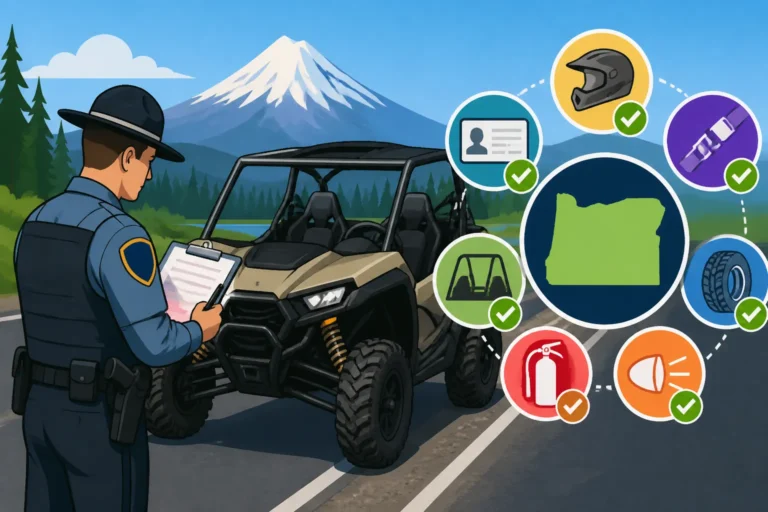
Stay to the right side of the lane, just as you would in any other vehicle, and avoid weaving or sudden maneuvers. Children, pets, and distracted pedestrians can appear suddenly, especially in a tourist-friendly town. Maintaining a moderate speed, even below the posted limit if conditions warrant, demonstrates respect and caution. A law enforcement officer might conduct a roadside check, so know [What an Oregon Trooper Checks Roadside] to ensure you're always prepared. This ensures that the designated route remains a positive experience for both riders and residents, fostering continued support for OHV access.
Respecting the Community and Environment
Being able to ride your OHV through town is a privilege that depends on the cooperation and good behavior of all riders. One of the biggest factors in community relations is noise. Even if your exhaust meets the legal [Oregon Sound Limits for ATVs], be mindful of noise, especially in residential areas. Early mornings or late evenings might not be the best time for a loud machine. Modifying your exhaust purely for sound is often a quick way to lose favor with the community and attract attention from law enforcement, despite having a valid [Oregon Spark Arrester Requirement].
Dust control is another important consideration. Especially in drier conditions, kicking up excessive dust near homes, businesses, or pedestrians isn't appreciated. Keep your speed down on unpaved sections, or consider taking alternative routes if dust is a significant issue. Regular maintenance of your machine, including exhaust systems that comply with sound limits, shows respect. Brands like SuperATV offer quality replacement and aftermarket parts that often meet or exceed OEM specifications, helping to ensure your machine runs quietly and efficiently. By consciously adhering to local ordinances and acting courteously, you contribute to a positive image of the OHV community.
Practicalities: Fuel, Food, and Lodging
One of the biggest perks of the Lakeside route is the ability to roll right into town for gas, grab a bite to eat, or even get to your lodging without unhooking the trailer. This eliminates a significant logistical hurdle and maximizes your riding time. Before heading out, plan your route to include necessary fuel stops. Knowing you can pull into a gas station directly on your machine is incredibly convenient, especially during long riding days.
Lakeside offers various eateries, from casual diners to more sit-down options. Being able to ride right up to a restaurant means you don't have to worry about parking a truck and trailer, making spontaneous meal stops much easier. Similarly, if you're staying at a hotel or campground nearby, the designated route can provide direct access, streamlining your arrival and departure. For those looking for more comprehensive overnight options, exploring articles like [Camping at an Oregon OHV Area] can help you find suitable lodging that connects well with the designated route. This seamless integration of amenities and riding is what makes Lakeside such a popular destination for OHV enthusiasts.
| Aspect | General Oregon Road Rules for ATVs | Designated Route Rules (e.g., Lakeside) |
|---|---|---|
| Paved Road Use | Generally Prohibited | Permitted only on marked, designated routes |
| Permit Required | N/A (as not permitted on roads) | Yes, current Oregon ATV Operating Permit |
| Safety Card | N/A (as not permitted on roads) | Yes, Oregon ATV Safety Education Card for all operators |
| Helmet Required | N/A (as not permitted on roads) | Yes, for all riders (especially strict for under 18) |
| Speed Limits | N/A | Follow posted speed limits (often lower for safety) |
| Lights & Signals | N/A | Required: Headlights, tail lights, brake lights. Turn signals, horn, mirror often recommended/required. |
| Sharing Road | N/A | Must obey all traffic laws, yield to cars & pedestrians |
| Access to Amenities | Typically requires trailering | Direct access to gas, food, lodging within route boundaries |
| Sound Limits | Applies on public lands/trails, but N/A for road | Applies to maintain community peace |
Disclaimer
This article is for general informational purposes only and does not constitute professional advice. Laws, prices and regulations vary by location and change over time. Consult a qualified professional for guidance on your specific situation.