Oregon Rules for Towing With a Side-by-Side
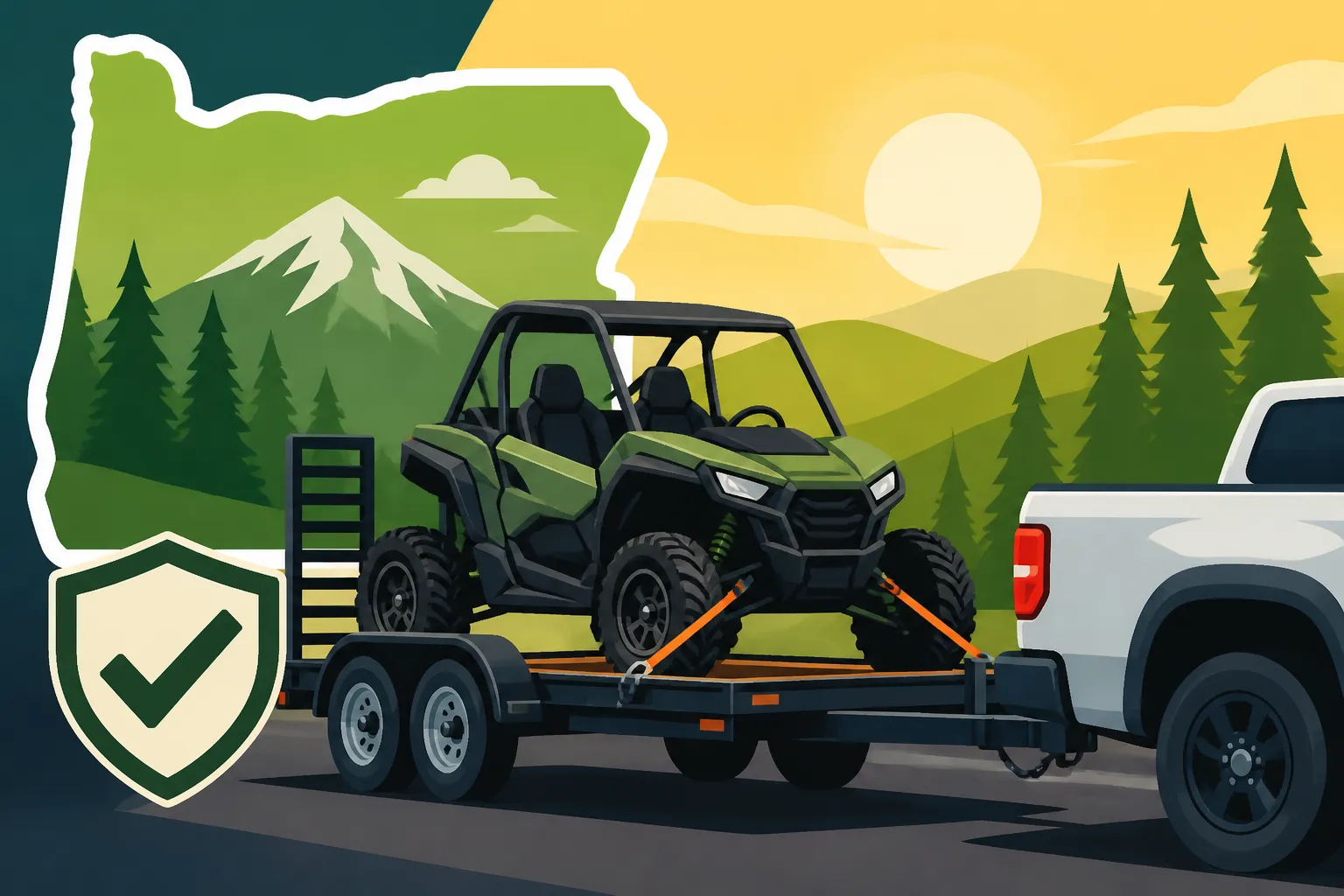
It’s a common scenario: you’re out on the trails, maybe heading to a favorite fishing spot, or perhaps you’ve got a big yard work project at your cabin, and you think, “Wouldn’t it be great if I could just hook up a small trailer to my side-by-side and haul this stuff?” Or maybe a buddy got stuck, and you’re the strongest one in the group. The desire to use your side-by-side for more than just tearing up the dunes is totally understandable. This guide will walk you through the nitty-gritty of Oregon's rules and practical considerations for towing with your side-by-side, whether you're on public roads or deep in the backcountry.
Understanding What "Towing" Means for a Side-by-Side in Oregon
When we talk about towing with a side-by-side, it's not as simple as hooking up to your pickup truck. There are distinct differences in expectations and legalities depending on where you plan to do your towing. It's crucial to understand these distinctions before you even think about putting a hitch on your machine.
Towing a Trailer on Public Roads vs. Off-Road
The biggest differentiator for towing in Oregon, especially with an off-highway vehicle (OHV) like a side-by-side, comes down to whether you're on a public road or off the beaten path. On public roads, which include paved highways, county gravel roads, and even some designated forest roads that are open to standard vehicle traffic, the rules become much stricter. These roads are designed for vehicles that meet specific safety and registration standards, and most side-by-sides, as fantastic as they are off-road, simply don't fit that mold.
Off-road, however, things are generally more permissive, within reason and within designated OHV areas or private property. Here, the primary concerns shift from strict legal compliance to practical safety and the capabilities of your machine. You're less likely to run into a state trooper checking your trailer brakes and more likely to face a challenging incline or a soft spot in the trail that demands careful operation. The rules and expectations are fundamentally different, so never assume that what's okay in the dunes is also okay on the highway.
The Machine Itself: Is Your Side-by-Side Equipped to Tow?
Before you even consider the rules, you need to look at your side-by-side itself. Not all machines are created equal when it comes to towing. Most modern side-by-sides come with some form of receiver hitch, often a 2-inch square, right from the factory. This isn't just for show; it's there because manufacturers understand the utility aspect of these vehicles. However, there's a huge difference between being capable of towing and being rated to tow a significant load.
Always check your owner's manual for the maximum towing capacity. Pushing your machine beyond its factory-rated limits can lead to serious damage to your transmission, brakes, and suspension, not to mention creating a dangerous situation. Aftermarket accessories, like heavy-duty hitches or receiver attachments from companies like SuperATV, can certainly enhance the utility of your machine, allowing you to carry specialized implements or tow different types of small trailers. But even with these upgrades, the fundamental limitations of your side-by-side's engine, drivetrain, and chassis remain. These parts are designed for spirited off-road adventures, not necessarily sustained heavy hauling like a farm tractor or a full-size pickup.
Oregon's Regulations for Towing on Public Roads with a Side-by-Side
This is where many riders get into a sticky situation. The idea of just taking your side-by-side, hooking up a utility trailer, and running to the hardware store for some lumber sounds convenient, but it's almost always illegal in Oregon. The state has very specific definitions and requirements for what constitutes a street-legal vehicle, and side-by-sides rarely meet them.
The "Street Legal" Hurdle for Side-by-Sides
The vast majority of side-by-sides (classified in Oregon as [Oregon's Class IV Side-by-Sides Under 75 Inches]) are not designed or equipped to be street-legal for general public road use. They lack many of the fundamental safety features required for highway travel, such as certified headlights, turn signals, brake lights, mirrors, windshields, and even proper seatbelt systems that meet automotive standards. Because of this, you generally cannot operate a Class IV machine on a paved road, let alone tow a trailer with it.
There is a very narrow exception for some Class II machines, like certain dune buggies or sand rails that might qualify for [Oregon's Class II Street-Legal Exception], which allows them to be titled and registered for street use. However, these are typically purpose-built vehicles that meet specific criteria and undergo inspection, and a standard factory side-by-side almost never fits this description. Even if a machine could be made street legal, the effort and cost involved are often prohibitive. This means that for most side-by-side owners, towing anything on public roads is simply not an option.
Specific Rules for Trailers and Loads
Let's say, hypothetically, you somehow have a street-legal side-by-side capable of towing on public roads. You would then be subject to the same strict Oregon towing laws that apply to any other vehicle. This includes requirements for trailer lighting (brake lights, turn signals, taillights), safety chains, and potentially trailer brakes depending on the weight of the trailer and its load. The load itself would need to be securely fastened and not extend beyond legal limits.
Oregon law is quite clear that if you're pulling a trailer on a public road, it needs to be roadworthy, and your towing vehicle needs to be legally capable of doing the pulling. Since most side-by-sides don't even meet the basic requirements to be on the road, adding a trailer just compounds the issue. This isn't just about avoiding a fine; it's about public safety. An improperly secured load or a trailer with no lights being pulled by a machine not designed for road speeds and braking distances is a recipe for disaster on busy highways.
Designated Highway Access Routes and Towing
Oregon has a couple of special zones, like [Oregon's Only Two Designated ATV Routes: Lakeside and Sumpter], where OHVs are permitted to ride on certain public roads to connect trail systems or access services. These are rare and highly specific exceptions, not a blanket permission for street-legal operation. Even within these designated routes, the rules for towing might be different or more restrictive. It's crucial to check the specific ordinances for those areas.
Generally, these routes are intended for point-to-point travel, not for utilitarian tasks like towing heavy trailers. The speed limits are often low, and the routes are typically short. While it might be technically possible to tow a very light trailer for a short distance within these zones, it's not their primary purpose, and you'd still be held to general towing safety standards. Always err on the side of caution and assume that towing on public roads, even in these special zones, is either heavily restricted or outright prohibited unless explicitly stated otherwise.
Towing Off-Road: Practicalities and Safety Considerations
When you move off the pavement and onto trails, fire roads, or private land, the conversation around towing with your side-by-side changes significantly. Here, the emphasis shifts from legal compliance (though some still applies) to practical utility and, most importantly, safety.
Common Off-Road Towing Scenarios
Off-road, your side-by-side truly shines as a utility vehicle. Many owners frequently use their machines to haul firewood from their property, pull small utility trailers filled with tools or camping gear, or even retrieve a friend's stuck machine. Picture this: you're out at your hunting camp, and you've got a small cart to bring back your harvest. Or perhaps you're clearing brush on your rural acreage, and a small dump trailer hooked to your side-by-side from SuperATV makes short work of moving the debris. These are the scenarios where towing with a side-by-side makes perfect sense and adds immense value to your ownership.
Another common use is pulling small implements, like a disc for a food plot, a sprayer for herbicides, or a small drag for maintaining a gravel driveway. For these tasks, the low-speed torque and maneuverability of a side-by-side are ideal. You might also find yourself needing to pull a buddy who’s broken down back to camp, using a tow strap attached to a secure hitch point. In these environments, the power and ground clearance of your machine are assets, not liabilities.
Essential Safety Practices for Off-Road Towing
Just because you're off-road doesn't mean safety goes out the window; in many ways, it becomes even more critical due to unpredictable terrain. Here are some key practices:
- Know Your Limits (and Your Machine's): Always respect your side-by-side's towing capacity. Just because it can pull something doesn't mean it should or that it can do so safely on a steep, rocky trail.
- Proper Hitching: Use the correct size ball and ensure the trailer is securely hitched. Safety chains are still a good idea, even off-road, especially if traversing rough terrain where the trailer could potentially detach.
- Weight Distribution: Load your trailer carefully. Too much weight on the tongue can lift the front end of your side-by-side, reducing steering control and traction. Too little can make the trailer unstable and prone to sway. Aim for a balanced load, with slightly more weight forward of the trailer axle.
- Adjust Your Speed: Slow down! Off-road conditions are dynamic. Bumps, rocks, roots, and soft spots can cause a trailer to bounce violently or even tip. Slower speeds give you more time to react and minimize stress on your machine and the trailer.
- Increase Braking Distance: A loaded trailer significantly increases your stopping distance. Anticipate turns, descents, and obstacles, and begin braking much earlier than you normally would. If your trailer has its own brakes, ensure they are functioning correctly.
- Terrain Awareness: Avoid steep side slopes with a heavy trailer, as it can increase the risk of rollover. Be extra cautious on descents, using engine braking where possible to control speed without overheating your brakes.
- Visibility: Ensure your load doesn't obscure your view, especially to the rear. Consider adding a taller whip flag if your load is particularly high, to make your presence known to other riders.
Using quality accessories for towing, like a robust hitch receiver or a specialized ball mount, can make a significant difference in safety and ease of use. Brands like SuperATV offer a range of heavy-duty options designed to withstand the rigors of off-road use, providing peace of mind when you're hauling through challenging conditions.
Permitting and Legalities for Off-Road Towing
While off-road towing has fewer direct legal hurdles than on-road, there are still fundamental requirements to consider, especially concerning your machine itself and potential liability.
Does Your Side-by-Side Need an Oregon ATV Permit to Tow Off-Road?
Absolutely, yes. If you are operating your side-by-side on any public lands in Oregon – whether it's a designated OHV park, state forest, or federal land managed by the BLM or Forest Service – your machine needs a valid [Oregon ATV & UTV] operating permit. This permit is required regardless of whether you are towing a trailer or just riding solo. It ensures that funds are available for trail maintenance and other OHV-related programs.
The permit is tied to your machine, not to the act of towing. So, if your machine needs a permit to ride a particular trail system, it still needs that permit if you're pulling a utility trailer on those same trails. Ensure your [Oregon ATV Permit Decal Placement] is correct and visible, even with a trailer attached, as rangers often check for current decals at staging areas.
Insurance and Liability When Towing
While Oregon doesn't mandate liability insurance for all OHVs, it's always a good idea to have it, especially when towing. If you are involved in an accident while towing, and property damage or injury occurs to another party, your liability insurance could cover the costs. This is particularly relevant if you're towing another machine that breaks down, or if your trailer somehow causes damage.
For Class II machines (like some street-legal dune buggies or side-by-sides that have gone through the rigorous process of becoming road-legal), [Oregon Insurance Rules for a Class II Machine] are mandatory when operated on public roads. Even if your side-by-side isn't Class II and isn't street legal, voluntary liability coverage for off-road use is a smart move. Imagine the potential costs if a heavy trailer detaches on a downhill section and causes damage to someone else’s vehicle or, worse, injures someone. A comprehensive off-road policy can provide critical protection in such scenarios.
What to Consider Before You Tow with Your Side-by-Side
Before you hook up that trailer, take a moment to really think through the implications for your machine and your safety. Towing isn't just about whether your side-by-side can pull it; it's about whether it should and what the long-term consequences might be.
Machine Capacity Versus Real-World Needs
Your owner's manual will give you a "towing capacity," which is a maximum weight it can handle under ideal conditions. But real-world needs are rarely ideal. Are you towing across flat, hard-packed ground, or up a rocky, muddy incline? Is it a short trip to move a few fence posts, or a multi-mile trek through variable terrain with a heavy load of camping gear?
Consider the type of load. A compact, heavy load sitting directly over the trailer axle will behave differently than a tall, bulky, lighter load that catches the wind. Terrain like loose gravel on a [Oregon Rules for Riding a County Gravel Road] or steep ascents on a [Oregon Rules for Riding a Forest Road] will stress your machine far more than flatland towing. You might have a 1,500-pound towing capacity, but trying to pull that much up a 20% grade on a loose dirt track is going to put enormous strain on your belt, clutch, and engine. Sometimes, a smaller, lighter load moved in multiple trips is far safer and less damaging to your machine. For specialized towing needs, upgrading certain components, such as a stronger hitch or even a transmission cooler, might be worthwhile to ensure reliability.
The Impact on Your Machine's Performance and Longevity
Towing, especially heavy towing or frequent towing, puts extra stress on almost every component of your side-by-side.
- Drivetrain: Your clutch (if applicable), belt (on CVT machines), transmission, and axles will work harder. This can lead to premature wear, especially if you're lugging the engine or slipping the belt. Pay close attention to any burning smells or unusual noises.
- Brakes: A loaded trailer means more mass to stop. Your side-by-side's brakes are designed for its own weight plus a couple of passengers, not an additional few hundred or thousand pounds of trailer. This can lead to brake fade, reduced stopping power, and accelerated wear on pads and rotors. Be particularly mindful on downhill sections, using engine braking to assist as much as possible.
- Suspension: The added tongue weight of a trailer will compress your rear suspension, potentially reducing ground clearance and affecting handling. Over time, this can wear out shocks and springs faster. Some riders install heavier-duty springs or air shocks if they tow frequently.
- Engine & Cooling: Your engine will generate more heat when working harder to pull a load, especially at lower speeds in rough terrain where airflow might be limited. Keep an eye on your temperature gauge. Ensure your cooling system is in top condition before any heavy towing.
Because of this increased stress, you might find yourself needing to perform maintenance more frequently. Checking your belt, fluids, and brake pads after heavy towing sessions is a good habit to adopt. Regular preventative maintenance can help mitigate some of the accelerated wear and tear that comes with using your side-by-side for consistent towing duties. Just like with any tool, understanding its limitations and taking care of it will ensure it serves you well for many years of adventures and utility.
| Feature | On-Road Towing (Public Roads) | Off-Road Towing (Trails/Private Land) |
|---|---|---|
| Legal Status | Generally Prohibited for most side-by-sides; requires street-legal registration (rare for Class IV). | Permissible within OHV areas/private land, with permit. |
| Permit/Registration | Street-legal registration, driver's license, vehicle plates. | [Oregon ATV & UTV] operating permit required for public land. |
| Trailer Requirements | Lights (brake/turn/taillight), safety chains, proper tires, potentially trailer brakes. | Secure hitch, appropriate load, may not need specific lighting. |
| Speed Limits | Standard road speed limits (though side-by-side likely too slow/illegal). | Slow, cautious speeds; dictated by terrain and safety. |
| Machine Limits | Manufacturer's towing capacity, usually low; impacts roadworthiness. | Manufacturer's towing capacity; consider terrain, grade. |
| Safety Concerns | Risk of traffic violation, accident with other vehicles due to speed/braking differences. | Rollover risk, getting stuck, damage to machine, extended braking. |
| Common Scenarios | Almost none, except very rare street-legal exceptions or designated routes. | Hauling gear, firewood, retrieving stuck machines, small implements. |
| Insurance | Mandatory liability if street-legal Class II. | Highly recommended liability for general OHV use. |
| Spark Arrester | Not applicable for road use, but still required if off-road anywhere. | [Oregon Spark Arrester Requirement] is mandatory. |
| Sound Limits | Not applicable for road use, but still applies if off-road. | [Oregon Sound Limits for ATVs] apply. |
Disclaimer
This article is for general informational purposes only and does not constitute professional advice. Laws, prices and regulations vary by location and change over time. Consult a qualified professional for guidance on your specific situation.