Crossing Where Sight Lines Are Short
There's nothing quite like the rush of exploring Oregon's incredible backcountry on your ATV or UTV, but let's be honest, those moments when you have to cross a paved road or a busy gravel road can instantly dial up the anxiety. You're trying to merge with traffic, often at slower speeds, from a blind corner or over a rise where visibility is terrible, and it feels like you're taking your life into your hands. This guide is all about equipping you with the knowledge and practical strategies to navigate those nerve-wracking crossings with confidence and, most importantly, safety, ensuring your Oregon adventures stay thrilling for all the right reasons.
The Unique Challenges of Crossing Limited-Visibility Roads on an ATV/UTV in Oregon
Riding an ATV or UTV offers a fantastic perspective on Oregon's diverse landscapes, from the misty Coast Range forests to the wide-open high desert. However, these machines, while perfect for the trails, present a specific set of challenges when you need to interact with public roads, especially when your view of oncoming traffic is obstructed. It's not just about stopping and looking; it's about understanding why these crossings demand a heightened level of awareness and preparation compared to driving a car.
Why ATVs and UTVs Are Different from Cars for Road Crossings
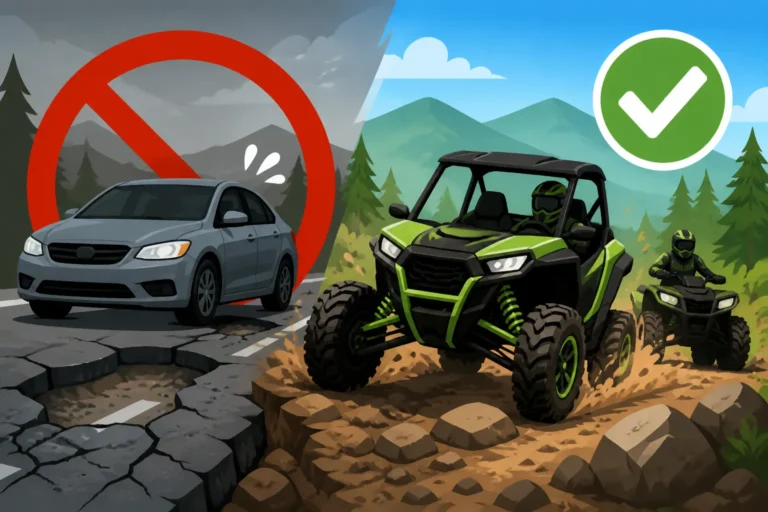
First off, let's acknowledge that your ATV or UTV is generally a smaller, lower-profile vehicle than almost any car, truck, or SUV you'll encounter on the road. This immediately puts you at a disadvantage in terms of visibility. A driver approaching a blind corner might not see your machine until they are much closer than they would see a full-sized vehicle, especially if you're pulling out from a heavily treed trailhead or a dip in the terrain.
Secondly, the acceleration of many ATVs and UTVs, particularly from a dead stop on pavement, can be significantly slower than standard road vehicles. This means that the "gap" you need in traffic to safely cross might be much larger than what a car driver would require. You can't just floor it and expect to be across in a blink; you need ample time to get up to speed and clear the lanes. Plus, the braking characteristics are different. While off-road, you might be used to sliding or digging in, on pavement, sudden braking can feel different and requires careful modulation. This is crucial given that ATVs and UTVs are not generally built for highway speeds, which is why [Street Legal ATVs in Oregon: The Short Answer] is typically "no," with very specific exceptions.
Identifying "Short Sight Lines" on Oregon's Backroads
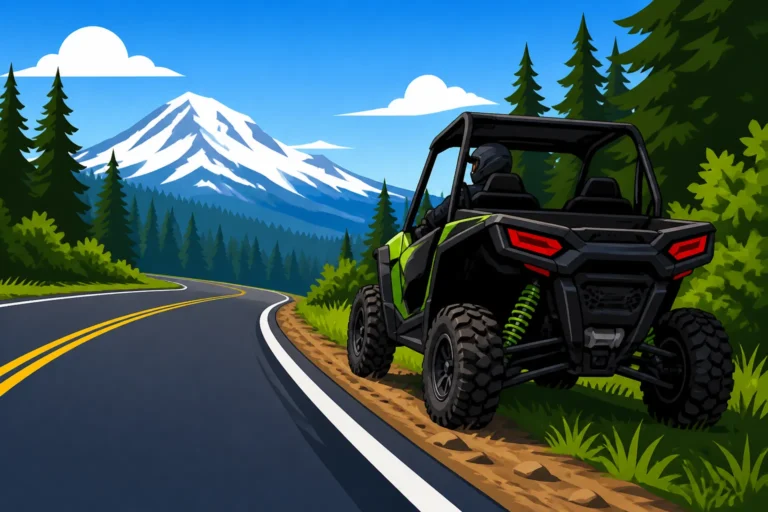
So, what exactly constitutes a "short sight line" when you're out riding? In Oregon, this could be a myriad of scenarios. Think about those winding, narrow gravel county roads in the Coast Range, hugged by dense Douglas firs and ferns that create immediate blind corners. Or perhaps you're in Eastern Oregon, crossing a paved state highway where the road crests a hill just a short distance from your turnout, obscuring vehicles approaching from over the horizon. Logging roads, often privately owned but with public access, can be particularly treacherous due to their unpredictable turns, elevation changes, and the sheer speed and size of industrial vehicles like log trucks.
These aren't just theoretical concerns; they're real-world hazards you'll face. Imagine pulling out from a trail onto a road near [Browns Camp] in the Tillamook State Forest, where the trees create a tunnel-like effect, or trying to cross a paved highway in the vicinity of [Millican Valley] where the terrain rises and falls, creating numerous blind spots. The danger is compounded because drivers on these roads, whether locals or other recreationalists, often don't expect an ATV or UTV to suddenly appear. They might be traveling at higher speeds than you'd anticipate, assuming the road is clear, making your window for a safe crossing incredibly narrow.
Essential Pre-Crossing Strategies for Enhanced Safety
When you're dealing with limited visibility crossings, your best defense is a strong offense—meaning preparation and a heightened sense of awareness before you even get to the road's edge. It's not just about following the letter of the law, but about adopting practices that maximize your visibility to others and your ability to perceive potential threats.
Pre-Ride Preparation and Machine Enhancements
Before you even leave your staging area, take a moment to ensure your machine is as visible as possible. While factory lights are good, aftermarket lighting can make a world of difference. Consider upgrading your headlights and taillights to brighter LED versions. Adding auxiliary lights, especially forward-facing ones that illuminate the shoulders of the road or the immediate area around your machine, can also help you see approaching hazards. And don't forget about the rear; bright brake lights and even additional amber strobes can alert drivers behind you to your presence and intentions. Companies like SuperATV offer a wide range of aftermarket lighting solutions that can dramatically improve your visibility, turning your machine into a beacon.
Mirrors are another critical component, and often overlooked. Many ATVs come with minimal mirrors, or none at all, and UTVs might have basic side mirrors. For road crossings, you need to see as much as possible, as far down the road as possible. Invest in wide-angle rearview mirrors and ensure your side mirrors are properly adjusted to cover your blind spots. Some riders even add a small convex mirror to their existing setup for an even broader field of view. These simple additions can give you those precious extra seconds to react. High-visibility flags or whips are also essential, especially if you're in areas with rolling hills or dunes where your machine might be hidden by terrain. A bright flag, reaching above the immediate tree line or dune crest, acts as an early warning system for other drivers. Finally, never underestimate your personal protective gear. Always wear a DOT or Snell-approved helmet, as required by [Oregon Helmet Law for ATV Riders], and consider bright, reflective clothing to make yourself stand out.
Scouting the Crossing and Situational Awareness
As you approach a road you intend to cross, your "eyes and ears" strategy needs to kick into high gear. Don't just blast up to the edge; slow down significantly as you near the pavement or gravel. Stop completely before you reach the edge of the road, giving yourself time to assess the situation without putting any part of your machine into the traffic lane. This allows you to listen for approaching vehicles, which you might hear before you see them, especially around blind corners. Turn off your engine if necessary to better hear faint vehicle sounds.
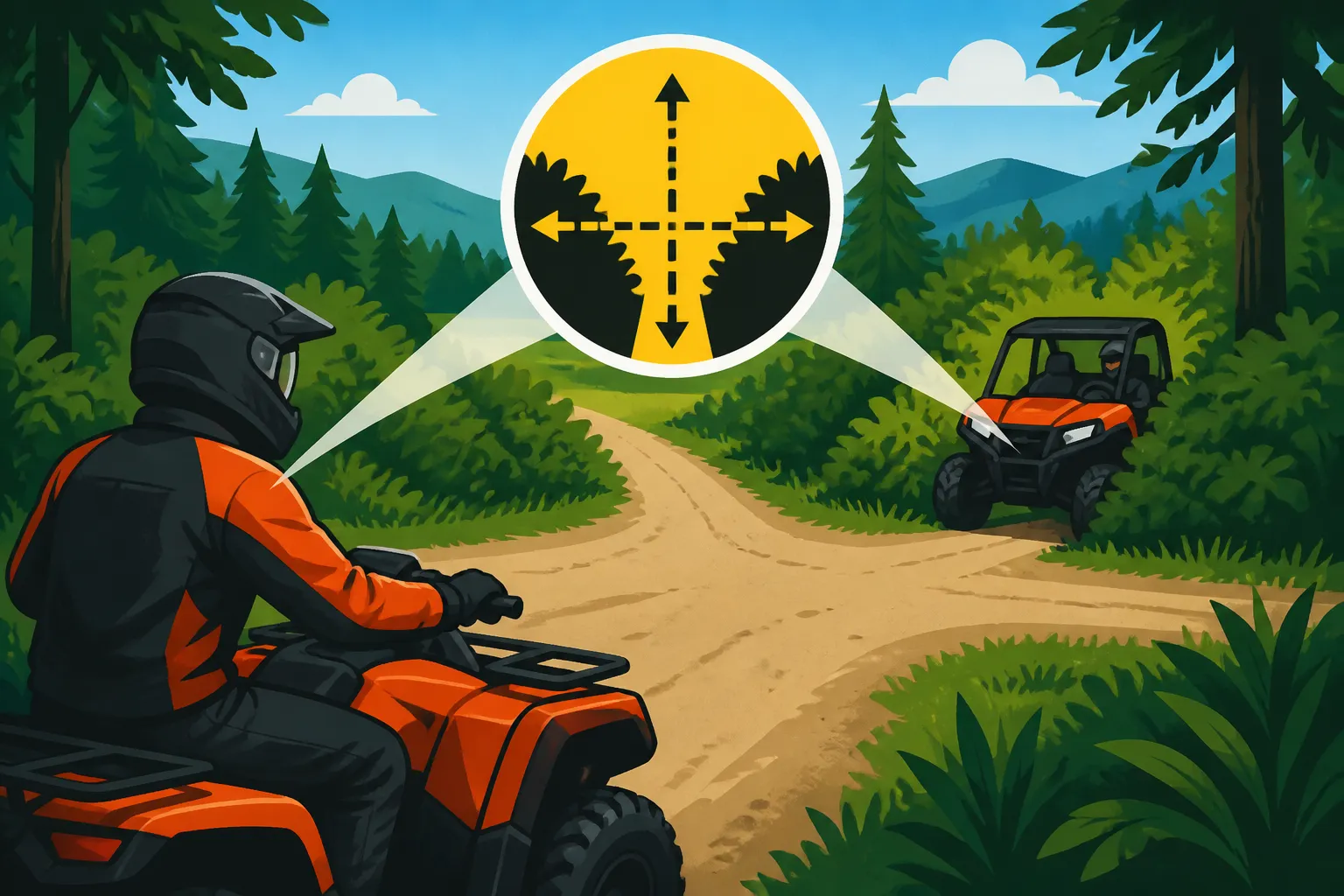
Next, look in both directions, not just once, but twice, slowly scanning for any signs of traffic. Pay attention to not just the immediate road, but also any dust clouds on a gravel road, or glints of sunlight off a windshield in the distance. Wait for a clear, substantial gap in traffic, one that you're absolutely confident you can cross safely without rushing or forcing another driver to slow down for you. If you're riding with a group, designating a spotter can be invaluable. This person can dismount and walk slightly ahead, safely positioning themselves to get a better view of oncoming traffic and signal when it's clear. Remember that conditions like heavy fog on the coast or intense sun glare can severely limit visibility for all drivers, making your crossing even riskier. Always be mindful of the [Oregon Rules for Crossing a State Highway], ensuring you understand the legalities and limitations of such maneuvers.
Executing the Crossing: Techniques for Minimizing Risk
Once you've done all your preparation and identified a safe window, the actual act of crossing a road with short sight lines requires precision and decisiveness. Hesitation can be just as dangerous as recklessness, so having a clear plan and executing it smoothly is key.
Positioning and Approach at the Road Edge
As you ease up to the edge of the road, stop your machine in a position where you can get the best possible view of oncoming traffic without putting any part of your ATV or UTV into the lane. This often means stopping just short of the paved edge or where a gravel road meets the main thoroughfare. Angle your machine slightly towards your intended direction of travel. This pre-positioning makes it easier to accelerate directly into the crossing, rather than having to make a sharp turn from a dead stop.
While not always legally required for ATVs, it's a good practice to activate your turn signals (if equipped) in the direction you intend to go or indicating you're crossing. This gives any unexpected traffic a visual cue of your intentions, however fleeting. In Oregon, the rules for moving between a trail and a road are pretty strict, and sometimes your road crossing is simply a brief interruption in your off-road journey, such as when you need to use a road to connect to the next section of trail or access a staging area. Many areas where you might be riding, like those described in [Oregon Rules for Riding to a Trailhead], require careful navigation of these transitional zones.
The "Point of No Return" and Commitment to the Crossing
After you've looked, listened, and confirmed a safe gap, the next crucial step is commitment. Once you decide to go, proceed decisively and smoothly. This is your "point of no return." You've assessed the risk, and you're moving. Hesitating once you've started the crossing can create a dangerous situation, as you might then be caught in the middle of the road if an unseen vehicle suddenly appears.
Maintain a steady, controlled acceleration across the lanes, aiming for a straight path perpendicular to the flow of traffic. Avoid sudden swerving or braking unless absolutely necessary. Your goal is to clear the road as quickly and predictably as possible. This isn't the time for fancy maneuvers; it's about efficiency and minimizing your time exposed to road traffic.
Group Crossing Protocols
If you're riding with a group, having a clear protocol for road crossings is non-negotiable. The safest method is often to cross one machine at a time. The lead rider stops, assesses the situation, and then crosses when clear, moving to a safe spot on the other side. Once clear, they can then signal the next rider to proceed, and so on. This ensures only one machine is exposed to traffic at any given moment.
Effective communication is paramount. Hand signals, clearly understood by everyone in the group, are essential. For longer groups or in noisy environments, radios can be a game-changer, allowing instant communication about clear lanes or approaching hazards. Regardless of the method, ensure there's adequate space between machines during the crossing. If one rider has an issue, you don't want a chain reaction of stuck or stalled ATVs in the middle of the road. Patience is key; it's far better to wait a few extra minutes for a safe crossing than to rush and endanger everyone.
Common Pitfalls and Legal Considerations in Oregon
Even with the best intentions and preparations, road crossings on an ATV or UTV can present unexpected challenges. Understanding common mistakes and staying informed about Oregon's specific regulations for OHVs on or near public roads is vital for a safe and enjoyable experience.
Misjudging Speed and Distance of Oncoming Traffic
One of the most frequent errors riders make is misjudging the speed and distance of oncoming vehicles. Our eyes often play tricks on us, especially in wide-open spaces where vehicles appear to be further away or traveling slower than they actually are. This is particularly true on Oregon's rural highways or long, straight stretches of gravel roads where drivers might be traveling at higher speeds than you'd expect. A logging truck, for instance, can cover a surprising distance in a very short amount of time, and its sheer mass means it cannot stop or swerve quickly. Always err on the side of caution; if you have any doubt about having enough time, wait for a larger, clearer gap.
Furthermore, remember that [Oregon Fines for Riding an Unopened Road] exist for a reason. You can't just cross any road. You need to be aware of whether the road you're approaching or crossing is legally open to your specific class of ATV or UTV, even if only for transit. Ignorance of the law is no excuse, and a citation is the least of your worries if you cause an accident.
The Importance of Knowing Oregon's Specific ATV Road Rules
Oregon has a detailed, albeit complex, set of rules governing ATV and UTV use, especially when it comes to roads. These rules often depend on your machine's classification (Class I, II, III, or IV) and the specific type of road. For most ATVs and UTVs (Classes I, III, and IV), road use is extremely limited, primarily to crossing at right angles where a street-legal vehicle could cross, or on designated [Oregon ATV Highway Access Routes] in places like Lakeside and Sumpter.
Class II machines, which are designed for both on- and off-road use (like some larger UTVs or specialty vehicles), have different requirements, including mandatory insurance and often requiring full registration with the DMV if street-legal. Beyond state law, many counties and towns have their own ordinances, such as [Union County Ordinance 2019-01], which may further restrict or allow specific types of OHV use on local roads. It's critical to research the rules for the specific area you plan to ride in. A quick check with the local county sheriff's office or the Oregon Parks and Recreation Department's OHV program can save you a lot of trouble.
What an Oregon Trooper Checks Roadside During a Stop
If an Oregon State Police trooper, sheriff's deputy, or Forest Service ranger stops you near a road crossing, they'll be checking for a few key things beyond just your crossing technique. First and foremost, they'll want to see your valid [Oregon ATV Permits Explained] decal affixed to your machine in the correct location. This permit shows you've paid your dues for off-road access. They'll also typically ask to see your [Oregon ATV Safety Card Requirements], which is mandatory for most riders, regardless of age, when operating on public lands.
Beyond paperwork, they'll check your machine's compliance: Does it have a spark arrester? Are its sound levels within legal limits? And critically, they'll assess your behavior and the machine's condition. Any signs of unsafe operation, or a machine that clearly isn't road-worthy (even for a brief crossing), could lead to a citation or further inspection. Being polite, cooperative, and having all your documentation in order can make a huge difference in how these encounters play out.
| Safety Check Category | Recommended Actions for Short Sight Lines | Why It Matters |
|---|---|---|
| Visibility Enhancements | Upgrade to LED lights (front/rear), add auxiliary lights. | Makes your machine more visible to other drivers, especially in low light. |
| Install wide-angle mirrors, check existing mirror adjustment. | Increases your field of view for approaching traffic. | |
| Use a high-visibility whip flag. | Provides an early visual warning of your presence over hills or around bends. | |
| Wear bright, reflective clothing and a compliant helmet. | Increases your personal visibility; mandatory for safety. | |
| Situational Awareness | Slow down well before the crossing; stop completely before the road edge. | Allows time to assess traffic, listen for sounds, and react safely. |
| Look left, right, then left again; scan for dust or distant vehicles. | Ensures thorough check for traffic, compensating for limited visibility. | |
| Use a spotter if riding in a group. | Provides an extra set of eyes from a safer vantage point. | |
| Execution Technique | Angle machine slightly towards crossing direction. | Facilitates smoother, quicker entry into traffic flow. |
| Activate turn signals (if equipped) to indicate intent. | Communicates your planned movement to other drivers. | |
| Accelerate smoothly and decisively across the road, avoiding hesitation. | Minimizes time exposed to traffic; unpredictability is dangerous. | |
| Legal & Group Protocols | Know local/state OHV road crossing rules and designated routes. | Avoids fines and ensures you're legally allowed to cross. |
| If in a group, cross one machine at a time with clear signals/communication. | Reduces simultaneous exposure to risk; allows for individual assessment of gaps. |
Disclaimer
This article is for general informational purposes only and does not constitute professional advice. Laws, prices and regulations vary by location and change over time. Consult a qualified professional for guidance on your specific situation.