Why Idaho Is Not on Oregon’s List
Why Idaho Is Not on Oregon’s List
An Idaho ATV or UTV sticker may look like the right paperwork for a trip into Oregon, but Oregon does not automatically treat every neighboring state’s permit as valid. The key is knowing which reciprocity list applies, what Oregon means by a permit, and what to do before unloading at a staging area. This article explains why Idaho’s permit is not on Oregon’s list and how to avoid confusing it with a safety card.
What Oregon’s reciprocity list covers
Oregon has separate rules for an off-highway vehicle operating permit and an ATV safety card. They serve different purposes, and Oregon maintains different reciprocity arrangements for them. Idaho’s absence from Oregon’s operating-permit reciprocity list does not, by itself, answer whether Oregon accepts an Idaho safety card.
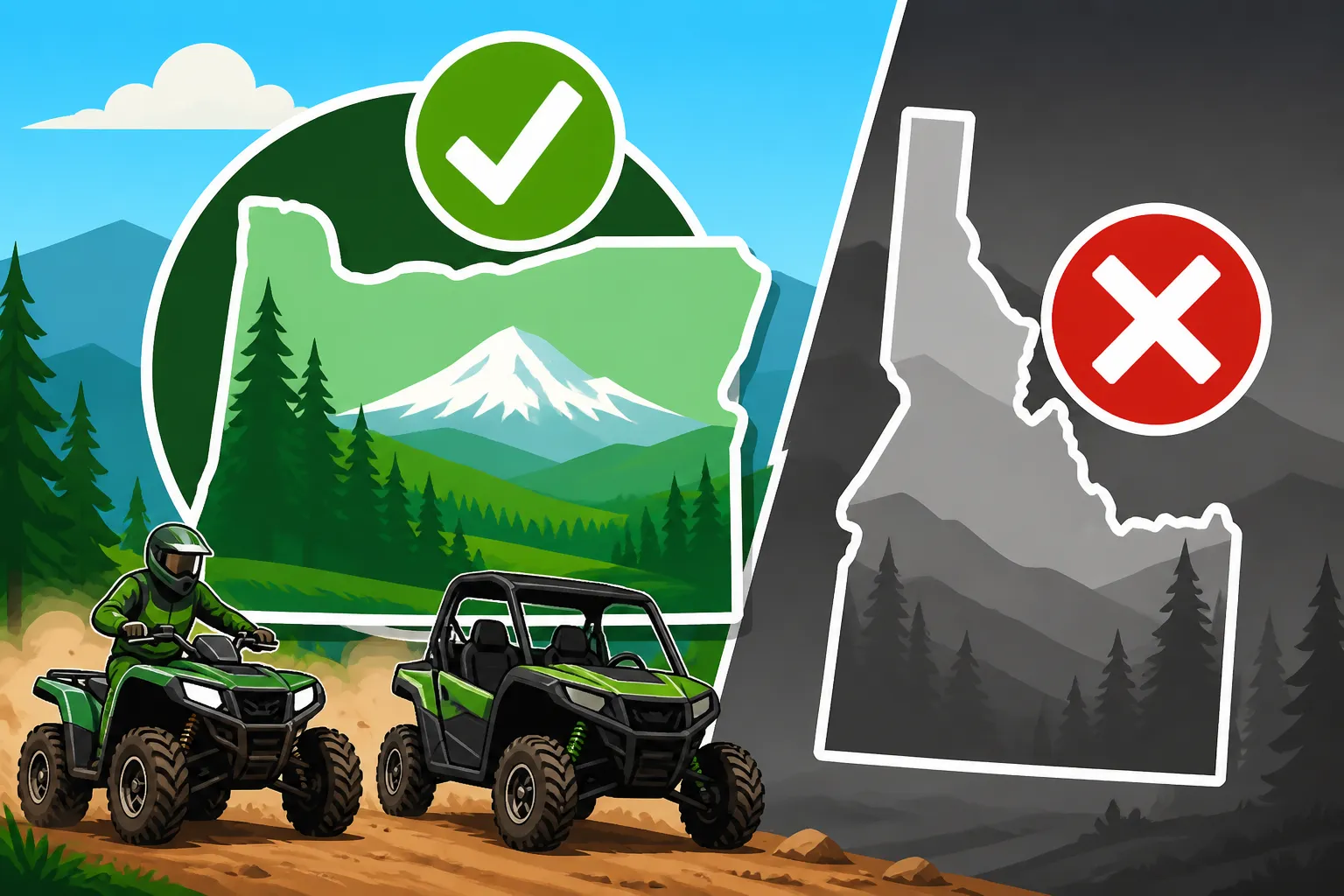
An operating permit is the authorization associated with using a machine on Oregon OHV riding areas where a permit is required. Oregon’s permit is generally displayed as a decal on the machine. An out-of-state permit or registration may qualify a visitor for an exemption only when Oregon recognizes it under its permit reciprocity rules. Idaho is not included on that list, so an Idaho permit or sticker alone does not give a rider the same exemption as a permit from a recognized state.
A safety card is different. It documents that a rider has met an applicable safety education requirement. It is not an operating permit and does not grant permission to ride a particular machine on Oregon trails. Oregon’s safety-card reciprocity list is separate, and an Idaho safety card may be treated differently from an Idaho vehicle permit. Check Does Oregon Honor an Idaho Safety Card? for that specific question.
| Document | What it generally does | What it does not do |
|---|---|---|
| Oregon ATV operating permit | Authorizes covered OHV use under Oregon’s permit system | Prove that a rider completed safety education |
| Recognized out-of-state permit | May qualify an eligible visitor for Oregon’s permit reciprocity exemption | Automatically replace every Oregon rule |
| Safety card | Shows that a rider met a relevant safety education requirement | Serve as an operating permit or machine decal |
| Idaho registration or sticker | Shows a connection to Idaho’s own vehicle or OHV system | Automatically qualify for Oregon permit reciprocity |
The practical distinction is simple: a machine permit and a rider safety credential answer different questions. The permit concerns the machine and its operating authorization. The card concerns the rider and safety education. Riders may need to address both, depending on the machine, the rider, and the planned use.
Oregon’s system also classifies machines. A quad, dirt bike, side-by-side, and larger off-road vehicle may fall into different classes, with different details affecting permit and safety-card requirements. If you’re unsure what your machine is classified as, start with Which Oregon ATV Class Your Machine Falls Into. A machine’s marketing name or Idaho paperwork may not match the category Oregon uses.
The list itself is best understood as a limited exception, not a general agreement that any neighboring state’s paperwork will work. Oregon riders and visitors should check the Oregon Permit Reciprocity List and distinguish it from the broader overview in Oregon OHV Reciprocity With 18 States. If Idaho is absent from the operating-permit list, the safe plan is to arrange an Oregon permit before riding rather than assume that proximity between the states creates reciprocity.
Why Idaho’s permit is not automatically accepted
It is tempting to treat two states’ OHV permits as interchangeable. Both may require a sticker, card, registration, or some other proof for riding. But similar-looking documents do not necessarily authorize the same activity or meet the same administrative requirements.
Permit reciprocity depends on Oregon recognizing another state’s system for a defined purpose. A state may issue an OHV sticker for its own lands and rules without that sticker being accepted as Oregon’s operating permit. A visitor cannot safely infer recognition from the document’s appearance, the fact that both states regulate OHVs, or the fact that Idaho borders Oregon.
There is also no need to assume that Idaho’s system is invalid or inadequate. Not being on Oregon’s list does not mean Idaho permits are useless in Idaho, nor does it establish that Oregon has made a judgment about the quality of Idaho’s program. It means only that a rider should not rely on an Idaho permit as Oregon permit reciprocity unless Oregon’s official rules say otherwise.
Nor should a rider assume that a missing state was left off because of one specific policy disagreement. Reciprocity arrangements can depend on how programs are structured and what each jurisdiction recognizes. Without an official explanation, guessing at a political, financial, or administrative reason can create a false impression. For practical purposes, the published list and Oregon’s instructions matter more than speculation about why the list was formed.
The distinction between an Idaho permit and an Idaho safety card is especially important. Oregon may recognize a safety credential from Idaho even though it does not recognize Idaho’s operating permit for reciprocity. Those outcomes are not contradictory: one concerns a rider’s education, while the other concerns the machine’s permit status. The related article Why Oregon’s Two Reciprocity Lists Differ explains why the state maintains two lists.
Visitors should also avoid treating an Idaho registration as a universal OHV passport. Registration, title, permit, and safety-card rules vary by state and by machine category. A document that proves ownership or allows operation in one place may not satisfy Oregon’s permit requirement. For the specific permit issue, see Why an Idaho Permit Does Not Work in Oregon.
If the answer affects a planned ride, verify the current rule through Oregon’s official OHV permit information before departure. Lists and program details can change, and a screenshot, old forum post, or seller’s assurance may not reflect the current rule. When the status is uncertain, buying the Oregon permit is the straightforward way to avoid depending on an exemption that may not apply.
What an Idaho rider should do before riding in Oregon
If your machine carries Idaho paperwork and you plan to use Oregon trails, dunes, or other OHV riding areas, treat the permit and safety-card questions as two separate pre-trip checks. Doing this before travel is easier than trying to sort out the rules at a trailhead, where you may have limited signal or no convenient permit agent nearby.
- Identify the machine’s Oregon class. Oregon’s classification system can differ from the labels used by a dealer or another state. Width, weight, seating, steering, and machine design can matter. Use Oregon’s Four ATV Classes Explained or the class guide linked above if you need to narrow it down.
- Check the operating-permit reciprocity list. Do not assume an Idaho permit or registration qualifies. If Idaho is not listed for permit reciprocity, plan to obtain an Oregon permit unless an official Oregon rule specifically provides another exemption for your situation.
- Check the rider’s safety-card requirement separately. Confirm what applies to the rider and machine class, then verify whether an Idaho-issued card is accepted. The answer to the permit question does not automatically decide the safety-card question.
- Arrange the Oregon permit before the ride. Oregon permits are available through official purchasing channels and authorized agents. See Where to Buy an Oregon ATV Permit for ways to obtain one. Check the provider’s current instructions, including what proof or machine details are needed.
- Place and protect the decal as required. A permit that has been purchased but is not displayed correctly may still create a problem during a check. Follow Oregon’s placement instructions for the machine class. Oregon ATV Permit Decal Placement covers the general issue.
- Carry or access any required rider documentation. Keep the safety card or other required proof available in the form Oregon accepts. A permit decal on the machine is not a substitute for a rider document.
- Confirm the rules for the location. A permit is not permission to ride every road, trail, beach, or parcel. Land managers can close routes or require separate day-use fees. Check access rules for the exact destination as well as the permit requirement.
The exemption for visitors with a recognized out-of-state permit is limited. Oregon’s reciprocity rules include a 60-day cap, so a visitor should not assume an out-of-state permit covers an extended stay indefinitely. Check How Long a Visitor Can Ride Oregon and When Sixty Consecutive Days Ends Your Exemption for the timing issue. If your visit may exceed the exemption period, decide how to comply before it runs out rather than waiting until the next ride.
A short trip does not make the distinction less important. An Idaho rider planning one weekend at an Oregon OHV area should still check the list. Conversely, a rider who lives in Oregon but has a machine with Idaho paperwork should not assume that visitor reciprocity applies simply because the machine was permitted in Idaho. Residence, machine status, use, and the precise rule can all matter.
For anyone unsure how an Oregon permit applies to their circumstances, Oregon ATV Permit for a Nonresident is a useful next step. For broader permit basics, consult Oregon’s ATV Operating Permit. The aim is not to collect paperwork unnecessarily; it is to make sure the document you have actually covers the activity you plan to do.
Common situations that cause confusion
The machine has an Idaho sticker and an Oregon safety card
These documents address different requirements. The safety card may satisfy a rider education rule if Oregon accepts that card and it applies to the rider. It does not make an Idaho permit reciprocal. Check both requirements independently, and obtain the Oregon operating permit if the Idaho sticker does not qualify.
The rider has an Idaho card but the machine has no Oregon decal
Do not assume the card replaces the decal. A rider education card and a machine operating permit are not interchangeable. If Oregon requires a permit for the planned use and no reciprocity exemption applies, the machine needs the appropriate Oregon permit.
The machine is used only on private property in Idaho
Past use in Idaho does not determine what paperwork is needed for a future ride in Oregon. The relevant questions are where the machine will be operated, what Oregon class it falls into, and whether an Oregon permit or an applicable exemption is required there. For the private-land question in Oregon, see Oregon ATV Permit for a Machine on Private Land.
The seller says the Idaho permit works in Oregon
A seller may be describing a different document, a different state, or a rule that has changed. Ask exactly what the paperwork is: an Idaho operating permit, a registration, a title, or a safety card. Then verify the answer against Oregon’s official permit reciprocity and safety-card information. A confident statement from a seller is not a substitute for confirming the Oregon rule.
The rider is bringing an out-of-state machine for an extended visit
Visitors should check both the initial reciprocity rule and its time limit. A recognized permit may offer a temporary exemption, but that does not necessarily apply to an Idaho permit, and an exemption may not continue for the full length of a stay. The Oregon Permit Reciprocity List and the guidance on visitor duration are the right places to start.
The machine is street-legal or used on public roads
A street-legal registration or license plate does not automatically settle the OHV permit question for off-road riding. Oregon treats road-use status and OHV access as distinct matters. Rules can also vary by machine class and route. If you plan to travel between a public road and an OHV area, check Oregon Rules for a Visiting Rider and the rules for the specific route, not just the vehicle’s plate status.
These examples point to one useful habit: identify each document by its purpose before relying on it. A permit, registration, title, decal, and safety card may all be paperwork connected to an OHV, but each has a different job. Matching the right document to the right requirement prevents most reciprocity misunderstandings.
How to confirm the rule and avoid a wasted trip
Use official Oregon information to confirm the current permit list, the safety-card list, purchasing options, and any visitor time limits. Look for the details that answer your specific question rather than relying on a broad phrase such as “out-of-state permits accepted.” A general statement may be true for some states while not applying to Idaho.
When checking, keep these questions together:
- Is the document an Idaho operating permit, registration, title, or safety card?
- Is Oregon’s published permit reciprocity list the one being consulted?
- Does the machine’s Oregon class affect which permit or safety rule applies?
- Is the rider covered by a separate safety-card rule?
- Does a visitor exemption have a time limit?
- Does the destination require a separate day-use pass or impose a closure?
- Is the decal displayed in the location Oregon specifies?
If you contact an agency or permit provider, describe the machine and the paperwork precisely. “I have an Idaho sticker” may not be enough to identify what the document covers. Provide the machine type, its Oregon class if known, the rider’s status, and the place where you intend to ride. Ask whether an Oregon permit is required, rather than asking only whether Idaho is “accepted,” since that broad question can blur permit and safety-card reciprocity.
If no clear exemption applies, purchasing an Oregon permit before setting out is generally the least ambiguous option. Review the current instructions for Buying an Oregon Permit Online or locate an agent through Oregon Permit Agents You Can Walk Into. Those pages can help with the practical steps, but confirm current availability and requirements with the provider.
Keep the permit information with the machine records and make sure the decal remains legible and attached as directed. On a multi-day trip, it is also sensible to keep the safety card accessible and to save the destination’s access information for offline use. These steps do not replace checking the rules, but they make it easier to show that you have prepared correctly.
The key takeaway is narrow but useful: Idaho’s operating permit is not automatically accepted under Oregon’s permit reciprocity list. That fact does not settle whether Oregon accepts an Idaho safety card, and neither document replaces the other. Check both lists, confirm the machine’s Oregon class, and secure an Oregon permit if the available exemption does not cover your ride.
Frequently Asked Questions
Does Oregon accept an Idaho ATV permit?
Idaho is not on Oregon’s operating-permit reciprocity list, so an Idaho permit or sticker alone should not be treated as an Oregon permit. Verify Oregon’s current list before riding.
Does Oregon accept an Idaho ATV safety card?
Safety-card reciprocity is separate from permit reciprocity. Oregon may accept an Idaho safety card even though Idaho is not on the permit list. Confirm the current safety-card rule and that it applies to the rider and machine.
Why is Idaho missing from Oregon’s permit list?
The absence means Oregon does not provide automatic permit reciprocity for Idaho under that list. Unless Oregon gives a specific official explanation, it is better not to infer a political or technical reason.
Does an Idaho registration replace an Oregon OHV permit?
Not automatically. Registration, an operating permit, and a safety card are different documents. Check whether a specific Oregon exemption applies; otherwise, arrange the Oregon permit required for the planned ride.
Disclaimer
This article is for general informational purposes only and does not constitute professional advice. Laws, prices and regulations vary by location and change over time. Consult a qualified professional for guidance on your specific situation.