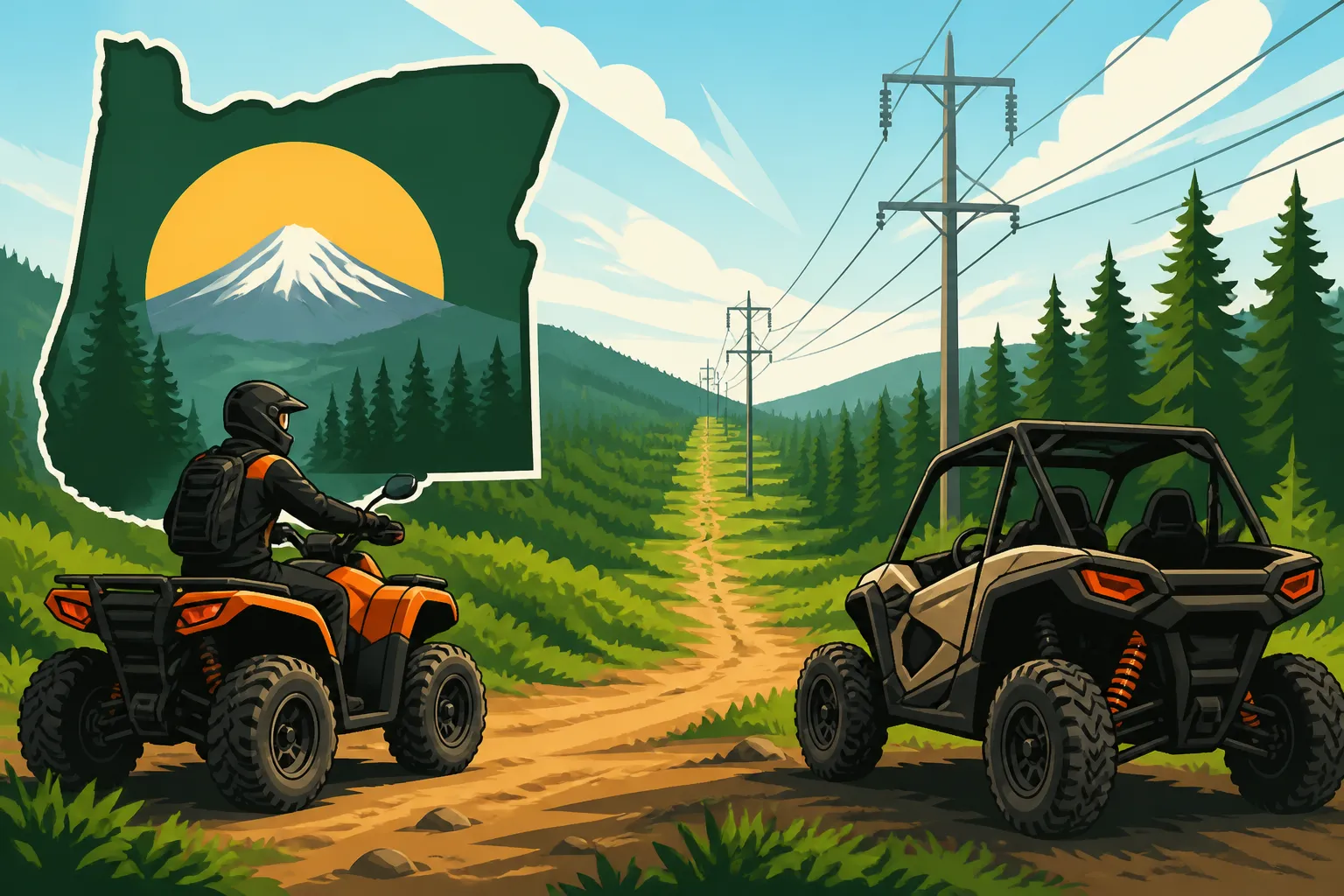
Utility Corridors and Oregon Riders
It’s a common scenario for many Oregon ATV and UTV riders: you’re out exploring, maybe on a well-known trail, and suddenly you see it—a wide, cleared swath cutting through the landscape, often stretching for miles, seemingly begging for an adventure. These are utility corridors, and they can look incredibly inviting. But here’s the thing that trips up so many of us: are they actually legal to ride? The answer, as is often the case with land access in Oregon, is far from simple, and ignoring the complexities can lead to frustration, fines, or even losing access to areas we love. This guide is here to help you navigate the tricky world of utility corridors so you can ride confidently and legally.
What Exactly Are Utility Corridors, Anyway?
Before we can even begin to talk about riding in these areas, it’s crucial to understand what utility corridors actually are and why they exist. They're not just random clearings; they serve very specific, vital purposes for our infrastructure.
The Many Faces of Utility Corridors
When we talk about "utility corridors," we're generally referring to strips of land that house essential infrastructure, such as high-voltage power lines, underground natural gas or oil pipelines, fiber optic communication cables, or water transmission lines. Think of those giant metal towers marching across the hillsides – the cleared land beneath them is a power line corridor. Or imagine a strip of slightly elevated ground running for miles, sometimes with small signs indicating a buried pipeline below.
These corridors are designed to provide clear access for construction, maintenance, and emergency repairs of these utilities. Because they need to be kept relatively clear of tall trees and major obstructions, they often present themselves as inviting, open pathways through otherwise dense forests or rugged terrain. It’s easy to see why a rider might look at such a clear, straight shot and think, "Perfect! A direct route and no obstacles!" But that open appearance can be very deceiving when it comes to legal access.
Who Owns and Manages Them?
This is where things get really complicated, and it’s arguably the most critical factor in determining if you can ride there. Utility corridors can exist on several different types of land, each with its own set of rules and managing entities.
Firstly, they might cross private land. In this case, the utility company typically has an "easement" over that portion of the property. An easement grants the utility company the right to access, maintain, and operate their infrastructure on someone else's land, but it does not automatically grant public access for recreation. The private landowner still owns the land, and their permission is almost always required for you to ride on it, even if a power line cuts across it. You can't just assume that because a utility has rights to the land, you do too.
Secondly, utility corridors frequently traverse public lands, such as those managed by the Bureau of Land Management (BLM), the U.S. Forest Service, or the Oregon Department of Forestry (ODF). Even on public land, however, the utility company still holds an easement or a right-of-way. While the land itself is public, the specific terms of the utility’s easement might restrict public recreational use within that corridor to prevent interference with their operations, damage to equipment, or to maintain environmental protections. It’s not uncommon for these corridors on public land to be explicitly closed to motorized vehicles, even if adjacent public lands are open for riding. It requires checking with the specific land manager for that segment of the corridor, which can be a real headache, given how long these corridors can stretch.
The entities managing these corridors are usually the utility companies themselves (like Pacific Power, Portland General Electric, NW Natural Gas, or various telecom providers), but they operate within the framework of land ownership, whether it's private citizens, the BLM, or the Forest Service. Each of these groups has its own set of rules and concerns.
The Legal Landscape: Can You Ride ATVs in Oregon's Utility Corridors?
So, back to the big question: can you actually ride your ATV or UTV in Oregon’s utility corridors? The short, often frustrating answer, is usually no, unless explicitly stated otherwise.
It's Not as Simple as 'Open' or 'Closed'
Many riders mistakenly believe that if a path exists and isn't physically blocked by a gate or a "No Trespassing" sign, it must be open. This is a dangerous assumption, especially when it comes to utility corridors. The primary purpose of these corridors is the safe operation and maintenance of critical infrastructure, not recreational riding. Utility companies need unimpeded access for crews, heavy equipment, and vehicles to inspect lines, trim vegetation, or make repairs. Recreational riding can interfere with these operations, compact the soil over buried lines, or even damage sensitive equipment.
Beyond the operational needs, there are significant safety concerns. Utility corridors can be active work zones with unexpected hazards like buried cables, unstable ground, or crews operating heavy machinery. You might encounter live electrical equipment, exposed pipelines, or open trenches that aren't immediately obvious, especially if you're riding at speed or in low light. These aren't just minor bumps; they can be incredibly dangerous.
Furthermore, these corridors often cross sensitive environmental areas or provide habitat for protected species. Just because it looks like a clear path doesn't mean it's an appropriate place for a recreational vehicle. Land managers, whether public or private, have responsibilities to protect these resources, and unauthorized riding can cause ecological damage, leading to further restrictions for all riders down the line.
The Importance of Knowing Ownership and Easements
Since many utility corridors appear to be natural trails, it's vital to understand that the visual appearance tells you very little about legal access. An easement for a power line grants the utility company specific rights over that land, but it rarely, if ever, grants public recreational access. That distinction is crucial.
If a utility corridor crosses private property, you absolutely need direct permission from the landowner. Without it, you are trespassing, pure and simple. This applies even if you're an experienced rider with all the right gear, like a reliable winch from SuperATV and heavy-duty skid plates. Those tools are for navigating legal challenges on authorized trails, not for bypassing property rights.
When a corridor is on public land, you still can't assume it's open. You need to consult the specific land management agency – be it the Forest Service, BLM, or ODF – for the exact segment you’re interested in. Their maps and regulations will indicate if that particular corridor is designated as an open trail or road, or if it's restricted. Sometimes, only specific sections of a corridor might be open, perhaps where it coincides with an existing designated OHV trail. This requires proactive research and a cautious approach. Don't rely on old maps or hearsay; always check the most current information directly from the managing agency. Many counties also have public parcel viewers online that can help you identify private versus public land.
Consequences of Trespassing in Utility Corridors
The risks of riding in unauthorized utility corridors are significant and can range from minor inconvenience to serious legal trouble.
First and foremost, you face the risk of fines and citations. Trespassing on private property or riding in restricted areas on public land is a violation. Law enforcement, whether county sheriffs, state troopers, or federal land rangers, can issue tickets that carry substantial fines. Your ATV or UTV could even be impounded, leaving you with hefty towing and storage fees on top of the legal penalties.
Beyond legal penalties, there’s the potential for civil liability. If you cause damage to utility infrastructure, private property, or injure yourself or others in an unauthorized area, you could be held financially responsible. Imagine the cost of repairing a buried fiber optic line or a gas pipeline – it would be astronomical. Utility companies and landowners are often very protective of these areas for good reason.
Finally, and perhaps most importantly for the broader riding community, unauthorized riding jeopardizes future access. When riders disregard property rights or environmental regulations, it creates negative perceptions of the entire OHV community. This can lead to increased enforcement, tighter restrictions, and even permanent closures of areas that might otherwise have been considered for future recreational access. It undermines the hard work that many OHV advocacy groups do to establish and maintain legal riding opportunities. Being caught on a closed section of a corridor could mean a citation similar to [Oregon's Class C Traffic Violation for No Permit], depending on the specifics.
How to Ride Responsibly and Legally in Oregon
The key to enjoying Oregon’s incredible scenery on your ATV or UTV is to ride responsibly and, crucially, legally. This means understanding and respecting land access rules.
Stick to Designated OHV Trails and Roads
The absolute best way to ensure you’re riding legally and safely is to stick to designated OHV parks, trails, and roads that are explicitly open to motorized vehicles. Oregon offers a fantastic variety of riding opportunities, from the famous [Oregon Dunes National Recreation Area] to the dense forests of the [Oregon's Tillamook State Forest Trails] and the high desert landscapes of [Millican Valley Outside Bend, Oregon]. These areas are maintained for rider enjoyment, often have amenities, and are clearly marked.
Look for official maps from the Oregon Parks and Recreation Department (OPRD), the Forest Service, or the BLM. These maps clearly show where you are permitted to ride. Many areas, like those listed on the [Oregon ATV Highway Access Route Map], even allow limited street-legal access for certain classes of vehicles to connect trails or access towns. You can also find great resources like [Where to Ride an ATV in Oregon] that guide you to legal and enjoyable spots. By focusing your adventures on these established locations, you eliminate the guesswork and reduce the risk of trespassing.
Seeking Permission and Understanding Signs
Before venturing into any area that isn't a clearly marked, designated OHV trail, always seek permission. If you suspect a utility corridor crosses private land, reach out to the landowner directly. A friendly conversation can often clear things up and might even grant you permission where you thought there was none. Always respect "No Trespassing" signs, locked gates, and other closure notices, even if a path looks inviting. These signs are there for a reason, often to protect property, ensure safety, or preserve sensitive resources.
For corridors on public land, contact the local Ranger District (Forest Service) or Field Office (BLM) to inquire about specific access. Explain where you want to ride and ask for clarification on the rules for that area. It might take a bit of effort, but it’s far better than facing a fine or a confrontation. While having robust aftermarket parts, perhaps from SuperATV, like a heavy-duty winch or beefy A-arms, might make you feel capable of tackling any terrain, it doesn't give you permission to ride where you're not allowed. Always prioritize legal access over perceived capability.
Equipping Your Machine for Legal Riding
Properly equipping your machine is essential for safe and legal riding, but it's important to remember that gear doesn't grant access. For legal riding areas, ensure your ATV or UTV meets all state requirements. This includes having a valid [Oregon ATV Operating Permit] decal properly affixed to your machine. For youth riders, or for many adults depending on the machine class, an [Oregon ATV Safety Card Requirements] is mandatory.
Other crucial equipment includes:
- Spark Arrester: All off-road vehicles in Oregon must have a U.S. Forest Service-approved [Oregon Spark Arrester Requirement] to prevent wildfires.
- Whip Flag: If you're riding on the Oregon Dunes, a [Oregon Dune Flags and Whips] is absolutely required for visibility.
- Lights: For any riding that might extend into dusk or darkness, ensure you have functional headlights and taillights.
- Protective Gear: Helmets, eye protection, sturdy footwear, and long pants/sleeves are non-negotiable for safety. [DOT and Snell Helmets in Oregon] are good standards to look for.
High-quality aftermarket parts from brands like SuperATV can certainly enhance your machine's performance and durability on legal trails. Upgraded suspension, reinforced control arms, or robust rock sliders are excellent investments for tackling challenging terrain in designated OHV areas. However, these enhancements do not, and cannot, serve as an excuse or justification for riding in prohibited utility corridors or other closed areas. Their purpose is to improve your experience within the bounds of the law, not to enable illegal access.
Common Misconceptions and Best Practices
Navigating the rules of utility corridors can be confusing, and many common misconceptions lead riders astray. Let's clear up some of those and look at how we can all be better stewards of the land.
The "If It's Not Gated, It's Open" Myth
This is one of the most persistent and dangerous myths in the off-road community. Just because a utility corridor, or any other piece of land, lacks a "No Trespassing" sign or a physical gate doesn't mean it's open for public motorized use. Landowners, whether private or public, are not always required to fence or post every boundary. Signs can be stolen, fall down, or simply may not have been installed in every conceivable access point.
The absence of a barrier does not imply permission. Instead, the burden of proof is on the rider to ensure they have legal access. Always assume an area is closed unless you have explicit, verifiable information that it is open for OHV use. This proactive approach protects you from legal trouble and helps preserve access for everyone. A good rule of thumb is: if you don't know for sure, stay out. It's better to miss an opportunity than to get a citation or cause damage.
Being a Good Steward of the Land
Responsible riding goes beyond just following the letter of the law; it's about being a good steward of Oregon's natural resources and a respectful neighbor. Illegal riding, especially in sensitive areas like utility corridors, has far-reaching negative consequences for the entire OHV community.
When riders trespass, damage property, or disturb wildlife in unauthorized areas, it fuels anti-access sentiment. This often leads to landowners putting up more fences, installing cameras, and pushing for stricter regulations, which can result in more closures for everyone, even in legal riding areas.
Practicing "Leave No Trace" principles is fundamental:
- Stay on Designated Trails: Don't create new trails or cut switchbacks.
- Pack It In, Pack It Out: Don't leave trash or litter behind.
- Respect Wildlife: Give animals space and avoid disturbing their habitats.
- Be Mindful of Others: Share the trails responsibly with hikers, equestrians, and other users.
- Respect Private Property: Always ask permission and respect boundaries.
Investing in a well-maintained machine with quality parts like SuperATV rock sliders and bumpers not only protects your UTV but also demonstrates a commitment to responsible riding by minimizing potential damage to the terrain you're traversing, on legal trails, of course.
Resources for Legal Riding Information
To avoid uncertainty and ensure you’re always riding legally, rely on official and trusted sources for information:
- Oregon Parks and Recreation Department (OPRD): This is your primary state resource for OHV recreation in Oregon. Their website has maps, permit information, and details on designated riding areas.
- U.S. Forest Service & Bureau of Land Management (BLM): If you plan to ride on federal lands, consult the specific Ranger District or Field Office responsible for that area. They have detailed motor vehicle use maps (MVUMs) that show exactly which roads and trails are open.
- County Sheriffs' Offices: For local county roads and ordinances, your local sheriff's office or county planning department can provide information.
- Local OHV Clubs: Joining a local ATV/UTV club is an excellent way to get up-to-date, localized information on legal riding areas, trail conditions, and potential access issues. Club members often have long-standing relationships with land managers and utility companies.
By using these resources and approaching every ride with a commitment to legality and respect for the land, you can ensure that Oregon remains a fantastic place for ATV and UTV adventures for years to come.
Here's a quick reference table to help clarify common situations related to utility corridors:
| Scenario | Land Ownership | Legal Access for OHVs | Best Practice |
|---|---|---|---|
| Power line/pipeline/cable corridor | Private Property | No, without permission | Always get explicit permission from landowner before riding. |
| Power line/pipeline/cable corridor | Public Land (FS/BLM) | No, unless designated | Check with specific land manager for official maps & regulations. Assume closed until verified open. |
| Area clearly marked "No Trespassing" | Any | No | Do not enter. Respect all signs, gates, and barriers. |
| Appears to be an old road/path | Unknown | No | Research land ownership. If uncertain, do not ride. |
| Designated OHV Trail crosses corridor | Public Land (FS/BLM) | Yes, if part of trail | Stay strictly on the designated trail. |
Disclaimer
This article is for general informational purposes only and does not constitute professional advice. Laws, prices and regulations vary by location and change over time. Consult a qualified professional for guidance on your specific situation.