Oregon Supervision Rules for Young Riders
A child may be ready to ride before they are ready to manage an ATV or UTV alone. Oregon’s rules for young riders depend on the machine’s class and the rider’s age, so supervision, safety-card and training requirements can differ. Here’s how to check what applies and how to supervise in a way that’s practical on the trail.
Oregon’s supervision rules depend on age and machine class
Oregon does not treat every ATV or UTV as the same kind of machine. Before deciding whether a young rider can operate one, identify its Oregon class. Width, weight, seating and controls can all matter. A quad, dirt bike and side-by-side may be subject to different requirements even when they’re used at the same riding area.
The key age threshold for many youth rules is 16. Riders under 16 may have additional supervision, training and safety-card requirements. Turning 16 can change which rules apply, but it does not automatically remove every requirement. For example, safety-card rules can still apply to older operators of some classes.
| Rider or machine | What to check | Practical takeaway |
|---|---|---|
| Rider under 16 | Class-specific supervision, safety-card and hands-on training rules | Confirm each requirement before the ride, rather than relying on age alone |
| Rider aged 16 or older | Safety-card rules for the machine’s class, plus any site rules | A rider may no longer fall under some youth rules but may still need a card |
| Class I or Class III machine | The specific card and hands-on training requirements for that class | Don’t assume a rule for a quad also applies to an off-road motorcycle |
| Class IV side-by-side | Whether the young operator needs a safety card and adult supervision | Check the operator’s age and the machine’s class |
| Visiting rider | Whether Oregon recognizes the rider’s out-of-state card or permit | Reciprocity for safety cards and vehicle permits are separate questions |
For a young rider, the first useful step is to identify the machine correctly. Which Oregon ATV Class Your Machine Falls Into explains the class system, while Oregon Rules for Riders Under 16 focuses on the age-related requirements. If you are unsure whether the machine is a Class I quad, Class III off-road motorcycle or Class IV side-by-side, don’t base the decision on its name or how the seller describes it. Compare the machine’s features with the state class definitions.
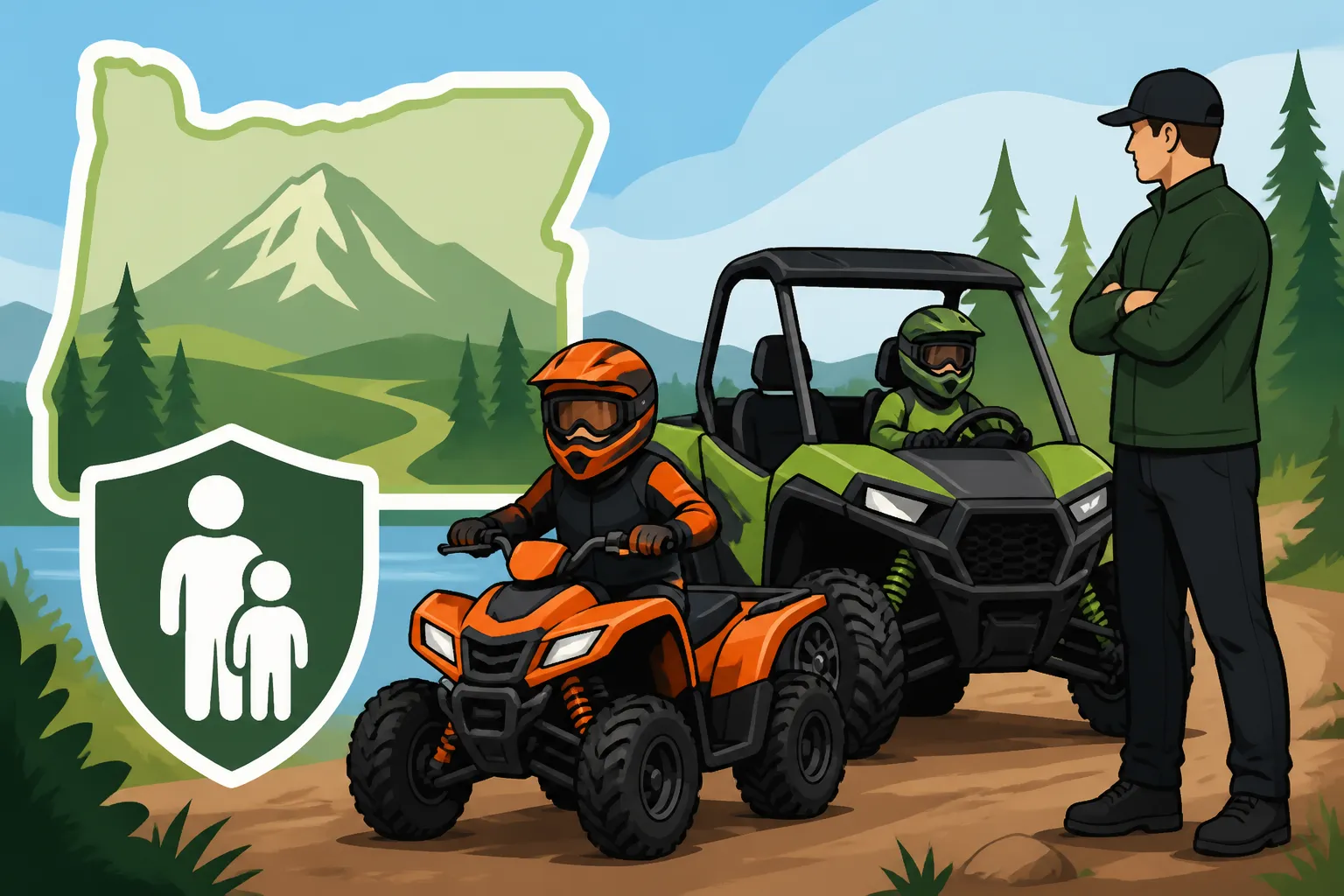
Supervision is more than having an adult somewhere at the riding area. A responsible adult should be able to observe the young rider, respond quickly if something goes wrong and make sure the child stays within the route and conditions they can handle. In practical terms, that means choosing a place where the adult can keep the rider in sight, rather than sending a child ahead around blind corners or across terrain the adult cannot see.
The adult should also know the machine and the route. A young rider may be able to operate a small, familiar quad in a controlled area but struggle with soft sand, steep slopes, loose rocks or traffic from larger machines. Being present does not make an unsuitable machine or route safe. Match the rider, vehicle and terrain before starting.
For a closer look at age limits and how age affects access to particular machines, see Oregon Minimum Age to Ride an ATV. Age is one part of the decision; physical size, judgment, experience and the machine’s controls matter too.
Safety cards and hands-on training are separate checks
A safety card is not the same thing as supervision. A young rider may need to meet the applicable card requirement and still need an adult supervisor. Likewise, an adult’s card does not automatically satisfy the child’s own requirements. Check the rule for the operator and the machine class rather than treating one adult’s paperwork as a substitute for a young rider’s training.
Oregon’s card rules differ by class. Class I and Class III machines have specific requirements, and Class IV rules treat riders under 16 differently from older operators. Oregon ATV Safety Card Requirements gives the general picture, while Class I and Class III Card Rules in Oregon and Class IV Cards Only for Riders Under 16 cover class-specific details. Those distinctions are especially important for families who ride more than one type of machine.
Hands-on training is another separate issue. An online course or safety card may not replace any hands-on training required for a young operator. Check Oregon Hands-On Training Requirements before riding, and allow time to complete training before a planned trip. Do not assume that experience on a bicycle, motorcycle or one kind of ATV counts as the required training for another machine.
A useful pre-ride check is:
- Identify the machine’s Oregon class.
- Check the young operator’s age against the rules for that class.
- Confirm whether the operator needs a safety card and whether hands-on training is required.
- Confirm the adult supervisor meets the applicable age and card requirements.
- Carry or have access to any required proof while riding, and check whether the riding area has additional rules.
A safety card requirement can also be confused with an operating permit. They serve different purposes. A safety card relates to rider education requirements; an operating permit relates to use of a machine on covered riding areas. Having one does not necessarily provide the other. Oregon ATV Operating Permit explains the permit, and Oregon Permit Reciprocity List covers the separate question of whether an out-of-state permit may be recognized.
Families visiting from another state should check card reciprocity separately from permit reciprocity. Oregon maintains different rules for these two kinds of documents, so a registration, sticker or safety credential from home should not be assumed to cover every requirement. See Does Oregon Accept an Out-of-State Safety Card? before traveling, and verify the machine’s permit status as well.
How to supervise a young rider on a real ride
Good supervision starts before the engine is running. Walk through the route, talk about where the child may ride, and set a clear signal or meeting point if the group gets separated. Choose terrain that leaves room to stop and regroup. If the trail narrows, becomes steep or enters a busy staging area, an adult should be ready to slow the group or change plans.
Keep the riding arrangement simple. One adult should be clearly responsible for the young rider rather than assuming another member of the group is watching. On a group ride, agree who leads, who stays with the child and who brings up the rear. If the adult needs to look at a map, adjust equipment or assist another rider, stop in a safe place first.
Use distance and speed the child can manage. A young rider should not have to chase the group to keep up. Give them room to stop without being crowded, and avoid putting them between larger machines where they may be hard to see. On shared routes, remind the group to expect other riders, use extra care at intersections and avoid sudden turns or stops.
The route should suit the least experienced rider, not the most capable adult. Sand can be tiring and unpredictable; rocks and roots demand attention; mud can hide holes; and a narrow trail may leave little space to turn around. Weather and visibility matter too. Fog, dust, rain and low light can make it harder for an adult to keep track of a child, even on familiar ground. If supervision becomes difficult, stop or choose an easier route.
A helmet and correctly fitted protective equipment are essential parts of a safe ride, but they do not replace supervision or training. Make sure the child can reach and operate the controls comfortably. Check that they can start, stop and turn the machine in a controlled area before heading onto a trail. If they cannot comfortably handle the machine, choose a smaller or more manageable option rather than expecting them to grow into it during the ride.
A child who is a passenger is not necessarily covered by the same rules as a child operating a machine. Passenger rules, seat design and restraints vary by machine and situation. Do not carry a child in a seat or position the manufacturer did not design for a passenger. For passenger-specific information, see Oregon Passenger Rules on a Quad or Oregon Passenger Rules in a Side-by-Side.
When the machine is rented, ask the rental business about the rider’s age, supervision, safety card and equipment before booking. A rental agreement or briefing does not necessarily replace Oregon’s requirements. Check Oregon Rules for a Rented Machine and confirm who must complete the safety checklist, what gear is provided and whether the young rider is allowed to operate that particular machine.
A simple decision process before you ride
If you are unsure whether a child can operate a machine, use a cautious sequence rather than resolving the question at the staging area.
- Confirm the class. Identify the machine using Oregon’s class definitions, not just the model name or the term “ATV.”
- Check the rider’s age. Look up the requirements for that age and class, including supervision and any minimum-age restrictions.
- Check training and cards. Make sure the young operator and supervising adult meet the rules that apply to them. Treat hands-on training, a safety card and a vehicle permit as separate checks.
- Check the riding location. Rules can depend on where you ride, and a permit does not grant access to a closed trail or private property.
- Choose a suitable route and machine. Consider the child’s size, experience, control of the machine, terrain and visibility.
- Set the supervision plan. Decide who watches the young rider, how the group will stay together and what to do if conditions change.
If any part of the answer is unclear, confirm it with Oregon’s official ATV safety education information before the trip. This is especially important when the machine’s class is uncertain, the rider is close to an age cutoff, or the family is relying on out-of-state documents. Planning ahead is easier than discovering at the trailhead that a card, training step or permit is missing.
Supervision also means being willing to end the ride early. A child who is tired, upset, cold, overheated or overwhelmed may make unsafe choices even if they rode well earlier. Stop for a break, switch to an easier route or call it a day. Meeting a legal requirement is the starting point; the adult’s job is to keep reassessing whether the ride remains appropriate.
Disclaimer
This article is for general informational purposes only and does not constitute professional advice. Laws, prices and regulations vary by location and change over time. Consult a qualified professional for guidance on your specific situation.