Which Motorcycle Course Counts Toward an Oregon Card
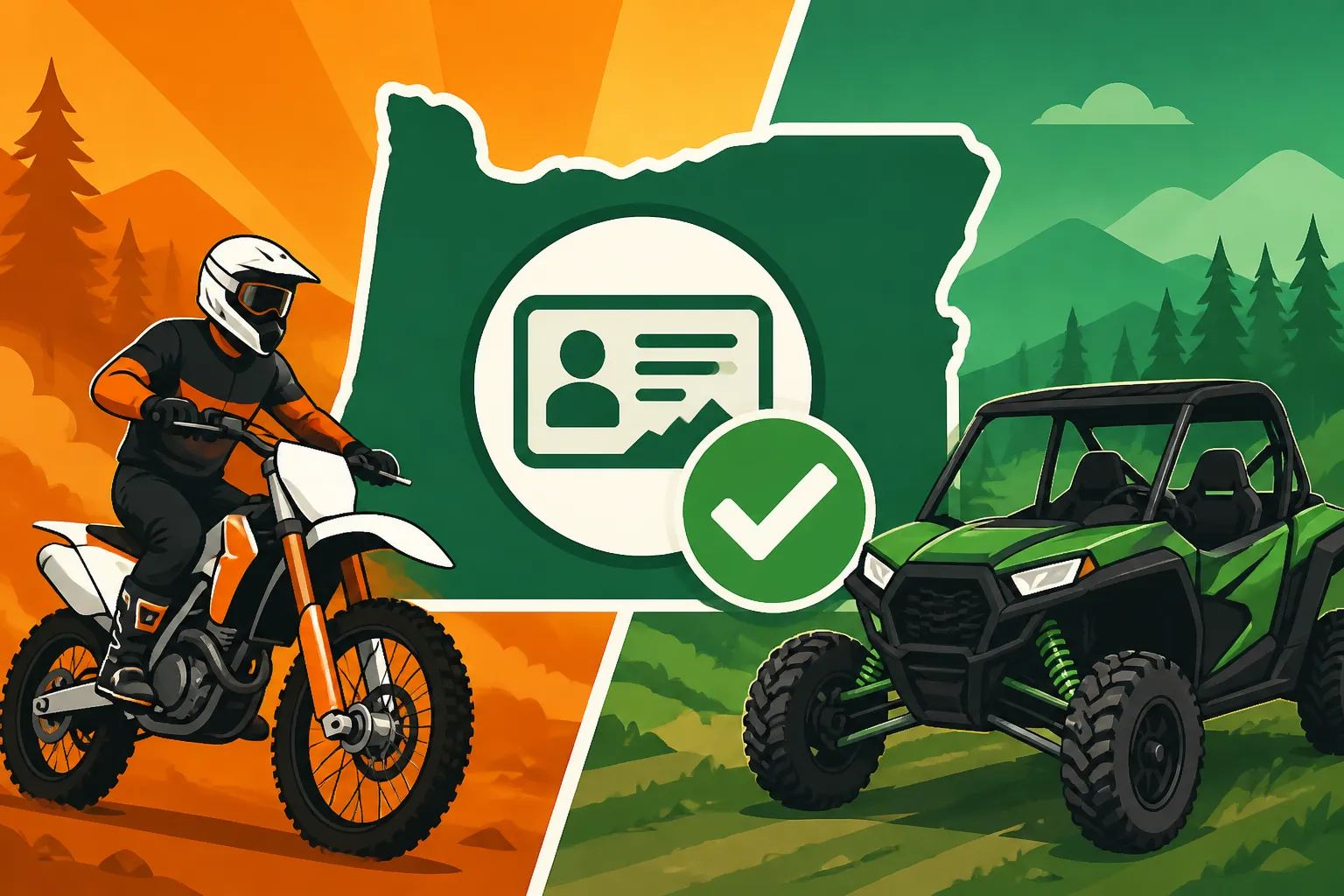
A motorcycle course can seem like an obvious substitute for ATV training, especially if you already ride dirt bikes. But Oregon’s ATV safety card has its own requirements, and a motorcycle certificate does not automatically prove you have met them. The key is to confirm whether Oregon accepts the specific course for the specific requirement you need to satisfy.
The short answer: a motorcycle course does not automatically count
Oregon’s ATV safety education requirements are distinct from motorcycle licensing and training. Completing a motorcycle course may give you useful riding skills, but that alone does not mean Oregon will accept it toward an ATV safety card or any required hands-on training.
The important question is not simply whether the course was about motorcycles. It is whether Oregon recognizes that particular course as meeting the relevant ATV safety requirement. Course names, providers, and certificates can sound similar while covering different training, so do not rely on a general claim that a motorcycle course “counts.”
Start by identifying what you need to complete:
- The ATV safety education course: The card process is specific to Oregon ATV operation. Review Oregon ATV Safety Card Requirements and How to Get an Oregon ATV Safety Card before assuming another course replaces it.
- Hands-on training: Some riders may have an additional practical training requirement. Check Oregon Hands-On Training Requirements to see whether it applies to your age and ATV class.
- Proof of completion: Even if a course is accepted, you may need documentation that identifies the provider, course, and completion date. A rider’s license or a general completion certificate may not be enough.
If you have completed a motorcycle course, treat it as potentially relevant training—not as automatic approval. Ask the Oregon ATV safety education program or the course provider whether the exact course is accepted for the requirement you are trying to meet. Get the answer before riding on the assumption that your card obligation is complete.
That distinction matters because an ATV safety card is not the same as a motorcycle endorsement, motorcycle safety certificate, or out-of-state ATV credential. For broader details on card rules by vehicle type, see Oregon’s ATV Safety Education Card and Class I and Class III Card Rules in Oregon.
What to check before relying on your motorcycle training
If you want an existing course to count, gather the details that let the state or provider identify it precisely. “I took a motorcycle class” is usually too general to establish whether the course satisfies an ATV requirement.
Identify the exact course and provider
Write down the course’s full name, the organization that offered it, where and when you completed it, and whether it included classroom, online, or practical riding components. If you still have the certificate or enrollment email, keep it available.
A course designed for street motorcycles may focus on traffic skills and road operation. An off-road motorcycle course may cover trail riding and terrain, but it still may not meet Oregon’s ATV-specific training standard. The vehicle, curriculum, and approval status all matter.
Oregon has course providers and training options that are specifically relevant to ATV safety. Use Oregon Course Providers and Where They Teach to find the right starting point, then ask whether your motorcycle course is accepted as a substitute or equivalent. Avoid relying only on a course provider’s informal description if the state’s card program must recognize the training.
Ask a precise question
When you contact the program or provider, explain what you are trying to satisfy. For example:
- Give the full course name and provider.
- State when and where you completed it.
- Explain whether you need the online ATV course, hands-on training, or both.
- Ask whether the course is accepted for that specific requirement.
- Ask what proof you must submit or keep.
- Request confirmation in writing if possible.
This helps prevent an answer that is technically correct but does not address your situation. A provider might confirm that its course teaches useful off-road skills without confirming that Oregon accepts it toward an ATV card requirement.
Keep the course evidence
Save the completion certificate, course outline, receipt, and any written confirmation about acceptance. If a course is approved only under certain conditions, keep the documents that show those conditions were met. Do not assume a provider will be able to retrieve your record years later.
If your certificate uses a broad label such as “motorcycle safety,” ask for a document that identifies the actual course and training content. Clear records can make it easier to resolve a question about whether the training qualifies.
How motorcycle training differs from Oregon ATV card requirements
A motorcycle course and an ATV safety card may both involve safe operation, protective gear, and off-road judgment. That overlap is useful, but similar subject matter does not make the credentials interchangeable.
| What you completed | What it may show | What it does not prove by itself |
|---|---|---|
| Street motorcycle safety course | Training in motorcycle operation and safety | That Oregon accepts it for an ATV card |
| Off-road motorcycle course | Experience or instruction for riding off pavement | That it satisfies Oregon’s required ATV training |
| Oregon ATV safety education course | Completion of the ATV-specific course process | That any separate hands-on requirement is complete |
| Approved hands-on ATV training | Completion of practical ATV instruction, if accepted for your situation | That every other card requirement has been met |
| Out-of-state card or certificate | Completion of a credential or course elsewhere | That Oregon recognizes it under its reciprocity rules |
The table is a practical way to separate training value from administrative acceptance. Motorcycle instruction can make you a more prepared rider, but the state’s card program determines what counts for its requirements.
A rider who has completed another state’s ATV course has a related but separate question: whether Oregon recognizes that credential under its reciprocity rules. Motorcycle-course approval and out-of-state ATV reciprocity are not the same issue. Check Oregon Safety Card Reciprocity List and Does Oregon Accept an Out-of-State Safety Card? if your training or card came from outside Oregon.
Also distinguish the card from the operating permit. An ATV permit authorizes operation under Oregon’s permit rules; the safety card addresses operator education requirements. Having one does not automatically satisfy the other. See [Oregon ATV Permits Explained] for the separate permit side of the process.
What to do if your motorcycle course is not accepted
If Oregon or the relevant provider says your motorcycle course does not satisfy the ATV requirement, the simplest route is usually to complete the ATV-specific training that applies to you. That avoids uncertainty at a ride area or during a compliance check.
Check the details for your ATV class and age before signing up. Requirements can differ by machine class and rider age, so make sure you are following the rule for the vehicle you will operate—not a rule that applies to another class. Oregon ATV Safety Card for Adults and Oregon ATV Safety Card for Children can help clarify which rules may apply to different riders.
If you are an experienced rider, ask whether Oregon offers an approved way to demonstrate equivalent knowledge or training. Do not assume that years of experience, a motorcycle endorsement, or prior instruction automatically replaces the required steps. The state may have a defined process for experienced riders, and that process may have its own eligibility and proof requirements. See Taking Oregon’s Equivalency Exam as an Experienced Rider for information on that option.
For a hands-on requirement, ask about approved training providers and available courses rather than enrolling in a general motorcycle class. A recognized provider can tell you what equipment to bring, what class of machine the training covers, and what completion record you will receive. Details such as scheduling and course availability can change, so confirm them directly with the provider.
Before your next ride, make sure you can answer three questions:
- Does the requirement apply to my age and ATV class?
- Has Oregon accepted my exact motorcycle course for that requirement?
- Do I have the documentation or card I need to show completion?
If you cannot answer the second or third question, verify first. It is better to complete the correct ATV requirement than to arrive at a ride area with a motorcycle certificate that does not meet Oregon’s rules.
Disclaimer
This article is for general informational purposes only and does not constitute professional advice. Laws, prices and regulations vary by location and change over time. Consult a qualified professional for guidance on your specific situation.