Oregon ATV Course Pass Mark
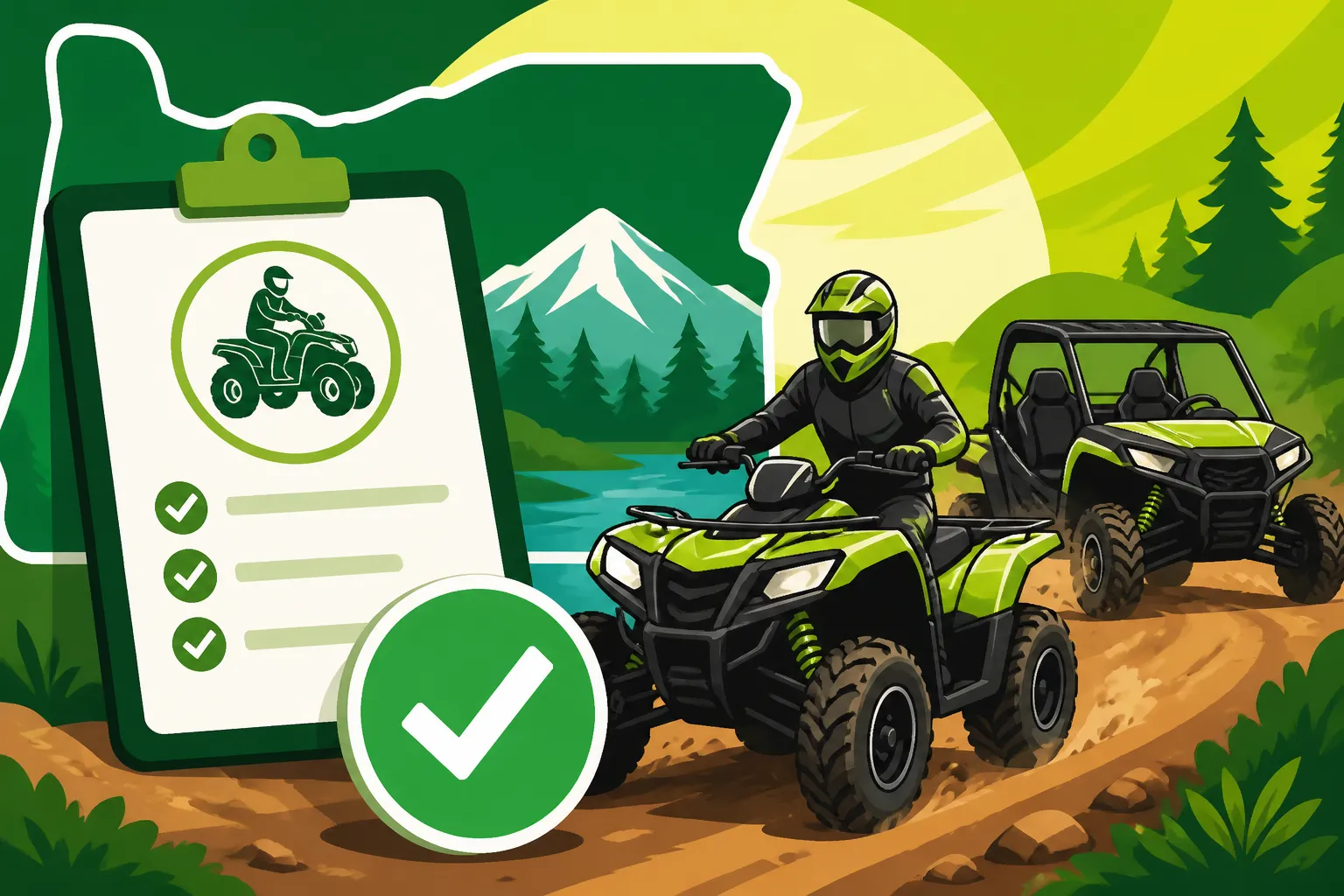
A missed question on Oregon’s ATV safety course can leave you wondering whether you can try again, whether the score applies to every machine, and what else you must do before riding. The course pass mark is 80 percent, but passing the knowledge test may not be the only step. Here’s how to understand the score and finish the requirements that apply to you.
What the 80 percent pass mark means
Oregon’s ATV safety course uses an 80 percent pass mark for its knowledge assessment. In practical terms, you need to earn at least 80 percent on the assessment to pass that course component. The mark is a percentage, not a fixed number of questions: the number you must answer correctly depends on the assessment’s total questions and scoring method.
The test checks whether you understand safety information covered in the course, such as riding responsibly, recognizing hazards, and following rules that apply to your machine and situation. It is meant to confirm that you have absorbed the material, not simply clicked through it. Read each question carefully, especially when the wording asks what you must do, what is safest, or which rule applies in a particular situation.
The 80 percent mark is not a permit score, an age threshold, or a guarantee that you are cleared to ride every type of ATV. It is the passing standard for the course assessment. Other requirements may apply depending on the machine class, rider’s age, and the steps required to receive or use an Oregon safety card. For a broader overview of who needs a card, see Oregon ATV Safety Card Requirements.
A useful way to think about the process is to separate three things:
| Step | What it means | What to check |
|---|---|---|
| Course assessment | Demonstrates understanding of the course material | Earn at least 80 percent |
| Required training steps | May include additional training depending on the rider and course pathway | Confirm whether hands-on training applies |
| Safety card | Evidence that the applicable education requirements have been met | Check which class and rider rules apply |
Passing the test is a milestone, not a substitute for understanding local riding rules. An education card does not automatically provide an operating permit, make a closed trail legal to ride, or cover site-specific day-use fees. Treat the course, machine permit, and riding-area rules as separate requirements.
How to prepare for the course test
The best preparation is to take the course seriously before you reach the final assessment. Pay attention to the explanations, not just the answer choices. Safety questions often test whether you can apply a basic principle to a real riding situation: for example, whether visibility, terrain, passengers, or the type of machine changes what a safe choice looks like.
A few practical habits can help:
- Work through the material at a pace that lets you understand it. Rushing through lessons makes it easier to confuse similar rules or miss a safety detail.
- Pause on unfamiliar terms. If the course distinguishes between machine classes, riding environments, or equipment, make sure you understand the distinction before continuing.
- Think about why an answer is safe. Memorizing a correct choice may help once, but understanding the reason makes it easier to handle a question phrased differently.
- Read every option before selecting an answer. A question may include a choice that sounds convenient but does not address the actual hazard.
- Use a quiet setting and a stable internet connection. Interruptions can make it harder to follow explanations or complete an assessment accurately.
- Keep track of where you stop. If the course allows you to resume later, note the last completed section so you can return to the material without skipping ahead.
Some riders prefer to complete an online course on a computer because a larger screen makes it easier to read lesson content. Others use a phone. The important point is to choose a setup where you can focus and see the material clearly. If you plan to use a mobile device, Taking the Course on a Phone can help you think through what to expect.
Do not assume that every course screen has the same format or that every provider handles assessment attempts identically. Follow the instructions presented in the course you are taking. If a question is unclear, review the relevant lesson rather than guessing based on what seems familiar from another state or another riding program.
If you do not pass on the first attempt
A score below 80 percent means you have not met the stated passing mark for that assessment attempt. It does not mean you should ride without completing the requirement, and it does not tell you that you are permanently barred from finishing the course. What happens next depends on the course provider’s process. Review the on-screen instructions for whether you can retry, whether you must revisit lessons, or whether any other step is needed.
Before retaking the test, identify the topics that caused difficulty. If the course shows a score breakdown or points you back to particular sections, use that information. If it does not, review the lessons in which you felt least certain. A short, focused review is usually more useful than immediately repeating the same assessment without changing your preparation.
If a technical problem interrupts the test or your result does not appear, use the course provider’s support instructions. Keep any confirmation or progress information the course provides. Avoid starting over with a different course or provider until you know whether your completed work can be recovered and whether the replacement course will meet Oregon’s requirements.
Passing the test is not always the final step
The knowledge score answers one question: did you meet the course’s 80 percent assessment standard? It does not answer every question about eligibility to ride or whether your training is complete. Oregon’s safety-card requirements vary according to the type of ATV and the rider. Before you assume that a passing score is all you need, check the rules for your situation.
For example, Oregon distinguishes among ATV classes. The requirements for Class I and Class III machines are not necessarily the same as those for a Class IV side-by-side, particularly when the rider is under 16. Review Class I and Class III Card Rules in Oregon and Class IV Cards Only for Riders Under 16 if you are unsure which rules apply.
Some riders may also have a hands-on training requirement. The online test measures knowledge, while hands-on instruction addresses practical skills. These are different parts of safety education, so passing the written or online assessment does not necessarily mean you have completed hands-on training. Check Oregon Hands-On Training Requirements before arranging a ride, especially if the rider is young or is using an instructional pathway.
Oregon also has an instructional permit pathway with a time limit. If that applies to you, passing the course does not mean you can ignore the permit’s conditions or deadline. Read Oregon’s 180-Day Instructional Permit and confirm the current instructions from the responsible program before relying on a permit to ride.
To keep the steps straight, use this sequence:
- Confirm the machine class. The class determines which safety-card rules may apply.
- Check the rider’s age and status. Requirements can differ for younger riders, and a driver’s license or other credential may affect which documents are needed.
- Complete the course and earn at least 80 percent. Save or print any completion confirmation the course provides.
- Complete additional training if required. Do not treat the online test as a replacement for hands-on training when that is part of the applicable pathway.
- Verify that the card is issued or available. Follow the provider’s instructions for accessing or printing it.
- Check operating requirements separately. A safety card is different from an ATV operating permit and from any site-specific access or parking requirement.
This distinction matters for families in particular. An adult may complete the course and receive a card, while a younger rider on the same trip may still need to meet separate training or supervision rules. Do not assume that one family member’s card covers the others. Each rider should meet the requirements that apply to their own age and machine.
Likewise, a safety card is not a substitute for an Oregon ATV operating permit. If you are preparing for a trip, review Oregon’s ATV Operating Permit and the rules for the area where you plan to ride. The course does not authorize travel on a road or trail that is closed to ATVs, and it does not override signs, land-manager restrictions, or seasonal closures.
What to do after you pass
Once the course reports a passing result, follow its instructions for confirming completion and getting the safety card. Some riders may be able to save a digital version or print a copy. Keep a copy somewhere accessible, and check that your name and other details are correct. If you need to show the card during a ride, know how to retrieve it without depending on a weak signal. See Showing an Oregon Safety Card on Your Phone for practical considerations.
Then check whether your card or course completion has an expiration or renewal requirement. Do not assume that a card remains current indefinitely just because the original assessment was passed. If you already have a card and are unsure whether it needs attention, review Oregon Safety Card Renewal.
Before heading out, do a final check:
- You have met the 80 percent pass mark and can verify your course completion.
- You have completed any additional hands-on training that applies.
- You know which card requirements apply to your machine class and age.
- You have the separate operating permit required for the machine, if applicable.
- You have checked the current rules and closures for your destination.
- You can access proof of your card if asked.
If you have a score question, a missing completion record, or uncertainty about whether a particular course counts, ask the course provider or the program responsible for Oregon ATV safety education. For rules that depend on machine class or rider age, verify the specific requirement rather than relying on a friend’s experience with a different machine or situation.
The main takeaway is straightforward: Oregon’s ATV course pass mark is 80 percent, but a passing score is only one part of getting ready to ride. Confirm the safety-card, hands-on training, permit, and site rules that apply to you before you head out.
Disclaimer
This article is for general informational purposes only and does not constitute professional advice. Laws, prices and regulations vary by location and change over time. Consult a qualified professional for guidance on your specific situation.