Helmet Rules for Oregon Riders
Riding ATVs and UTVs in Oregon offers incredible freedom, from the sprawling coastal dunes to the rugged Cascade mountain trails. Yet, navigating all the safety rules, especially around helmets, can feel like a tangled mess that zaps some of the fun out of planning your trip. You want to hit the trails or the sand without constantly worrying about getting a ticket or, worse, suffering a preventable injury. This comprehensive guide will break down Oregon's helmet laws for all types of riders and machines, so you can understand the regulations, make informed choices, and ride confidently and safely every time you venture out.
Why Helmet Laws Matter So Much for Off-Road Riding
When you're out on the trails, whether you're kicking up sand at the Oregon Dunes or navigating a rocky forest path in the Tillamook State Forest, the environment is inherently dynamic and unpredictable. Unlike paved roads, where hazards are often more visible and predictable, off-road terrain presents a constant barrage of challenges: unexpected ruts, hidden rocks, slippery mud, fallen timber, and sudden changes in elevation. These conditions significantly increase the risk of an accident, even for the most experienced riders. Helmet laws aren't just about bureaucracy; they're a vital layer of protection designed to keep you safe when the unexpected happens.
The Harsh Reality of Off-Road Impacts
Let's be blunt: off-road accidents, even at relatively low speeds, can have devastating consequences. When you're ejected from a quad or side-by-side, or if your machine rolls over, your head is incredibly vulnerable. Impact with the ground, a tree, a rock, or even the machine itself can lead to severe head trauma. We've all seen riders who've had close calls – a tumble in the mud that seemed harmless but could have been catastrophic without proper gear. These aren't just statistics; these are real-life scenarios that play out on our favorite riding areas every season. The reality is, while you might not plan to crash, the potential is always there, and a helmet is your last line of defense. It's about mitigating the worst outcomes of an unplanned event.
Protecting Your Most Important Asset
Your brain is, without a doubt, your most important asset, not just for riding, but for everything in life. A traumatic brain injury (TBI) can alter everything: your memory, your personality, your ability to work, and your relationships. Investing in a good helmet, and more importantly, wearing it every single time you ride, is a non-negotiable step in protecting that asset. Think about it this way: you spend thousands on your machine, your trailer, your fuel, and your gear. Why would you skimp on the one piece of equipment that safeguards your brain? It’s not about being invincible; it’s about being prepared for the inherent risks and ensuring that if you do take a spill, you have the best possible chance of walking away with minimal injury.
Oregon's Proactive Stance on Rider Safety
Oregon has long taken a proactive stance on off-highway vehicle (OHV) safety, recognizing the unique dangers associated with this exhilarating sport. The state's laws reflect a commitment to reducing injuries and fatalities. This isn't about penalizing riders; it's about education and prevention. The [Oregon ATV Safety Education Card] program, for instance, emphasizes training and knowledge alongside equipment. When the Oregon Parks and Recreation Department (OPRD) sets forth regulations, they do so with a wealth of data and experience from countless incidents across the state. They understand that a moment of inattention or an unforeseen obstacle can turn a fun ride into an emergency, and helmets are consistently proven to be the most effective way to prevent the most serious injuries in these situations.
Oregon's Universal Helmet Rule: Who Needs One?
Oregon's helmet laws can sometimes feel a bit like a puzzle, with different rules applying to different ages and different types of machines. However, the core principle is simple: safety first. While there are nuances, especially concerning adults and certain UTVs, the general expectation is that riders should be wearing a helmet. Understanding the specific mandates is crucial to staying legal and, more importantly, staying safe.
The "Under 18" Mandate
Let's start with the clearest rule: if you're under 18 years old, a helmet is absolutely mandatory in Oregon, no exceptions. This applies whether you're driving a quad, riding a dirt bike, or even just a passenger in a side-by-side. The law states unequivocally that "a person under 18 years of age operating or riding on an all-terrain vehicle shall wear a safety helmet." This is a critical point for parents and guardians. Sending your teenager or child out on the trails without a helmet isn't just a risk; it's a violation of state law. This rule protects our youngest and most vulnerable riders, who may have less experience or slower reaction times. It's vital to ensure they have properly fitted, approved helmets every time their wheels hit the dirt or sand. You can find this specific requirement detailed in [Oregon Helmet Law for Riders Under 18].
Adult Riders: When a Helmet Becomes Optional (and Why You Still Should)
Here's where it gets a little more nuanced for the grown-ups. For operators and passengers 18 years of age or older, Oregon law generally makes helmets optional when riding on Class I (quads) and Class III (off-road motorcycles/dirt bikes) ATVs. This might come as a surprise to some, especially given the universal requirement for younger riders. However, while legally optional, the spirit of rider safety still strongly encourages helmet use for adults on these open machines. Many seasoned riders, even those with decades of experience, wouldn't dream of hitting the dunes or trails without one. Why? Because common sense and personal experience often outweigh legal loopholes. A helmet doesn't just protect you from a ticket; it protects you from life-altering injuries, regardless of your age. Even if the law says you don't have to, your well-being certainly does. For more details on this, see [Oregon Helmet Law for Adults].
Defining "Motorcycle-Type" vs. "Side-by-Side" Machines
The distinction between different machine types plays a significant role in Oregon's helmet regulations. The rules primarily differentiate between "motorcycle-type" ATVs (Class I quads and Class III dirt bikes, where the rider straddles a seat and uses handlebars) and "utility-type" or "side-by-side" vehicles (Class IV, often with a steering wheel, bench seats, and a roll cage).
- Motorcycle-Type ATVs (Class I and III): These are the machines where the operator straddles the engine and uses handlebars. Think traditional quads and dirt bikes. For these, the under-18 rule is absolute, and over-18 riders have the "optional" choice (though highly discouraged).
- Side-by-Side ATVs (Class IV): These vehicles, also known as UTVs, SXS, or ROVs, typically have a steering wheel, foot pedals, and a bench or bucket seat where the operator and passengers sit side-by-side. These machines often come equipped with factory-installed rollover protective structures (ROPS) or roll cages, and seat belts. This distinction is crucial because the presence of a roof and roll bar can trigger a different set of helmet rules, particularly for adults, which we'll delve into shortly. Understanding [Oregon's Four ATV Classes Explained] can really help clarify which rule applies to your ride.
Understanding DOT and Snell Helmets in Oregon
It's not enough to just put any helmet on your head. For a helmet to offer effective protection and satisfy Oregon's legal requirements (especially for youth riders), it must meet specific safety standards. You'll commonly hear terms like "DOT approved" and "Snell certified," and knowing the difference, and why both matter, is key to choosing the right gear.
What "DOT Approved" Really Means
"DOT approved" means the helmet meets the minimum safety standards set by the U.S. Department of Transportation (DOT), specifically Federal Motor Vehicle Safety Standard (FMVSS) No. 218. When a helmet has this certification, it means it has been tested (or certified by the manufacturer to have been tested) for impact absorption, penetration resistance, retention system effectiveness (the chin strap!), and peripheral vision. You'll typically find a DOT sticker on the back of the helmet. For any helmet required by law in Oregon – like for riders under 18 – it must be DOT approved. This isn't just a suggestion; it's a legal requirement. A helmet without this certification, even if it looks protective, won't cut it in the eyes of the law, and more importantly, may not offer the protection you need. It's the baseline for safety, ensuring that the helmet can withstand common types of impacts and offer a reasonable level of head protection.
The Gold Standard: Snell Certification
While DOT certification is the minimum legal requirement, Snell Memorial Foundation (Snell) certification is often considered the "gold standard" in helmet safety. Snell is a non-profit organization that independently tests helmets and sets even more rigorous standards than the DOT. They conduct more aggressive tests, including multiple impacts in the same spot, impacts with sharper objects, and more stringent chin bar integrity tests. A Snell-certified helmet offers a higher level of protection than a DOT-only helmet. While Oregon law doesn't mandate Snell certification, many experienced riders, especially those who push their limits on challenging terrain or at higher speeds, prefer Snell-certified helmets for the enhanced safety they provide. It's an extra layer of peace of mind, knowing your helmet has passed some of the toughest safety evaluations in the world. When considering your next helmet, looking for both DOT and Snell labels is always a smart move. More information on these standards can be found in [DOT and Snell Helmets in Oregon].
The Crucial Chin Strap Rule Oregon Enforces
This often overlooked detail is absolutely critical: a helmet is useless if it's not securely fastened. Oregon law specifically states that if a helmet is required, it must be worn and "secured with a chin strap." This isn't just about avoiding a ticket; it's about making the helmet effective. Imagine taking a tumble, and your helmet flies off on the first impact. It then provides zero protection for subsequent impacts. The chin strap is what keeps the helmet firmly on your head, ensuring it stays in place to absorb energy and protect your skull and brain during an accident. Rangers and law enforcement officers are trained to check not just for the presence of a helmet, but for its proper use. A loose chin strap is as good as no helmet at all, and it can result in a citation. Always double-check that strap before you start your engine – it literally could save your life. This critical detail is elaborated on in [The Chin Strap Rule Oregon Enforces].
Specific Rules for Different ATV & UTV Classes
Oregon's OHV laws classify machines into different categories, and these classifications directly influence helmet requirements. Understanding which class your machine falls into is fundamental to knowing the specific safety regulations that apply to you and your passengers. It’s not a one-size-fits-all approach, and getting it wrong could lead to a fine or, worse, inadequate protection in a crash.
Class I and Class III Machines: The Traditional Quad and Dirt Bike
Oregon defines Class I ATVs as those under 50 inches wide, with a dry weight less than 1,200 pounds, designed for a single rider or operator and one passenger. These are your traditional four-wheeled quads. Class III ATVs are off-road motorcycles, commonly known as dirt bikes. Both of these classes are characterized by a straddle seat and handlebar steering. For these machines, the helmet rules are straightforward:
- Riders Under 18: Absolutely must wear a DOT-approved safety helmet, securely fastened with a chin strap. No exceptions. This applies whether they are operating or riding as a passenger.
- Adult Riders (18 and Older): Legally, helmets are optional for adults operating or riding on Class I and Class III machines. However, as discussed, this is where personal responsibility and common sense come heavily into play. Most experienced adult riders will still choose to wear a helmet due to the high risks associated with these open, agile machines. They are very much "motorcycle-type" vehicles, and the wisdom of wearing a helmet on a motorcycle universally applies here, regardless of the optional nature of the law for adults. The potential for head injury on these machines is significant, whether you're a novice or a veteran.
Class IV Side-by-Sides and Dune Buggies: The Roof and Roll Bar Exception
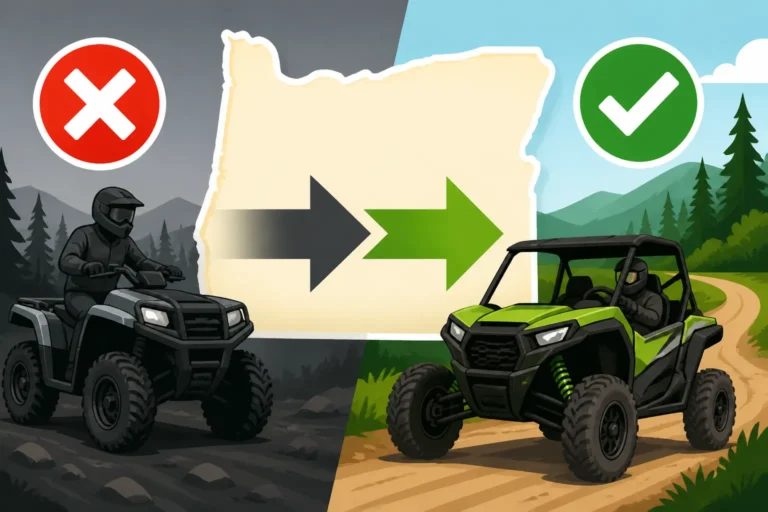
Class IV ATVs are the side-by-sides, also known as UTVs, or ROVs. These machines are designed to carry multiple passengers, typically have a steering wheel, foot pedals, and come with a factory-installed roll-over protective structure (ROPS) or roll cage and seat belts. This is where Oregon's helmet laws introduce a specific exception for adults.
- Riders Under 18: Just like with Class I and III machines, anyone under 18 operating or riding as a passenger in a Class IV machine must wear a DOT-approved safety helmet, secured with a chin strap. The presence of a roll cage does not exempt minors from this requirement.
- Adult Riders (18 and Older): Here's the key difference: an adult operator or passenger in a Class IV ATV that has a factory-installed roll cage and seat belts, and is equipped with a roof, is exempt from the helmet requirement. The thinking here is that the structural integrity of the roll cage, combined with the restraint of seat belts and the overhead protection of a roof, offers a level of protection comparable to a helmet in many rollover or impact scenarios. Many UTVs, even those customized with aftermarket roofs from companies like SuperATV, would fall under this exemption. However, it's crucial that the roof is present and not just a roll cage with no overhead protection. It's also important to remember that this exemption only applies to adults, and only when all components (roll cage, seat belts, and roof) are present and properly utilized. For a deeper dive, check out [Oregon's Class IV Side-by-Sides Under 75 Inches] and [When a Class II Roof Exempts You].
Oregon's Class II Machines and Their Unique Road Rules
Class II ATVs are a somewhat unique category in Oregon. These are machines designed for off-road use but are equipped for limited use on public roads. Think of things like specialized dune buggies, larger sand rails, or even some purpose-built expedition vehicles that might gain street-legal status. These machines often have features that blur the lines between traditional off-road and street-legal vehicles.
- Helmet Rules: The helmet rules for Class II machines generally follow the same principles as Class I and III for operators and passengers under 18. For adults, if the Class II machine is essentially an open-cockpit vehicle with a straddle seat (like some very large quads not meeting Class I specs) or an open-top dune buggy without a full roof, then the adult helmet rule is optional but highly recommended. However, if the Class II machine is fully enclosed with a roof, roll cage, and seat belts, like a heavily modified side-by-side or a purpose-built sand rail, then the Class IV adult exemption may apply. It's really about the configuration of the machine. The key difference for Class II machines is their potential for limited road use. If you’re operating a Class II machine on a designated highway access route, or crossing a highway, the rules of the road, including specific insurance and registration requirements, come into play. For instance, [Insurance and Oregon Class II Machines] is mandatory. While the helmet law focuses on off-road operation, always remember that road rules apply on public roads.
Helmets for Passengers and Young Riders in Oregon
The safety of everyone on board is paramount, and Oregon's laws reflect this by extending helmet requirements beyond just the operator. This is particularly true for passengers and, universally, for young riders. It's about ensuring that every head is protected, regardless of where they're sitting or who's driving.
Passenger Rules: Every Head Needs Protection
The rule of thumb for passengers in Oregon is simple: if the operator needs a helmet, the passenger needs one too. And, as we've already covered, all riders under 18 years old always need a helmet, whether they're driving or just along for the ride.
- Quads (Class I) and Dirt Bikes (Class III): If you're carrying a passenger on a Class I quad (and your machine is explicitly designed for two riders with dedicated seating and footrests) or a Class III dirt bike (though carrying passengers on these is generally discouraged and often illegal if not designed for it), then any passenger under 18 needs a helmet. For adult passengers, just like adult operators, a helmet is legally optional but strongly recommended for their safety.
- Side-by-Sides (Class IV): Again, passengers under 18 in a side-by-side must wear a DOT-approved, chin-strapped helmet, even with a roll cage and roof. For adult passengers in a Class IV machine with a roll cage, seat belts, and a roof, they are exempt from the helmet law. However, if that Class IV machine lacks a roof, then even adult passengers should be wearing a helmet. It's about providing the best possible protection, and in an open vehicle, that means head protection for everyone. You can learn more about specific passenger rules in [Passengers Behind the Operator on a Quad].
Foot Pegs and Oregon's Passenger Rule
Oregon law isn't just concerned with whether a helmet is worn; it also looks at how passengers are carried. Specifically, for Class I and Class III ATVs, a passenger must have "foot pegs or floorboards" to support their feet. This isn't just a comfort issue; it's a safety requirement. If a passenger's feet are dangling or they are forced to ride in an awkward position, their balance is compromised, and they are at a much higher risk of falling off the machine or being injured if the machine hits a bump or rolls. This rule reinforces the idea that only ATVs designed to carry a passenger, with the appropriate seating and foot support, should be used for that purpose. For example, if you've got a quad factory-built for one person, adding a passenger, even if they're wearing a helmet, isn't compliant with the spirit of the law, and certainly not the safest choice. Ensuring your machine is actually built for two, and your passenger has proper foot support, is just as important as the helmet itself. This is critical information, especially concerning [Foot Pegs and Oregon's Passenger Rule].
Youth Riders: More Than Just a Helmet
When it comes to youth riders, Oregon's safety mandates extend beyond just the helmet. While the helmet is non-negotiable for anyone under 18, it's part of a broader framework of protection. Youth riders also need to:
- Complete a Safety Education Course: All riders under 16 must complete an approved ATV safety course and carry an [Oregon ATV Safety Education Card]. While this doesn't directly relate to helmets, it's about building foundational knowledge and safe riding habits.
- Be Supervised: Depending on their age and machine class, youth riders may also require direct adult supervision.
- Operate an Appropriately Sized Machine: A child shouldn't be operating a machine that's too powerful or too large for their physical capabilities.
The helmet is the cornerstone of youth safety, but it's most effective when combined with proper training, supervision, and an appropriate machine. Parents and guardians bear a significant responsibility here to ensure all these elements are in place before letting a child ride.
When a Class II Roof Exempts You
One of the more unique aspects of Oregon's helmet law for adult riders involves the distinction for certain Class II and Class IV machines. It's not just about having a roll cage; it's about the combination of safety features that, when used together, are considered to provide sufficient protection in specific scenarios. This exemption primarily applies to adult riders in machines that offer a more enclosed, car-like experience than a traditional open-air quad or dirt bike.
The Enclosed Cab Distinction
For adult operators and passengers (18 years or older) in a Class II or Class IV ATV, the helmet requirement can be waived if the machine has a "factory-installed roll bar or roll cage and seatbelts and a roof." The operative word here is "roof." It's not enough to just have the roll bars; there needs to be a physical overhead barrier that provides protection. This distinction is based on the idea that the combination of these elements – a strong frame protecting against rollovers, seatbelts to keep occupants secured within that frame, and a roof to prevent head impacts from above during a roll or from falling debris – offers a level of protection that, for adults, can substitute for a helmet. This is the "enclosed cab" concept, even if the sides are open. This rule acknowledges the design differences between a side-by-side or a sand rail and an open quad. This exemption is crucial for those who enjoy the comfort and utility of modern UTVs. Many aftermarket accessories, such as hard tops from manufacturers like SuperATV, can fulfill this "roof" requirement, as long as they are securely mounted to the factory roll cage. You can delve into this further by reading [When a Class II Roof Exempts You].
Roll Bars and Seat Belts: A Critical Combination
It's vital to emphasize that the roof exemption is never a standalone rule. It always hinges on the presence and proper use of both a factory-installed roll bar (or roll cage) and seat belts. If your Class II or Class IV machine has a roof but you or your adult passenger are not buckled into the seat belt, the exemption does not apply, and you could be cited for not wearing a helmet. This makes perfect sense: the roll cage protects the cabin space in a rollover, but the seat belt is what keeps you inside that protected space. Without the seat belt, you could be ejected from the vehicle, rendering the roll cage and roof useless for your personal protection. So, while you might appreciate the breeze through your hair in your UTV, always make sure everyone 18 and older is buckled in if they're opting out of a helmet. For underage riders, as we know, the helmet is always required, regardless of these other features.
Still, Is It Really Safer Without One?
Even with the legal exemption for adults in certain roofed, caged, and belted Class II and IV machines, many experienced riders still choose to wear a helmet. Why? Because while a roll cage and roof protect against rollovers and direct overhead impacts, they don't protect against every single type of head injury. Imagine hitting your head on an interior roll bar during a sudden jolt, or an impact from a low-hanging branch that penetrates the open sides of the cage. Or consider the sheer amount of dust, debris, and roost that can fly up, potentially impairing vision or causing facial injuries. A full-face helmet offers protection against these smaller, but still significant, hazards. While the law grants an exemption, personal safety is always the ultimate goal. Many riders argue that while a UTV offers more passive protection, a helmet offers an active layer of defense for your most valuable asset, even when legally optional. It's always a personal choice for adults in these machines, but it's a choice that should be made with a full understanding of all potential risks.
Choosing the Right Helmet for Oregon Riding Conditions
Selecting the right helmet isn't just about meeting legal requirements; it's about optimizing your comfort, visibility, and safety for the specific riding conditions you'll encounter in Oregon. From the dusty high desert near Bend to the foggy, sandy coast, your helmet needs to perform in diverse environments. A well-chosen helmet can significantly enhance your riding experience, while a poor choice can lead to discomfort, impaired vision, and inadequate protection.
Full Face, Open Face, or Modular?
The type of helmet you choose greatly impacts your protection and comfort.
- Full-Face Helmets: These offer the most comprehensive protection, covering your entire head, face, and chin. They are highly recommended for aggressive riding, high speeds, or any scenario where maximum impact protection is desired. Many come with integrated visors to protect against dust, roost, and sun. They are excellent for the Oregon Dunes, where flying sand is a constant.
- Open-Face (3/4) Helmets: These cover the top, back, and sides of your head, but leave your face exposed. They offer more ventilation and a wider field of vision, which some riders prefer. However, they provide no protection for your chin or face from impacts, flying debris, or weather. If you choose an open-face helmet, always wear proper goggles to protect your eyes.
- Modular (Flip-Up) Helmets: These are a hybrid, offering the protection of a full-face helmet with the convenience of an open-face. The chin bar can flip up, allowing for easy communication or quick sips of water without removing the entire helmet. They tend to be heavier and sometimes more expensive.
For off-road riding in Oregon, a full-face helmet designed specifically for OHV use (often called an MX or off-road helmet, characterized by a prominent visor and chin bar) is generally the safest and most practical choice, especially for the variable conditions you’ll encounter.
Ventilation and Visors for Dust and Fog
Oregon's riding environments present unique challenges that your helmet needs to address.
- Dust: Areas like Millican Valley or the Christmas Valley Dunes can be incredibly dusty, especially in dry seasons. A helmet with good ventilation helps keep you cool, but you'll also need a visor or goggles that seal well to prevent dust from getting into your eyes. Some helmets offer removable dust filters.
- Fog/Rain: The Oregon Coast dunes, particularly in the mornings or during cooler seasons, can be incredibly foggy or rainy. A clear, anti-fog visor is essential here. If your helmet doesn't have an integrated visor, high-quality goggles with anti-fog properties are a must. Tinted visors are great for sunny days but can be dangerous in low light or fog. Carrying a clear visor or interchangeable lenses for your goggles is a smart move.
- Sun: In the high desert, intense sun can cause glare and fatigue. A helmet with a peak (like an MX helmet) or an integrated sun visor can help manage this.
Sizing and Fit: Your First Line of Defense
No matter how expensive or advanced your helmet is, it's useless if it doesn't fit correctly. A properly fitting helmet should be snug but not uncomfortably tight. It shouldn't move independently of your head when you shake it.
- Snug Fit: The padding should press firmly against your cheeks and the top of your head.
- No Movement: When you try to rotate the helmet from side to side or front to back, your skin should move with it. If it slides around, it's too big.
- Vision: Ensure your peripheral vision isn't obstructed.
- Chin Strap: Always ensure the chin strap is securely fastened but not painfully tight. You should be able to get two fingers snugly under the strap, but no more.
A helmet that's too loose can shift during an impact, exposing your head or even coming off. One that's too tight can cause headaches and distraction, ruining your ride. Always try on helmets before buying and consult sizing charts. Remember, a well-fitting helmet is your first, and most important, line of defense.
Common Misconceptions and Fines for Non-Compliance
Despite the clear rules, some common misconceptions persist among riders, which can lead to unnecessary risks and costly citations. It’s important to clarify these points and understand the consequences of not adhering to Oregon’s helmet laws, especially when interacting with law enforcement or OPRD rangers.
"It's Just a Short Ride to the Staging Area!"
This is one of the most frequent excuses heard by rangers: "I'm just going from my campsite to the staging area," or "It's just a quick hop across the road." The reality is, an accident can happen in a split second, regardless of how short the distance or how low the speed. Many serious incidents occur close to staging areas or campgrounds, where riders might be less vigilant. Oregon's helmet laws apply whenever you are operating your ATV or UTV on public land, regardless of the perceived brevity of the ride. A "short ride" without a helmet for an underage rider is still a violation, and a serious risk. This applies equally to a short jaunt down a campground loop or from your trailer to the entry point of the dunes at Spinreel. Always put safety first, even for what seems like an insignificant distance.
What a Trooper Checks Roadside
When an Oregon State Police Trooper or an OPRD ranger stops you, especially at a staging area like Browns Camp or a popular dune access point, they're typically looking for a few key things to ensure compliance.
- Permit Decal: First and foremost, they'll check for your valid [Oregon Permit Decals and Where They Go].
- Safety Education Card: For youth riders, they'll ask to see the [Oregon ATV Safety Education Card].
- Machine Class and Setup: They'll quickly assess your machine's class to determine which rules apply, looking at width, number of seats, and whether you have a roll cage, roof, and seat belts if it's a UTV.
- Helmet Use and Type: For anyone under 18, they will verify that a DOT-approved helmet is being worn and, crucially, that the chin strap is securely fastened. For adults, if you're on a Class I or III, they'll note whether you're wearing one. If you're in a Class IV, they'll check for the roof and seatbelt use.
They're not trying to ruin your day; they're ensuring everyone's safety and enforcing the laws designed to prevent serious injury. A roadside stop is a good opportunity for them to educate, but also to issue citations if necessary. Knowing [What a Trooper Checks Roadside] can help you be prepared.
What a Citation for a Helmet Violation Costs
Riding without a required helmet in Oregon, or having an improperly fastened helmet, can result in a traffic citation. While I cannot give specific dollar amounts for fines (as they can change and vary by county), understand that it's typically treated as a Class C traffic violation. This usually means a significant monetary penalty, and it's certainly more than the cost of a good helmet. Beyond the immediate financial hit, there's the inconvenience of dealing with a court appearance if you dispute it, or the potential for it to show up on your record. It's an entirely avoidable expense and hassle. Moreover, if an accident occurs and you weren't wearing a required helmet, it could complicate insurance claims or even expose you to greater liability. The cost of a ticket pales in comparison to the potential medical bills from a head injury, not to mention the long-term impact on your health and well-being. Always choose to wear the appropriate safety gear. While this guide primarily discusses helmets, other violations can also lead to fines, such as those related to [Oregon Fines for Riding Without a Permit].
| Rider Age / Machine Type | Helmet Requirement (Operator & Passenger) | Exemption Conditions (Adults Only) | Legal Consequence for Non-Compliance |
|---|---|---|---|
| Under 18 (All Classes) | MANDATORY (DOT Approved, chin strapped) | None (Helmet ALWAYS required) | Class C Traffic Violation, Fines |
| 18+ (Class I Quad) | Optional (Highly Recommended) | N/A (No specific exemption) | N/A (If optional, no citation) |
| 18+ (Class III Dirt Bike) | Optional (Highly Recommended) | N/A (No specific exemption) | N/A (If optional, no citation) |
| 18+ (Class IV Side-by-Side) | Optional (Recommended) | Factory roll cage, seat belts, AND a roof | Class C Traffic Violation, Fines (if conditions not met) |
| 18+ (Class II Machines) | Varies by configuration | Depends on enclosed cab features (see Class IV) | Class C Traffic Violation, Fines (if conditions not met) |
Disclaimer
This article is for general informational purposes only and does not constitute professional advice. Laws, prices and regulations vary by location and change over time. Consult a qualified professional for guidance on your specific situation.