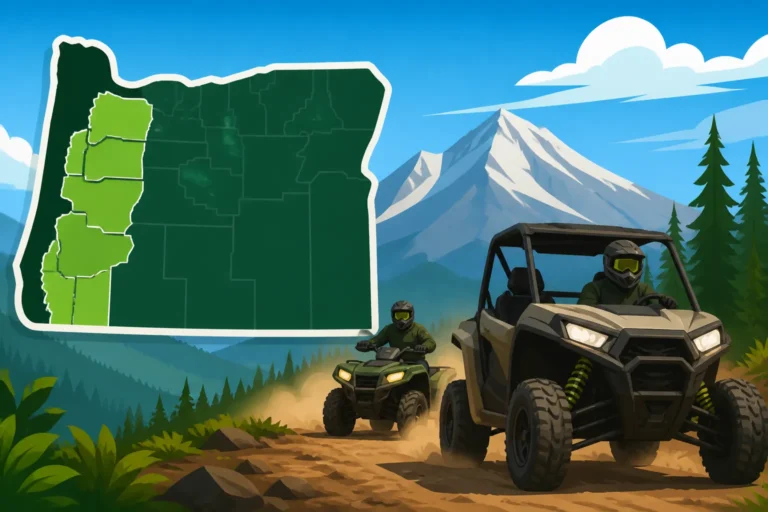
Riding a County Road in Grant County, Oregon
Navigating the vast and beautiful landscapes of Grant County on your ATV or UTV can be an incredible experience, but the rules around riding on county roads can feel like a tangled web. Many riders dream of connecting trails, accessing remote fishing spots, or simply enjoying a scenic drive without constantly trailering their machine. The frustration often comes from conflicting information, vague signage, and the fear of accidentally breaking a rule. This guide is here to untangle that web, clearly explaining Oregon's regulations and how they apply to Grant County's extensive network of gravel and dirt roads, helping you ride legally and confidently.
Understanding Oregon's ATV Road Rules (The Big Picture)
Oregon's approach to allowing off-highway vehicles (OHVs) on public roads isn't always straightforward. It's a patchwork of state laws and local ordinances, which means what's permissible in one county might be a no-go in another. Before you even think about hitting a county road in Grant County, it's crucial to grasp the foundational rules that govern OHV use statewide.
Why County Roads Are Different from Highways
First things first: forget about cruising down major highways or state routes on your ATV or UTV. Oregon law generally prohibits OHVs from operating on paved state highways. These are designed for conventional vehicles, and the speed, size, and safety requirements are simply not compatible with most off-road machines. Attempting to ride your quad or side-by-side on a state highway will likely result in a quick and expensive interaction with law enforcement.
County roads, however, are a different story. These roads often crisscross vast rural areas, connecting small towns, timberlands, and access points to recreational areas. Many of them are unpaved, consisting of gravel or dirt, and they see varying degrees of traffic. The key distinction here is that while the state sets the overarching framework, individual counties have the authority to open their roads to OHVs through specific ordinances. This local control means that a "street legal" designation for an OHV is not a blanket term across the state; it's highly dependent on where you plan to ride. It’s not just about having the right equipment; it’s about whether the local jurisdiction has given you permission to operate there in the first place.
The Oregon Permit and Safety Card Basics
Regardless of whether you're riding on a county road or strictly off-road, two fundamental requirements apply to almost all public land OHV use in Oregon: the operating permit and the safety education card. Every ATV, UTV, dirt bike, or sand rail used on public land in Oregon needs an [Oregon's ATV Operating Permit]. This permit is essentially a decal you affix to your machine, proving you've paid your dues to help maintain the state's OHV riding areas. Even if a county road is open to OHVs, you're still on public access and this permit is a non-negotiable item. Think of it as your passport to ride in Oregon's beautiful backcountry.
In addition to the permit, virtually all riders need an [Oregon's ATV Safety Education Card]. This card signifies that you've completed a state-approved safety course, demonstrating a basic understanding of safe riding practices and the rules of the trail. This isn't just for kids; adults of all ages are required to carry this card when riding on public lands, including designated county roads. While these two items are primarily designed for off-road use, they form the bedrock of legal OHV operation in Oregon. A ranger at a staging area or an Oregon State Trooper stopping you on a county road will absolutely be checking for both of these, so make sure they're current and accessible.
Grant County's Approach to ATV Road Access
Grant County is known for its incredible scenery, including portions of the Malheur National Forest and vast expanses of BLM land. This makes it a prime candidate for OHV exploration. However, like other rural Oregon counties, Grant County has its own specific rules about where and how you can ride on its local roads.
How Grant County Allows OHV Use on Its Roads
Unlike major population centers, many rural Oregon counties recognize the importance of OHVs for recreation, land management, and local economies. They often have provisions to open certain county roads to OHV use. This permission usually comes in the form of a county ordinance, which specifically designates certain roads or classes of roads as open for OHV travel. These aren't [Oregon's Only Two Designated ATV Routes: Lakeside and Sumpter], which are state-level designations. Instead, this is the county making its own rules for its own roads.
The key here is that Grant County, through its Board of Commissioners, has the power to define which of its non-state roads can be used by OHVs. This often means less-trafficked gravel and dirt roads that connect trails, campgrounds, or provide access to remote areas. It's not a free-for-all on every single county road, but rather a targeted approach to facilitate recreation while ensuring public safety. Riders really need to do their homework here, because simply assuming a gravel road is "open" just because it's in a rural county can lead to unwanted fines and headaches.
Identifying Open Roads: Maps and Signage
Knowing which specific roads are open for OHV use in Grant County is perhaps the most critical piece of information. You can't just guess. The first place to look is the official Grant County website for their Public Works department or Sheriff's office. They often publish maps or lists of designated OHV routes. Beyond county resources, always consult maps from federal land management agencies like the U.S. Forest Service (for areas like the Malheur National Forest) and the Bureau of Land Management (BLM), as many county roads run through or connect these federal lands. These maps are updated periodically and will show specific roads marked as open or closed to OHVs. Paying attention to [Reading a Forest Service Road Number] can help you discern between different road types and their typical access rules.
In addition to maps, real-world signage is your best friend. Look for signs posted at the entrance to a road or at intersections that explicitly state "Open to OHVs" or similar language. Conversely, be vigilant for "Closed to OHVs," "No Motorized Vehicles," or "Private Property" signs. These signs are legally binding, even if your map shows something different (always defer to the most restrictive current signage). If you encounter a road that isn't clearly marked, or if you're unsure, the safest bet is always to turn around. Getting stopped on an undesignated road can result in significant penalties, impacting your ability to enjoy future rides in Oregon.
Essential Gear and Machine Requirements for Road Use
Even if a county road in Grant County is designated as open to OHVs, your machine still needs to meet certain equipment standards to be considered "road-legal" for that specific usage. This isn't just about personal safety; it's about making your vehicle visible and controllable in a mixed-traffic environment.
Vehicle Equipment for Road-Legal Operation
When you're riding on a public road, even a gravel one, your OHV needs to be visible to others and capable of performing basic road maneuvers safely. This means equipping your machine with a few key items. First, you'll need functional headlights and taillights. These aren't just for night riding; they make you much more visible during the day, especially in dusty conditions or inclement weather. Brake lights are also crucial, clearly signaling to any following vehicles when you're slowing down or stopping. [Oregon Lighting Requirements for Road Use] outlines these specifics, so it’s worth reviewing to ensure compliance.
Beyond lighting, you'll need a rearview mirror or mirrors to see what's behind you, just like any other vehicle on the road. A working horn is also essential for alerting others to your presence. Your tires should be in good condition, suitable for mixed terrain, and properly inflated for road use (often different from optimal trail pressure). Finally, your braking system must be fully operational and effective. For many stock ATVs and UTVs, these items might be standard, but for older models or highly modified machines, you might need to invest in some aftermarket upgrades. Brands like SuperATV offer a wide range of accessories, from mirrors to turn signal kits, that can help bring your machine up to snuff for road-legal operation, ensuring you're not caught unprepared on a county thoroughfare.
Safety Gear for Riders (Helmets and More)
Rider safety is paramount, whether you're on a gnarly trail or a graded county road. Oregon has clear helmet laws that apply to virtually all OHV riders. Specifically, [Oregon Helmet Law for ATV Riders] dictates that anyone operating or riding as a passenger on an ATV or Class III off-road motorcycle must wear a DOT (Department of Transportation) or Snell certified helmet. This isn't optional; it's the law, and it applies even on county roads that are open to OHVs. The helmet must be properly fitted and have the chin strap securely fastened. While many side-by-sides (Class IV) with roll cages and seat belts might feel safer, the helmet rule still applies to all drivers and passengers under the age of 18, and is highly recommended for all adults, regardless of vehicle type.
Beyond helmets, other safety gear is highly recommended. Eye protection, such as goggles or a face shield, is critical to protect against dust, debris, and insects, especially on those dusty Grant County roads. Sturdy over-the-ankle boots, long pants, and a long-sleeved shirt or jacket can protect you from abrasions in case of a fall and offer some protection from sun and branches. Gloves can improve your grip and protect your hands. While you might be tempted to skip some gear on a "leisurely" road ride, remember that conditions can change rapidly, and other vehicles might not be expecting an OHV on the road. Better to be over-prepared than under-protected.
Riding Responsibly and Staying Safe on County Roads
Riding on county roads, even those open to OHVs, requires a different mindset than hitting the trails. You're sharing space with a variety of users, and respecting others while prioritizing your own safety is key to a positive experience.
Sharing the Road with Other Users
County roads, especially in rural areas like Grant County, are often shared by a diverse group of users. This can include passenger cars, pickup trucks, heavy logging equipment, ranchers on horseback, cyclists, and even pedestrians. It's absolutely crucial to remember that your OHV is often the least visible and most vulnerable vehicle on these roads. Always yield to larger vehicles, especially log trucks or other commercial vehicles that have limited maneuverability and longer stopping distances. [Sharing a Gravel Road With Log Trucks] is a common scenario in many parts of Oregon's timber country, and these vehicles operate on tight schedules with heavy loads. Give them plenty of space.
Dust can be a huge issue, especially during the dry summer months in Grant County. If you're following another vehicle, maintain a significant distance to avoid kicking up a blinding cloud of dust. If you're approaching another vehicle, be prepared to slow down and move to the right side of the road to minimize dust for them. Blind corners and hills are also common on winding county roads. Always approach these cautiously, reducing your speed and being prepared to stop if another vehicle suddenly appears. Responsible riding isn't just about following the law; it's about being a courteous and safe participant in the shared road environment.
Environmental Considerations and Respect
When riding on any public land, including county roads, environmental stewardship is a must. Stick to marked roads and trails, and never venture onto private property without explicit permission. Respecting boundaries is critical for maintaining access to these areas for everyone. Many county roads in Grant County traverse through or near sensitive ecological areas, and going off-route can damage fragile habitats.
Your machine's emissions and noise also play a role. Ensure your OHV is equipped with a properly functioning [Oregon Spark Arrester Requirement]. This device prevents hot carbon particles from escaping your exhaust and potentially starting wildfires, a serious concern in Eastern Oregon. Additionally, be mindful of [Oregon Sound Limits for ATVs]. While some aftermarket exhausts might sound great on the trail, excessive noise can be a nuisance to residents, wildlife, and other recreational users. Keeping your machine well-maintained, using designated routes, and being considerate of noise levels all contribute to preserving access and good relationships with local communities and land managers. Remember, what a ranger checks at a staging area often includes these details, and what an Oregon Trooper checks roadside could include them too, especially if you're causing a disturbance.
| Equipment Item | Purpose | Requirement for Road Use (General) | Notes |
|---|---|---|---|
| Headlights | Visibility for rider and others, day or night | Yes (functional, white light) | Essential for being seen, especially in dust or low light. |
| Taillights | Rear visibility for following vehicles | Yes (functional, red light) | Signals your presence from behind. |
| Brake Lights | Signals braking to following vehicles | Yes (functional, illuminates when braking) | Critical safety feature for preventing rear-end collisions. |
| Rearview Mirror | Allows rider to see behind the vehicle | Yes (at least one) | Standard safety for any road-going vehicle. |
| Horn | Alerts others to your presence | Yes (functional) | Used for warning other users. |
| Tires | Traction and control | Good condition, suitable for road use | Check pressure for optimal road handling; SuperATV offers options. |
| Braking System | Stopping power | Fully operational and effective | Must be able to stop safely and predictably. |
| Helmet | Rider head protection | Yes (DOT/Snell certified, all ages) | Mandatory for ATVs/dirt bikes; highly recommended for all. |
| Spark Arrester | Prevents fires from exhaust | Yes (USFS approved) | Essential for fire prevention, especially in dry areas. |
Disclaimer
This article is for general informational purposes only and does not constitute professional advice. Laws, prices and regulations vary by location and change over time. Consult a qualified professional for guidance on your specific situation.