Oregon ATV Safety Card Cost
Oregon’s ATV safety card is not the same thing as an operating permit, and confusing the two can lead to surprise costs or a ride without required paperwork. The safety course and card are provided at no charge, but training, permits, site fees, and rental costs are separate. Here’s what the card costs, what may cost extra, and what to check before riding.
What the Oregon ATV safety card costs
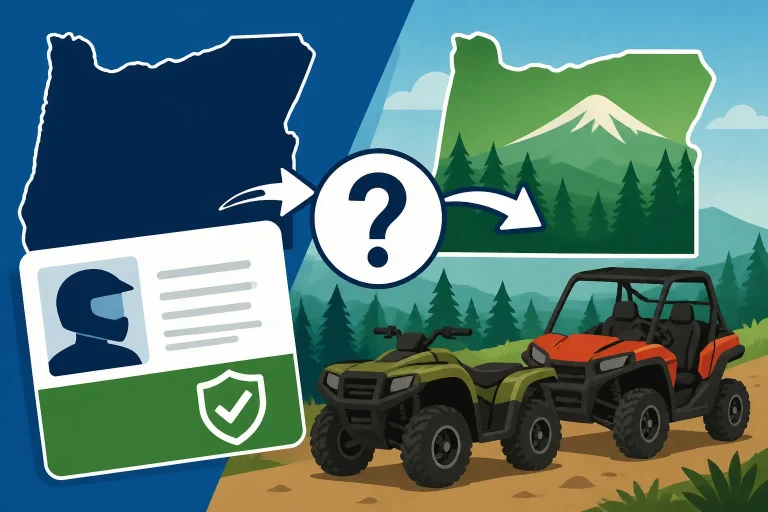
Oregon’s ATV safety education course and card are available at no charge. You do not pay a fee just to take the course or receive the card after meeting the course requirements. The card shows that you completed the state’s safety education requirement; it is not a permit to operate any machine anywhere.
That distinction matters because a rider can have a safety card and still need a separate operating permit for the machine. The permit, in turn, does not replace a required safety card. Oregon ATV Safety Card Requirements explains the education requirement, while Oregon’s ATV Operating Permit covers the separate permit for riding.
| Item | What it covers | Is it the safety card fee? |
|---|---|---|
| ATV safety education course and card | Completion of Oregon’s safety education requirement | No charge |
| ATV operating permit | Permission to operate a covered machine under Oregon’s permit rules | Separate cost |
| Day-use or site fee | Access or parking at some riding areas | Separate from the card |
| Hands-on instruction | Practical training that may be required for some riders | Check whether a provider charges for it |
| Rental or tour | Use of a machine or guided activity | Separate business charge |
The no-charge course is useful, but it does not mean every part of getting ready to ride is free. A rider might still need to buy a permit, pay a fee at a riding site, arrange training, or rent a machine. Those costs depend on the machine, the rider, the riding area, and the service being used. They are not charges for the safety card itself.
For an explanation of why the card is free, see Why Oregon’s ATV Safety Card Costs Nothing. The Oregon Parks and Recreation Department has a role in the state’s OHV program; The Oregon Parks and Recreation Department’s Role provides more context about that work.
Costs that may come up even though the card is free
The operating permit is separate
A safety card and an ATV operating permit do different jobs. A safety card relates to the operator’s education. A permit relates to the machine’s operation under Oregon’s permit system. One does not stand in for the other.
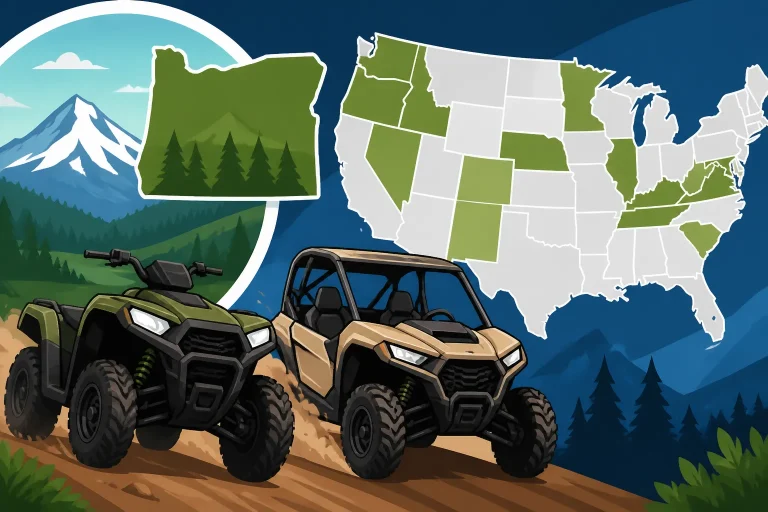
Before a trip, check whether the machine needs an Oregon permit or qualifies under a current reciprocity rule. This is especially important for visitors bringing a machine from another state, since a registration or decal from home may not automatically meet Oregon’s requirements. Oregon Permit Reciprocity List explains the permit side of reciprocity, and Does Oregon Accept an Out-of-State Safety Card? covers safety-card acceptance.
If you need to buy an Oregon permit, its cost is a separate expense from the safety course. Permit prices and requirements can change, so confirm the current details through the official Oregon program before purchasing. Do not assume that getting a free card also registers the machine, covers a day-use charge, or authorizes riding on every road or trail.
Training can be a separate expense
The online course and safety card do not necessarily cover every training requirement. Some riders may also need hands-on instruction, depending on their age, machine class, and circumstances. Practical instruction can involve a separate provider, schedule, and possible charge. Check what applies to the rider before treating the online course as the only step.
Oregon’s requirements vary by machine class and rider age. For instance, the card rules for Class I and Class III machines are not identical to the rules for Class IV machines. See Class I and Class III Card Rules in Oregon and Class IV Cards Only for Riders Under 16 for the class-specific distinctions. For practical instruction, Oregon Hands-On Training Requirements is a useful next step.
If a provider offers instruction, ask what the fee includes before booking. It may cover coaching and a supervised skills session, but it should not be assumed to include a permit, safety equipment, transportation, or a riding-area fee. Confirm the course location, equipment requirements, and cancellation terms directly with the provider.
Riding-area charges are not card charges
Some riding areas charge day-use or parking fees. Other locations may require a pass, reservation, or additional payment for camping. These costs are tied to access or facilities, not to the safety card. A card holder can still be turned away from a site or owe a fee if the area’s access rules require it.
The type of land and the site’s rules matter. Check the riding area’s current information before leaving home, including access restrictions, closures, and whether a pass is accepted. Oregon Day Use Fees Explained and The Northwest Forest Pass and Oregon Sites address common site-fee questions. The permit, safety card, and site fee are separate checks to make.
Rentals and tours have their own terms
If you are renting an ATV or joining a guided ride, the business may explain what it provides and what you must bring. A rental fee does not automatically mean you have received your own Oregon safety card, and a safety card does not cover the rental charge. Ask the operator whether the rental includes any required safety materials or instruction, and whether you need to complete a separate course.
Check age and license rules as well as card requirements when booking for a young rider. The operator may have its own limits in addition to state rules. Oregon Rules for a Rented Machine and What an Oregon Rental Agency Must Do can help you identify what to ask before the rental date.
How to get the card without unnecessary expense
A straightforward way to avoid paying for something that should be free is to use Oregon’s official ATV safety education process rather than an unrelated course or a third-party offer that claims to issue a state card. Start at the official Oregon ATV safety education site and follow its current instructions for the applicable machine class and rider.
The general process is:
- Identify the machine class. Oregon classifies ATVs by features such as design and operating characteristics. Do not rely only on a seller’s casual description of a machine as a quad, dirt bike, or side-by-side.
- Check who needs a card. Requirements can depend on the class and the rider’s age. Review the current rules before starting so that the rider takes the appropriate course.
- Complete the required education. Use the official course pathway and follow its instructions for the exam and any additional steps.
- Save proof of completion. Keep the card or an accepted digital version available while riding, and make sure the rider knows how to show it if asked.
- Check for any hands-on requirement. If the rider’s situation calls for practical training, arrange it separately and confirm the provider’s costs and requirements.
- Check the machine and destination. Confirm the permit, reciprocity, and site-access rules separately from the education card.
This sequence prevents a common mix-up: taking a safety course is not the same as securing a permit for the machine. It also helps avoid paying an outside service for a card when the state course itself has no fee.
Keep a copy of the card where it is accessible during a ride, but do not rely on a photo or screenshot unless Oregon’s current rules accept that format. A phone can lose power, get wet, or have no signal, so a printed copy may be a useful backup. Check the state’s current guidance on acceptable proof before you set out.
If you already completed the course but cannot find the card, check the official replacement process before paying anyone to reproduce it. [Oregon Safety Card Replacement] covers that situation. If you are unsure whether an older card remains valid, check the renewal information at Oregon Safety Card Renewal rather than retaking a course or paying for a service without confirming what is required.
Before riding, confirm the card and the other requirements
The simplest way to budget is to treat the safety card as one item on a pre-ride checklist, not as a single document that covers every obligation. Confirm the operator’s education status, then check the machine’s permit status, the destination’s access rules, and any separate training requirement.
For a visitor, there is an extra question: does Oregon accept the safety card from the rider’s home state? Card reciprocity and permit reciprocity are separate topics, so an answer about one does not settle the other. Verify both before traveling, particularly if the visit will extend beyond a short trip. Riding Oregon With an Out-of-State Permit can help with the permit question, while the out-of-state card information explains the education side.
For families, check each rider individually. One person’s card does not qualify another person, and rules may differ for a child operating one class of machine and an older rider operating another. Make sure the machine class is correct, too. A vehicle’s appearance or model name may not be enough to establish its Oregon class.
A practical budget can include:
- The safety education course and card, which are provided at no charge.
- Any required hands-on training, if applicable.
- The machine’s Oregon operating permit, if required.
- Day-use, parking, or camping charges at the chosen site.
- Rental, tour, transportation, and equipment costs, if applicable.
Confirm current requirements and charges with the relevant official program, site manager, training provider, or rental business. That keeps the free card in perspective: it is one piece of preparation, while the other costs depend on the ride you plan to take.
Disclaimer
This article is for general informational purposes only and does not constitute professional advice. Laws, prices and regulations vary by location and change over time. Consult a qualified professional for guidance on your specific situation.