Oregon Fines for Riding Without a Safety Card
A missing Oregon ATV safety card can turn a ride into a roadside citation, but not every operator is subject to the same card rule. The machine’s class and the rider’s age matter, and an operating permit is a separate requirement. Here’s how to work out whether you need a card, what a citation may mean, and what to check before heading out.
What can happen if you ride without a required safety card
If Oregon requires you to carry an ATV safety education card for the machine you’re operating, riding without one can lead to a citation and a fine. The safety-card requirement is generally enforced as a traffic violation. The amount due can depend on the violation and current court schedules, so check the relevant official information rather than relying on an old fine figure.
A citation can also interrupt a day of riding. An officer or land manager may ask you to show that you meet the requirements for operating the machine. If you cannot show a required card, you may have to stop riding until the issue is resolved. A card on your phone may be useful if it is accepted for verification, but having it available does not replace any other required documents or equipment.
It helps to separate three things that riders often mix up:
| Requirement | What it does | What to check |
|---|---|---|
| ATV safety education card | Shows that a rider has met Oregon’s safety education requirement when it applies | Machine class, rider age, and whether an out-of-state card is accepted |
| Oregon ATV operating permit | Authorizes the machine to operate in places where an Oregon permit is required | Whether the machine has the right permit or qualifying out-of-state permit |
| Site or day-use pass | Covers access or parking requirements at some riding areas | The rules for the specific land manager and staging area |
A safety card is for the rider; an operating permit is for the machine. One does not replace the other. A machine with a valid decal does not make an operator exempt from a safety-card rule, and a rider’s card does not permit an unpermitted machine to ride. For the permit side of the question, see Oregon’s ATV Operating Permit and Oregon Permit Reciprocity List.
This distinction matters when you are trying to understand a citation. A rider might be properly educated but operating a machine without the required permit, or have the permit but lack a required card. Those are separate issues and may have separate consequences. Oregon’s rules for an unpermitted machine are covered in Oregon’s Class C Traffic Violation for No Permit.
The practical approach is to sort out each requirement before the ride. Confirm that the operator has the right safety card, that the machine has the right permit, and that the riding area is open to that machine and rider. A card does not authorize travel on a closed trail or road, and it does not cancel a site’s separate access rules.
Who needs an Oregon ATV safety card
The card requirement depends on the ATV class and, for some machines, the operator’s age. Oregon groups ATVs into classes based on characteristics such as width, seating, steering, and weight. If you are unsure which class your machine falls into, start with Which Oregon ATV Class Your Machine Falls Into rather than guessing from its model name or how it is commonly described.
In broad terms, Oregon’s safety-card rules apply to operators of Class I and Class III machines. That includes many quads and off-road motorcycles. Class IV machines, including many side-by-sides, have a card requirement for operators under 16; the age-based rule is different from the one for Class I and Class III. Review Class I and Class III Card Rules in Oregon and Class IV Cards Only for Riders Under 16 if you need to check the rule for a specific operator.
Class II machines have a different operating framework from Class I, III, and IV machines. Some Class II operators may not need an ATV safety card, but that does not mean they can ignore all operator requirements. A driver’s license, registration, insurance, or other road-use rules may apply depending on the machine and where it is being operated. For a side-by-side or other Class II machine, confirm its classification and the applicable rules rather than assuming that a steering wheel alone settles the question.
The broad categories are useful for a first check, but they are not a substitute for identifying the machine correctly. A machine’s width, weight, seating, and controls can affect its class. Modifications can also make a casual visual comparison unreliable. If the classification is unclear, check the vehicle’s specifications and Oregon’s class definitions before relying on an age-based exception.
Age rules are not the same for every machine
A rider’s age can change whether a card is required, particularly for a Class IV machine. It does not automatically exempt a young operator of a Class I or Class III machine from the card rules. Young riders may also be subject to supervision, training, or other safety requirements, so checking only the card rule can leave an important gap.
Parents and guardians should confirm both the class rule and the requirements for a young rider. Oregon Rules for Riders Under 16 explains the age-related rules more broadly, while Oregon Minimum Age to Ride an ATV is relevant if you are checking whether a child may operate a particular machine at all.
An adult should not assume that they can ride a child’s machine without checking the rules either. The operator’s age and the ATV’s class both matter. A youth quad may be Class I, for example, so the fact that it was purchased for a child does not by itself determine whether an adult operator needs a card.
A card is not a general riding license
The safety card does not give a rider permission to operate every type of ATV in every place. It does not change the vehicle’s class, substitute for a driver’s license where one is required, or grant access to a road, trail, or area that is closed to that machine.
Think of the card as one part of the compliance check. Before riding, identify the machine class, check the operator’s age-related requirements, confirm that the machine’s permit is valid, and check the land manager’s current access rules. That is more reliable than treating the card as a universal license.
Out-of-state cards, rentals, and other exceptions
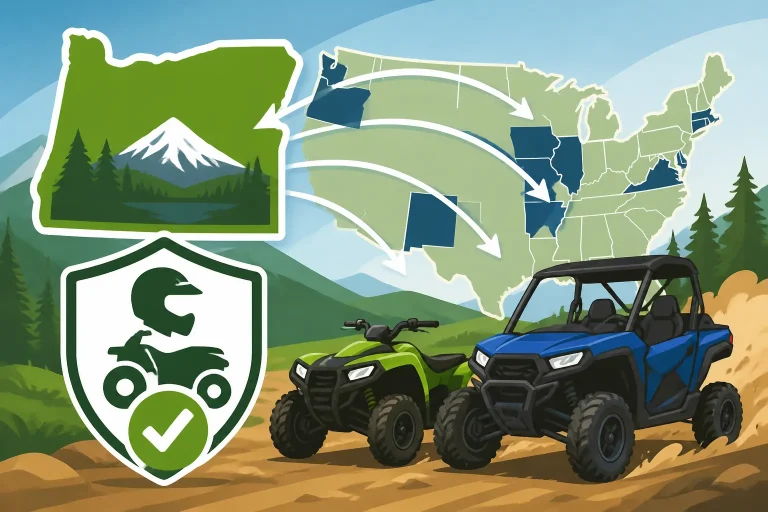
Visitors should not assume that a safety card issued elsewhere is automatically accepted in Oregon. Oregon recognizes qualifying out-of-state safety credentials under its reciprocity rules, but acceptance depends on the credential and the applicable list. Check Does Oregon Accept an Out-of-State Safety Card? before traveling, especially if the card was issued by a state with different training requirements.
Also keep safety-card reciprocity separate from permit reciprocity. Oregon’s lists for cards and machine permits are not identical. A visitor could have an accepted safety card but still need to meet Oregon’s permit requirements for the machine, or have an out-of-state permit that does not settle the card question. Why Oregon’s Two Reciprocity Lists Differ explains why checking only one list can lead to a mistaken assumption.
If you are visiting for a short trip, check the applicable rules before leaving home. Do not wait until you reach a staging area to discover that your card does not qualify or that your machine’s permit is not recognized. Keep the card accessible, and verify that the name or credential details can be matched to the person riding.
Rental customers should ask the rental provider what is included and what the rider must do personally. A shop may provide guidance or handle a rental-specific safety process, but do not assume that the rental automatically gives every operator a permanent Oregon card or covers every situation after the rental period. Read Oregon Rules for a Rented Machine and confirm the instructions directly with the provider before signing or riding.
A short-term rental process and a rider’s own safety card are not necessarily interchangeable. Ask whether the rental’s safety paperwork applies only to that rental, who it covers, and how long it is valid. If you plan to ride a second machine or return for another trip, check whether you will need to complete Oregon’s regular card process.
For riders who need an Oregon card, the next step is to confirm the approved course or testing route and follow the current instructions. How to Get an Oregon ATV Safety Card covers the process, while Oregon ATV Safety Card Requirements is a useful place to review the broader rules. Keep a copy in a format you can access during the ride, and check that it is legible and belongs to the operator who is actually driving.
How to avoid a safety-card citation before you ride
A few checks at home can prevent a confusing stop at a trailhead or staging area. Use this sequence before loading the machine:
- Identify the machine’s Oregon class. Use its actual dimensions and design, not just the name used in an advertisement or by the seller.
- Check the operator’s age against the class rule. Do not assume that one age rule applies to every ATV.
- Confirm the card is valid for Oregon. If it came from another state, check that credential against Oregon’s safety-card reciprocity rules.
- Check the machine’s permit separately. Confirm the decal or other required permit is current and valid for Oregon.
- Check the riding area. A safety card and permit do not override closures, access restrictions, or separate site fees.
- Carry proof in an accessible format. Make sure the card can be shown and is associated with the person operating the machine.
If an officer or land manager asks for proof, stay calm and provide the information requested. If you receive a citation, read it carefully and follow the instructions for responding. Do not assume that showing a card later will automatically cancel the citation; the process and available options depend on the specific violation and the court’s instructions.
If you discover before riding that you do not have a required card, the safest choice is to pause and resolve the issue before operating the machine. Do not rely on another rider’s card, a machine’s permit decal, or the assumption that enforcement will not check. For Class I and III operators in particular, verifying the card requirement before the trip is a straightforward way to avoid an unnecessary citation.
Finally, keep the paperwork questions distinct. If the issue is that the operator lacks a card, follow the safety-card process. If the machine lacks an Oregon permit, address that separately. If both are uncertain, do not ride until both questions are settled. That simple distinction prevents the most common misunderstanding: having one valid item does not satisfy the other requirement.
Disclaimer
This article is for general informational purposes only and does not constitute professional advice. Laws, prices and regulations vary by location and change over time. Consult a qualified professional for guidance on your specific situation.